 Ferndale
 Why Marietta's Marine Climate Is Hard on Windows
Marietta sits close to the water, in the flatter, low-lying stretches of Whatcom County where marine air moves through constantly. That air carries salt, and salt is corrosive to window hardware, fasteners, and unprotected metal components in a way that homeowners further inland rarely have to think about. Combine that with driving, wind-pushed rain off the water and a long stretch of the year where moss and mildew have every opportunity to take hold, and you get a set of conditions that will find every weakness in an aging or poorly installed window within a few winters.
This isn't a climate that punishes windows all at once with extreme heat or cold. It punishes them slowly, through constant moisture cycling, wind-driven water intrusion, and salt exposure that accelerates corrosion on hinges, latches, and metal spacers inside the glass unit itself. A window that would perform fine for twenty years in a dry inland climate can start failing in half that time here if it wasn't built or installed with this specific exposure in mind.
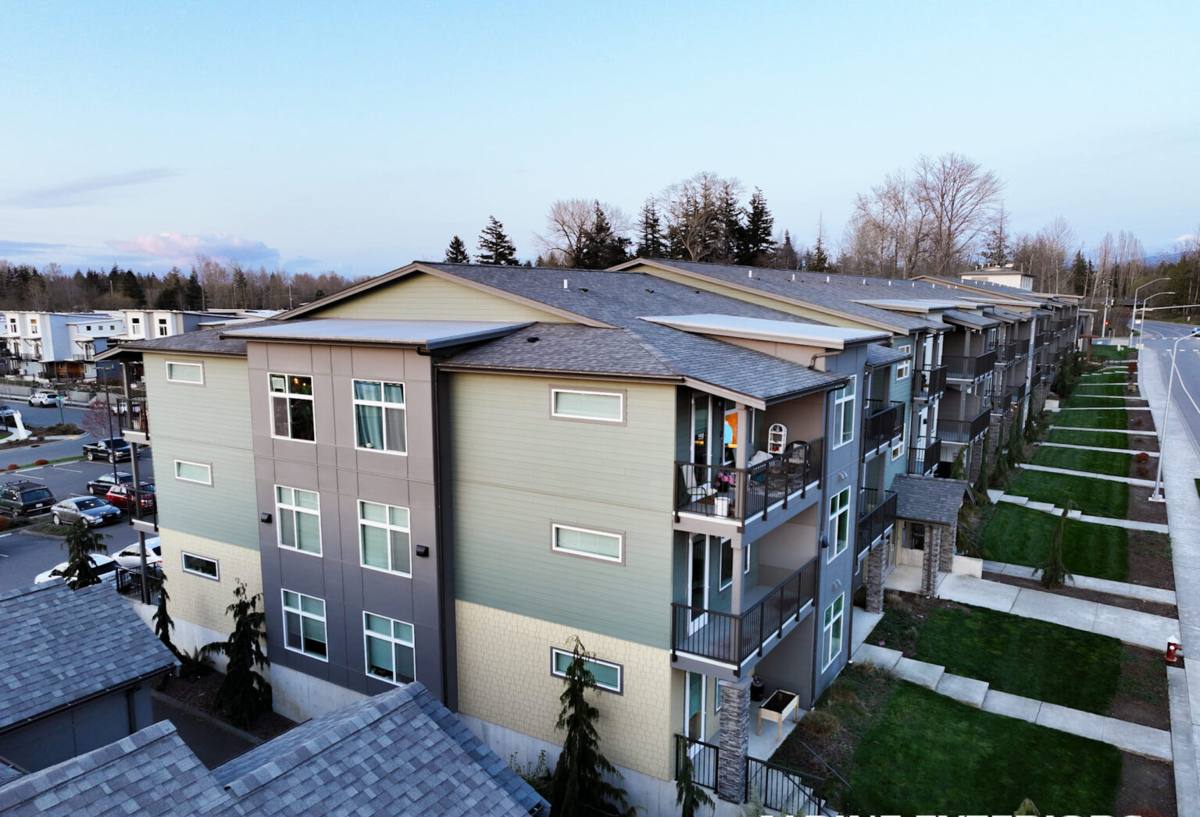
Signs Your Marietta Home's Windows Are Underperforming
Most homeowners don't replace windows because of one dramatic failure — they replace them because a collection of small problems finally adds up. Here's what we look for and what you can check yourself:
- Visible condensation or fogging between the panes of a double-pane window — this means the seal has failed and the argon or air fill has escaped
- Drafts you can feel near the frame even when the window is fully latched
- Sashes that are hard to open, stick, or won't stay up without a prop
- Soft or discolored trim, siding, or wall material directly around the window opening
- Visible corrosion or chalky white residue on aluminum frames or hardware
- Moss or dark streaking on the frame or sill that keeps coming back no matter how often it's cleaned
- A noticeable difference in room temperature near the window compared to the rest of the house
- Rising heating bills without any other explanation, especially in older single-pane or early-generation double-pane homes
Any one of these on its own might just mean a repair. Several of them together, especially combined with visible moisture staining on the wall around the window, usually means the window and its flashing have been letting water in for a while.
What "Energy-Efficient" Actually Means in This Climate
Energy-efficient windows are rated using a handful of numbers, and in a marine climate like ours, some matter more than others.
U-Factor
U-factor measures how much heat the window lets escape. Lower is better. Since Whatcom County winters are damp and mild rather than bitterly cold, a strong U-factor still matters, but it's less about surviving a deep freeze and more about cutting the steady, day-in day-out heat loss that drives up bills over a long heating season.
Solar Heat Gain Coefficient (SHGC)
SHGC measures how much solar heat passes through the glass. In a region with limited direct sun for much of the year, we don't recommend going as low on SHGC as you might in a sunnier climate — you want to keep some of that free solar warmth on the clear days you do get, without sacrificing the U-factor gains from a good Low-E coating.
Air Leakage and Water Penetration Ratings
This is the number that matters most here. Wind-driven rain off the water puts real pressure on a window assembly, and a unit with a poor water-penetration rating will leak at the frame joints and sill long before it ever fails from age. We pay close attention to this rating on every Marietta job, sometimes more than the U-factor itself.
Gas Fill and Spacer Type
Argon-filled units with a warm-edge (non-metal) spacer resist the seal failure that leads to fogged glass. In a climate with constant humidity and temperature cycling, the spacer type has a real effect on how long that seal actually lasts.
Choosing the Right Frame Material
Frame material affects how a window holds up to salt air and moisture over time as much as the glass package does. There's no single "best" choice — it depends on your home, your budget, and how much upkeep you want to take on.
| Frame Material | Salt Air / Moisture Behavior | Maintenance | Notes for This Area |
|---|---|---|---|
| Vinyl | Does not corrode or rot; performs well in humid, salty air | Low — occasional cleaning | Our most common recommendation for coastal Whatcom County homes; good value |
| Fiberglass | Very stable, resists expansion/contraction and moisture damage | Low | Higher upfront cost, strong long-term performance where budget allows |
| Wood-clad | Interior wood needs protection from any interior condensation; cladding protects exterior | Moderate — interior finish upkeep | Best where the look of real wood inside matters more than lowest maintenance |
| Bare Aluminum | Prone to pitting and corrosion in direct salt air over time | Higher — needs monitoring and occasional treatment | We're cautious recommending this in Marietta's exposure without a strong protective finish |
We're straightforward with clients about aluminum: it's not that it can't work, it's that unprotected or lower-grade aluminum hardware and frames show corrosion faster in direct salt air than vinyl or fiberglass do, and that shows up as a maintenance burden a few years down the road. If a homeowner wants an aluminum-frame look, we talk through what finish and hardware grade actually holds up here before recommending it.
Why Installation Quality Matters More Than the Window Itself
We say this to every homeowner: a premium window installed poorly will fail faster than a mid-range window installed correctly. This is doubly true in a wind-driven rain climate, because almost every water intrusion problem we get called out to fix started at the flashing, not the glass.
Flashing Integration
The window has to be integrated into the wall's water-resistive barrier in the correct order — building paper or house wrap, then flashing tape at the sill and jambs, then the window, then flashing over the top, then siding lapping over that. Skip a step or do it out of order and water finds its way behind the siding, where it can sit unseen for months.
Sill Pan Drainage
A sloped sill pan under the window gives any water that does get past the exterior seal somewhere to go — back out, not into the wall cavity. In a climate with this much sustained rain, we treat a sill pan as standard, not optional.
Sealant Selection
Not all exterior sealants handle constant moisture and salt exposure equally well. We use sealants rated for continuous exterior/marine exposure at the joints that see the most water, rather than a general-purpose caulk that will shrink and crack within a couple of seasons.
Weep Holes and Drainage Paths
Vinyl and fiberglass frames are designed with weep holes that let any moisture inside the frame track drain back out. If these get sealed shut, painted over, or blocked with debris during installation, moisture has nowhere to go and starts accumulating inside the frame — one of the more common installation mistakes we find when replacing another contractor's earlier work.
Our Process for a Marietta Window Replacement
- On-site assessment — we look at your current windows, the surrounding siding and trim condition, and any signs of past water intrusion before recommending anything
- Product selection — we walk through frame material, glass package, and grille options based on your home's exposure and your budget, not a one-size pitch
- Flashing and siding coordination — because we're a siding contractor first, we plan the window tie-in with the surrounding wall assembly as one job, not two separate trades that don't talk to each other
- Removal and inspection — old windows come out carefully so we can check the framing, sheathing, and existing flashing underneath for hidden moisture damage before anything new goes in
- Installation — sill pan, flashing sequence, sealant, and fastening done to manufacturer specs and matched to this climate's exposure
- Siding and trim tie-in — trim and siding are re-integrated around the new window so the whole assembly sheds water correctly, not just the window unit itself
- Final walkthrough — we check operation, sealing, and appearance with you before calling the job done
What Affects the Cost of Energy-Efficient Window Replacement
| Factor | Why It Matters |
|---|---|
| Number and size of windows | Larger openings and whole-house replacements have different labor and material needs than a handful of units |
| Frame material | Vinyl, fiberglass, and wood-clad carry different material costs and installation time |
| Glass package | Low-E coatings, argon fill, and impact or sound-dampening upgrades add to the base cost |
| Condition of existing framing | Hidden rot or moisture damage found during removal adds repair work before the new window can go in |
| Siding and trim tie-in | Matching and re-integrating existing siding around a new window opening takes more care than a bare frame swap |
| Access and story height | Second-story or hard-to-access windows take longer and require more setup |
Broad ranges vary a lot based on these factors, which is exactly why we walk every home in person before quoting rather than giving a number over the phone. What we can promise is a straightforward, itemized estimate with no pressure to decide on the spot.
Why a Crew That Already Works Marietta Homes Matters
Working in and around Ferndale and the surrounding Whatcom County communities day in and day out means we've already seen how this specific stretch of coastline treats window and siding assemblies — the moss buildup on north-facing walls, the way driving rain hits certain wall orientations harder than others, and which flashing details actually hold up through a full wet season instead of just looking right on installation day. That's the kind of judgment that only comes from doing the work here repeatedly, not from a general install checklist.
It also means we're realistic about scheduling around this region's weather — planning exterior tie-in work for drier windows where possible, and knowing how to sequence a job so your home isn't left exposed longer than necessary.
Keeping Your New Windows Performing Long-Term
Energy-efficient windows are not maintenance-free, especially here. A little regular attention goes a long way toward protecting the investment:
- Rinse frames and sills periodically to clear salt residue and organic buildup before it becomes ground-in moss or algae
- Keep weep holes clear of dirt, moss, and debris so water can drain as designed
- Check exterior sealant lines yearly for cracking or separation, especially after storm season
- Operate every window a few times a year, even ones you rarely open, to keep hardware and seals working properly
- Watch for any soft trim or discoloration on the wall around a window and address it early rather than waiting
If you're noticing drafts, fogged glass, or rising heating bills, or you're planning a siding project and want the windows handled as part of the same job, we're happy to take a look. We offer free, no-pressure estimates for Marietta homeowners — use the form below to get started.