 Ferndale
 Why Decks in Nooksack Wear Out Faster Than the Manual Says
Every deck comes with a manufacturer's lifespan estimate, and almost none of those numbers account for what a deck actually goes through in Whatcom County. Nooksack sits in the river valley east of Ferndale, but it still gets the same marine-influenced weather that shapes the rest of the county: long stretches of damp air, driving rain that blows sideways more often than straight down, and short, low-sun winters that never quite dry things out. Add in the humidity that settles along the Nooksack River corridor and you get horizontal surfaces — deck boards, rail caps, stair treads — that stay wet far longer than they would in a drier climate.
That extended dampness is what drives moss and algae growth on decking, what softens wood fiber from the inside out, and what corrodes fasteners years before the boards themselves look bad. A deck that would last two decades in Eastern Washington often needs real structural attention here in half that time, especially if it was built with basic hardware or without proper drainage underneath.
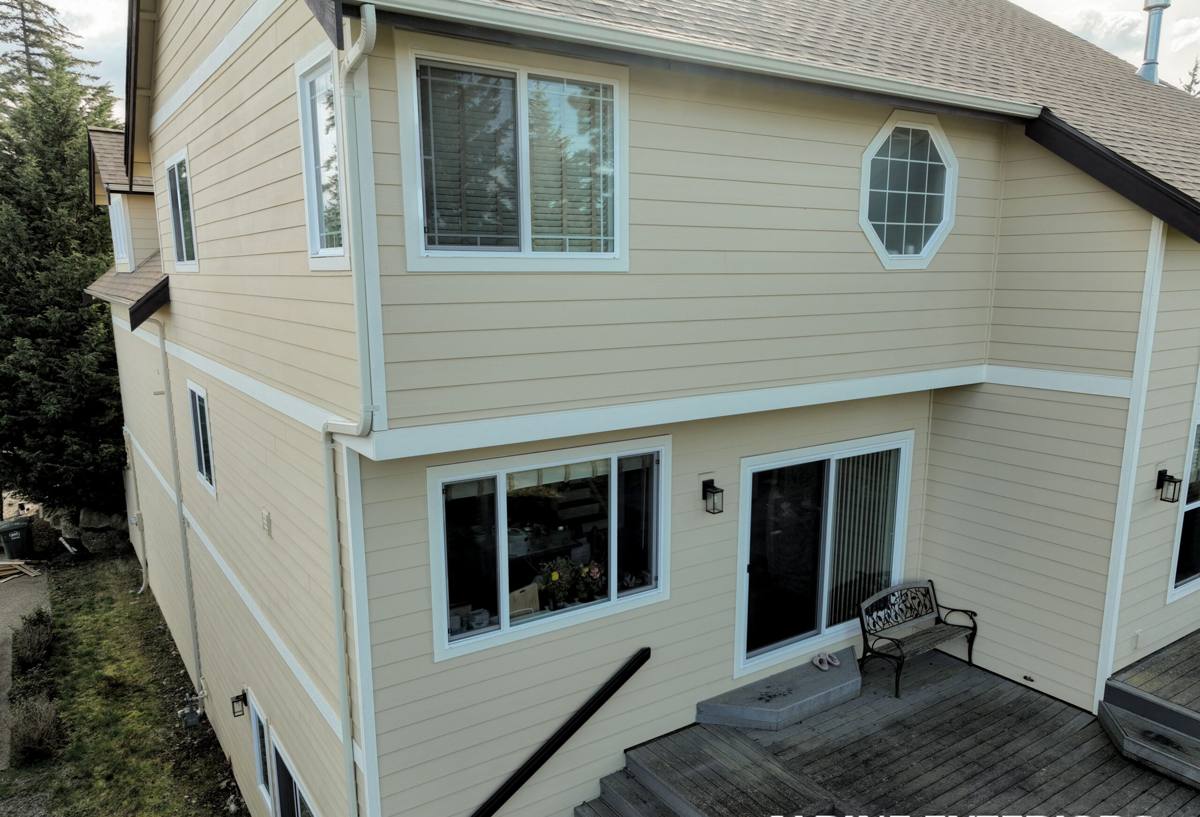
Signs Your Deck Needs Replacement, Not Another Repair
Not every tired deck needs to be torn out. But there's a point where patching boards is just delaying a bigger problem, and spending money past that point is money wasted. Here's what tells us a deck has crossed the line:
- Soft or spongy spots when you walk across the decking, especially near the house or at board ends
- A screwdriver sinks easily into joists, beams, or posts with little resistance
- Persistent moss or dark staining that comes back within weeks of cleaning
- Visible gaps, cupping, or splitting across most of the deck surface rather than a few boards
- Rust streaks bleeding out from fastener heads or connector hardware
- Railings that flex or feel loose when leaned on
- Ledger board area (where the deck meets the house) shows staining, soft wood, or gaps in flashing
- The deck was built without permits or footings you can't verify, and you don't have documentation on depth or size
If it's mostly cosmetic wear on an otherwise sound structure, repair or resurfacing may be the honest answer. If the framing itself is compromised, replacement is the only option that doesn't just push the same problem two years down the road.
What a Correct Deck Replacement Actually Involves
Starting From the Ground Up
A proper replacement isn't just new boards on old framing. It starts with the footings — checking that they're set below frost depth, properly sized for the load, and not showing signs of heaving or settling. In Whatcom County's wetter soils, undersized or shallow footings are one of the most common reasons decks develop that "bouncy" feel over time.
Framing and Ledger Attachment
The ledger board — where the deck attaches to the house — is the single most important connection on the whole structure, and it's also the spot most prone to hidden rot if it wasn't flashed correctly the first time. A correct replacement means pulling back siding as needed to install proper flashing that sheds water away from the house framing, not just caulking around bolts and hoping. Beams and joists get sized to actual span tables for the decking material chosen, not just "what was there before."
Decking, Railings, and Finish Details
Once the frame is solid, decking installation should account for drainage — small consistent gaps, proper fastening that allows for wood movement, and attention to any spots where two boards butt together, since that's where water sits longest. Railings get built to current code height and baluster spacing requirements, and stairs get proper stringer support rather than being an afterthought.
Choosing Decking Material for This Climate
There's no single "best" decking material — there's the right material for how you use the deck, how much upkeep you're willing to do, and what you're comfortable spending. Here's how the common options actually compare once you factor in Whatcom County's damp, moss-friendly weather:
| Material | Moisture Performance | Maintenance | Typical Lifespan |
|---|---|---|---|
| Pressure-treated wood | Good if sealed regularly; end grain and fastener holes are weak points | Annual cleaning, re-sealing every 2-3 years | 15-20 years with upkeep |
| Cedar | Naturally rot-resistant but still needs sealing in this climate | Cleaning plus periodic oil or sealer | 15-20 years with upkeep |
| Composite decking | Doesn't absorb water or rot, but can still grow surface moss/algae if not cleaned | Occasional washing, no sealing needed | 25+ years |
| PVC / capped composite | Fully moisture-resistant surface, best resistance to staining and mold | Lowest maintenance of the group | 25+ years |
We don't push composite or PVC on every job — plenty of homeowners want the look and feel of real wood and are willing to keep up with sealing. What we do insist on is being honest about the maintenance trade-off up front, because a wood deck that doesn't get resealed on schedule in this climate will show it within a couple of seasons, not years.
Why We're Careful With Certain Wood Species
Some lower-grade treated lumber sold as general framing stock isn't rated for ground contact or sustained wet exposure, and using it anywhere near grade or under a deck invites early failure. Our standard is to match lumber rating to actual exposure — ground-contact rated where it touches soil or sits low, above-ground rated only where it genuinely stays dry and ventilated. That's a durability decision, not a brand preference.
Fasteners, Flashing, and the Details That Actually Determine Lifespan
Most deck failures don't start with the boards — they start with the hardware holding everything together. In a climate with this much sustained moisture, standard zinc-coated screws and joist hangers corrode faster than the wood around them, and once a fastener weakens, the connection it's holding can fail without much visible warning.
Our standard for deck replacement is hot-dip galvanized or stainless steel connector hardware throughout, coated deck screws rated for treated lumber, and flashing tape or metal flashing at every ledger connection and any spot where framing meets siding or trim. These aren't upgrades — they're what a deck actually needs to hold up here.
Drainage Underneath the Deck
Low or ground-level decks are especially prone to trapping moisture underneath, where airflow is limited and the soil rarely fully dries out. Where the design allows it, we grade and ventilate the space under the deck so moisture has somewhere to go instead of sitting against the framing all winter.
Permits, Codes, and Footings for This Area
Deck replacement in Whatcom County generally requires a permit once you're dealing with structural work — new footings, a rebuilt frame, or a deck attached at a certain height above grade. Requirements can vary depending on the deck's size, height, and whether it's attached to the house, so we pull the specific requirements for your property rather than assuming. Footing depth and sizing follow local frost-line and soil-bearing standards, which is exactly why we don't reuse old footings unless we've confirmed they actually meet current requirements.
Skipping permits might save a little time up front, but it can create real problems later — at resale, at insurance claim time, or if the work needs to be inspected for any reason. We handle the permit process as part of the job, not as an extra line item you have to chase down yourself.
How Our Deck Replacement Process Works
- Free on-site inspection of the existing deck, including a check under the structure and at the ledger connection
- Honest assessment of whether replacement or repair is the right call, in writing
- Material and design conversation based on how you actually use the deck
- Permit handling and scheduling
- Demolition, footing and framing work, then decking, railings, and finish details
- Final walkthrough before we consider the job done
We don't upsell a full rebuild when a repair will genuinely hold up, and we don't quote a repair when the framing underneath tells a different story. The goal is a deck that's still solid a decade from now, not just one that looks good in photos the week it's finished.
Why Hiring a Crew That Already Works in Nooksack Matters
A lot of general contractors will build a deck to whatever spec is common where they usually work — which might be a drier region with less sustained moisture and a shorter moss season. Working regularly in and around Ferndale and Nooksack means we're already building to the standard this climate demands: proper flashing at every ledger, corrosion-resistant hardware as the default, and footing depths that account for local soil and frost conditions rather than a generic minimum.
It also means we're not learning the local permit process on your project. We know what the county typically asks for on a deck replacement, and we build that into the timeline from the start instead of discovering it partway through the job.
Ready for a Deck Built to Actually Last?
If your deck in Nooksack is showing soft spots, persistent moss, loose railings, or you're just not sure whether it needs a repair or a full replacement, we're happy to take a look. The estimate is free, there's no pressure, and you'll get a straight answer about what your deck actually needs — use the form below to get started.