 Ferndale
 Fiber Cement Siding for the Nooksack Area
The Nooksack area sits in a part of Whatcom County where exterior materials get tested year-round. Homes here deal with a mix of coastal moisture blown in off the Salish Sea, steady winter rain that can run for weeks without a real break, and shaded, tree-lined lots where moss and algae get a head start every fall. Siding that looks fine in a showroom in July can start showing problems by its third Pacific Northwest winter if it wasn't built for this climate or installed correctly. Fiber cement siding, specifically James Hardie fiber cement, is the material we install because it's engineered to hold up to exactly these conditions without the upkeep headaches that come with wood or the long-term weaknesses we've seen in other siding categories.
This page focuses specifically on fiber cement siding for homes in and around Nooksack and the greater Ferndale area — what the local climate demands, what a correct installation actually involves, and how we approach the job from first estimate to final walkthrough.
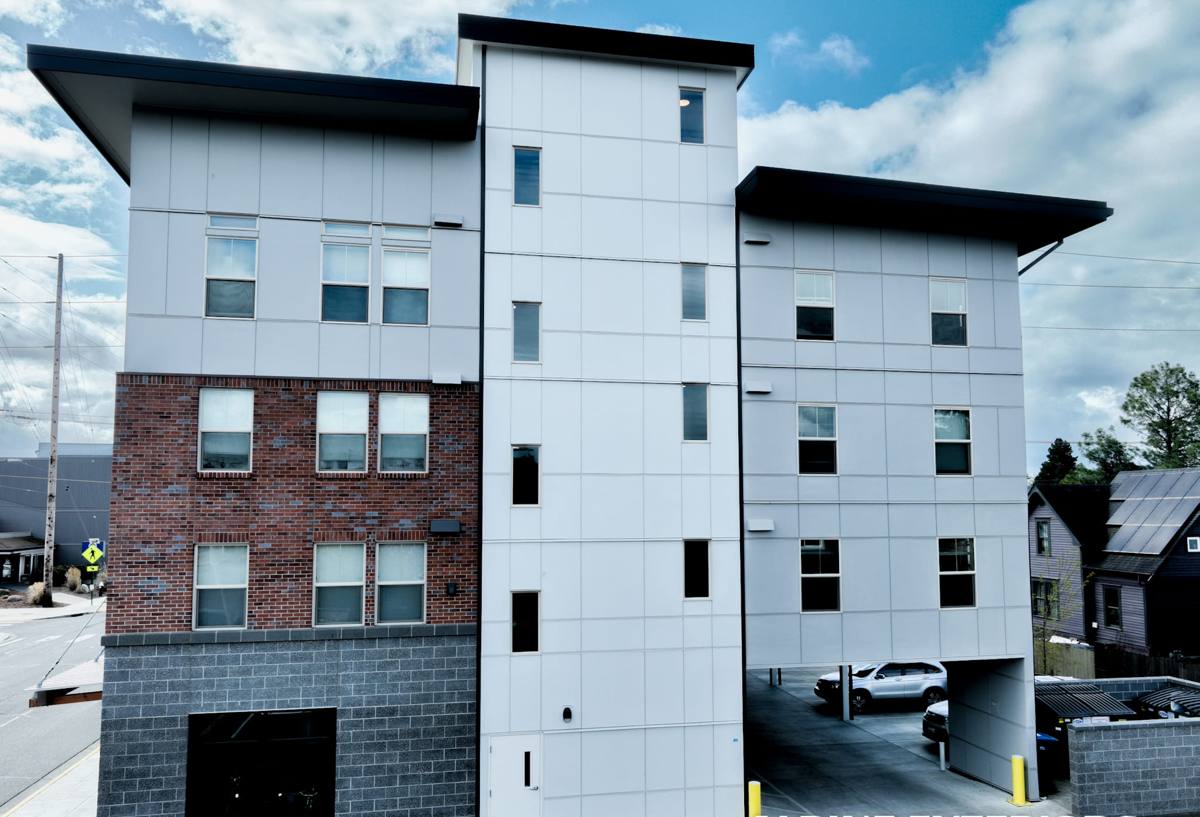
What This Climate Does to Siding Over Time
Whatcom County's exterior conditions aren't extreme in the way a hurricane zone or a desert climate is extreme — they're persistent. That persistence is what wears down the wrong siding material.
Salt Air and Moisture Load
Proximity to Puget Sound and the Strait of Georgia means airborne salt and moisture reach homes well inland from any visible shoreline. Salt-laden air accelerates corrosion on fasteners, trim, and any metal flashing that isn't rated for coastal exposure, and it speeds up the breakdown of finishes that aren't formulated to resist it.
Driving Rain
Rain in this region doesn't just fall straight down — wind-driven storms push water sideways into wall assemblies, seams, and butt joints. Siding and the water-resistive barrier behind it need to work together as a system, or water finds its way behind the cladding and into sheathing that never fully dries between storms.
A Long Moss and Algae Season
Shaded lots, high humidity, and mild temperatures give moss and algae a long growing window — often close to year-round on north-facing walls or areas shielded from direct sun. Siding that holds moisture at the surface, or that has a porous or absorbent face, gives moss more to grab onto and speeds up staining and surface breakdown.
Why We Install James Hardie Fiber Cement — And Only Hardie
We standardized on James Hardie fiber cement siding and don't install vinyl, LP SmartSide, primed wood, cedar, or other fiber cement brands like Allura or Cemplank. That's a deliberate professional standard, not a sales pitch, and it's worth explaining honestly.
Fiber cement as a category performs well in wet, coastal-influenced climates because it's dimensionally stable, doesn't rot, and isn't a food source for insects the way wood-based products can be. Within that category, James Hardie has the longest track record in North America, climate-engineered product lines built for specific exposure conditions, and a factory-applied ColorPlus finish that's baked on under controlled conditions rather than field-painted. That finish process matters directly here: a factory finish resists fading and holds up to UV and moisture exposure more consistently than a coating applied on site, which is one less variable in a climate that doesn't give paint much of a drying window.
Other fiber cement brands aren't necessarily bad products, and we're not going to make unfounded claims about their failure rates. Our decision comes down to consistency of supply, finish quality control, warranty structure, and the fact that our crews have built deep, repeatable expertise installing one system correctly rather than spreading that expertise across several. For a homeowner, that translates into fewer surprises and a contractor who has seen how this specific product behaves on this specific coastline over time.
What a Correct Fiber Cement Installation Actually Involves
Fiber cement siding's real-world performance depends almost entirely on installation quality. The material itself is durable, but a poorly installed job — wrong fasteners, missing flashing, siding installed tight to trim with no expansion gap — will fail well before its expected lifespan, regardless of brand. In a climate that pushes rain sideways and keeps surfaces damp for long stretches, these details aren't optional.
- A drainage plane or rainscreen gap behind the siding so any moisture that gets past the cladding can drain and dry rather than sit against the sheathing
- Correct water-resistive barrier installation with properly lapped and taped seams
- Manufacturer-specified fasteners, driven to the correct depth — overdriven or underdriven nails are one of the most common causes of early siding failure
- Flashing at every window, door, deck ledger, and roofline intersection, integrated with the barrier rather than just caulked over
- Proper clearance between the bottom of the siding and grade, decks, patios, or roof surfaces to keep splashback and standing moisture away from the material
- Correct expansion gaps at trim, corners, and butt joints, sealed with a high-quality, paintable sealant rated for the exposure
- Field-cut edges primed or sealed per manufacturer specification so raw cut ends aren't left exposed to moisture
Every one of these steps is boring to talk about and easy to skip. They're also the difference between siding that looks good for its full service life and siding that starts showing staining, board separation, or moisture damage within a handful of winters.
Choosing the Right Hardie Product Line for a Nooksack-Area Home
James Hardie makes several product lines, and they're not interchangeable across climates — the company engineers specific formulations (HZ5, HZ10) for different moisture and temperature exposure zones. Western Washington, including the Nooksack and Ferndale area, falls into a wetter exposure category, and we specify product accordingly rather than defaulting to whatever's easiest to source.
| Product | Typical Use | Why It Fits This Climate |
|---|---|---|
| HardiePlank lap siding | Most common choice for full re-sides and new construction | Traditional lap profile sheds water efficiently when installed with correct overlap |
| HardiePanel vertical siding | Accent walls, gables, modern facades | Fewer horizontal seams where wind-driven rain can push moisture in |
| HardieTrim boards | Corners, window and door trim, fascia | Matches the siding's moisture resistance so trim doesn't become the weak point |
| ColorPlus finishes | All exposed product lines | Factory-cured finish resists the fading and staining that field-painted siding shows first in this climate |
We walk homeowners through texture (smooth versus cedar-grain), reveal size, and color options during the estimate, but the underlying product selection is driven by exposure — how much direct weather a given wall sees, sun orientation, and proximity to landscaping or tree cover that holds moisture against the wall.
Our Process, Start to Finish
1. On-Site Assessment
We look at the existing siding, sheathing condition where accessible, moisture history, and how each elevation of the home is exposed to wind and rain. This is also when we flag any rot or water damage that needs to be addressed before new siding goes on — covering up an existing moisture problem is one of the worst mistakes in this trade.
2. Detailed Estimate
You get a written scope covering product line, color, trim details, and what the tear-off and disposal process looks like, so there's no ambiguity about what's included.
3. Prep and Weather Barrier
Old siding comes off, sheathing is inspected and repaired as needed, and a new water-resistive barrier goes on with correctly lapped seams before any siding is hung.
4. Installation to Manufacturer Spec
Fastening, flashing, gapping, and sealant work follow James Hardie's published installation guidelines — not shortcuts, because those guidelines exist specifically to make the product perform in climates like this one.
5. Final Walkthrough
We go over the finished work with you, including care and maintenance basics, before considering the job done.
Cost Factors Worth Understanding
Every home is different, so we don't publish flat per-square-foot pricing — but the factors that drive cost up or down are consistent, and knowing them helps you evaluate any estimate you receive, from us or anyone else.
| Factor | Impact on Cost |
|---|---|
| Tear-off and disposal of existing siding | Adds labor and disposal fees, varies by material being removed |
| Underlying sheathing or rot repair | Can add cost but is essential — never skip this to hit a lower number |
| Home's height and roofline complexity | Multi-story homes and steep or cut-up rooflines increase labor and staging needs |
| Trim and detail work (corners, window casings, fascia) | More custom trim means more precise cutting and installation time |
| Product line and texture selected | Panel versus lap, smooth versus cedar-grain, and finish color affect material cost |
Maintenance in a Wet, Moss-Prone Climate
James Hardie siding is low-maintenance compared to wood, but "low-maintenance" isn't "no-maintenance," especially with the moss and algae exposure common in this area.
- Rinse siding annually with a garden hose and soft brush to remove pollen, dust, and early moss growth — avoid high-pressure washing, which can drive water behind panels or damage the finish
- Keep gutters clean and functioning so overflow doesn't run down the siding face repeatedly
- Trim back landscaping and tree branches that keep siding shaded and damp for long stretches
- Inspect caulking at trim joints and penetrations every year or two and re-seal if it's cracking or pulling away
- Watch for any soft spots, staining, or bubbling paint, which can indicate moisture getting behind the siding and warrants a closer look sooner rather than later
Why Local Experience in This Area Matters
Whatcom County weather patterns aren't the same as siding literature written for a national audience. A crew that already works homes in and around Nooksack and Ferndale understands how wind and rain actually hit different elevations here, which sides of a house are prone to moss, and how coastal moisture behaves differently than it does even twenty miles inland. That local pattern recognition shows up in small decisions — flashing details, product selection, where to add extra sealant attention — that a crew unfamiliar with this specific stretch of coastline might not think to make.
If you're weighing a siding replacement or new construction project in the Nooksack area, we're happy to take a look and put together a straightforward estimate. There's no pressure and no obligation — just an honest assessment of what your home needs and what correct James Hardie fiber cement installation would involve. The form below is the fastest way to get started.