 Ferndale
 Siding Installation for Nooksack-Area Homes
Homes in and around Nooksack sit in one of the more demanding stretches of Whatcom County for exterior materials. You're close enough to Bellingham Bay and the Salish Sea to catch salt-laden air on a regular basis, far enough inland to sit under heavier tree cover than the coastal strip, and squarely inside a weather pattern that delivers long stretches of driving rain followed by a moss season that can run most of the year. Siding here isn't decorative — it's the first line of defense against moisture intrusion, and it takes a beating that a lot of national siding guides simply don't account for.
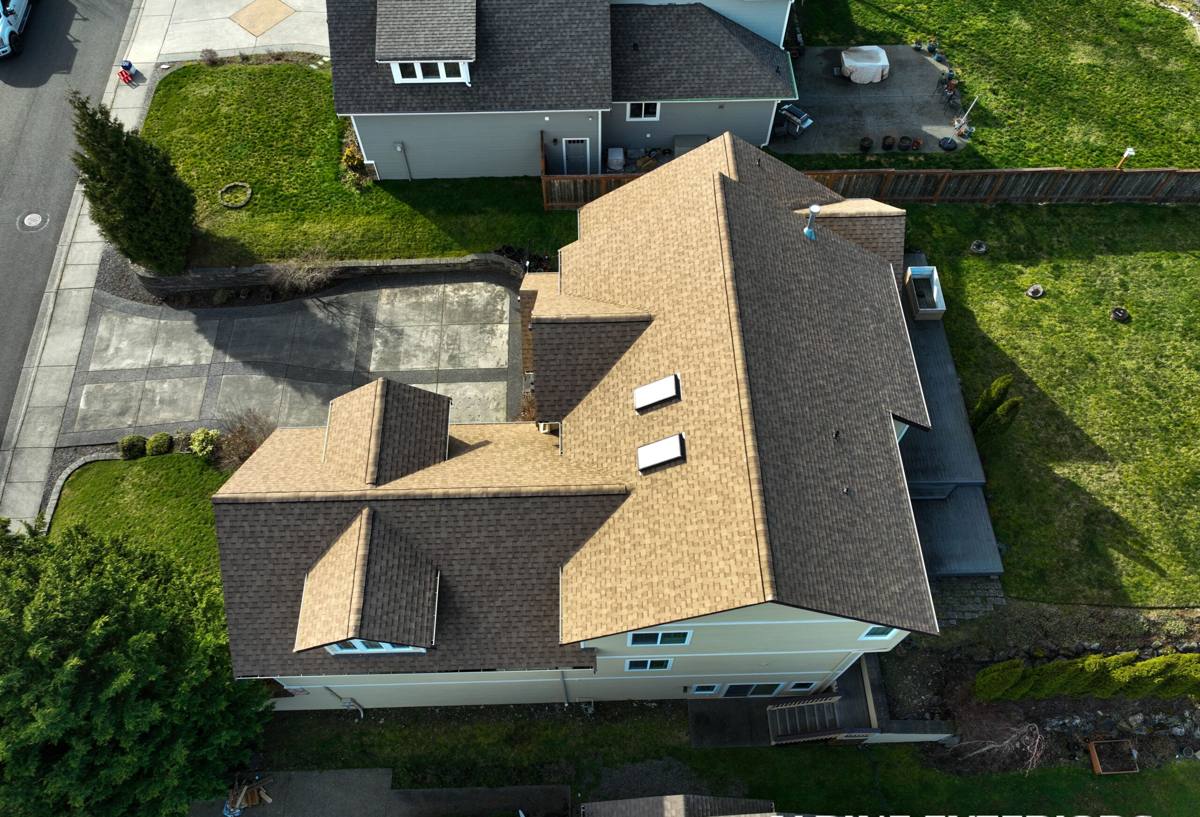
This page is about one job done right in this one area: a full siding installation for a Nooksack-area home, using James Hardie fiber cement, installed by a crew that already works this part of Whatcom County and knows what the local climate actually does to a wall assembly over time.
What This Climate Does to Siding
Salt Air
Even well inland from the water, airborne salt and moisture accelerate corrosion on fasteners, flashing, and any metal trim components. Siding materials that rely on paint film alone for protection tend to show chalking, fading, and edge deterioration faster here than in drier inland climates. This is one of the reasons fastener selection and flashing detail matter as much as the siding panel itself.
Driving Rain
Whatcom County storms frequently come in sideways off the water, driven by wind that pushes rain up under laps, around trim, and into any gap in the water-resistive barrier. A siding system that depends on face-sealing (caulk and paint alone) rather than proper drainage behind the cladding is working against the odds in this weather pattern. Correct installation has to assume water will reach the wall plane and give it a way out.
Long Moss Season
Shaded, damp, slow-to-dry wall sections — common on north-facing walls and anywhere tree cover blocks sun and wind — grow moss and algae for much of the year in this region. Moss holds moisture against the siding surface, and on materials that swell, delaminate, or rot when kept wet, that's a slow but steady path to damage. Siding that stays dimensionally stable when damp, and finishes that resist mold and mildew growth, hold up dramatically better under these conditions.
Why We Install James Hardie and Nothing Else
We standardized on James Hardie fiber cement siding for every job we take on, including installations in the Nooksack area, and we don't install vinyl, LP SmartSide, cedar, primed spruce, Cemplank, or Allura. That's a deliberate call, not a sales position:
- Non-combustible core — fiber cement doesn't feed a fire the way wood-based or engineered-wood siding can.
- Moisture-stable material — Hardie panels don't swell, rot, or delaminate the way wood-based products can when they stay damp during a long wet season.
- Factory-applied ColorPlus finish — a baked-on finish holds color and resists fading and chalking better than field-applied paint, which matters when salt air is part of the equation.
- Climate-engineered product lines — Hardie makes HZ5 products specifically formulated for regions with more moisture exposure, which fits western Washington.
- A real transferable warranty — a strong, well-documented warranty backing the product matters when a wall assembly is expected to perform for decades.
We're not going to pretend other products don't have their own selling points — cedar has a look some homeowners love, vinyl is inexpensive up front, LP SmartSide is lighter and easier to handle. But when we weigh those advantages against long-term performance in a wet, salt-influenced, moss-prone climate, fiber cement is what we're willing to warranty and put our name behind.
What a Correct Installation Involves
The siding panel is only one part of the system. In a climate like this, the details around it determine whether the wall stays dry for the next 30-plus years or starts showing problems in five.
Water-Resistive Barrier and Drainage Plane
A code-compliant weather barrier goes on before any siding, lapped correctly so water sheds downward and outward. Behind the Hardie panels, a drainage gap — whether furring strips or a manufactured rainscreen product — lets any water that does get behind the cladding drain out and lets the wall assembly dry, rather than trapping moisture against the sheathing.
Flashing at Every Penetration
Windows, doors, hose bibs, light fixtures, deck ledgers — every penetration through the siding plane is a place water can find its way in. Correct flashing detail at each one, installed in the right shingle-lap order, is non-negotiable in a climate that gets this much wind-driven rain.
Proper Fastening and Clearances
Hardie specifies fastener type, spacing, and embedment depth, along with minimum clearances from grade, roof lines, and decks. Skipping these specs is the single most common cause of premature siding failure — not the product itself, but installation shortcuts.
Caulking and Joint Treatment
Butt joints, trim intersections, and any place two components meet get sealed with a product rated for the exposure, applied at the right stage of installation — not slathered on at the end to cover gaps.
| Step | Why It Matters Here |
|---|---|
| Old siding removal & sheathing inspection | Catches hidden rot or moisture damage before it's covered up again |
| Weather-resistive barrier install | First real line of defense against driving rain |
| Rainscreen / drainage gap | Lets trapped moisture drain and the wall dry between storms |
| Flashing at all penetrations | Closes the most common entry points for wind-driven rain |
| Hardie panel installation to spec | Fastener spacing and clearances protect the manufacturer warranty |
| Trim, caulking, and touch-up | Finishes the weather seal and protects ColorPlus finish edges |
Our Process on a Nooksack-Area Job
We start with a walk-around and honest assessment: what condition the current siding and sheathing are in, which walls take the worst weather exposure (usually the west and south faces catching driving rain, and shaded north faces holding onto moss and moisture longest), and what the drainage and ventilation situation looks like. From there we scope the tear-off, any sheathing repair, the barrier and rainscreen system, and the Hardie product line and profile that fits the home.
During installation, we follow Hardie's published fastening and clearance specs exactly — not as a formality, but because that's what keeps the manufacturer's warranty valid and what actually keeps water out in this climate. We clean up as we go and walk the finished job with the homeowner before calling it done.
Why a Local Crew Matters for This Job
A siding crew that only occasionally works in Whatcom County can install a technically correct system and still miss climate-specific judgment calls: which walls need extra drainage attention because of tree cover, how much lap and clearance to build in given how hard rain drives sideways here, or which trim details tend to trap moss versus shed it. A crew that already works the Ferndale and Nooksack area has seen how homes in this specific setting age over 10 and 20 years, and builds that knowledge into how the job gets done — not just what the spec sheet says.
Choosing a Contractor for This Job: A Checklist
- Are they installing to the manufacturer's published fastening and clearance specifications, not just "similar to code"?
- Do they include a proper drainage plane behind the siding, not just a barrier and caulk?
- Will they inspect and address sheathing condition before covering it back up?
- Can they explain how they handle flashing at windows, doors, and other penetrations?
- Are they James Hardie factory-trained or experienced specifically with fiber cement, not just "siding in general"?
- Do they carry proper licensing and insurance for exterior work in Washington?
- Will they put the scope, materials, and warranty terms in writing before work starts?
Cost Factors for a Nooksack-Area Siding Job
Every home is different, but a few factors reliably move the price on a project like this, more than any national average can tell you:
| Factor | Why It Affects Cost |
|---|---|
| Existing siding & sheathing condition | Hidden rot or moisture damage found during tear-off adds repair scope |
| Home size & wall complexity | More corners, gables, and trim detail means more labor and material |
| Rainscreen/drainage system chosen | A full rainscreen adds material and labor versus a basic drainage gap |
| Hardie product line & profile | HZ5 lines and certain profiles (board-and-batten, shingle-style) cost more than basic lap siding |
| Access & site conditions | Tree cover, slope, and staging room all affect labor time |
We give homeowners a real number after walking the actual house — not a phone estimate — because in this climate the condition of what's underneath the current siding changes the scope more often than people expect.
Signs a Nooksack-Area Home May Need New Siding Soon
- Persistent moss or algae staining that returns quickly after cleaning
- Soft spots, bubbling, or visible swelling in the siding material
- Paint that's failing faster than a normal repaint cycle would explain
- Visible gaps or separation at trim and joints
- Musty smell or moisture signs on interior walls that back onto exterior siding
None of these are emergencies by themselves, but together they're a pattern worth having looked at before the next wet season.
If you're weighing a siding project for a home in the Nooksack area, we're happy to walk the property, look at what's actually going on with the current siding and sheathing, and give you a straightforward, no-pressure estimate for a James Hardie installation built for this climate. Use the form below to get started.