 Ferndale
 Decks in Point Roberts Work Harder Than Most
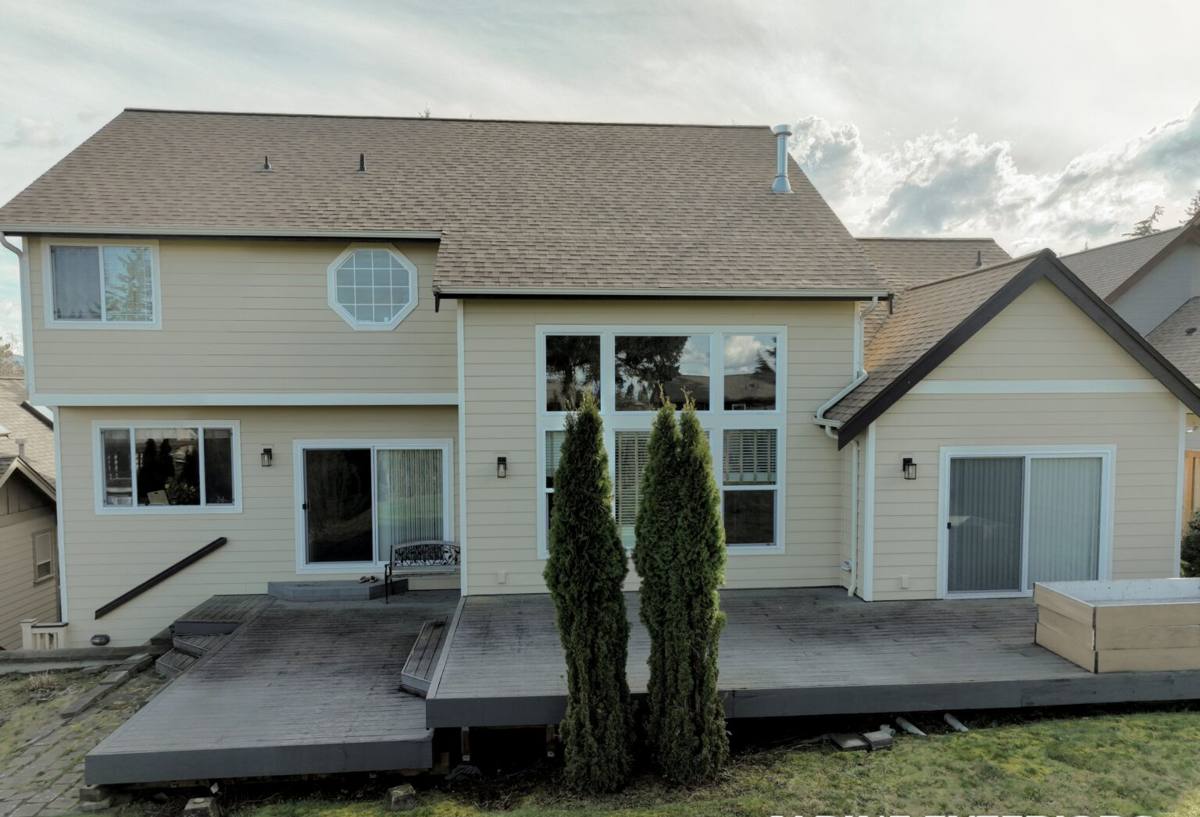
Point Roberts sits on its own peninsula, surrounded by water on three sides, which means every deck out there takes a steadier beating from salt-laden air than a deck ten miles inland in Ferndale or Bellingham. Add Whatcom County's long wet season, driving rain that comes in sideways off the Strait of Georgia, and months of low winter sun that let moss and algae take hold on any shaded or north-facing surface, and you have a recipe for decks that age faster than their owners expect. Fasteners corrode sooner. Ledger boards trap moisture longer. Railings loosen because the wood around the posts stays damp for weeks at a stretch.
None of that means a deck out there is doomed — it means the repair work has to account for conditions a generic "deck fix" checklist doesn't cover. That's the difference between a repair that lasts one more season and one that lasts another decade.
What Salt Air, Rain, and Moss Actually Do to a Deck
Salt Air
Airborne salt accelerates corrosion in anything metal — nails, screws, joist hangers, bolts, and railing hardware. Once a fastener starts rusting, it loses grip strength long before it looks obviously bad. A deck board can appear solid while the screw holding it down has already lost most of its holding power.
Driving Rain
Wind-driven rain doesn't just fall on a deck, it gets pushed sideways into joints, under flashing, and behind ledger boards where the deck attaches to the house. That's the single most common place we find hidden rot, because water gets in and has nowhere to drain or dry out.
Moss and Algae
A long moss season means shaded boards, north-facing stairs, and anything under tree cover stay damp far longer than sun-exposed areas. Moss holds moisture against the wood surface, and it also makes stairs and walking surfaces genuinely slippery — a safety issue as much as a maintenance one.
Signs Your Deck Needs Repair (Not Just a Power Wash)
- Soft or spongy spots when you walk across the decking boards
- Railings or posts that wiggle or flex under hand pressure
- Visible gaps, staining, or dark streaking around the ledger board where the deck meets the house
- Rust stains bleeding out from screw or nail heads
- Stairs that feel uneven or slightly bouncy
- Persistent moss or black algae that comes back within weeks of cleaning
- Cracked, splitting, or cupped boards, especially on the shaded side of the deck
- Fasteners backing out or heads stripped from repeated seasonal movement
Any one of these on its own might just need a targeted fix. Several at once, especially near the ledger board or support posts, usually means it's time for a full structural look before we talk about surface repairs.
What a Correct Deck Repair Actually Involves
A repair that only replaces the boards you can see and skips what's underneath isn't a repair, it's a patch. Here's what we check and address, in order:
1. Structural Frame First
Joists, beams, and posts get inspected for rot, checking especially anywhere water collects or wood touches wood without a gap to dry. Structural members that are compromised get sistered or replaced before anything else happens — cosmetic work on top of a weak frame is wasted money.
2. Ledger Board and Flashing
Given how much driving rain this area sees, the ledger board connection is where we spend real attention. Proper flashing directs water away from the house band joist instead of letting it pool and soak in. If flashing is missing, undersized, or improperly lapped, we correct it as part of the repair rather than just re-sealing over the problem.
3. Fasteners and Hardware
Corroded fasteners get pulled and replaced with hardware rated for coastal and marine-adjacent exposure. This matters more here than in a lot of inland Whatcom County jobs, simply because the air itself is harder on metal.
4. Decking Surface
Individual boards get replaced where cracked, cupped, or rotted. We check board spacing too — gaps that have closed up from swelling restrict drainage and airflow, which speeds up future moss growth and moisture retention.
5. Railings and Guardrails
Loose railings are a safety issue, not a cosmetic one. Posts get re-secured to structural framing, not just to the decking surface, and connections are checked against current code requirements where the repair scope requires it.
Repair or Replace? An Honest Look at the Trade-offs
Not every deck problem needs a full rebuild, and not every deck is worth saving as-is. Here's how we think through it:
| Factor | Repair Usually Makes Sense | Replacement Usually Makes Sense |
|---|---|---|
| Structural frame | Isolated rot in one or two joists/posts | Widespread rot across multiple framing members |
| Ledger board | Flashing issue with sound wood behind it | Rot has spread into the house band joist |
| Decking surface | Scattered bad boards, rest of deck is solid | Most boards are cupped, cracked, or soft |
| Age of deck | Under 15-20 years, built to a reasonable standard | Older deck with outdated fastening or no flashing at all |
| Budget goal | Extend usable life a decade or more affordably | Want a long-term reset and possible layout changes |
We'll always tell you honestly which category your deck falls into. If a repair genuinely covers it, we won't push a replacement — and if the framing is too far gone, we'll explain exactly why patching it would just be spending money to delay the same conversation next year.
Our Process for Point Roberts Deck Repairs
- Inspection — We get under the deck and check framing, ledger, posts, and footings, not just the walking surface.
- Written scope — You get a clear breakdown of what's failing, what's sound, and what each repair option covers, in plain language.
- Materials matched to conditions — Framing, fasteners, and flashing are chosen for salt air and rain exposure, not generic inland specs.
- The repair itself — Structural work first, then surface and railing work, with attention to drainage and airflow so the fix actually holds up.
- Walkthrough — We show you what was done and what to keep an eye on going forward.
Materials That Actually Hold Up Out Here
For framing repairs, properly rated pressure-treated lumber remains the standard — the question is whether it's installed with the right gaps, flashing, and fastener compatibility, since mismatched metals can accelerate corrosion in a coastal environment. For fasteners and hardware, we favor corrosion-resistant coated or stainless options over standard hot-dip galvanized in high-exposure spots, since the cost difference is modest compared to redoing the work in a few years.
On decking surfaces, both quality wood and composite boards can work well here, and each comes with trade-offs worth knowing honestly:
- Wood decking costs less upfront but needs regular cleaning and sealing to resist moss and moisture — skipping that maintenance is what leads to most of the wood repairs we see.
- Composite decking resists moisture and moss buildup better and needs less upkeep, but it costs more initially and still requires a properly built, well-drained frame underneath — composite doesn't fix a bad structure, it just sits on top of it.
We'll walk through which option fits your budget and how much maintenance you actually want to keep up with, rather than steering you toward whichever is easiest for us to install.
Why a Crew That Already Works Point Roberts Matters
Point Roberts is a peninsula with its own logistics — getting a crew, materials, and equipment there and back isn't the same as driving across town in Ferndale. A contractor who already schedules jobs out there factors that travel and timing into your quote up front, instead of tacking on surprise fees or dragging a project out because logistics weren't planned for. We've also seen firsthand how this specific stretch of coastline treats decks over multiple seasons, which shapes real decisions — where we add extra flashing, which fasteners we skip even if they're cheaper, and which framing details matter more here than they would fifteen miles inland.
Hiring locally-experienced also means fewer surprises mid-project. We're not learning how driving rain and salt exposure behave on a Point Roberts deck for the first time on your job.
Keeping a Repaired Deck in Good Shape
Once your deck is repaired, a little seasonal upkeep goes a long way toward avoiding the same problems again:
- Clean moss and algae off boards and stairs at least once a year, more often on shaded sections
- Keep gutters and downspouts clear so water isn't dumping directly onto or near the deck
- Check railings and stair connections for looseness each spring
- Reseal or restain wood decking on the manufacturer's recommended schedule, not just when it looks faded
- Keep an eye on the ledger board area after heavy rain events for any new staining
- Trim back vegetation that shades boards and keeps them from drying out between rains
Staying ahead of these small things is what turns a repair into a deck that lasts.
If your deck in Point Roberts has soft boards, loose railings, or moss that won't quit coming back, we're happy to take a look and give you a straight answer on what it needs. Fill out the form below for a free, no-pressure estimate.