 Ferndale
 Why Point Roberts Wears Out Siding Faster Than Most of Whatcom County
Point Roberts sits on its own peninsula, surrounded on nearly every side by saltwater — Boundary Bay to the east, the Strait of Georgia to the west. That geography is part of what makes the community special, and it's also exactly why siding here takes a harder beating than siding on a home twenty minutes inland. Salt-laden air moves off the water and settles onto exterior surfaces daily, not just during storms. Combine that with the long, wet Pacific Northwest winter and a moss season that can stretch from fall through spring, and you've got a set of conditions that will find every weakness in a siding system within a few years, not a few decades.
Homeowners who've lived in Point Roberts for a while already know the signs: paint that chalks and fades faster than it should, caulk lines that crack early, trim that stays damp long after a storm has passed, and moss creeping up from the shaded, north-facing walls. None of that is bad luck. It's what happens when a siding product or installation wasn't built with this specific exposure in mind.
Salt Air and Slow, Constant Corrosion
Salt air doesn't just affect metal railings and hardware — though it does accelerate corrosion on fasteners, flashing, and trim if the wrong materials are used. It also works on paint films and caulking, breaking down the surface chemistry faster than inland exposure would. On a coastal property, fastener choice and flashing material aren't afterthoughts; they're decisions that determine whether the siding system is still performing well in fifteen years or starting to fail in five.
Driving Rain and a Moss Season That Doesn't Quit
Whatcom County gets its share of wind-driven rain off the water, and Point Roberts catches more of it than most because there's so little land breaking up the wind. Rain that's driven sideways finds its way behind poorly lapped siding, undersized flashing, and gaps around windows and trim. Once moisture gets behind the cladding, the long, mild, damp winters here give mold, moss, and rot plenty of time to take hold before a dry summer stretch can reverse the damage. On shaded walls and roof-adjacent siding, moss can establish itself almost year-round.
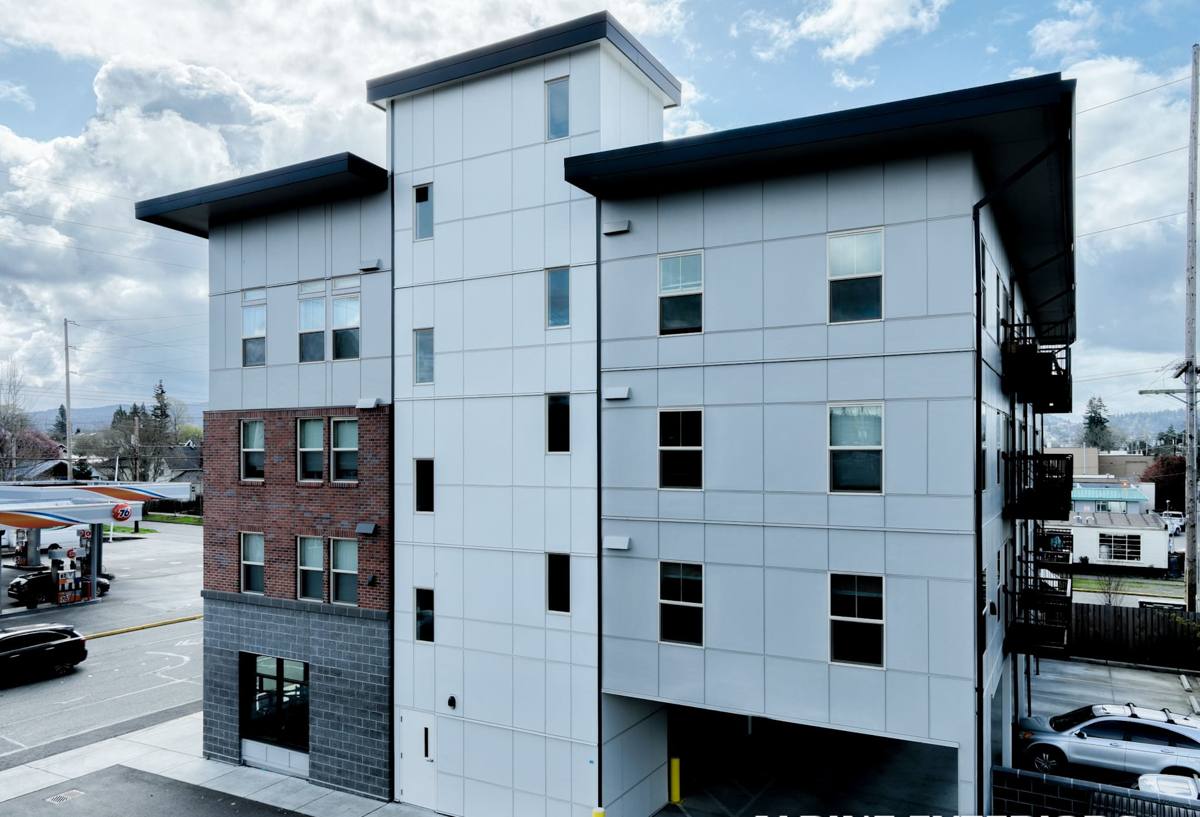
What a Correct Siding Installation Actually Involves Here
A siding job that looks right the day it's finished and a siding job that's still performing well after a decade of Point Roberts weather are not automatically the same job. The difference comes down to details most homeowners never see once the siding is up.
Weather-Resistive Barrier and Drainage Plane
Behind every board, there should be a continuous weather-resistive barrier and a drainage gap that lets any moisture that does get past the cladding find its way back out instead of sitting against the sheathing. On a coastal, high-moisture property, this drainage plane isn't optional — it's the difference between a wall assembly that dries out and one that slowly rots from the inside where nobody can see it until it's expensive to fix.
Flashing and Fastening for Salt Exposure
Every window, door, and horizontal trim transition needs flashing sized and lapped correctly to shed wind-driven rain — and in a salt-air environment, the flashing and fastener materials need to be chosen for corrosion resistance, not just cost. Corrosion-resistant fasteners driven at the correct depth and spacing hold panels tight through decades of wind and temperature swings; the wrong fastener rusts, weeps, and eventually loosens.
Proper Clearances
Siding installed too close to grade, decks, or roof lines traps moisture and gives moss a head start. Manufacturer-specified clearances — typically several inches above grade, decking, and roofing — aren't a suggestion in a climate like this one; they're what keeps the bottom courses of siding from staying damp long after everything else has dried.
Why We Only Install James Hardie Fiber Cement
We don't install vinyl, LP SmartSide, primed spruce, cedar, or other fiber cement brands. That's a deliberate standard, not a limitation in what we're capable of installing. In a climate defined by salt air, driving rain, and heavy moss pressure, the material matters as much as the workmanship.
James Hardie fiber cement is engineered specifically for climate exposure through its HZ product lines, which are matched to regional weather conditions rather than sold as one generic product for the whole country. It's non-combustible, which matters increasingly for insurance and wildfire-adjacent building considerations even in a wet coastal climate. It holds paint and factory-applied ColorPlus finishes far longer than wood or engineered wood products exposed to constant moisture, and it doesn't absorb water the way wood-based sidings do, which is precisely the failure mode that salt air and driving rain exploit fastest.
None of this means other products are worthless — vinyl is inexpensive and low-maintenance in the right setting, and engineered wood has a warmer, more traditional look that some homeowners prefer. But we've made a professional decision to stand behind one system we can install to spec every time and back with a strong transferable warranty, rather than offer several products with different failure points in a climate that doesn't forgive shortcuts.
How Siding Materials Actually Hold Up in This Climate
| Material | Salt air / coastal performance | Moss and moisture behavior | Typical maintenance |
|---|---|---|---|
| James Hardie fiber cement | Non-combustible, holds factory finish well against salt exposure | Doesn't absorb water like wood; resists moss-driven rot with proper clearances | Occasional wash; repaint only if trim is field-painted |
| Vinyl siding | Can warp, fade, and become brittle faster under sun and salt cycling | Panels themselves don't rot, but trapped moisture behind them can damage sheathing unnoticed | Low, but panel replacement can be difficult to color-match after fading |
| LP SmartSide / engineered wood | Edge and seam sealing is critical; salt-driven moisture finds gaps fast | Wood-based core is vulnerable to swelling and rot if moisture penetrates | Regular caulk and paint upkeep; edge sealing checks |
| Cedar / primed wood | Attractive but high-maintenance in salt air; finish breaks down faster | Most susceptible to moss growth and rot without frequent upkeep | Frequent refinishing and moss/mildew treatment |
Our Process for a Point Roberts Project
Point Roberts is part of Whatcom County, but it's geographically separated from the rest of the mainland — reaching it by land means crossing into Canada and back through the border. That's a fact of life for anyone doing work here, and it shapes how we plan a job.
- Assessment and measurement: We evaluate the existing siding, sheathing condition, and any signs of moisture intrusion or moss damage before quoting the job.
- Material and logistics planning: Because crews, tools, and materials headed to Point Roberts have to clear the border, we plan deliveries and crew scheduling in advance rather than making last-minute trips — this keeps the job moving instead of stalling mid-project.
- Permitting: Point Roberts building work falls under Whatcom County's permitting process; we handle what's required for the scope of the job.
- Tear-off or overlay decision: If the existing siding or the sheathing behind it shows moisture damage, we recommend tear-off so we're not sealing a problem inside the wall.
- Weather barrier and flashing installation: This is where a coastal job earns its long-term performance — done right, it's largely invisible once the siding goes up.
- Hardie panel or plank installation: Installed to manufacturer clearance and fastening specifications for this climate zone.
- Final inspection and walkthrough: We review the finished job with the homeowner before considering it complete.
Living With Salt Air and Moss: Maintenance That Actually Matters
Correctly installed Hardie siding is low-maintenance, not no-maintenance. A few habits go a long way in a Point Roberts exposure:
- Rinse salt residue off siding once or twice a year, especially on walls facing open water
- Keep gutters clear so water isn't overflowing and running down the wall face
- Trim back vegetation and tree cover that keeps shaded walls damp and feeds moss growth
- Check caulking around windows, doors, and trim annually and recaulk before gaps open up
- Address any moss on the roof promptly — it spreads to adjacent siding surfaces over time
- Repaint field-painted trim on schedule rather than waiting for visible failure
Why a Crew That Already Works in Point Roberts Matters
A contractor who's never worked past the border doesn't know that a delivery delay can cost you a full day, not an hour, or that certain weather windows here close faster than they do a few miles inland. A crew with Point Roberts experience builds that reality into the schedule from day one instead of discovering it mid-project. It also means we've already seen how siding actually fails in this specific exposure — which walls take the worst of the salt air, where moss establishes first, and which details are worth the extra time during installation. That's knowledge you can't get from a spec sheet; it comes from doing the work here.
Getting Started
If your Point Roberts home has siding that's fading fast, holding moss, or showing soft spots near the bottom courses, it's worth having someone look before those problems spread behind the wall. We offer free, no-pressure estimates for Point Roberts siding installation — reach out through the form below and we'll walk the property with you and give you an honest read on what it needs.