 Ferndale
 Sandy Point sits right on the water at the edge of Ferndale, and that location shapes almost everything about how windows perform there. A lot of the housing stock in this community started out as weekend cabins and seasonal beach houses, many of them converted over the years into full-time residences, which means window openings and framing details here don't always match what a modern manufacturer builds to. Add in direct exposure to the water — salt-laden air, wind with nothing to slow it down before it hits the wall, and rain that comes in sideways as often as it falls straight down — and window installation in Sandy Point ends up being a different job than the same task a few miles inland.
We treat window work in this neighborhood as its own category, not a generic replacement job with a nicer view. The measuring, the flashing sequence, the frame material, and the installation details all have to account for a waterfront exposure that tests every seam a window has. Get those details right and a window installation here can perform for decades. Cut corners on any one of them, and the water finds it.
Why Sandy Point Is a Different Window Job
Three things come up again and again on this stretch of Whatcom County waterfront. First, older cabins and cottages were often framed to whatever dimensions made sense at the time, before manufacturers standardized common sizes, so a like-for-like window swap can turn into a custom order or a reframe once we actually measure the opening. Second, homes converted from seasonal to year-round use frequently need upgrades a weekend cabin never required — better sealing, real energy performance, and hardware that can handle daily use instead of occasional weekend visits. Third, direct waterfront exposure means every opening on the water-facing side of the house takes a harder hit from wind and rain than the same window would on a sheltered inland lot.
None of that makes window installation in Sandy Point unusual for us — it's routine work in this community. It does mean the job starts with an honest, in-person look at the actual opening and the actual exposure, not a phone estimate based on square footage.
What the Climate Does to a Window Installation Here
Salt Air and Corrosion
Being this close to the water puts hardware, fasteners, and lower-grade frame components under more stress than they'd see almost anywhere else in the county. Salt-laden air accelerates corrosion, and it doesn't take long for cheap hardware to start sticking, pitting, or failing outright. Frame material and hardware grade matter more here than they would on a typical inland replacement.
Wind-Driven Rain and Flashing
Rain off the water rarely falls straight down in Sandy Point — wind pushes it sideways into wall assemblies and window openings, which is a fundamentally different load than what most manufacturer installation instructions assume. A flashing detail that would hold up fine on a calm, sheltered lot can fail here specifically because water is arriving from the side, testing laps and seams that gravity alone would never reach.
Moss, Dampness, and a Long Wet Season
Shade, consistent moisture, and mild temperatures add up to a moss and mildew season that can run most of the year on north-facing walls and window trim throughout Whatcom County, and waterfront properties like Sandy Point see it as much as anywhere. Sills, trim, and any spot where water sits instead of draining away become growth surfaces over time — usually starting quietly, well before it's visible from inside the house.
Common Window Installation Projects We See in Sandy Point
- Replacement in older cabins and cottages — matching or upgrading openings in homes built decades ago to dimensions that predate today's standard sizing
- Seasonal-to-year-round conversions — upgrading windows in a home that used to sit empty most of the year and now needs real energy performance and sealing
- Water-facing view windows — larger picture or slider units on the side of the house that takes the most direct wind and rain
- Reframed or resized openings — correcting an opening that's out of square, undersized for a modern unit, or showing signs of past water damage
- Full-house window replacement — aging original single-pane or early double-pane units being replaced as a set for consistency and performance
- New construction and additions — window installation on new builds or additions going up along the waterfront, where flashing and drainage details get built in from the start rather than retrofitted
What a Correct Window Installation Involves
Measuring and Assessment
We start with a field measurement of the actual opening, not a catalog assumption. On older Sandy Point homes this is also where we check for out-of-square or out-of-level conditions, note any existing moisture damage around the frame, and get an honest read on whether the job is a straightforward replacement or something that needs a custom-sized unit.
Removal and Opening Prep
The old window comes out carefully so we can see what's actually going on in the rough opening before a new unit goes in. On waterfront properties, this is frequently where we find out whether years of wind-driven rain have already gotten past the old flashing — soft framing, staining, or a water-resistive barrier that's failed. That gets addressed before anything new is installed, not discovered after the fact.
Flashing and Weatherproofing Sequence
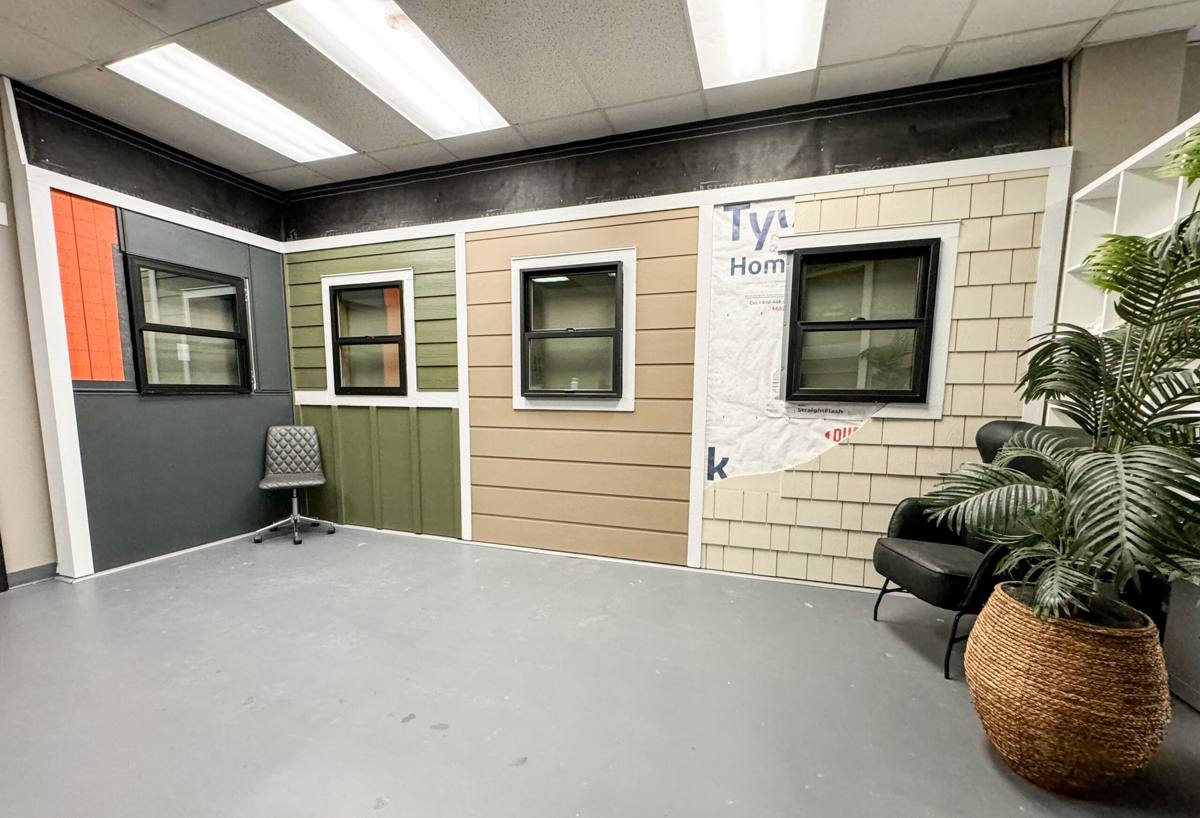
This is the step that matters most given the exposure in Sandy Point. Flashing has to lap correctly with the surrounding house wrap and siding so water is directed out and away from the opening, not trapped behind it. Every seam gets sealed with materials rated for sustained moisture exposure. We treat this as standard practice on every window we install here, not an upgrade homeowners have to ask for.
Setting, Shimming, and Sealing
A window has to be set plumb, level, and square, then shimmed correctly so it operates smoothly and doesn't put uneven stress on the frame. Fasteners and sealants are chosen for coastal exposure, since standard hardware corrodes faster this close to the water.
Trim and Finish Integration
New windows in Sandy Point are often on visually prominent, water-facing walls, so the trim and finish work needs to tie in cleanly with the surrounding exterior rather than looking added on.
Practical Checklist Before You Move Forward
- Confirm the opening was field-measured in person, not estimated from old plans or a rough guess
- Ask what the flashing plan looks like for a water-facing opening specifically
- Get a realistic lead time in writing, especially for any custom-sized units
- Ask what hardware and fastener grade is being used given the salt air exposure
- Confirm what's covered under warranty — the window unit and the installation labor are usually separate
- Ask how the new trim will be matched to the rest of the exterior
Frame Materials for This Exposure
We install vinyl and fiberglass window systems suited to a wet, salt-exposed marine climate, and we'll walk through the honest trade-offs for your specific opening rather than defaulting to whichever option is fastest to install.
| Frame Material | Strengths in Sandy Point | Trade-Offs to Consider |
|---|---|---|
| Vinyl | Won't rot, resists moisture well, generally the most affordable option | Fewer color options; can flex slightly on very large units |
| Fiberglass | Very dimensionally stable across temperature swings, holds paint if a custom color is wanted | Higher upfront cost than vinyl |
| Wood-clad | Warm interior appearance some homeowners prefer | Exterior cladding and seals need to be flawless in this climate, or moisture works in behind the clad exterior |
| Aluminum | Strong and slim sightlines for larger view windows | Conducts heat and cold readily unless thermally broken; more prone to condensation without it |
For most water-facing openings in this neighborhood, vinyl or fiberglass frames with corrosion-resistant hardware give the best balance of moisture resistance and low upkeep. Wood-clad and aluminum both still have a place depending on the look and structural goals for a specific opening — we'll talk through what fits your house rather than steering every job toward the same answer.
Our Process, Start to Finish
- On-site assessment — we measure the opening, check the surrounding framing and existing flashing, and evaluate the specific exposure that wall faces
- Honest recommendation — standard replacement, custom order, or opening repair, explained with the reasoning behind it
- Ordering and lead time — a realistic timeline, especially if the opening needs a custom-sized unit
- Removal and opening prep — the old window comes out carefully, and any hidden framing or flashing issues get addressed before the new unit goes in
- Installation and flashing — the new unit is set, shimmed, and flashed to a sequence built for its exposure and orientation
- Trim and finish — exterior trim is integrated to match the surrounding siding and architecture
Window Installation Cost Factors in Sandy Point
| Factor | What It Affects | Why It Matters Here |
|---|---|---|
| Opening size and standard vs. custom fit | Material cost and lead time | Older cabins often need custom-sized units, which cost more and take longer to arrive |
| Frame material | Upfront cost and long-term upkeep | Salt air rewards corrosion-resistant materials even at a higher initial price |
| Condition of the existing opening | Repair costs before the new window goes in | Wind-driven rain can hide moisture damage behind older flashing until the window comes out |
| Number of windows and site access | Total labor and staging time | Waterfront lots can add setup time depending on access and site layout |
| Glazing package | Energy performance and condensation resistance | Year-round Sandy Point homes benefit more from upgraded glazing than seasonal-use cabins do |
What actually moves price on most jobs in this neighborhood is fairly consistent: how many windows are being replaced together, whether any are custom-sized, the condition of the existing openings, and the frame and glazing package chosen. We won't quote a number without seeing the openings in person, but we'll walk through which of those factors apply to your project before you commit to anything.
Why a Local Sandy Point Crew Matters
Manufacturer installation guidance is written for average conditions in a moderate climate, and Sandy Point's direct waterfront exposure rarely matches that description. A crew that has actually worked windows on this stretch of Ferndale's coastline knows which parts of standard installation guidance are non-negotiable here and where extra time on flashing or hardware selection is worth it even when it isn't strictly required somewhere calmer and drier.
That experience shows up in decisions that don't come up in a sales pitch — how much lap a flashing course needs on a water-facing wall, which fastener grade actually holds up to salt air over years instead of months, and when an older opening needs real repair instead of a quick patch before a new window goes in. Those are the details that decide whether a window installation is still performing cleanly in fifteen years or showing drafts and soft trim in five.
What to Ask Before Hiring for Window Work in Sandy Point
- Ask how they sequence flashing for a water-facing opening specifically, not just a generic answer
- Confirm current Washington contractor licensing and active liability insurance
- Ask what hardware and fastener grade they use given the coastal exposure
- Get a written scope of work and a realistic lead time before signing anything
- Ask how the window unit warranty and the installation warranty are each handled
If you're weighing new windows for a Sandy Point cabin, a full-house replacement, or an honest second opinion on an opening that's showing drafts or moisture, it's worth having someone look at the actual windows before you start pricing units. We offer free, no-pressure estimates for window installation in Sandy Point and throughout Ferndale — use the form below to get a time on the schedule.