 Ferndale
 Building a Deck That Can Actually Handle Sudden Valley
Sudden Valley sits in a part of Whatcom County where mature tree cover, lake-adjacent moisture, and a long, damp season all work against an outdoor structure. A deck built here without accounting for those conditions doesn't fail dramatically — it just ages fast. Boards stay damp longer than they should, hardware corrodes ahead of schedule, and shaded sections turn slick with moss well before the rest of the yard notices spring. We build decks specifically with that pattern in mind, not a generic design pulled from a catalog meant for a drier climate.
This page covers what actually matters for a deck going into a Sudden Valley lot near Ferndale — the material choices, the structural details most homeowners never think to ask about, and the maintenance habits that keep a deck solid for the long haul instead of the first few years.
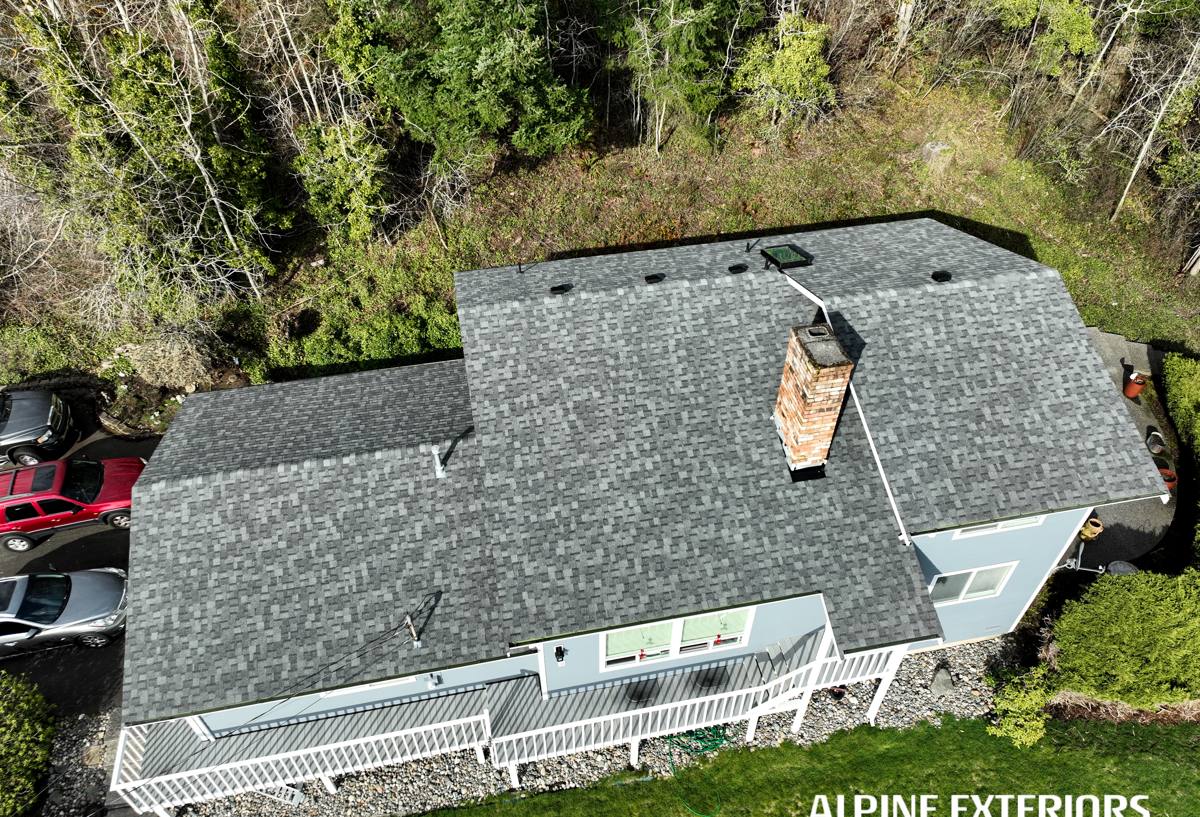
What Whatcom County Weather Does to a Deck Over Time
The Pacific Northwest's marine climate is gentler on siding and roofing than harsher inland climates, but it's genuinely tough on horizontal wood surfaces. A few things stack up against a deck here specifically:
- Driving rain gets pushed sideways into end grain, fastener holes, and any spot where two boards meet — this is where rot almost always starts first.
- Moss and algae take hold on shaded or north-facing sections, holding moisture against the wood surface and turning the deck slick underfoot.
- Salt-laden air, common across Whatcom County's marine climate, accelerates corrosion on exposed screws, joist hangers, and railing hardware faster than most homeowners expect.
- Freeze-thaw swings during the shoulder seasons open up small cracks in fasteners and finishes, which then let in more water the next time it rains.
Why Tree Cover Makes It Worse
Sudden Valley's wooded lots are part of what makes the area appealing, but heavy canopy also means a deck underneath it dries slower after every rain. Less direct sun and airflow means more time spent damp, which is exactly the condition moss, algae, and early wood decay need to get established. It doesn't mean a deck can't work under trees — it means the design and material choice have to account for it instead of ignoring it.
Choosing Decking Material That Holds Up Here
There's no single "best" decking material — there's the right material for a given budget, sun exposure, and how much upkeep a homeowner actually wants to do. Here's how the common options compare for a shaded, damp Whatcom County lot:
| Material | Moisture Behavior | Maintenance | Typical Lifespan |
|---|---|---|---|
| Pressure-treated lumber | Resists rot when properly sealed; end grain and cut edges are vulnerable if not treated after cutting | Needs cleaning and resealing every 1-2 years, especially in shade | 15-20 years with upkeep |
| Cedar | Naturally rot-resistant but softer surface; holds moisture in shaded spots more than composite | Regular sealing and moss treatment needed to keep its appearance | 15-20 years with consistent care |
| Capped composite | Doesn't absorb moisture into the board core; surface sheds water well | Occasional washing; no sealing or staining required | 25+ years, backed by manufacturer warranty |
For sections that get real sun, wood is a reasonable and attractive option if the homeowner is willing to keep up with sealing. For shaded, damp corners of a lot — which describes a lot of Sudden Valley — capped composite tends to be the more sensible choice long-term, since it isn't relying on a maintenance schedule to stay ahead of rot. We're happy to walk through the honest trade-offs for a specific lot rather than push one material across the board.
What's Underneath Matters More Than What's On Top
The decking boards get all the attention, but the framing underneath is what determines whether a deck is safe and long-lasting. A few details we don't skip:
- Ledger flashing: where the deck attaches to the house, proper flashing keeps water from working its way behind the siding and into the band board — one of the most common places we find hidden rot on older decks.
- Corrosion-rated hardware: modern pressure-treated lumber is corrosive to standard steel fasteners, and that effect is compounded by our marine air. We use hardware rated for ACQ-treated lumber so joist hangers and structural screws don't corrode from the inside out.
- Footings sized for local soil and frost depth: footings that are too shallow or undersized shift over time, which shows up as a bouncy or uneven deck years later.
- Airflow underneath: proper joist spacing and clearance let air move under the deck so it can actually dry out between rain events instead of staying damp indefinitely.
Site-Specific Considerations for a Sudden Valley Lot
Every deck we build gets designed around the actual lot, not a standard template. In this neighborhood, that usually means thinking through:
Tree Canopy and Debris
Overhanging branches drop needles and leaves that collect in gaps between boards and against the house, holding moisture right where you don't want it. Where possible, we design the layout and gap spacing to make it easy to sweep debris through rather than letting it pack in.
Grading and Drainage
On sloped or lake-adjacent lots, where water sheds around and under a deck matters as much as the deck itself. We check that grading directs water away from footings and the house foundation rather than pooling underneath the structure.
Privacy and Setbacks
Wooded lots often come with specific setback and tree-protection rules. We confirm those details as part of the permitting process so the design doesn't run into problems after the framing is already up.
How Our Deck Building Process Works
- On-site assessment: we look at sun exposure, tree cover, drainage, and the condition of anything being replaced.
- Design and material walkthrough: honest discussion of options and trade-offs based on your budget and how much maintenance you want to take on.
- Permitting: we handle the permit application and inspection scheduling with the local jurisdiction.
- Removal of the old structure, if applicable, including a check for hidden rot at the ledger or framing.
- Framing built to code, with corrosion-rated hardware and proper flashing at every water-entry point.
- Decking, railing, and stair installation, followed by a final walkthrough so you understand what maintenance the material you chose actually needs.
Permits and Code Basics in Whatcom County
Most attached or elevated decks require a building permit, and the requirements — guardrail height, baluster spacing, footing depth, ledger attachment method — are set by the local building department rather than being optional details. Requirements can vary depending on deck height and whether it's attached to the house, so we confirm specifics with the jurisdiction for your project rather than assuming. Handling this correctly up front avoids problems at resale and keeps the structure genuinely safe, not just code-adjacent.
Keeping a Sudden Valley Deck Solid for the Long Haul
A well-built deck still needs some basic upkeep, especially under tree cover. This is the short version of what actually matters:
- Clear leaves and needles off the deck surface and out of board gaps each fall, before they sit wet all winter.
- Clean moss and algae with a proper deck cleaner rather than an aggressive pressure wash, which can damage wood fibers or composite surfaces.
- Reseal or restain wood decking on the schedule the product actually needs — for most wood, that's every one to two years in a shaded Whatcom County lot.
- Check visible fasteners and railing hardware periodically for rust or corrosion, especially near ground level.
- Confirm ledger flashing stays intact where the deck meets the house — this is the single most common spot for hidden rot to start.
- Trim back overhanging branches so more air and light can reach the deck surface.
Why It Matters to Hire a Crew That Already Works This Neighborhood
A deck design that works fine on an open, sunny lot can be the wrong call on a shaded, wooded Sudden Valley property, and the reverse is also true. A crew that already builds regularly in this part of Ferndale and Whatcom County knows which materials and hardware actually hold up under the local tree cover and marine air, what the permitting process looks like locally, and where past decks in the area have run into trouble. That local familiarity shows up as fewer surprises during the build and a deck that's still solid well past the point a poorly-matched one would need major repairs.
If you're planning a new deck or need to replace one that's showing its age, we're happy to take a look and talk through honest options for your specific lot — no pressure, no obligation. Fill out the form below for a free estimate.