 Ferndale
 A Ferndale-Based Crew That Already Works Sumas
We're based in Ferndale, and our territory runs from the salt air along Bellingham Bay out to inland communities like Sumas, near the Canadian border. That range matters more than it sounds. A crew that only ever sides homes right on the water tends to over-build for salt exposure and under-think what a wetter, more enclosed inland lot actually needs. A crew that only works inland can miss how much marine air still pushes into this whole stretch of Whatcom County, salt and all, on the weather systems that move through. Working both ends of that territory regularly is what lets us spec a Sumas job correctly instead of applying a one-size-fits-all approach built for somewhere else.
This page is specifically about James Hardie fiber cement siding for Sumas homes — not a general overview of every exterior service, just the one product we install and what doing it right looks like on a property in this part of the county.
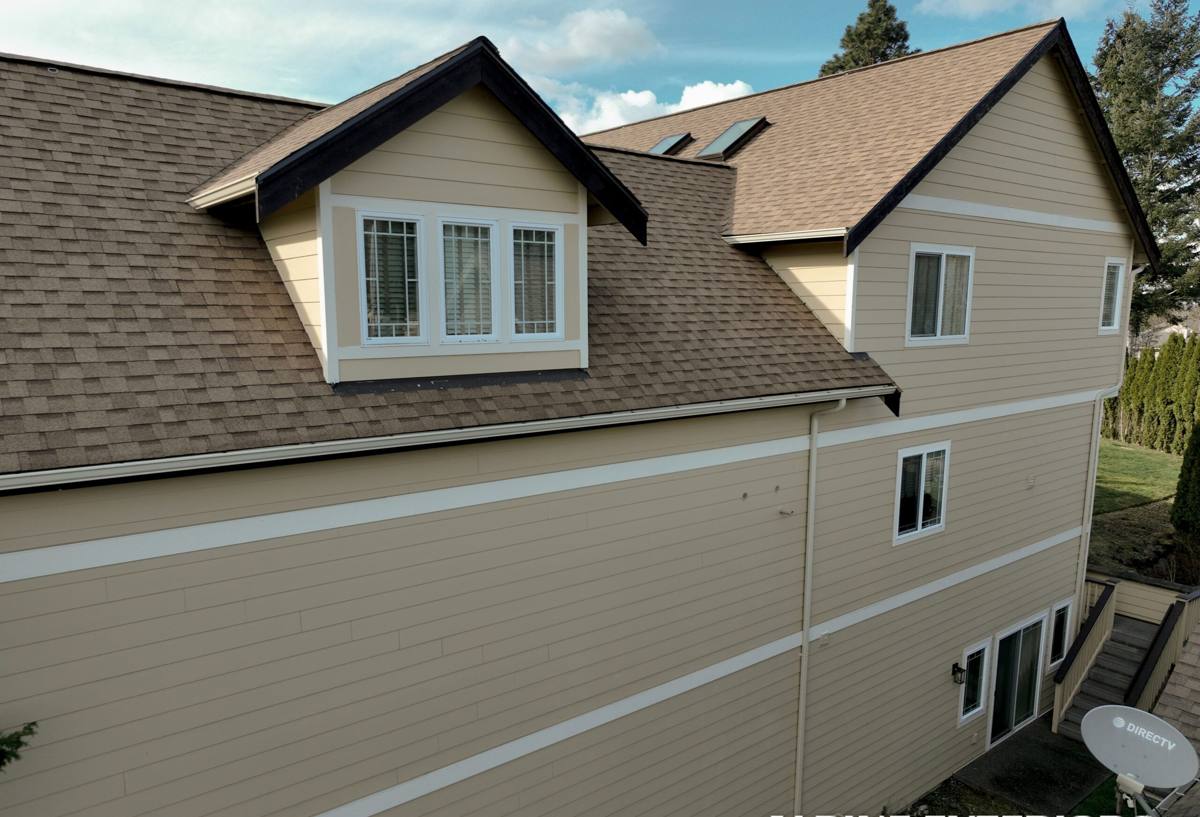
What a Sumas Roofline and Wall Actually Deal With
Three things define exterior wear here, and they compound rather than acting alone. Driving rain moves through sideways more often than straight down, which means it finds seams, corners, and butt joints that a straight-down rain would never reach. That same weather system carries salt-laden marine air inland off the water, so even a property with no direct view of the bay still sees siding, fasteners, and trim exposed to airborne salt over the life of the material. And a long, mild, damp season keeps shaded and north-facing walls wet enough, long enough, for moss and mildew to take hold and stay there for much of the year rather than drying out between storms.
None of those three things is dramatic on its own. The problem is what they do together, year after year, to a wall assembly that wasn't detailed for it. Paint chalks and fails early. Wood-based trim swells and splits at end grain. Caulk that's doing the job flashing should be doing eventually opens up. By the time a homeowner notices a stain or a soft spot, water has usually been getting behind the siding for a while.
Why This Isn't Just a Coastal Problem
It's tempting to think inland means sheltered, but Sumas gets the same storm systems as the rest of Whatcom County, just filtered through more open, low-lying terrain before they arrive. The rain doesn't get gentler by the time it reaches an inland lot, and the moss doesn't care how far you are from the water. What changes inland is mostly wind direction and how quickly a property drains, not whether the underlying climate risk is real.
Why James Hardie Fiber Cement Is the Right Answer Here
We install James Hardie fiber cement siding exclusively — no LP SmartSide, no vinyl, no Cemplank, no Allura, no primed spruce or cedar. That's a professional standard, not a sales pitch, and it comes from watching how different materials actually age under this specific combination of rain, salt, and moss exposure.
Non-Combustible Core
Fiber cement doesn't burn or feed a fire the way wood-based siding can. That matters for household safety and often for insurance underwriting, and it's true everywhere Hardie goes on a house — climate aside.
Climate-Engineered HZ Formulations
Hardie doesn't build one product for the whole country. Its HZ5 formulation is engineered for regions with sustained moisture and real temperature swings, which is a closer match to Sumas than a generic formulation meant for a dry, mild climate. That engineering shows up in how the material handles repeated wetting and drying without swelling, cupping, or losing dimensional stability.
Factory-Applied ColorPlus Finish
The color coat is baked onto the board at the factory under controlled conditions, not brushed on in the field after installation. That finish resists fading and chalking far longer than site-applied paint, and it holds up better against the kind of airborne salt and grime that settles onto every wall in this part of the county over time.
A Warranty That Means Something
Hardie backs its products with a solid transferable warranty, provided installation follows spec. That last part is the catch worth understanding: the warranty protects the material, but it doesn't cover a bad installation, which is exactly why the install itself matters as much as the product choice.
What Correct Installation Requires on a Sumas Home
Buying the right material and then installing it poorly gets a homeowner the worst of both worlds — Hardie-level cost with none of the Hardie-level performance. On a property dealing with driving rain, salt air, and a long wet season, installation detail is where a job actually succeeds or fails.
| Installation Detail | What It Does | Why It Matters in Sumas |
|---|---|---|
| Drainage gap behind the siding | Lets any moisture that gets past the surface drain and dry out instead of sitting against the sheathing | A long wet season means anything that stays damp behind the wall stays damp for weeks, not days |
| Correct fastener type and pattern | Holds siding tight through wind and temperature swings without pulling loose | Salt-laden air accelerates corrosion on the wrong fastener, and driving rain tests every fastener line directly |
| Lapped, sealed joints — not butted and caulked | Sheds water at seams instead of relying on a bead of caulk to hold a gap closed | Caulk is a maintenance item, not a permanent seal; a joint that depends on it will eventually fail |
| Proper grade clearance | Keeps the bottom edge of the siding from sitting in standing moisture or splash-back | Prevents the wicking and rot that shows up first at the lowest course on a damp property |
| Flashing at windows, doors, and penetrations | Directs water around openings instead of through them | Wind-driven rain finds gaps at openings faster than anywhere else on the wall |
Every one of these is a standard Hardie installation requirement, not something specific to us. The difference is whether a crew actually follows it on every course of every wall, or treats it as optional when the schedule gets tight.
Mistakes We Find Tearing Off Other Installs
- No drainage gap behind the siding, leaving moisture trapped directly against the sheathing
- Butted joints sealed with caulk instead of properly lapped and flashed
- Fasteners driven too high or too low on the board, or the wrong fastener type for the substrate
- Siding installed tight to grade with no clearance, wicking ground moisture up into the bottom courses
- Trim and window flashing installed out of sequence with the house wrap, creating a path for water to get behind it
- Cut edges of ColorPlus boards left unsealed, exposing raw fiber cement to moisture at every field cut
How We Approach a Sumas James Hardie Job
- Walk the property and assess the existing siding, wall assembly, and any visible moisture or moss damage
- Confirm the right HardiePlank, HardiePanel, or HardieShingle product and profile for the home's style and exposure
- Tear off old siding and inspect the sheathing underneath for hidden rot before anything new goes up
- Install house wrap, flashing, and a proper drainage gap before the first course of siding goes on
- Fasten and lap every course to spec, sealing cut edges and finishing trim to match
- Walk the finished job with the homeowner and explain what was done and why
What a Job Like This Costs
| Factor | What It Affects | Sumas-Specific Note |
|---|---|---|
| Tear-off vs. new construction | Labor scope and disposal | Tear-off jobs often reveal hidden moisture damage from a long wet season that needs repair before new siding goes on |
| Sheathing and framing condition | Repair costs before siding installation | Sustained damp conditions can rot sheathing behind failed caulk joints or missing flashing |
| Product line and profile | Material cost per square foot | Lap siding, panel siding, and shingle profiles price differently and suit different home styles |
| Trim complexity | Labor time around windows, corners, and rooflines | More openings mean more flashing detail, which takes real time to do correctly |
| Site access | Staging and equipment needs | Rural and larger lots common around Sumas can mean different staging than a tight in-town lot |
Most full re-side projects land somewhere in the five-figure range, with the exact number driven by square footage, trim detail, and how much substrate repair a tear-off uncovers. We don't quote off a generic price sheet — we walk the property first and give a real number based on what's actually there.
Living With Hardie Siding on a Sumas Property
Fiber cement is low-maintenance compared to wood-based products, but low-maintenance isn't the same as no-maintenance, especially with this much moss pressure and moisture in the air.
- Rinse siding annually to clear salt film, pollen, and organic buildup before it becomes a growth medium for moss
- Check caulk lines at trim and penetrations each year — caulk is a wear item even on a correctly installed home
- Keep gutters clear so overflow doesn't wash directly down the wall face during heavy rain events
- Trim back vegetation and tree cover that keeps a wall shaded and damp longer than it needs to be
- Watch north-facing and shaded walls specifically, since that's where moss and mildew take hold first
Why Hiring a Crew That Already Works Sumas Matters
Product specs and warranty paperwork look the same no matter who installs them. What actually determines how a Sumas home performs over the next twenty years is whether the crew on the ladder understands this specific combination of driving rain, salt-laden air, and moss season well enough to detail every joint, gap, and fastener line accordingly — not just follow a generic install sheet written for a milder climate somewhere else. That's the difference between a Hardie installation that earns its warranty and one that technically has the right material on the wall but was never really built for where it's standing.
If you've got a Sumas home that needs new siding, or you just want an honest look at whether your current siding is holding up the way it should, we're glad to take a look. Reach out using the form below for a free, no-pressure estimate.