 Ferndale
 Windows Built for Bellingham's Weather, Not Just Its Openings
Bellingham sits close enough to the water and low enough in elevation that its homes take a specific kind of beating — salt-tinged air drifting in off Bellingham Bay, long stretches of driving horizontal rain, and a moss season that can run from October well into spring. Windows here don't fail the way they do in drier climates. They fail at the seams, at the sill, and at the frame corners, where moisture finds its way in slowly, over years, until a homeowner notices soft trim, fogged glass, or a draft that wasn't there last winter.
"Custom windows" doesn't mean fancy shapes or unusual glass patterns, though we do that too. Most of the custom work we do in Bellingham is about getting the size, the material, and the installation detail right for a specific opening in a specific house — especially older homes in and around the city where original openings rarely match today's standard sizes.
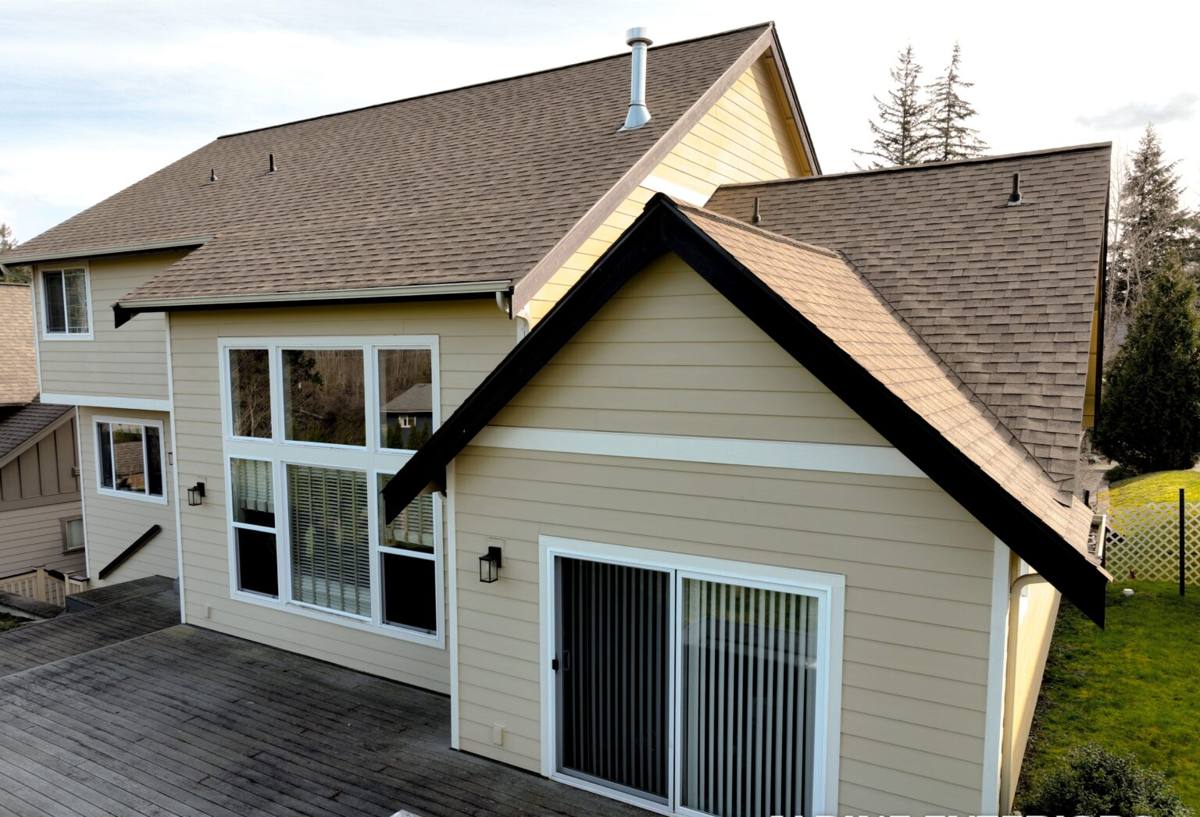
What Makes a Window Job "Custom" in This Area
Standard, off-the-shelf window sizes work fine in a lot of newer construction. But a meaningful share of Bellingham's housing stock predates modern manufacturing standards, which means openings are often slightly out of square, a fraction of an inch off from any stock size, or framed for a style of window that isn't made anymore. Custom sizing means we measure the actual opening — not a catalog number — and either order a window built to that exact dimension or fabricate the transition so a near-standard size fits cleanly without gaps packed full of trim and caulk to hide the mismatch.
Common reasons a Bellingham home needs a custom approach
- Older construction with settled or slightly out-of-square framing
- Bay, bow, or angled openings that don't match stock window geometry
- Additions or remodels where wall depth differs from the original structure
- Replacing a window style (like a large picture window) that's no longer manufactured in that size
- Matching sightlines and trim on a home where only some windows are being replaced
Signs Your Current Windows Are Losing the Fight Against the Climate
Because Whatcom County's moisture problems build slowly, most homeowners don't realize a window has failed until it's well past the point of a simple fix. These are the warning signs we see most often on service calls in and around Bellingham:
- Fogging or a milky haze between panes — the seal has failed and the gas fill (or air) is exchanging with outside moisture
- Soft, discolored, or bubbling trim and sill wood, especially on north- and west-facing walls that catch the most driving rain
- Visible moss or dark streaking on the frame or the siding directly above and below the window
- A draft you can feel with your hand near the frame, even with the window fully latched
- Difficulty opening, closing, or locking — often a sign the frame has swollen or shifted
- Rising heating bills without a clear explanation elsewhere in the house
Any one of these on its own might not mean full replacement. Several together, especially on a window that's original to the house, usually does.
Frame and Material Options — What Actually Holds Up Here
We install a range of frame materials, and the right choice depends on the exposure of that specific wall, the home's style, and the homeowner's budget. Salt air and constant rain rule out some choices we'd happily recommend in a drier inland market.
| Frame Material | How It Handles This Climate | Maintenance | General Cost Position |
|---|---|---|---|
| Vinyl | Good moisture resistance, won't rot or corrode; performs well in most Bellingham exposures | Low — occasional cleaning | Lower |
| Fiberglass | Excellent stability in wet, temperature-swinging conditions; holds paint well if color changes later | Low | Higher |
| Wood-clad | Good insulating value and traditional look, but the exterior cladding must be detailed carefully to keep water off the wood core | Moderate — watch caulk lines and cladding seams | Higher |
| Aluminum | Durable but conducts cold and can corrode near salt air over time without proper coatings | Moderate | Lower to mid |
For most Bellingham homes with direct weather exposure, we steer people toward vinyl or fiberglass. That's not a knock on wood-clad windows — they can look excellent and perform well for decades — but they demand more attentive upkeep near the water, and we'd rather set that expectation honestly up front than have a homeowner surprised five years in.
Glass Packages That Make Sense for the PNW
Frame material gets most of the attention, but the glass package matters just as much for comfort and moisture control.
- Double-pane with Low-E coating and argon fill — the standard, solid choice for most Bellingham homes; blocks a meaningful share of heat loss and UV without a big price jump
- Triple-pane — worth considering for north-facing rooms, homes near open water with more wind exposure, or anyone prioritizing sound dampening from traffic or weather
- Warm-edge spacers — the material separating the panes at the edge of the glass; better spacers reduce condensation risk at the frame perimeter, which matters directly for moss and mildew prevention
Why the Installation Matters More Than the Window Itself
A high-quality window installed poorly will fail faster than a mid-grade window installed correctly. In a climate that throws driving rain at a wall for days at a time, the flashing and sealing details around the window are doing as much work as the window unit itself.
Correct installation in this region includes:
- Proper weather-resistive barrier integration so water is directed out and down, never trapped behind the wall
- Sill pan flashing under the window opening — a step that's easy to skip and impossible to see once the trim goes back on, but it's the difference between water draining out and water pooling in the framing
- Correctly lapped flashing tape at the head, jambs, and sill, in the right order, so each layer sheds water onto the one below it
- Backer rod and quality exterior sealant at the trim line, sized and applied correctly rather than just caulked over gaps
- Shimming and squaring the unit so it operates smoothly and seals evenly for its full lifespan, not just on install day
This is the part of the job a homeowner can't inspect after the fact without opening up the wall — which is exactly why it matters who's doing the work, not just which window they're selling you.
Our Process for a Bellingham Window Project
1. On-site assessment
We look at each opening individually — framing condition, current moisture damage, sun and rain exposure, and how the window fits into the rest of the home's siding and trim plan. This is also when we flag anything custom-sized or out of square.
2. Material and glass selection
We walk through frame and glass options honestly, including trade-offs, so the decision matches the wall's exposure and the household's budget — not a one-size-fits-all upsell.
3. Precise measurement and ordering
Custom openings get measured to the actual dimension, not rounded to the nearest stock size. This is where a lot of the "custom" work actually happens, long before installation day.
4. Removal and moisture check
When we pull the old window, we inspect the framing underneath for hidden rot or moisture intrusion before anything new goes in. Catching a problem here, while the wall is open, is far cheaper than catching it later.
5. Installation with full flashing detail
Sill pan, flashing sequence, insulation, and sealant — done in the order that actually sheds water in this climate, not just what's fastest.
6. Final check and cleanup
We test operation, check the seal, and make sure the job site is left clean. Any trim or siding disturbed during the install gets properly finished, not just patched.
Why Hiring a Crew That Already Works Bellingham Matters
Window installation isn't identical everywhere. A crew that mostly works drier inland markets can install a technically fine window and still get the flashing sequence wrong for a wall that faces years of near-constant rain and salt-laden air. Working regularly in Whatcom County means we've seen how these specific conditions show up in real houses over time — where moss tends to establish, which exposures fail first, and which installation shortcuts cause problems five years down the road instead of five days.
It also means we're a known, reachable local business if a question comes up after the work is done — not a crew that was in town for one job and gone.
What This Typically Costs
Every project is priced on the specifics — size, quantity, material, glass package, and how much flashing or framing repair is needed — so we won't quote a number without seeing the openings. In general, expect vinyl double-pane replacements to sit at the lower end of the range, fiberglass and triple-pane glass to push it higher, and true custom sizing or framing repair to add to the total. The honest answer is that a written, itemized estimate after an on-site look is worth far more than a ballpark figure pulled from a website.
If your Bellingham home has windows showing any of the signs above, or you're planning ahead for a remodel, we're glad to come take a look. The estimate is free, there's no pressure, and you'll get a straight answer about what your windows actually need — just fill out the form below to get started.