 Ferndale
 Roofing in a Waterfront Climate
Birch Bay sits right on the water, and that changes what a roof has to deal with compared to a home a few miles inland. Salt-laden air moves off the bay and settles on every exposed surface, including your shingles, flashing, and fasteners. Add in wind-driven rain that comes in sideways during winter storms, plus a moss and algae season that can stretch nine months or more in this part of Whatcom County, and you've got a roof that works harder than most people realize. An asphalt shingle roof can absolutely hold up here for decades, but only if it's specified and installed with these conditions in mind from the start.
We've installed and repaired enough roofs around Birch Bay to know which shortcuts cause callbacks two winters later. This page walks through what that actually means in practice — not generic roofing advice, but what matters specifically for homes exposed to bay-front weather.
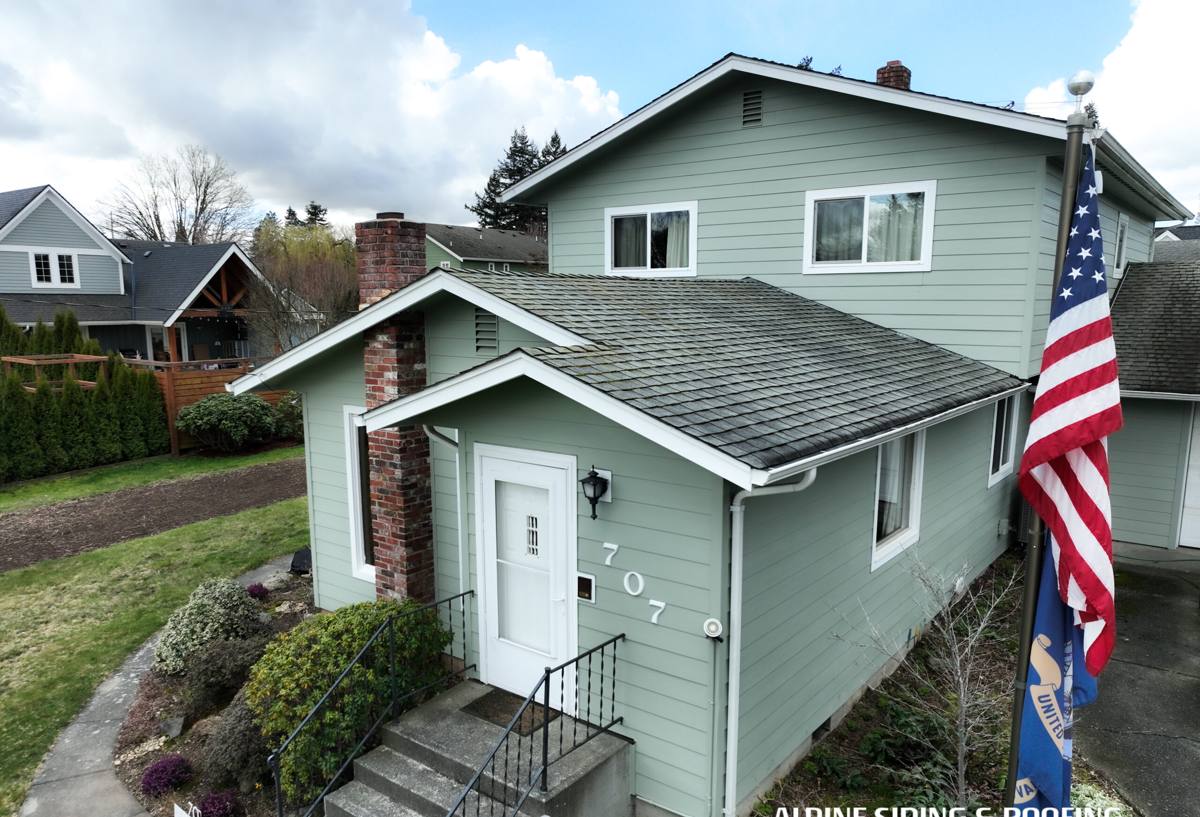
What Salt Air and Driving Rain Actually Do to a Roof
It helps to understand the mechanisms, because they drive most of the decisions below.
Salt Exposure
Airborne salt accelerates corrosion on any exposed metal — nail heads, drip edge, flashing, and vent stacks. Once corrosion starts on a fastener, it can loosen its grip on the shingle above it, and a loose shingle in a windstorm is how leaks start. This is why fastener choice and flashing material matter more here than they would on a roof set back from the water.
Wind-Driven Rain
Ordinary rain falls straight down and mostly runs off. Wind-driven rain gets pushed sideways and upward under shingle edges, into gaps at valleys, and around penetrations like chimneys and vents. A roof that would be watertight in calm rain can still leak in a bay-front windstorm if the underlayment, flashing, and shingle overlap weren't detailed for that kind of weather.
Extended Moss Season
Moss and algae need shade, moisture, and time — and Birch Bay roofs, especially on the north-facing or tree-shaded sides, get plenty of all three for most of the year. Left alone, moss holds moisture against the shingle surface, works its way under tabs, and can lift shingles enough to let water in even without an active storm.
Choosing the Right Asphalt Shingle for This Environment
Not every asphalt shingle product is a good fit for a bay-front home. We generally steer Birch Bay homeowners toward algae-resistant, higher wind-rated shingles, and away from budget-grade products that aren't built for sustained moisture and salt exposure. The table below is a general guide — exact specs vary by manufacturer and product line, so we'll go over the specific options during your estimate.
| Shingle Type | Typical Wind Rating | Algae Resistance | Best Fit |
|---|---|---|---|
| Standard 3-tab | Lower end of the range | Often none or limited | Budget projects on sheltered, inland roofs |
| Architectural / laminate | Mid to high range | Usually available as an upgrade | Most Birch Bay homes — our typical recommendation |
| Premium / designer laminate | High range | Standard on most lines | Exposed, high-wind, or high-visibility roofs |
Algae-resistant shingles use copper-containing granules that slow the growth of the algae responsible for the dark streaking you see on older roofs. It's not a permanent moss-proofing, but it meaningfully extends the time before a roof needs cleaning or treatment — a real advantage in a climate where moss has all season to establish itself.
What Correct Installation Looks Like Here
The shingle itself is only part of the system. Most leaks we get called out to repair trace back to underlayment, flashing, or ventilation details — not the shingles failing on their own. For a Birch Bay roof, our standard includes:
- Self-adhering ice-and-water underlayment at eaves, valleys, and around all penetrations — the areas most exposed to wind-driven rain
- Corrosion-resistant fasteners and flashing, chosen specifically to hold up against salt air rather than standard-grade hardware
- Properly lapped and sealed step flashing at any wall or chimney intersection, not just caulk over old flashing
- Balanced intake and exhaust ventilation, so moist air isn't trapped in the attic where it can condense and accelerate deck rot
- Correct nailing pattern and placement per manufacturer specs — high wind-rating warranties are void if the shingle isn't fastened exactly as required
- Drip edge and starter strip installed at every eave and rake, giving wind-driven rain nowhere to get underneath the first course
None of this is exotic. It's the difference between a roof installed to a manufacturer's minimum spec and one installed to hold up against the specific weather Birch Bay sees every winter.
Our Process for a Birch Bay Roofing Project
- On-site inspection. We look at the existing roof, decking condition, ventilation, and any signs of past leaks or moss damage before quoting anything.
- Written estimate. You get a clear scope — shingle type, underlayment, flashing plan, and a firm price — with no surprise add-ons sprung on you mid-project.
- Tear-off and deck inspection. Old roofing comes off down to the deck so we can check for soft spots, rot, or damage that needs to be addressed before new roofing goes on. Sheathing repairs are called out and priced honestly, not buried in the total.
- Underlayment and flashing. Ice-and-water shield, felt or synthetic underlayment, and all flashing go in before a single shingle is set.
- Shingle installation. Installed to manufacturer nailing specs, with attention to valleys, ridges, and penetrations — the spots where most leaks actually originate.
- Ventilation check. We confirm intake and exhaust venting is balanced so the attic can breathe, which protects both the roof deck and the shingles from underneath.
- Final walkthrough and cleanup. We walk the finished roof with you, answer questions, and make sure the property is cleared of debris and stray nails.
Maintenance and Moss Management After Installation
A well-installed roof still needs occasional attention in a climate like this one. Moss and algae growth is normal on north-facing and shaded slopes — it's how you manage it that determines whether it stays cosmetic or becomes a real problem.
What We Recommend
Keep gutters and valleys clear so water isn't sitting against the shingle edge. Have moss physically removed rather than pressure-washed, since aggressive pressure washing strips granules and shortens shingle life. Zinc or copper strips near the ridge can help slow regrowth on shaded sections over time. And a periodic visual check — or a quick call to us — after major windstorms is a cheap way to catch a lifted shingle before it becomes a leak.
Signs It's Time to Call Someone
- Granules collecting in gutters or at the base of downspouts
- Shingle edges curling, cupping, or lifting at the corners
- Thick moss buildup rather than light surface growth
- Dark streaking spreading across large sections of the roof
- Soft or spongy spots when walked, or visible sagging
- Water stains, discoloration, or daylight visible in the attic
- Rusted or visibly deteriorating flashing around chimneys and vents
What Affects the Cost of a Birch Bay Roofing Project
Every roof is different, so we won't quote a number without seeing yours — but these are the main factors that move the price up or down, and worth understanding before you start collecting estimates.
| Factor | Why It Matters |
|---|---|
| Roof size and pitch | More square footage and steeper pitches mean more material and more labor time and safety setup |
| Number of existing layers | Tear-off of multiple old layers takes longer and adds disposal cost versus a single-layer roof |
| Deck condition | Rotted or soft sheathing found during tear-off needs to be replaced before new roofing goes on |
| Shingle grade selected | Standard, architectural, and premium lines differ in material cost and wind/algae performance |
| Roof complexity | Valleys, dormers, skylights, and chimneys all add flashing work and installation time |
| Site accessibility | Steep driveways, limited staging area, or difficult access can affect labor and equipment needs |
We'll walk through which of these apply to your home during the estimate, so the number you get reflects your roof — not a generic average.
Why It Matters That We Already Work Birch Bay
A roofing crew that's worked bay-front properties knows the difference between a spec that looks fine on paper and one that actually holds up against salt air and wind-driven rain year after year. We know which details tend to fail first on homes exposed to this weather, which shingle products perform well here versus which ones struggle, and how to detail flashing and ventilation for a coastal Whatcom County property rather than a generic textbook installation.
That local experience also means straight answers — about what your roof actually needs, what can reasonably wait, and what a fair price looks like for the scope of work involved. As a Ferndale-based crew, Birch Bay isn't a special trip for us; it's part of the area we work in every week.
Get a Free Estimate
If your Birch Bay roof is showing its age, or you're planning ahead rather than waiting for a leak, we're happy to take a look and give you an honest assessment. Reach out using the form below for a free, no-pressure estimate — we'll tell you what we see and what we'd recommend, plain and simple.