 Ferndale
 Why Board & Batten Suits Bellingham-Area Architecture
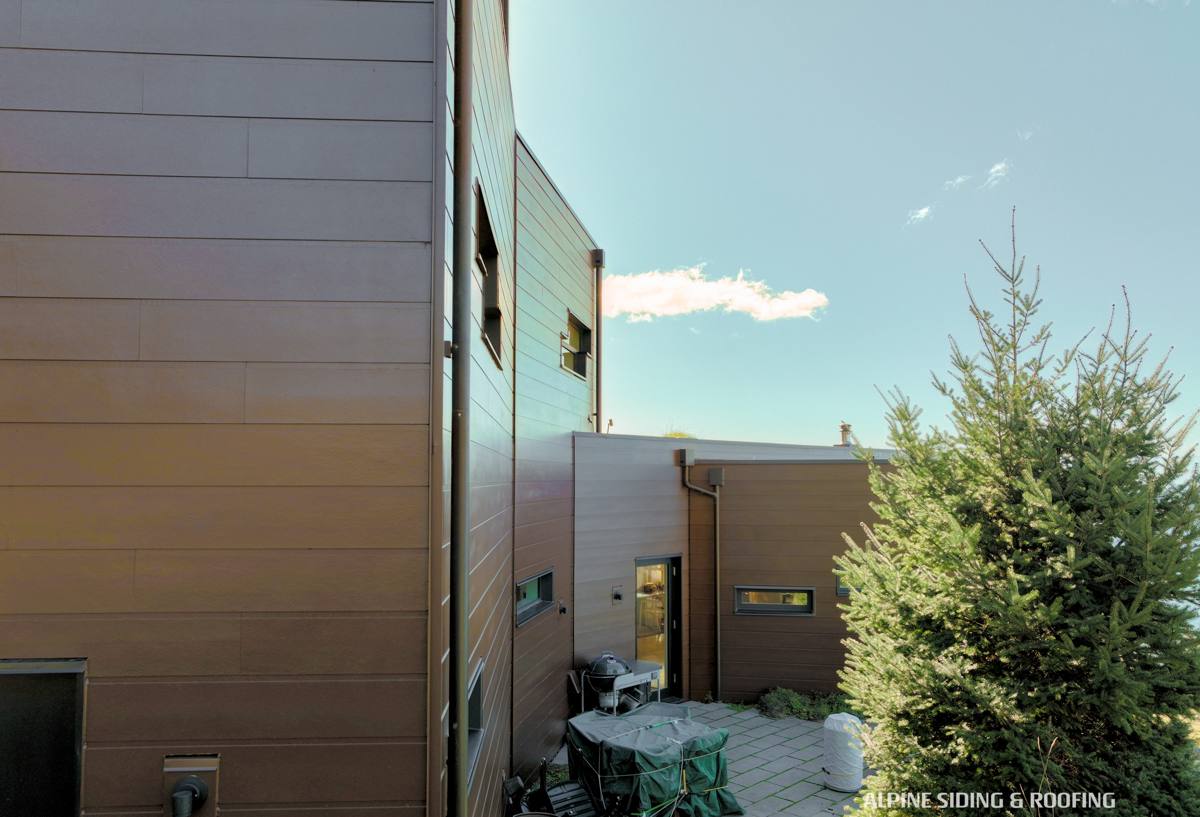
Board and batten has become one of the most requested siding styles for homes near Bellingham, and it's easy to see why. The vertical panels and raised battens create strong shadow lines and a clean, modern-farmhouse look that works on everything from newer builds to older homes getting a full exterior refresh. It reads as more architectural than lap siding, and it pairs well with the mix of Craftsman, contemporary, and farmhouse-style homes common throughout Whatcom County.
But board and batten is also one of the least forgiving siding styles if the material or the installation isn't right for the climate it's going into. The vertical orientation, the narrow channels between battens, and the number of seams involved all raise the stakes on moisture management. In a wetter coastal climate like Bellingham's, those details aren't cosmetic — they determine whether the siding holds up or starts failing within a few years.
What Bellingham's Climate Asks of a Vertical Siding System
Homes near Bellingham deal with a specific combination of conditions that not every siding product, or every installer, accounts for. Proximity to Bellingham Bay and the Salish Sea means a steady dose of salt-laden air, which accelerates corrosion on fasteners and trim and speeds up the breakdown of lower-quality coatings. Storms coming off the Strait of Georgia bring driving, wind-pushed rain that hits siding at an angle rather than falling straight down — which means water finds its way behind trim, into seams, and up under battens if the assembly isn't detailed correctly.
Then there's the moss. Bellingham's long, damp fall-through-spring stretch gives moss, algae, and mildew months of ideal growing conditions on any siding surface that stays shaded or doesn't shed water cleanly. Vertical board and batten, with its stacked horizontal battens and narrow gaps, gives moss more ledges and crevices to take hold in than a flat lap profile does. A siding system for this area has to handle salt exposure, wind-driven rain, and a long moss season all at once — not just one of the three.
Why We Install Board & Batten Only in James Hardie Fiber Cement
We get asked fairly often why we won't do board and batten in vinyl, engineered wood, or primed cedar, since all three are available and often cheaper up front. The honest answer is that this particular style exposes the weak points of those materials faster than a standard lap profile does.
Engineered wood siding (LP SmartSide and similar products) performs reasonably well as a flat panel, but board and batten adds cut edges and butt joints at every batten strip. Any cut edge on an engineered wood product is a place water can wick into the substrate if it isn't sealed and maintained consistently — and in a climate with Bellingham's rain and moss exposure, that maintenance schedule is unforgiving. Miss a season of caulk touch-up and swelling or delamination can start at those edges.
Vinyl board and batten has a different problem: it's a rigid-looking style built from a material that expands and contracts significantly with temperature. On a vertical run, that movement shows up as visible waviness or buckling at the battens, and the panels can never fully commit to the crisp, flat look board and batten is supposed to deliver. It also can't be painted a custom color without voiding the warranty, which limits homeowners who want a specific, saturated tone.
Primed wood or cedar board and batten looks great on day one, but it's the highest-maintenance option of the group — repainting on a multi-year cycle, checking for rot at the battens, and dealing with moss that has actual organic material to grow into. In a coastal, moss-heavy climate, that upkeep burden is real and ongoing.
James Hardie fiber cement doesn't have any of those failure points. It doesn't expand and contract with temperature the way vinyl does, it doesn't wick moisture at cut edges the way engineered wood can, and it's non-combustible. The factory-applied ColorPlus finish holds its color far longer than field-applied paint, which matters a lot on a style with this many exposed batten edges. It's the only product we've found that holds up to salt air, driving rain, and a long moss season without asking the homeowner to babysit it.
What a Correct Board & Batten Installation Involves
Drainage Plane and Rainscreen Gap
Every board and batten job starts behind the panels, not at them. A weather-resistant barrier goes over the sheathing, and we build in a drainage gap so any moisture that does get past the siding has somewhere to go instead of sitting against the wall assembly. This is especially important on vertical siding, where water tends to run down and collect at horizontal breaks rather than sheeting off cleanly the way it does on lap siding.
Batten Layout and Fastening
Batten spacing has to be planned before the first panel goes up — not eyeballed as we go. We follow James Hardie's fastening schedule for panel and batten thickness, using corrosion-resistant fasteners driven at the correct depth. Overdriven or underdriven fasteners are one of the most common causes of early siding failure, and they're easy to miss if a crew is moving fast to hit a schedule.
Flashing Details That Matter in Driving Rain
Because Bellingham-area storms push rain sideways as often as straight down, flashing above windows, doors, and any horizontal trim break has to be installed with real overlap and kickout flashing where rooflines meet walls. These are the details that separate a board and batten installation that survives twenty years of coastal storms from one that starts leaking behind the trim in year three.
James Hardie Products We Use for the Board & Batten Look
For this style, we typically work with HardiePanel vertical siding paired with Hardie batten strips, giving you the classic board and batten profile without the moisture risks of wood-based battens. Depending on the home, HardieTrim battens or Artisan-line trim can be used to fine-tune the reveal and shadow line. Panels come in ColorPlus factory finishes, which are baked on and backed by a separate finish warranty, or as primed panels for a custom paint color if you want something outside the standard palette.
James Hardie also engineers its products by climate zone (HZ5 and HZ10), and the versions specified for our region are formulated for sustained moisture exposure rather than a drier climate. That distinction matters more in a place like Bellingham than it does in most of the country.
Comparing Board & Batten Material Options
| Material | Salt Air & Moisture Performance | Maintenance | Longevity / Warranty |
|---|---|---|---|
| James Hardie fiber cement | Engineered for sustained moisture exposure; won't rot or wick at cut edges when installed to spec | Occasional rinse; no repainting needed with ColorPlus finish | Long service life; strong transferable material and finish warranties |
| Engineered wood (LP SmartSide) | Vulnerable at cut edges and seams if sealing isn't maintained | Regular caulk and paint touch-up, especially at battens | Shorter real-world lifespan in wet coastal climates without upkeep |
| Vinyl board & batten | Handles moisture fine but expands/contracts, causing visible warping on vertical runs | Low, but can't be repainted a custom color | Moderate; appearance often degrades before the material fails |
| Primed wood / cedar | Most vulnerable to rot and moss growth in a damp, mossy climate | Highest — repainting cycle, rot checks, moss removal | Shortest, heavily dependent on maintenance discipline |
Our Board & Batten Process for Bellingham-Area Projects
- Inspection: We check the existing wall assembly for hidden moisture damage, especially around windows, corners, and rooflines — common trouble spots given the amount of driving rain this area sees.
- Drainage plane and prep: We install or repair the weather barrier and rainscreen gap before any siding goes up.
- Batten layout: We plan spacing and reveal to fit the home's proportions and window/door openings, avoiding awkward cuts at corners.
- Installation: Panels and battens go up per James Hardie's fastening and flashing specifications, not a generalized siding approach.
- Detail work: Flashing, kickouts, and trim transitions get finished with the same attention as the field panels — this is where most siding problems actually start.
- Final walk-through: We go over the finished job with you before calling it done.
Maintenance Checklist for Board & Batten Homes Near Bellingham
- Rinse lower courses periodically to clear salt residue, especially on homes closer to the water
- Clean gutters before the fall rains start so water isn't overflowing onto siding and trim
- Check caulking at trim and penetrations once a year — even Hardie systems use caulk at select joints
- Trim back vegetation touching the walls to cut down on shaded, damp surfaces where moss takes hold
- Look at north- and shade-facing battens each fall for early moss growth and clean it off before it spreads
- After major storms, glance at flashing above windows, doors, and roof-to-wall transitions for any signs of movement
Why a Crew That Already Works in Bellingham Matters
Board and batten installation isn't complicated in theory, but getting it right in this specific climate takes more than a generic install checklist. A crew that already works siding jobs around Bellingham has seen where driving rain actually gets in, how fast moss establishes on a shaded batten, and which flashing shortcuts show up as callbacks two winters later. That local pattern recognition is hard to replace with a manufacturer's install manual alone, no matter how good the manual is.
It also means faster, more realistic answers when you're deciding between design options — batten spacing, reveal size, trim details — because we're weighing those choices against what actually holds up on homes in this specific area, not a generic climate zone.
If you're considering board and batten siding for a home near Bellingham, we're happy to walk the exterior with you, talk through what the existing wall assembly needs, and put together a straightforward, no-pressure estimate using the form below.