 Ferndale
 Energy-Efficient Windows Built for Cordata's Coastal Climate
Cordata sits close enough to Bellingham Bay and the Salish Sea that homes here take on a specific mix of weather stress: salt-laden air, long stretches of driving rain off the water, and the kind of shaded, damp conditions that keep moss and mildew active nearly year-round. Windows are one of the first places that stress shows up — in fogged glass, drafts around the frame, sticky sashes, and heating bills that creep up even though nothing looks obviously wrong. An energy-efficient window replacement done right isn't just about a lower utility bill. In this climate, it's also about keeping moisture out of the wall cavity and stopping small seal failures from turning into rot behind the trim.
This page covers what actually matters for window performance in Cordata specifically — not a generic list of window features, but the trade-offs and details that matter given Whatcom County's weather, and what a correct installation looks like here.
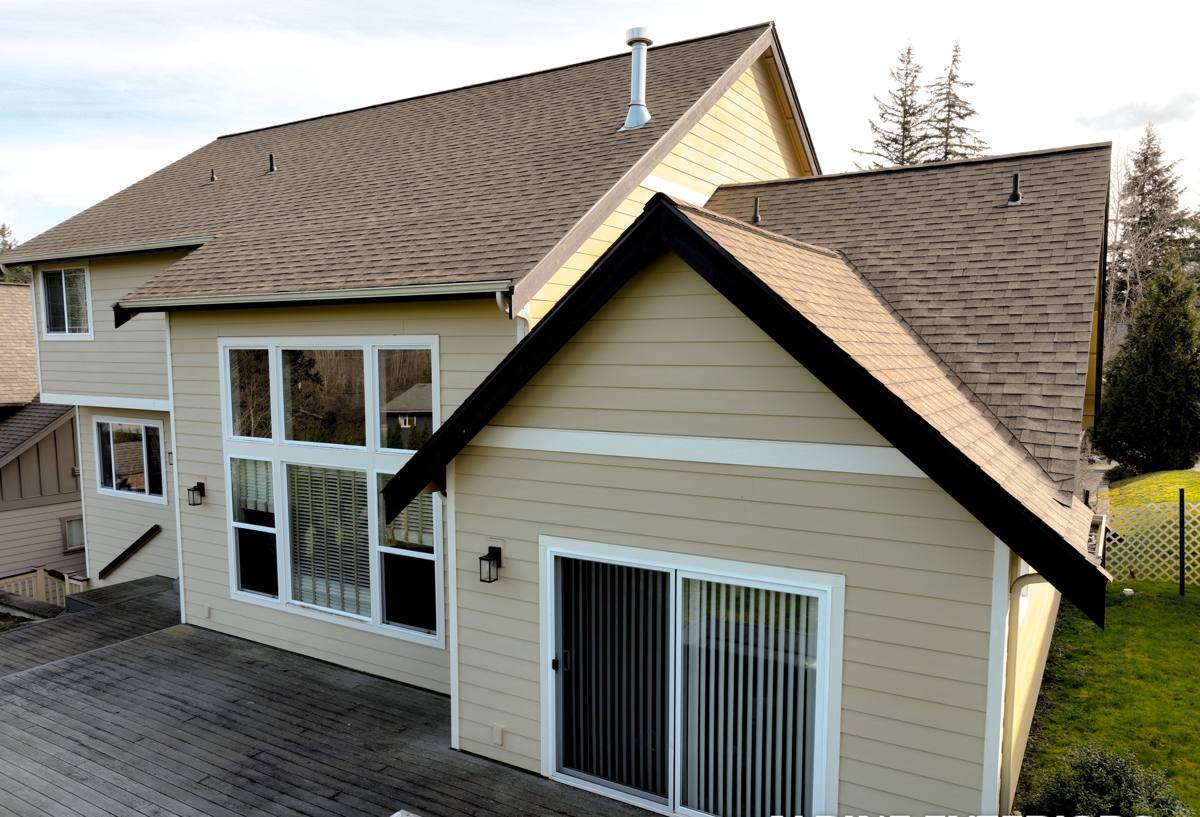
What Whatcom County's Climate Does to Windows Over Time
Every window eventually fails somewhere. The question is how fast, and where. In Cordata's environment, three factors do most of the damage:
Salt Air and Metal Components
Proximity to the bay means a steady low-level exposure to salt in the air, even a few miles inland. Salt accelerates corrosion on hinges, balance hardware, screws, and lower-grade cladding. Once hardware corrodes, sashes stop closing tightly, and a window that was airtight on day one starts leaking conditioned air.
Driving Rain and Seal Integrity
Wind-driven rain doesn't just hit windows straight on — it gets pushed sideways and upward under sills and around trim. Any gap in the flashing, sealant, or weatherstripping becomes an entry point. Over a few wet seasons, water that gets behind the frame instead of shedding off it causes far more damage than the rain itself ever would on the surface.
Moss Season and Shaded, Damp Walls
Many lots in and around Cordata carry mature tree cover, which keeps north- and west-facing walls shaded and slow to dry. That prolongs the time window frames and sills stay wet after a storm, which is exactly the condition moss, algae, and wood rot need to take hold. Windows on shaded elevations deserve extra attention to detailing, not just the same treatment as a sun-exposed wall.
What "Energy-Efficient" Actually Means Here
Energy-efficient window marketing tends to emphasize whichever number sounds most impressive. For a climate like ours — long heating season, mild summers, little need for serious cooling — some ratings matter more than others.
- U-factor matters most here. It measures how well a window resists heat loss, and in a heating-dominated climate like Whatcom County's, a low U-factor is what actually keeps your furnace from running constantly through fall, winter, and spring.
- Solar Heat Gain Coefficient (SHGC) matters less for us than it does in hot, sunny climates, since we're rarely fighting overheating. It's still worth checking on south- and west-facing windows that get direct afternoon sun.
- Air leakage rating is a direct measure of draft resistance — critical when driving rain is also pushing wind against the glass and frame.
- Condensation resistance reflects how well a window handles the humidity swings common in a marine climate, which relates directly to how much fogging and interior moisture you'll see on cold, damp mornings.
A window can carry an efficiency label and still perform poorly in our climate if it was chosen for a warmer, drier region. We size recommendations to the actual conditions on your home's specific elevation, not just a generic efficiency rating.
Choosing the Right Frame Material for Cordata's Conditions
Frame material affects how a window handles moisture, temperature swings, and long-term maintenance — all more relevant here than in a drier climate. There's no single "best" material for every home; the right choice depends on your home's exposure, your maintenance appetite, and your budget.
| Frame Material | Moisture Resistance | Maintenance | Typical Fit for Cordata Homes |
|---|---|---|---|
| Vinyl | Good — won't rot, low corrosion risk | Low | Solid, cost-effective choice for most elevations |
| Fiberglass | Very good — stable in wet/dry cycling | Low | Strong option for shaded, damp-prone walls |
| Wood-clad | Depends heavily on cladding integrity | Moderate to high | Best reserved for well-protected, sun-exposed elevations |
| Aluminum | Poor without thermal break; corrodes faster in salt air | Moderate | Generally not our first recommendation this close to the bay |
Our standard is to match material to exposure — a shaded, rain-facing wall and a sheltered, sun-facing wall on the same house may call for different specifications, even though they're on the same building.
How Our Installation Process Works
Most window failures we get called out to fix aren't the glass unit's fault — they're an installation detail that was skipped or rushed. Given how much water this area sees, the details around the window matter as much as the window itself.
- On-site assessment. We check existing flashing, sill condition, framing for hidden moisture damage, and note which elevations face the worst weather.
- Removal without collateral damage. Old windows come out cleanly so we can inspect the rough opening for rot or soft wood before anything new goes in — a step that's easy to skip but expensive to regret later.
- Correcting what we find. Any damaged sheathing or framing gets repaired before the new window is set. Installing a new window into a compromised opening just hides the problem.
- Proper flashing and weather barrier integration. Flashing tape and pan flashing are layered so water is directed out and down, never trapped behind the frame — the single most important step for long-term performance in driving rain.
- Air-sealing and insulation. Gaps around the frame are sealed and insulated correctly, which is what actually delivers the energy savings, not just the glass package alone.
- Final adjustment and clean finish work. Sashes are adjusted to operate and seal correctly, and interior/exterior trim is finished cleanly.
Common Signs Your Current Windows Are Losing You Money
- Visible condensation or fog between the panes (a failed seal, not a cleaning issue)
- Cold drafts near the frame even when the window is fully closed
- Sashes that are hard to open, close, or lock — often a sign of frame or hardware corrosion
- Soft, discolored, or spongy wood on the sill or surrounding trim
- Noticeably higher heating bills compared to similarly sized rooms elsewhere in the house
- Moss or algae buildup on the sill or lower frame that keeps returning after cleaning
Why a Crew That Already Works Cordata Regularly Matters
Window installation quality depends a lot on judgment calls made on-site — how much flashing overlap a given wall needs, whether a sill needs extra slope, which frame material fits a shaded versus exposed elevation. A crew that regularly works this specific area has already seen how Cordata homes hold up over multiple wet seasons, which informs those judgment calls in a way that generic experience doesn't. Local familiarity also means faster response if something needs a follow-up adjustment, and a better sense of realistic timelines around our wetter months, when installation scheduling has to work around the weather rather than against it.
What Affects the Cost of a Window Project
We don't publish fixed prices because every home and every opening is different, but the main cost drivers are consistent from job to job:
| Factor | Why It Affects Cost |
|---|---|
| Frame material | Vinyl, fiberglass, and wood-clad carry different material and labor costs |
| Glass package | Double-pane vs. triple-pane, low-E coatings, and gas fills add cost but also performance |
| Number and size of windows | Larger jobs typically lower the per-window cost, but total project cost rises |
| Condition of the rough opening | Hidden rot or framing repair adds labor beyond the window itself |
| Access and elevation | Second-story, tight-clearance, or heavily landscaped openings take more time |
| Trim and finish work | Matching existing interior/exterior trim adds carpentry time |
In general, expect a meaningful range between a basic vinyl replacement and a higher-end fiberglass or wood-clad option with an upgraded glass package. The right answer for your home depends on which elevations need the most protection and how long you plan to stay in the house — priorities we'll walk through with you directly rather than guessing over the phone.
Get a Straightforward, No-Pressure Estimate
If your windows are fogging, drafting, sticking, or just costing more to heat around than they should, it's worth having a straightforward conversation about what's actually going on before deciding what to replace. Use the form below to request a free estimate — we'll take a look, tell you honestly what we see, and give you options sized to your home's actual exposure, not a one-size-fits-all package.