 Ferndale
 Building Decks for Lummi Island's Marine Climate
Lummi Island sits out in the salt water of Whatcom County, and that changes what a deck has to survive compared to a build a few miles inland in Ferndale or Bellingham. Homes here deal with salt-laden air coming off the water, wind-driven rain that gets pushed sideways into ledgers and railings, and a moss season that runs longer than almost anywhere else in the county because of the shade, humidity, and mild winter temperatures. A deck built to a generic spec sheet does not hold up out here the way one built for these specific conditions does.
We've worked on homes across Whatcom County long enough to know that "custom" on an island project means more than picking a railing style. It means choosing fasteners that won't streak or fail from salt exposure, framing that sheds water instead of trapping it, and a decking surface that won't turn into a moss farm by year three. This page walks through what that actually looks like for a Lummi Island property.
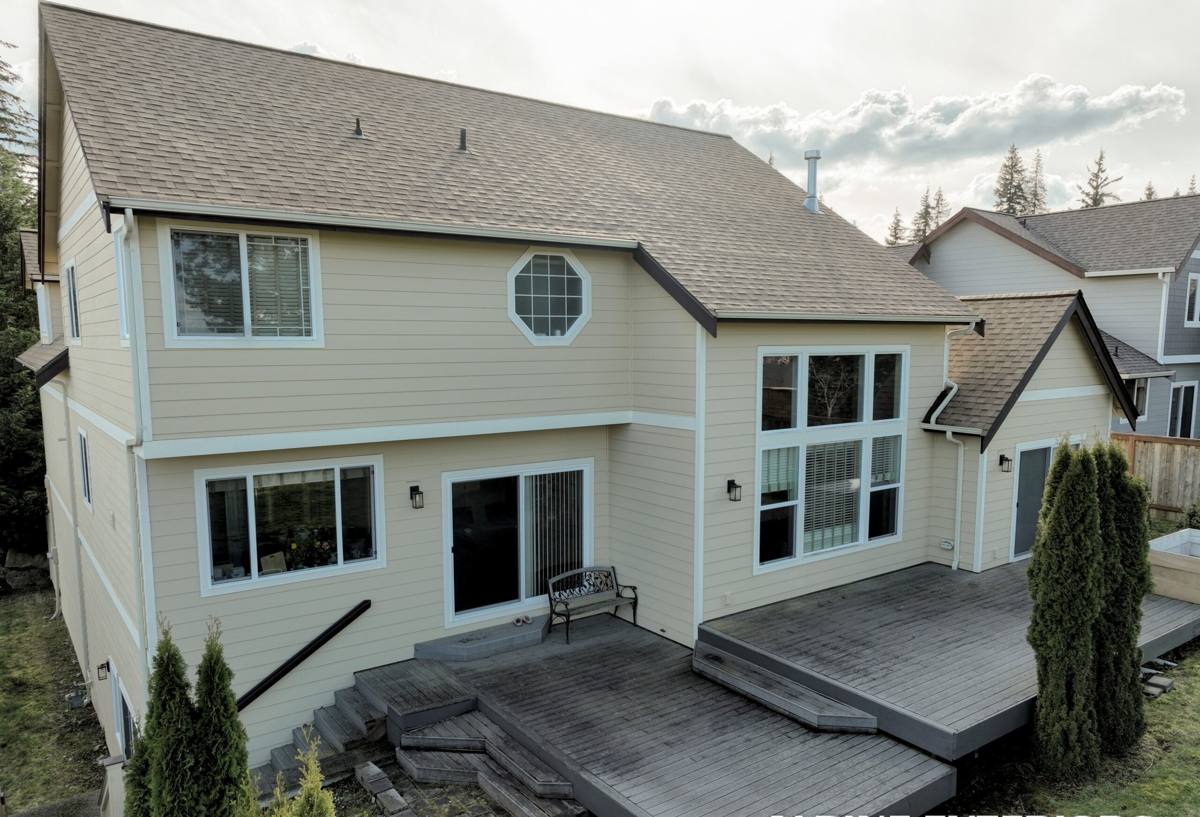
What Makes Lummi Island Decks Different
Whether your lot faces open water, sits back in the trees, or is somewhere in between, the island environment shapes the build in a few consistent ways:
- Salt air corrosion — even homes set back from the shoreline get salt-laden moisture in the air, which accelerates rust and pitting on standard hardware over time.
- Wind-driven, sideways rain — storms coming off the water don't just fall straight down; they drive rain into ledger boards, rail posts, and any horizontal surface that isn't properly flashed.
- Extended moss and algae season — mild, damp winters plus shaded, wooded lots mean moss gets a much longer growing window here than in a drier, sunnier location.
- Access and logistics — Lummi Island is reached by ferry, which affects how materials are staged and how a crew schedules a multi-day build. A contractor unfamiliar with that rhythm can turn a straightforward project into a scheduling headache.
- Wooded and bluff-top lot variety — some Lummi Island properties sit up on a bluff facing open wind and water, others are tucked into heavily wooded lots with almost no direct sun. Each calls for a different approach to material selection and drainage.
Fasteners and Hardware: Where Salt Air Does the Most Damage
The single biggest difference between a deck that ages well on Lummi Island and one that doesn't usually comes down to hardware most homeowners never think about. Standard galvanized fasteners are fine in a lot of the country, but in a marine air environment they can start showing rust streaks and corrosion well before the wood itself shows any wear.
Our standard for island builds
On projects with meaningful salt air exposure, we build with stainless steel or heavy-duty coated fasteners and structural connectors rated for corrosive environments, along with corrosion-resistant flashing at every ledger and post connection. It costs more up front than using whatever hardware is on the shelf, but it's the difference between hardware that lasts the life of the deck and hardware that's staining your decking and weakening connections within a handful of years.
Choosing the Right Decking Material
There's no single "best" decking material for every Lummi Island home — it depends on sun exposure, budget, and how much maintenance you actually want to do. Here's how the common options stack up against the conditions this island throws at them:
| Material | Moisture & Salt Air Behavior | Moss Resistance | Maintenance |
|---|---|---|---|
| Pressure-treated wood | Good if sealed and maintained; end grain and fasteners are the weak points | Needs regular cleaning to stay ahead of growth | Annual cleaning/sealing recommended |
| Cedar | Naturally moisture-resistant, but still needs sealing near salt air | Moderate — still needs periodic cleaning in shaded areas | Sealing every 1-2 years |
| Composite decking | Excellent — doesn't absorb moisture or rot | Can still grow surface moss/algae in deep shade; cleans off easily | Occasional wash, no sealing |
| PVC/capped polymer decking | Excellent — fully sealed surface resists moisture and salt entirely | Best resistance; smooth cap sheds organic buildup | Lowest maintenance of the group |
For bluff-top or open-water-facing lots with direct sun, a well-maintained wood deck can absolutely work and gives you that natural look a lot of homeowners want. For shaded, wooded lots — which describes a good share of Lummi Island properties — we generally steer clients toward composite or capped polymer decking, simply because it holds up to constant dampness and shade without the upkeep wood demands in that setting.
Why we're selective about which composite products we install
Not all composite decking is built the same. Some lower-tier boards absorb more moisture at the core than manufacturers advertise, which becomes a real problem in a climate that rarely lets a deck fully dry out between rain events. We stick to product lines with a track record in wet, coastal Pacific Northwest conditions and a warranty structure that actually backs up their moisture-resistance claims, rather than the cheapest option available.
Structure, Drainage, and Flashing Come First
A good-looking deck surface means nothing if the structure underneath is trapping moisture. This is where a lot of deck problems actually start, and it's not something you can see once the boards are down.
- Ledger flashing — the connection between the deck and the house is the single most common source of hidden rot; it needs proper flashing that directs water away from the house framing, not just caulk.
- Footings sized for the site — soil conditions vary across the island, and footings need to be sized and set to local frost depth and soil-bearing requirements, not just a standard spec.
- Joist spacing and airflow — tighter joist spacing and proper under-deck ventilation help lumber dry out between rain events instead of staying damp, which is a major factor in both rot and moss growth.
- Board gapping — correct spacing between deck boards lets water drain through instead of pooling, which matters more here than almost anywhere given how much rain the structure sees.
Permits and Shoreline Considerations
Whatcom County requires permits for most new deck construction, and island properties near the water can carry additional shoreline setback or critical area review depending on the specific lot and its distance from the water. We handle the permitting process as part of the job — pulling the right permit, building to the approved plan, and coordinating inspections — so you're not the one trying to figure out county requirements on top of everything else.
Our Process for Lummi Island Projects
1. Site visit and design
We start with an on-site visit to look at sun exposure, wind exposure, existing drainage, and how the deck should tie into the house. Because access to Lummi Island depends on the ferry schedule, we plan site visits and material deliveries around it in advance rather than treating it as an afterthought.
2. Material selection based on your specific lot
We walk you through decking and hardware options based on where your lot sits — open water exposure, wooded shade, or somewhere in between — and what level of maintenance you actually want to take on.
3. Permitting
We handle the Whatcom County permit application and any shoreline or critical area documentation your specific property requires.
4. Staged, efficient building
Because ferry-dependent scheduling rewards efficiency, we plan material deliveries and crew days to minimize trips and keep the job moving without wasted downtime.
5. Final walkthrough
We walk the finished deck with you, cover basic maintenance for your specific material choice, and make sure everything meets code before we consider the job done.
Living With Your Deck: Moss and Long-Term Care
Because moss season runs long here, a little routine care goes a long way toward keeping a deck looking and performing the way it should:
- Sweep off leaves, needles, and organic debris regularly — they hold moisture against the surface and feed moss growth.
- Rinse the deck periodically, especially in shaded areas, rather than letting buildup sit through the wet months.
- Keep gutters and downspouts near the deck clear so runoff isn't dumping extra water onto the surface.
- Trim back overhanging branches where possible to let more light and air reach shaded sections.
- Inspect fasteners and railing hardware yearly for early signs of corrosion, especially on decks facing open water.
Why Hire a Crew That Already Works on Lummi Island
A deck contractor who mostly works inland projects can still build a structurally sound deck, but they're often learning the island's logistics and climate demands on your project. A crew that already works Lummi Island regularly knows how to plan around ferry schedules so your build isn't held up waiting on materials, understands which hardware and decking products actually hold up to this specific salt-air, high-moisture environment, and is familiar with how Whatcom County handles permitting for shoreline and near-shoreline properties. That experience shows up in fewer surprises during the build and a deck that's specified correctly the first time.
What to Ask Before You Hire
- Have you built decks on Lummi Island or other Whatcom County waterfront/island properties before?
- What hardware and fastener grade do you use for salt air exposure, and is that reflected in the written estimate?
- How do you handle ledger flashing and moisture management at the house connection?
- Will you pull the Whatcom County permit, and do you know if my lot needs shoreline or critical area review?
- How do you plan material delivery and crew scheduling around ferry access?
- What decking material would you actually recommend for my lot's sun and shade exposure, and why?
If you're planning a new deck or replacing an aging one on Lummi Island, we're happy to take a look at your property and walk you through honest options for your specific site — no pressure, no pushy sales pitch. Use the form below to request a free estimate and we'll get back to you to schedule a visit.