 Ferndale
 Siding Replacement Built for Fairhaven's Coastal Conditions
Fairhaven sits close enough to the water that its siding takes a different kind of beating than siding a few miles inland. Salt-laden air off the bay, wind-driven rain that comes in sideways during winter storms, and a long, damp moss season all work on exterior walls year-round. When we replace siding on a Fairhaven home, we're not just swapping old material for new — we're solving for a specific set of coastal stresses that inland Whatcom County homes don't deal with in the same combination.
This page covers what siding replacement actually involves for a home in this part of Ferndale's service area: what the climate does to different materials, what a correct tear-off and install looks like, how our process runs from first look to final walkthrough, and what it costs to do the job right instead of the cheap way.
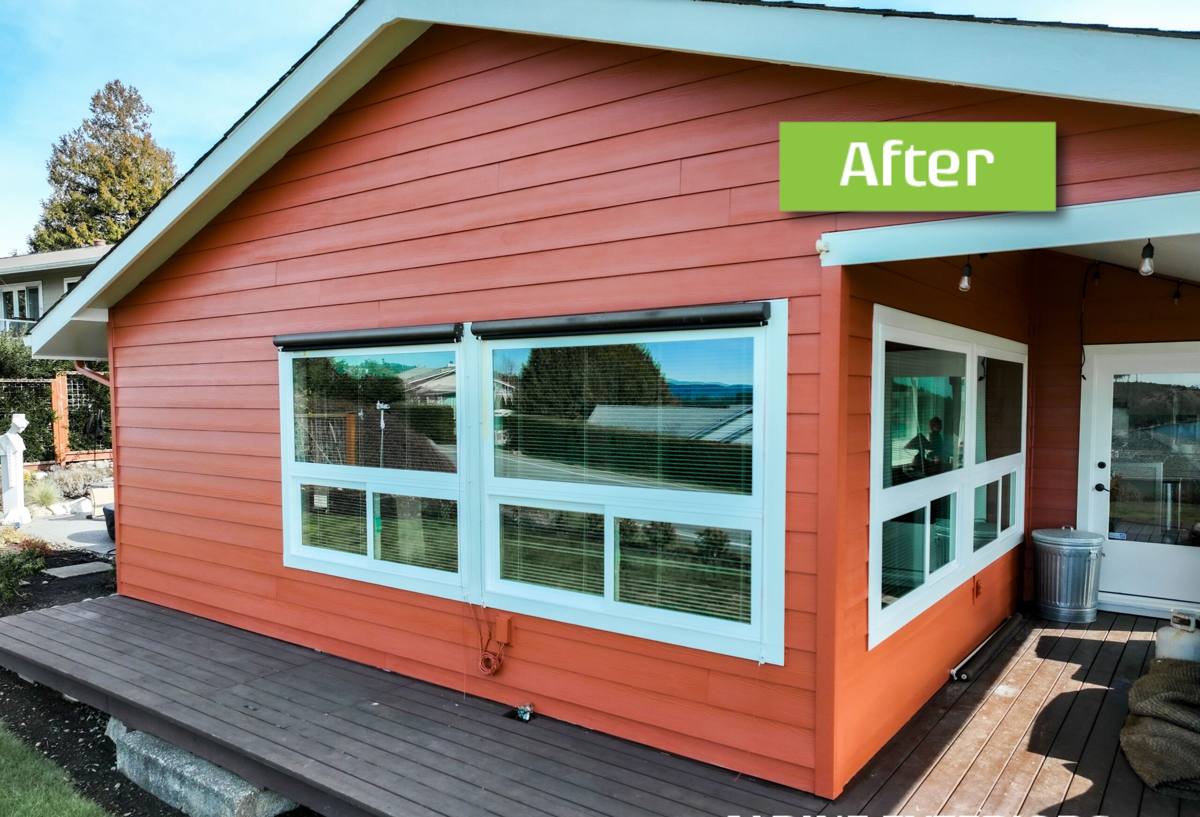
What Fairhaven's Climate Actually Does to Siding
Three factors drive almost every siding failure we see in this area, and they compound each other rather than acting alone.
Salt Air
Airborne salt is corrosive to exposed metal fasteners, flashing, and trim, and it accelerates the breakdown of finishes that aren't formulated to resist it. Paint film on wood or fiber cement that isn't factory-cured chalks and fades faster near the water. Over years, that means more frequent repainting and a higher chance of moisture getting behind a finish that's already thinning.
Driving Rain
Storms coming off the water don't fall straight down — they hit siding at an angle, which pushes water into laps, seams, butt joints, and any gap around windows or trim that isn't properly flashed. A siding system that's fine in a calm rain can still leak in a wind-driven one if the water-resistive barrier, flashing, and lap details weren't installed to spec.
Moss and Algae Season
Whatcom County's wet season runs long, and shaded or north-facing walls in Fairhaven stay damp for extended stretches. That's ideal growing conditions for moss and algae on porous or textured surfaces. Beyond looking bad, sustained moisture contact at the surface is exactly the condition that leads to rot in wood-based products and coating failure in lower-grade composites.
None of these factors is dramatic on its own. Together, over 10-15 years, they're what separates a siding job that still looks tight from one that's cupping, staining, or letting water into the wall assembly.
| Climate Factor | What It Stresses | What Siding Needs to Resist It |
|---|---|---|
| Salt air | Fasteners, flashing, factory finish | Corrosion-resistant fasteners, a finish engineered to hold up near marine air |
| Driving rain | Laps, seams, window/door trim | Correct WRB, flashing, and lap installation per manufacturer spec |
| Moss/algae season | Shaded and north-facing walls | A dense, low-absorption material and finish that resists sustained moisture |
| Temperature swings | Panel expansion/contraction, caulk joints | A material with stable dimensional behavior and correctly gapped joints |
Signs a Fairhaven Home's Siding Is at the End of Its Life
Homeowners usually notice the same handful of warning signs before deciding to replace rather than repair. If you're seeing more than one or two of these, it's worth having someone look at the wall assembly, not just the surface.
- Persistent moss or dark streaking that comes back within a season of cleaning
- Soft, spongy, or crumbling spots, especially near the bottom courses or around windows
- Paint or finish that's peeling, bubbling, or chalking heavily rather than just fading evenly
- Visible cupping, warping, or gaps opening up at seams and corners
- Rising energy bills that suggest the wall assembly isn't sealing the way it used to
- Interior signs — musty smell, staining on interior walls near exterior corners — that point to moisture getting past the siding
Why We Install Only James Hardie Fiber Cement
We standardized on James Hardie fiber cement for every siding job we do, including in Fairhaven, and we don't install vinyl, LP SmartSide, or other fiber cement brands. That's not a marketing position — it's a decision based on what holds up in this specific climate over the long haul.
Fiber cement is non-combustible and dimensionally stable, meaning it doesn't expand and contract with moisture the way wood-based products can, which matters directly in a place with this much sustained damp weather. James Hardie's ColorPlus finish is baked on at the factory under controlled conditions, rather than field-applied, which gives it more consistent resistance to fading and wear than a job-site paint job — a real advantage against salt air and UV exposure near the water. Hardie also engineers regional product lines (the HZ5 line is built for climates like ours) specifically to perform in wetter, more variable conditions rather than shipping one national product everywhere.
We're not going to tell you every other product on the market is worthless — vinyl and engineered wood sidings have real uses and plenty of homes have them. But for the moisture load, temperature swings, and salt exposure a Fairhaven home deals with, we've made Hardie fiber cement our standard because it's what we're comfortable standing behind for the next 30-50 years, not just the next 5.
What a Correct Siding Replacement Involves
Siding replacement isn't just removing old panels and nailing up new ones. The parts nobody sees are what determine whether the job holds up through a decade of Fairhaven winters.
Tear-Off and Inspection
We remove the existing siding down to the sheathing and inspect for rot, soft spots, or prior water damage. This is the point where hidden problems from years of moisture intrusion get found and fixed — patching over damaged sheathing instead of replacing it is one of the most common shortcuts that leads to problems a few years later.
Water-Resistive Barrier and Flashing
A correctly lapped water-resistive barrier, plus properly installed flashing around every window, door, and penetration, is what actually keeps wind-driven rain out of the wall. Siding sheds most of the water; the WRB and flashing catch what gets past it. This detail work matters more in a driving-rain climate than almost anywhere else.
Installation to Manufacturer Spec
James Hardie publishes specific fastening patterns, clearances, and gapping requirements, and following them isn't optional if you want the warranty to mean anything. That includes proper ground clearance, correct fastener spacing and type (corrosion-resistant, given the salt air), and appropriate gaps at butt joints and trim to allow for expansion.
Trim, Caulking, and Finish Details
Corners, trim boards, and joint sealant are where a lot of amateur jobs fall apart first. We use sealants and details rated for exterior, coastal-adjacent exposure, and we finish out trim so water sheds away from joints instead of pooling at them.
Our Process for a Fairhaven Siding Replacement Project
- On-site assessment: We walk the exterior, check for existing moisture damage, and evaluate sun/shade exposure on each wall, since that affects moss risk and product recommendations.
- Written estimate: You get a clear scope of work and pricing before anything is scheduled — no vague verbal quotes.
- Tear-off and sheathing check: Old siding comes off, sheathing gets inspected, and any damaged material is repaired before anything new goes up.
- WRB, flashing, and Hardie installation: Installed to manufacturer specification, with attention to every window, door, and penetration.
- Trim and finish work: Corners, trim, and caulking completed to shed water correctly.
- Final walkthrough: We go over the completed job with you and confirm everything meets both our standard and yours.
Cost Factors for Fairhaven Siding Replacement
Every home is different, but the same factors drive cost on most projects in this area. Rather than quote a number that won't fit your house, here's what actually moves the price up or down.
| Factor | Why It Affects Cost |
|---|---|
| Extent of hidden damage found at tear-off | Rotted or damaged sheathing needs repair before new siding goes on |
| Home size and wall complexity | More corners, dormers, and trim details mean more labor and material |
| Siding profile and accessory selection | Different Hardie profiles and trim packages carry different material costs |
| Access and site conditions | Tight lots, landscaping, or multi-story walls affect labor time |
| Window and door count | Each opening requires flashing and trim work, adding time |
Because hidden damage is such a common variable, we always inspect before finalizing a quote rather than pricing off a drive-by estimate.
Maintaining Your Siding Through Fairhaven's Wet Season
Correctly installed Hardie siding is low-maintenance, but "low" isn't "none," especially this close to the water. A yearly rinse to clear moss and salt residue, prompt attention to any caulking that starts to fail, and keeping gutters clear so water isn't sheeting down the wall all go a long way toward getting the full service life out of the material. None of that requires special equipment or a contractor visit — it's the kind of basic upkeep that protects the investment you made in the install.
Why Hiring a Crew That Already Works in Fairhaven Matters
A lot of siding problems we get called out to fix started with a crew that didn't build for this specific climate — details that would be fine in a drier, calmer part of the state don't hold up against sustained salt air and driving rain. A contractor who already works homes in and around Fairhaven knows to prioritize flashing details, fastener corrosion resistance, and moisture management from the start, rather than treating this as a generic siding job. That local familiarity with Whatcom County's coastal conditions shows up in fewer callbacks and a longer service life, not just a nicer-looking finish on install day.
If your Fairhaven home's siding is showing wear, or you're planning ahead before it becomes a moisture problem, we're happy to take a look and give you a straightforward, no-pressure estimate using the form below.