 Ferndale
 What Nooksack-Area Homes Actually Deal With
Homes in the Nooksack area, part of our Ferndale-based service territory in Whatcom County, sit in a climate that is harder on exterior siding than most homeowners realize. Three things do most of the damage over time: salt-laden air moving in off Puget Sound and the Strait of Georgia, driving rain that gets pushed sideways into walls during winter storms, and a long moss and algae season created by mild temperatures, shade, and near-constant dampness. None of these are dramatic events. They're slow, steady pressure that shows up as premature paint failure, soft trim, swollen seams, and green-black staining on siding that was never built to shed water and organic growth the way this region demands.
Salt Air and Coastal Moisture
Salt-laden air is corrosive to fasteners and hard on paint films, and it accelerates the breakdown of anything that relies on a surface coating rather than a material that's engineered to resist moisture at the core. Over years, homes closer to open water or exposed to prevailing coastal winds see faster fading, chalking, and edge deterioration on siding products that weren't designed with this exposure in mind.
Driving Rain and Wind-Driven Water
Whatcom County's winter storms don't just drop rain straight down — wind pushes it sideways and up under laps, around trim, and into any gap that wasn't detailed correctly. A siding system is only as good as its weakest joint. Water that gets behind the cladding and can't dry out is what actually causes rot, not the rain itself.
A Long Moss and Algae Season
Shaded lots, tree cover, and persistent moisture mean moss and algae get a much longer growing window here than in drier inland climates. Siding that stays damp longer — because it absorbs water, holds it at the surface, or doesn't get enough airflow behind it — will grow moss and mildew stains faster and need more frequent cleaning and repainting to keep up.
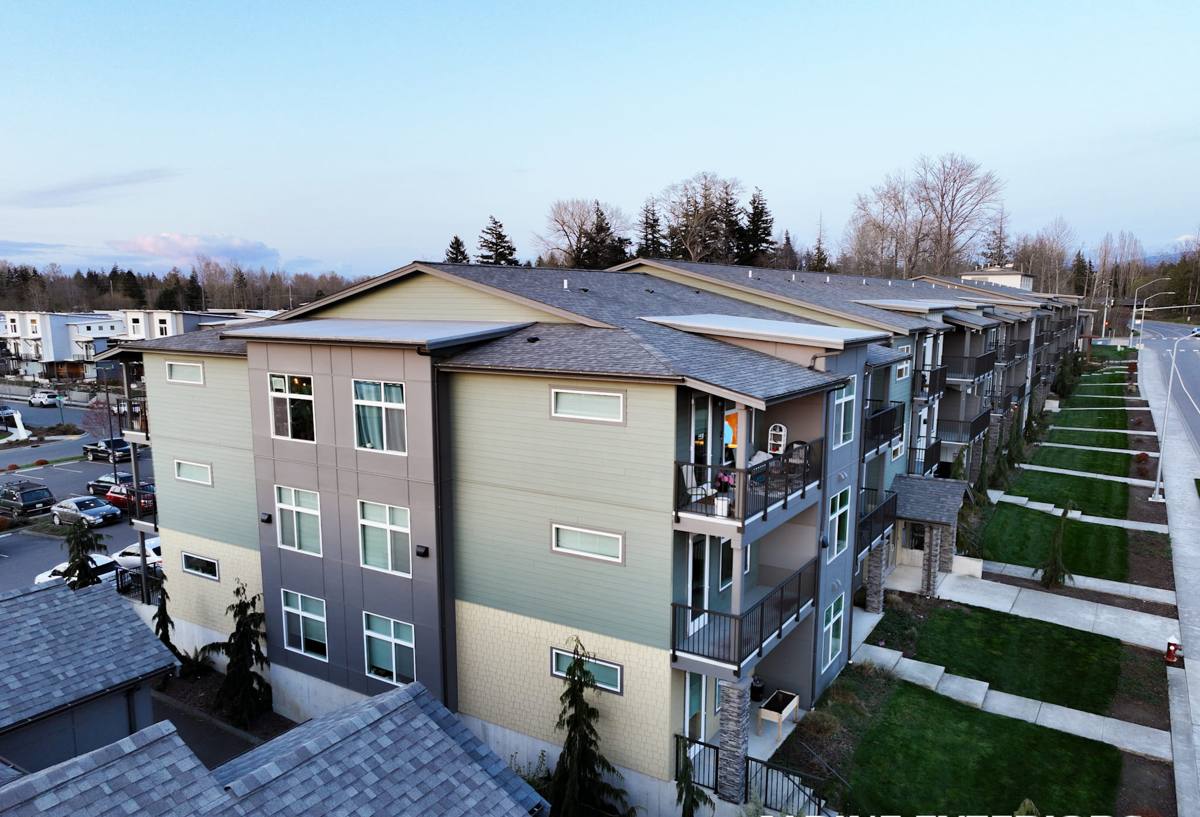
Why We Install Only James Hardie Fiber Cement Siding
We don't install vinyl, LP SmartSide, Cemplank, Allura, primed spruce, or cedar. That's a deliberate standard, not a sales pitch. Vinyl expands, contracts, and can warp under the temperature swings and moisture cycling this region produces, and it isn't fire-rated. Wood-based and OSB-based siding products depend on protective coatings and perfect field sealing to keep moisture out — miss one spot in a climate this wet, and the substrate itself is vulnerable to swelling and rot. Cedar is a beautiful, legitimate material, but it needs ongoing maintenance, staining, and moisture vigilance that most homeowners underestimate when they choose it.
James Hardie fiber cement is cement, sand, and cellulose fiber — non-combustible, dimensionally stable, and manufactured with a factory-cured ColorPlus finish that's baked on rather than field-applied. It doesn't rely on a surface coat to keep water out the way wood-based products do, and it holds up to freeze-thaw cycling, driving rain, and salt exposure far better than the alternatives. That's why it's the only product we put our name behind.
Choosing the Right Hardie Product Line for This Area
James Hardie engineers its siding by climate zone, and this part of Washington falls into the HZ5 zone — designed for regions with real moisture exposure, freeze-thaw cycling, and coastal influence. HZ5 products are formulated and tested for exactly the conditions Nooksack-area homes face, which is different from what gets sold in drier inland markets.
Panel and Profile Options
Most homes here work well with either HardiePlank lap siding (the most common choice, available in several exposure widths and textures) or HardiePanel vertical siding for accent areas, gables, or a more modern look. HardieShingle is also an option for homes wanting a dimensional, textured look on gables or full elevations. The right choice depends on the home's existing architecture, roofline, and how much of the wall is exposed to direct weather.
ColorPlus Factory Finish
ColorPlus finishes are baked on in a controlled factory environment, which gives more consistent coverage and better fade and moisture resistance than a field-applied paint job. In a climate with this much rain and salt exposure, that factory bond matters — it's one less place for water to find a way in through a compromised paint layer.
What a Correct Installation Actually Requires Here
Fiber cement siding is only as good as the installation behind it. A rushed or generic install will fail early in this climate even with the right material on the wall. A few things are non-negotiable on every Nooksack-area project we run:
A Proper Drainage Plane and Rainscreen Gap
Siding needs a gap and drainage plane behind it so any water that does get past the surface can drain and the wall can breathe and dry. In a region with this much sustained moisture, skipping this detail is one of the most common causes of hidden rot behind siding that looks fine from the curb.
Flashing and Trim Details
Every window, door, and horizontal trim transition is a place water wants to get in. Correct head flashing, kick-out flashing at roof-to-wall intersections, and properly lapped weather-resistant barrier are what actually keep driving rain out — not the siding panel itself.
Fastening and Joint Treatment to Manufacturer Spec
James Hardie publishes exact fastener spacing, placement, and joint treatment requirements for HZ5 conditions. Following them isn't optional if you want the manufacturer's warranty to actually be valid — and it's also what keeps panels from cupping, popping, or opening seams over time.
Our Process for a Nooksack-Area Project
The steps don't change from job to job, but the details we pay closest attention to are shaped by this specific climate:
- On-site assessment of existing siding, trim, and any signs of moisture damage or past repairs
- Inspection of sheathing and framing once old siding is removed, with any rot addressed before new material goes up
- Installation of a code-compliant weather-resistant barrier and drainage gap behind the new siding
- Installation of James Hardie panels, trim, and flashing to manufacturer HZ5 specifications
- Caulking, touch-up, and final detailing using ColorPlus-matched products
- Warranty registration and a walkthrough so you know what was done and what to expect going forward
Here's what we'd tell any homeowner to expect from a correct job, regardless of who installs it:
- Manufacturer-specified rainscreen gap or drainage plane behind the siding, not siding installed tight to the sheathing
- Cut edges and exposed ends sealed per Hardie's application instructions
- Fastener type, spacing, and placement matching the HZ5 climate zone requirements
- Properly lapped and sealed flashing at every window, door, and roofline intersection
- A ColorPlus touch-up kit left with you for minor future nicks
- Warranty paperwork registered in your name, not left undone
Cost Factors for James Hardie Siding in This Area
Every project is different, but the same handful of factors drive most of the cost variation we see on homes in and around Nooksack and greater Ferndale:
| Factor | Why It Matters Here | Effect on the Project |
|---|---|---|
| Home size and number of stories | More wall area and more difficult access on taller homes | Directly scales material and labor cost |
| Condition of existing siding and sheathing | Long-term moisture exposure sometimes hides rot until removal | Can add sheathing repair before new siding goes up |
| Product line and profile chosen | Lap, panel, and shingle profiles have different material and labor needs | Changes material cost and install time |
| Trim complexity and color | More corners, dormers, and trim transitions mean more detail work | Adds labor for flashing and finish work |
| Exposure to wind, rain, and salt air | Higher-exposure sites need more careful flashing and sealing | Can add time for weatherproofing details, not just material swap |
Living With It: Maintenance in a Moss-Prone, Salt-Air Climate
One of the real advantages of James Hardie over the products we don't install is how little upkeep it needs once it's on the wall correctly. It won't rot, it doesn't need re-staining like cedar, and the ColorPlus finish resists fading far longer than field-applied paint. That said, no siding is maintenance-free in a climate that grows moss this readily. A yearly rinse-down, keeping gutters clear so water isn't sheeting down walls, and trimming back vegetation that keeps siding shaded and damp will keep a Hardie exterior looking like new for a long time. What you won't be dealing with is swelling, delamination, or the repeated repainting cycle that wood and OSB-based products demand in this environment.
Why Local Experience Matters More Than It Seems
A siding crew that already works in this part of Whatcom County has already seen how the salt air, wind direction, and rainfall patterns here play out on real homes — which elevations take the most weather, where moss shows up first, where past installers cut corners on flashing. That's the kind of knowledge that doesn't come from a spec sheet. It also means we're familiar with local permitting expectations and typical home construction in the area, so there are fewer surprises once we open up a wall. Hiring a crew with no track record in this specific climate means you're the one absorbing the learning curve.
If you're weighing siding options for a home in the Nooksack area, we're glad to take a look and give you a straight answer on what your home needs. Reach out for a free, no-pressure estimate using the form below.