 Ferndale
 Roof Repair in Kendall: Built for the Way This Area Actually Weathers
Kendall sits out toward the foothills east of Ferndale, closer to the Nooksack River valley and the timber country leading up toward Mount Baker than to the open shoreline. That location shapes what goes wrong with roofs here, and it's a different problem set than what you'd see on a roof closer to the water. Homes in Kendall tend to sit under heavier tree cover, deal with more shade for more of the day, and take on a slower, steadier kind of moisture load rather than direct wind-driven salt spray. Add in the rest of Whatcom County's marine-influenced weather pattern — long stretches of drizzle, a genuinely long moss season, and driving rain that shows up several times a winter — and you get roofs that fail in specific, predictable ways if they aren't repaired correctly.
This page is about roof repair specifically for Kendall properties: what the climate does to a roof out here, what a correct repair looks like, and why it matters to hire a crew that has actually worked on roofs in this part of the county.
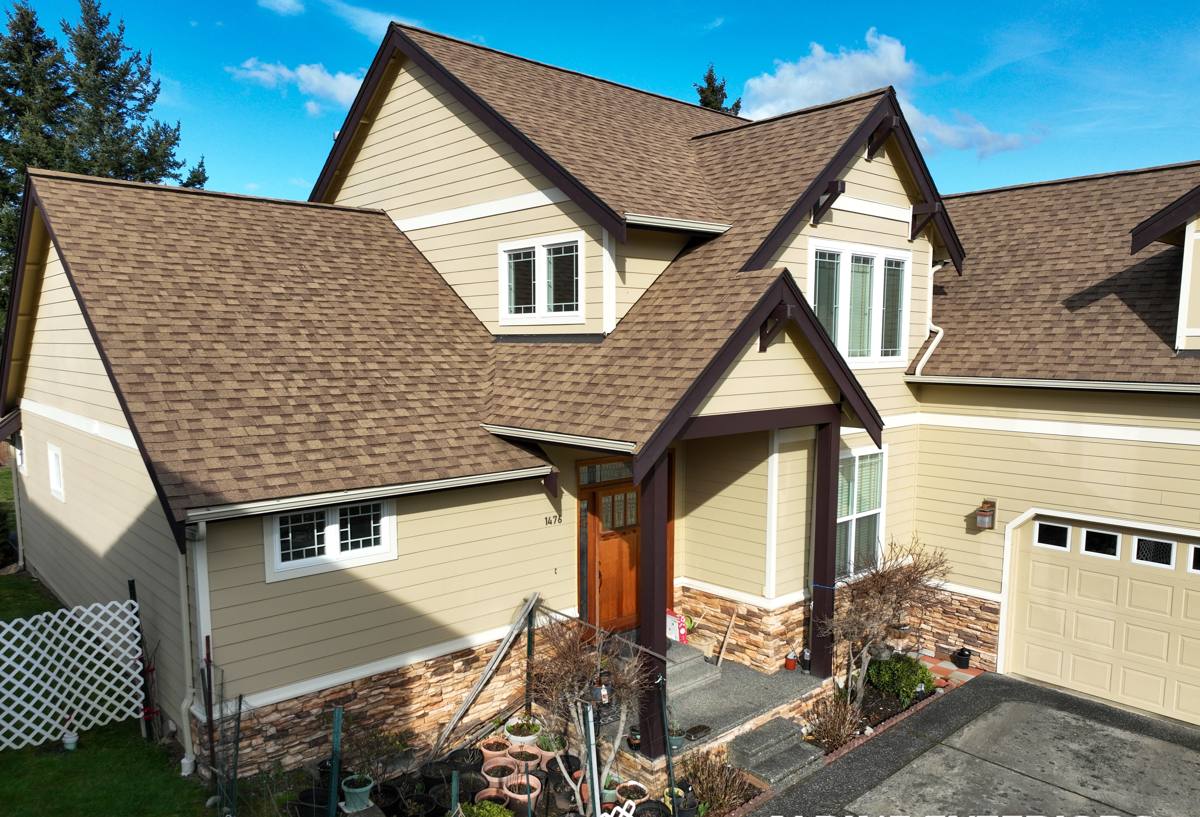
What Kendall's Climate Does to a Roof
Shade, tree cover, and moss
Kendall's tree-lined lots keep a lot of roof surfaces in partial shade for much of the day, especially on north-facing slopes and anywhere a roofline sits close to conifers. Shaded roofing stays damp longer after every rain, and damp roofing is exactly what moss, moss, and algae need to establish. Once moss gets a foothold in the granule layer of composition shingles or in the butt joints of cedar, it holds water against the roofing material around the clock instead of letting it shed off. Over a few seasons that constant moisture works shingle edges loose, degrades the mat underneath the granules, and rots the sheathing underneath in the worst spots. This is one of the most common reasons we get called out to Kendall roofs that otherwise still have some life left in them.
Driving rain and wind-driven water
Whatcom County gets its share of driving rain events — storms where wind pushes water sideways instead of letting it run straight down the slope. On a roof with tight, well-lapped flashing this isn't a problem. On a roof where flashing has lifted, where a boot around a vent pipe has cracked, or where nail heads have backed out, driving rain finds those gaps and pushes water uphill under the shingles. That's a different failure mode than a slow moss-related leak, and it usually shows up as a sudden stain on a ceiling after a bad storm rather than a slow-building soft spot.
Temperature swings near the foothills
Being farther inland and closer to the foothills, Kendall sees a bit more temperature swing than areas right on Bellingham Bay — colder overnight lows in winter, warmer summer afternoons. That expansion and contraction cycle is hard on roofing materials, especially older asphalt shingles and any sealant or caulking used around flashing. Materials that have gone brittle from years of temperature cycling crack instead of flexing, which is exactly where small leaks start.
Common Roof Problems We See on Kendall Homes
- Moss buildup along shaded slopes, ridge lines, and north-facing valleys
- Lifted or cracked flashing around chimneys, skylights, and roof-to-wall transitions
- Cracked or shrunken pipe boots around plumbing vents
- Granule loss on aging composition shingles, especially where moss has been scraped or pressure-washed incorrectly in the past
- Soft or spongy sheathing discovered only once a shingle is lifted for inspection
- Gutter and valley debris from heavy tree cover causing water to back up under shingles
- Nail pops and lifted shingle tabs from wind events
Warning Signs Worth a Call Before They Become a Bigger Job
- Dark streaks or green-black patches on the roof surface, especially on shaded slopes
- A ceiling stain that appears or grows after a heavy rain or windstorm
- Granules collecting in gutters or at downspout outlets
- Shingles that look curled, cupped, or lifted at the edges
- Daylight visible through the attic roof deck
- Higher heating bills with no other explanation, which can point to a wet, compressed attic insulation layer under a slow leak
What a Correct Roof Repair Actually Involves
Diagnosis before patching
The biggest mistake in roof repair isn't a bad patch — it's patching the wrong spot. Water on a roof travels before it shows up as a stain, sometimes running several feet along sheathing or framing before it drips through somewhere visible. A correct repair starts by tracing the leak to its actual entry point, not just covering the spot where the ceiling looks wet. That usually means getting on the roof, checking flashing and penetrations first, and pulling back shingles around the suspected area to look at the decking underneath before any new material goes down.
Dealing with moss the right way
Moss removal on a Kendall roof has to be done carefully. Aggressive pressure washing strips granules off shingles and shortens their remaining life, sometimes worse than the moss itself. We treat and remove moss using methods that clear the growth without tearing up the shingle surface, then look at whether zinc or copper strips near the ridge make sense for that particular roof to slow regrowth going forward, given the amount of shade the home actually gets.
Matching materials properly
A repair that uses the wrong shingle profile, the wrong flashing metal, or mismatched underlayment creates a new weak point even if it stops the immediate leak. We match repair materials to what's already on the roof wherever possible, and where an exact match isn't available, we choose materials that are compatible in terms of expansion, weight, and water-shedding behavior rather than just "close enough" in appearance.
Sealing the repair correctly
Flashing and fasteners need to be set so that water sheds over every lap, not sealed shut with caulk as the primary line of defense. Caulking has its place, but a repair that relies on sealant instead of correct overlap and fastening will fail again once that sealant ages and cracks under the region's temperature swings.
Our Roof Repair Process
- Inspection and diagnosis — We assess the roof surface, flashing, penetrations, and attic space where accessible to find the actual source of the problem, not just the symptom.
- Written scope and honest recommendation — You get a clear explanation of what's actually needed: a targeted repair, a larger section replacement, or in some cases an honest conversation about whether the roof is closer to end-of-life than repair-worthy.
- Repair work — Damaged shingles, flashing, boots, or decking are removed and replaced with properly matched materials, correctly lapped and fastened.
- Moss and debris cleanup — Any moss, lichen, or debris contributing to the original problem is addressed so the repair isn't undone within a season or two.
- Final check — We walk the repair and surrounding roof areas to confirm the fix holds and flag any other areas worth keeping an eye on.
Repair vs. Replacement: How We Help You Decide
Not every roof problem in Kendall needs a full replacement, and not every leak can be permanently solved with a patch. The table below outlines the factors that typically point one direction or the other.
| Factor | Favors Repair | Favors Replacement |
|---|---|---|
| Roof age | Under roughly 15 years, or well within expected service life | At or past the typical lifespan for the material |
| Extent of damage | Isolated to one section, flashing point, or penetration | Spread across multiple slopes or recurring in several spots |
| Sheathing condition | Solid, dry decking under the affected area | Soft, delaminated, or rotted decking found during inspection |
| Moss and moisture history | First significant moss issue, caught early | Long-term moss damage that's degraded granules broadly |
| Material availability | Matching shingles or panels still available | Discontinued material forcing a mismatched patch |
Why Hire a Crew That Already Works Kendall
Roofing crews that mostly work closer to town or right along the water don't always have a feel for how much shade, tree debris, and moss pressure a Kendall roof deals with compared to a roof out in the open. A crew familiar with this specific area knows to check the shaded slopes first, expects moss regrowth patterns tied to the surrounding tree cover, and doesn't assume every leak is wind-driven just because that's the common story closer to the bay. That local familiarity shows up in faster, more accurate diagnosis and repairs that are built for how this area actually behaves through a full Whatcom County winter, not a generic weather profile.
It also matters for response time. A roof leak found during a storm doesn't wait for a crew to drive in from far outside the area. Working Kendall regularly means being able to get eyes on a problem and get a tarp or temporary fix in place quickly when it counts.
Maintenance That Extends the Life of a Repair
- Clear gutters and valleys of needles and leaf debris at least twice a year, more often under heavy tree cover
- Trim back branches that overhang or brush against the roof surface to reduce shade and debris buildup
- Have moss growth addressed early rather than waiting for it to spread across a full slope
- Check attic ventilation periodically — poor airflow traps moisture and speeds up sheathing damage from the inside
- Schedule a roof check after any significant windstorm, even if nothing looks wrong from the ground
Get a Straight Answer About Your Kendall Roof
If you've got a stain on a ceiling, moss taking hold on a shaded slope, or you just want an honest read on how much life is left in the roof, we're happy to take a look. We'll give you a clear, no-pressure estimate and tell you plainly whether you're looking at a repair or something bigger — use the form below to get started.