 Ferndale
 Building Decks for Lummi Nation's Marine Climate
Lummi Nation sits close enough to the water that salt air, wind-driven rain, and heavy shade in places make outdoor living space a different challenge than it is thirty miles inland. A deck built here has to deal with moisture that doesn't just fall from the sky once and dry off — it lingers. Morning fog rolls off the water, rain comes in sideways during winter storms, and shaded corners of a yard can stay damp for days at a time. Add in Whatcom County's long stretch of gray months, and you have conditions that will find every weak point in a deck within a few seasons if it wasn't built with this specific climate in mind.
We install composite decking for homeowners throughout the Lummi Nation area, and the work is the same craft we do everywhere else in Ferndale and Whatcom County, but the details we pay extra attention to shift based on what the local climate actually does to a structure. That's what this page is about — not composite decking in general, but what it takes to get it right on this stretch of coastline.
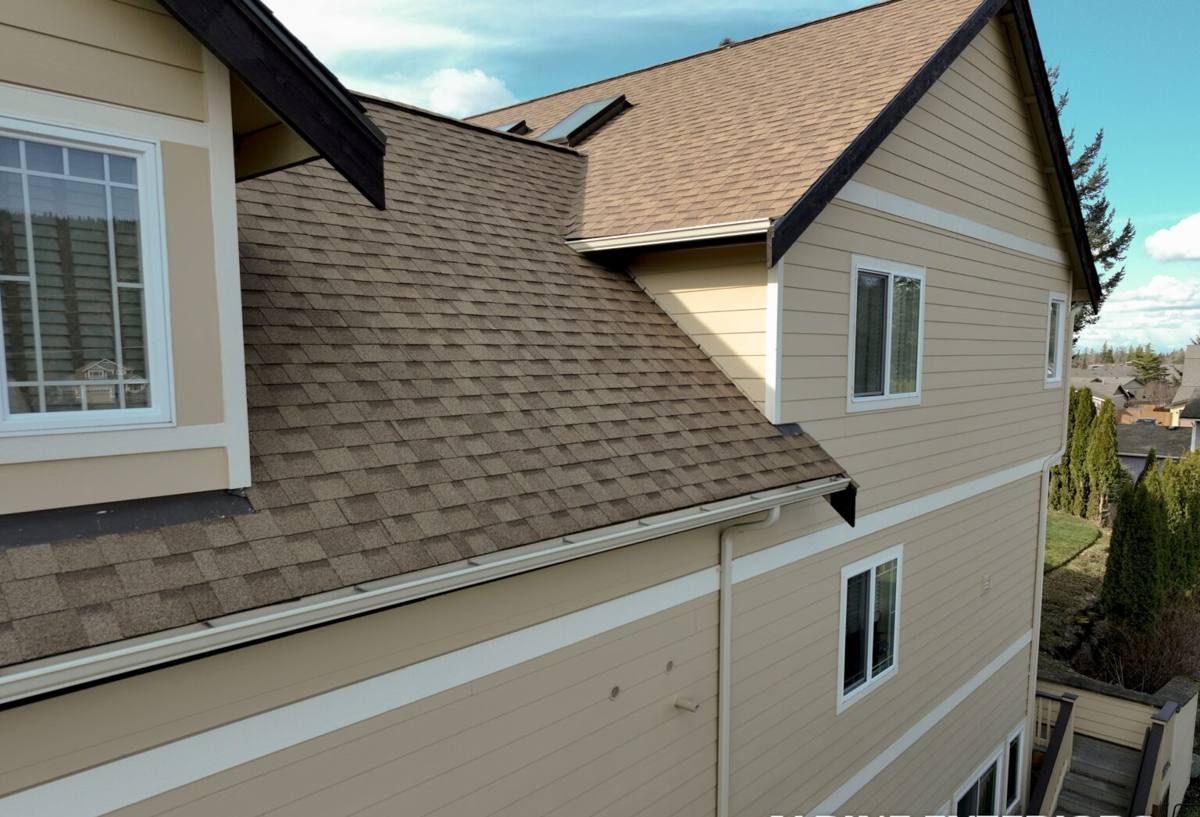
What Salt Air and Driving Rain Do to a Deck
Salt air is corrosive to metal fasteners, brackets, and hardware long before most homeowners notice any visible damage. A deck that looks fine on the surface can have ledger board connections or joist hangers quietly rusting underneath, which is a structural problem, not a cosmetic one. Driving rain compounds this by pushing moisture into joints, seams, and end-cuts that would stay dry in a calmer climate. Water doesn't need to pool to cause damage — it just needs somewhere to sit against wood or fastener long enough to start the corrosion or rot process.
The other factor specific to this area is moss. Whatcom County's moss season runs long, often eight months or more in shaded, damp spots, and it doesn't limit itself to roofs. Deck boards, especially in areas that don't get much direct sun, will grow moss and algae on the surface if the material and the airflow underneath aren't accounted for. Moss holds moisture against the board surface, and on the wrong material that moisture exposure leads to swelling, splintering, or surface breakdown over a handful of seasons.
The Three Failure Points We See Most
- Corroded or failing fasteners and joist hardware hidden beneath the deck surface
- Trapped moisture at the ledger board connection to the house, leading to rot behind the rim joist
- Moss and algae buildup on shaded boards that were installed without adequate airflow underneath
Why Composite Makes Sense in This Climate
Composite decking is not immune to moisture, but it doesn't absorb and swell the way untreated or even pressure-treated wood does over time, and it doesn't need the same cycle of sanding, staining, and sealing that wood decking requires to survive a wet climate. For a lot of Lummi Nation homeowners, that maintenance reduction is the actual selling point — not appearance, not resale value, just fewer weekends spent re-sealing a deck that's going to get rained on again in six months anyway.
That said, composite isn't a material you can install the same way regardless of climate and expect it to perform. The board itself resists moisture better than wood, but the structure underneath it — framing, flashing, fastening, airflow — still has to be built correctly for the material to live up to its warranty and its reputation. We've seen composite decks installed without attention to those details fail just as fast as a poorly built wood deck, because the problems were never really about the board surface in the first place.
What a Correctly Built Composite Deck Requires Here
Substructure and Framing
The framing underneath composite decking should be treated wood or a moisture-resistant alternative, spaced and fastened according to the manufacturer's specifications for our climate zone — not stretched to save material. Joist spacing that's fine in a dry climate can allow composite boards to flex or sag over time in a wet one, especially once boards are carrying seasonal moisture weight from rain and moss buildup.
Ledger Board Flashing
Where the deck attaches to the house, proper flashing is what keeps driving rain from working its way behind the ledger board and into the house's rim joist or sheathing. This is one of the most common shortcuts we find on decks we're asked to repair or replace — a missing or improperly lapped flashing detail that let water in behind the connection point for years before anyone noticed the damage.
Airflow Underneath
Composite decking needs ventilation underneath the boards to shed the moisture that inevitably gets driven or splashed underneath during storms. Decks built low to the ground, or with skirting that blocks airflow entirely, hold humidity underneath the surface longer, which is exactly the condition that encourages moss and mildew to take hold on the board undersides and can accelerate wear even on materials rated to resist it.
Fastener and Hardware Selection
Given the salt air exposure in this area, we use corrosion-resistant fasteners and hardware rated for coastal or marine-adjacent environments, not standard interior-grade hardware. It costs a little more upfront and it's the difference between hardware that's still sound in fifteen years and hardware that's rusting through in five.
Comparing Decking Materials for This Climate
| Material | Moisture Behavior | Moss/Algae Resistance | Maintenance |
|---|---|---|---|
| Composite | Doesn't absorb and swell like wood; resists rot | Good on quality boards with proper airflow; still needs occasional cleaning | Periodic cleaning, no staining or sealing |
| Pressure-treated wood | Absorbs moisture, can swell/shrink seasonally | Prone to moss in shaded, damp areas without upkeep | Annual staining/sealing recommended in this climate |
| Cedar | Naturally moisture-resistant but still absorbs over time | Moderate resistance, still needs upkeep in shade | Regular sealing to maintain resistance |
| PVC/vinyl decking | Excellent moisture resistance | Good, but surface texture can trap grime | Low maintenance, higher material cost |
Each of these can be installed correctly or incorrectly. The table above reflects the material's general behavior, not a guarantee — installation quality matters as much as material choice, especially in a climate that gives moisture this many chances to find a weakness.
Our Installation Process
We start with an on-site assessment of the deck location, including sun exposure, drainage patterns around the house, and how close the build is to prevailing wind and rain direction — details that matter more here than they would inland. From there:
- We evaluate the existing structure if this is a replacement, or the ground and foundation conditions if it's new construction, including soil drainage around footings.
- We install or repair ledger board flashing to current best practice, sealing the connection point against driving rain before any framing goes up.
- We frame with moisture-resistant materials, spaced to manufacturer spec for our climate and load requirements, with attention to airflow underneath the finished deck.
- We install composite decking with corrosion-resistant fasteners, following manufacturer gapping and expansion guidelines so boards perform correctly through temperature and moisture swings.
- We finish with edge details, fascia, and any railing work, checking that no design element traps water or blocks ventilation underneath.
Cost Factors for Composite Decking in Lummi Nation
| Factor | Why It Affects Price |
|---|---|
| Deck size and shape | More square footage and complex cuts around angles or stairs increase material and labor |
| Substructure condition | Replacing rotted framing or footings on an existing deck adds cost beyond surface-level work |
| Composite board tier | Capped composite boards cost more upfront than uncapped but resist moisture and staining better long-term |
| Railing and stair complexity | Custom railing, multiple stair runs, or elevation changes add labor time |
| Site access | Difficult access for material delivery or equipment can add time to the project |
We don't quote a job without seeing it. Any number given without walking the site and looking at the existing structure, drainage, and access is a guess, and guesses on decking projects tend to be wrong in the homeowner's favor right up until change orders start.
Maintaining a Composite Deck Through Moss Season
Composite decking is low maintenance compared to wood, but low maintenance isn't no maintenance, especially with a moss season as long as Whatcom County's. A periodic rinse and light scrub with a soft brush in shaded areas keeps spores from establishing before they turn into a real growth problem. Homeowners who wait until moss is visibly established have a harder cleaning job, and in some cases surface staining that's difficult to fully remove even on composite material.
- Rinse the deck surface periodically during the wet months, especially in shaded corners
- Keep gutters and downspouts clear so runoff isn't draining directly onto or near the deck
- Trim back overhanging branches or shrubs that keep sections of the deck shaded and damp
- Check underneath the deck occasionally for standing water or blocked airflow at skirting
- Inspect ledger board flashing and railing connections annually for signs of water intrusion
Why a Crew That Already Works This Area Matters
A contractor who's worked in Ferndale and around Lummi Nation already knows which drainage patterns show up on which lots, how far wind-driven rain typically travels under an eave, and where moss tends to establish first based on tree cover and shade. That's not something you can fully substitute with a generic installation manual. It shows up in small decisions — how much slope to build into the decking for drainage, where to add an extra flashing detail, which fastener grade is worth the upcharge — that a crew unfamiliar with this specific stretch of coastline might not think to make.
It also matters for warranty support. Composite decking manufacturers require correct installation for warranty coverage to hold, and a crew that understands the climate-specific requirements is less likely to install in a way that voids that coverage down the road.
Getting an Estimate
If you're considering composite decking for a home in Lummi Nation, we're glad to walk the site, look at drainage and sun exposure, and give you an honest read on what the project involves and what it will cost. There's no pressure and no obligation — just a straight answer based on what your property actually needs. Reach out through the form below to schedule a free estimate.