 Ferndale
 Why Sandy Point Roofs Take a Different Kind of Beating
Sandy Point sits close enough to the water that salt air is a daily fact of life, not an occasional nuisance. Combine that with the driving rain that rolls in off the Strait and the long, damp moss season that Whatcom County is known for, and you've got a combination that wears out roofing materials faster than it would twenty miles inland. Asphalt shingles in this environment tend to show granule loss, algae streaking, and moss colonization earlier than the warranty numbers suggest. Metal roofing handles this combination better than almost anything else on the market, but only when the material, the fasteners, and the installation details are matched to the actual conditions here — not just to a generic spec sheet.
We've worked on homes throughout Ferndale and the surrounding coastal pockets long enough to know which details matter for a roof that has to shed salt-laden moisture and resist moss for decades, not just look good on install day.
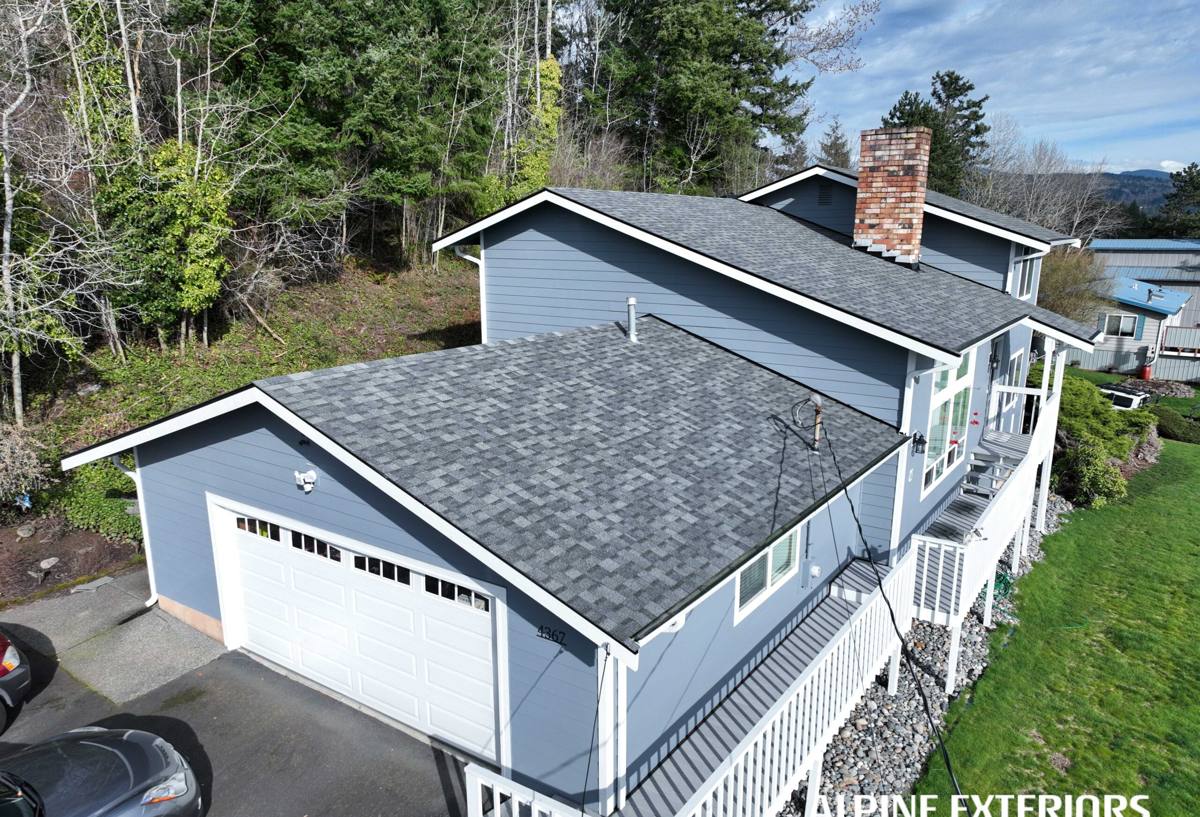
What Salt Air Actually Does to a Roof
Salt air is corrosive, and it doesn't need direct ocean spray to do damage — a steady coastal breeze carries fine salt particulate that settles on any exposed metal surface. Over time, that accelerates corrosion at cut edges, fastener heads, and anywhere the protective coating has been scratched or compromised during installation. This is why the choice of metal, coating system, and fastener hardware matters more in Sandy Point than it would for a roof further from the water.
Where Corrosion Starts
- Field-cut panel edges that aren't properly treated or capped
- Exposed fasteners with worn or missing rubber washers
- Dissimilar metals in contact with each other (galvanic corrosion)
- Scratches or gouges in the coating from careless handling during install
- Flashing seams where water can sit rather than drain
None of these are complicated problems to prevent. They're just details that get skipped when a crew is moving fast or hasn't installed metal roofing in a marine-influenced environment before.
Moss Season and Why It Lasts So Long Here
Whatcom County's wet season stretches long, and shaded, north-facing roof slopes barely get a chance to dry out between rain events for months at a time. That's the exact condition moss needs to establish itself. On asphalt shingles, moss roots into the granule surface and lifts shingle edges, which is how minor moss growth turns into active leaks. Metal roofing doesn't give moss the same foothold — there's no porous surface for spores to grip — but a metal roof still needs to be detailed correctly at valleys, low-slope transitions, and shaded areas so water and debris don't pool and create a damp microclimate where moss and lichen can still take hold on adjacent trim or underlayment.
What a Correctly Installed Metal Roof Involves
Metal roofing is often sold as a simple upgrade, but the difference between a roof that performs for 40-plus years and one that develops problems within a decade comes down to details most homeowners never see once the job is finished.
The Underlayment Matters as Much as the Metal
In a climate with this much sustained rainfall, we install a high-quality synthetic or self-adhered underlayment as a second line of defense, with ice-and-water shield style membrane at eaves, valleys, and any low-slope sections. This is the layer that protects your roof deck if wind-driven rain ever gets past the panel seams.
Fastening and Panel Attachment
Standing-seam systems use concealed clips rather than exposed screws, which removes one of the biggest long-term failure points on a metal roof — the slow backing-out or corrosion of exposed fasteners over years of thermal cycling. Where exposed-fastener panels are used (on outbuildings or budget-driven projects), we use coated, gasketed fasteners matched to the panel material to avoid galvanic reaction.
Flashing and Penetration Detail
Chimneys, vents, and any roof-to-wall transitions are where most roof leaks originate, metal or otherwise. We custom-fabricate flashing to fit the actual roof geometry rather than relying on generic stock pieces, and every penetration gets proper counterflashing so water is directed onto the roof surface and off the edge, not behind the panel.
Ventilation
A well-ventilated attic keeps the roof deck at a stable temperature and reduces condensation risk, which matters in our climate where interior humidity and cool roof surfaces can otherwise create moisture problems from the inside out.
Choosing the Right Metal for a Coastal-Influenced Property
Not every metal roofing product performs the same way near salt air. This is a case where the coating system and base metal matter more than the color or panel style.
| Material | Coastal Performance | Typical Trade-Off |
|---|---|---|
| Galvalume steel (standard coating) | Good general performance; needs a quality paint finish for coastal exposure | Lower upfront cost, but cut edges need careful treatment |
| Galvalume steel (premium PVDF finish) | Strong coastal performance; resists chalking and fading | Higher upfront cost than standard-finish steel |
| Aluminum | Naturally corrosion-resistant, a strong choice directly on the water | Softer material, more prone to denting from impact |
| Copper or zinc | Excellent longevity, develops a natural patina | Highest material cost, specialty installation |
For most Sandy Point homes, a premium-finish steel or aluminum panel system offers the best balance of corrosion resistance and cost. We'll walk through the actual trade-offs for your specific roof rather than defaulting to whatever's easiest to sell.
Our Process, Start to Finish
- On-site assessment — we inspect your existing roof, deck condition, ventilation, and any problem areas specific to your home's exposure to wind and salt air.
- Material and system recommendation — based on your roof's slope, sun and shade exposure, and budget, we recommend a panel type and finish suited to Sandy Point conditions rather than a one-size-fits-all package.
- Written estimate — a clear breakdown of materials, labor, tear-off (if needed), and any deck repair contingencies, with no vague allowances.
- Tear-off and deck inspection — old roofing is removed and the deck is inspected for rot or moisture damage before anything new goes down, so problems aren't sealed in under a new roof.
- Underlayment and flashing installation — the waterproofing layer and all custom flashing go in before a single panel is set.
- Panel installation — panels are installed to manufacturer spec with attention to seam alignment, expansion allowance, and fastener placement.
- Final walkthrough — we review the finished roof with you, including maintenance basics specific to a coastal property.
What to Ask Before Hiring Anyone for This Job
A metal roof is a long-term investment, and coastal conditions raise the stakes on getting the installation right the first time. Before hiring a crew for a Sandy Point metal roof, it's worth asking:
- Have you installed metal roofing on homes with direct coastal or salt-air exposure before?
- What fastener and flashing hardware do you use, and is it rated for corrosion resistance?
- Will panel seams be crimped mechanically, or are they lap-seam only?
- What underlayment system is included, and does it extend into valleys and eaves?
- Are you licensed and insured to work in Whatcom County, and can you provide proof?
- What does the manufacturer's warranty cover versus your own workmanship warranty?
A contractor who's genuinely familiar with Sandy Point conditions should be able to answer all of these without hesitation, and should be pointing out coastal-specific details before you even ask.
Maintenance That Actually Extends the Life of a Metal Roof Here
Metal roofing is low-maintenance compared to asphalt, but "low-maintenance" doesn't mean "no maintenance," especially this close to the water.
- Rinse off accumulated salt residue and debris once or twice a year, particularly after storm events
- Keep gutters and valleys clear so water isn't sitting against panel edges or flashing
- Trim back overhanging branches to reduce shade and debris buildup that can trap moisture
- Have flashing and sealant points checked periodically, since these age faster than the panels themselves
- Address any scratched or exposed metal promptly to prevent localized corrosion from spreading
Getting a Straight Answer on Cost
Metal roofing costs more upfront than asphalt shingles, and the exact number depends on your roof's size, slope complexity, current condition, and the panel system you choose. What we won't do is give you a number over the phone without seeing the roof, or pad an estimate with vague line items. Every estimate we provide breaks down materials, labor, and any deck repair contingency so you know exactly what you're paying for and why — factors like roof pitch, the number of valleys and penetrations, and whether a tear-off is needed all move the price, and we'll walk you through each one specific to your home.
If you're weighing a metal roof for a Sandy Point home, we're glad to come take a look and give you a straightforward, no-pressure estimate. There's a form below — reach out and we'll get a time on the calendar.