 Ferndale
 Roofing in Kendall: A Different Set of Conditions
Kendall sits inland from Ferndale in the shadow of the foothills, with more tree cover, more shade, and a wetter, slower-drying climate than the open lots closer to town. That combination changes how a roof ages. A shingle roof on a sun-exposed property in town might show wear in one way; a roof tucked under fir and cedar canopy in Kendall shows it in another — usually moss first, then soft decking, then leaks that show up nowhere near where the water actually got in.
We replace roofs across Whatcom County, but Kendall jobs get planned differently from the start. Ventilation, moss resistance, and flashing details all get weighted more heavily here because the property itself works against a roof harder than it does in drier, more open parts of the county.
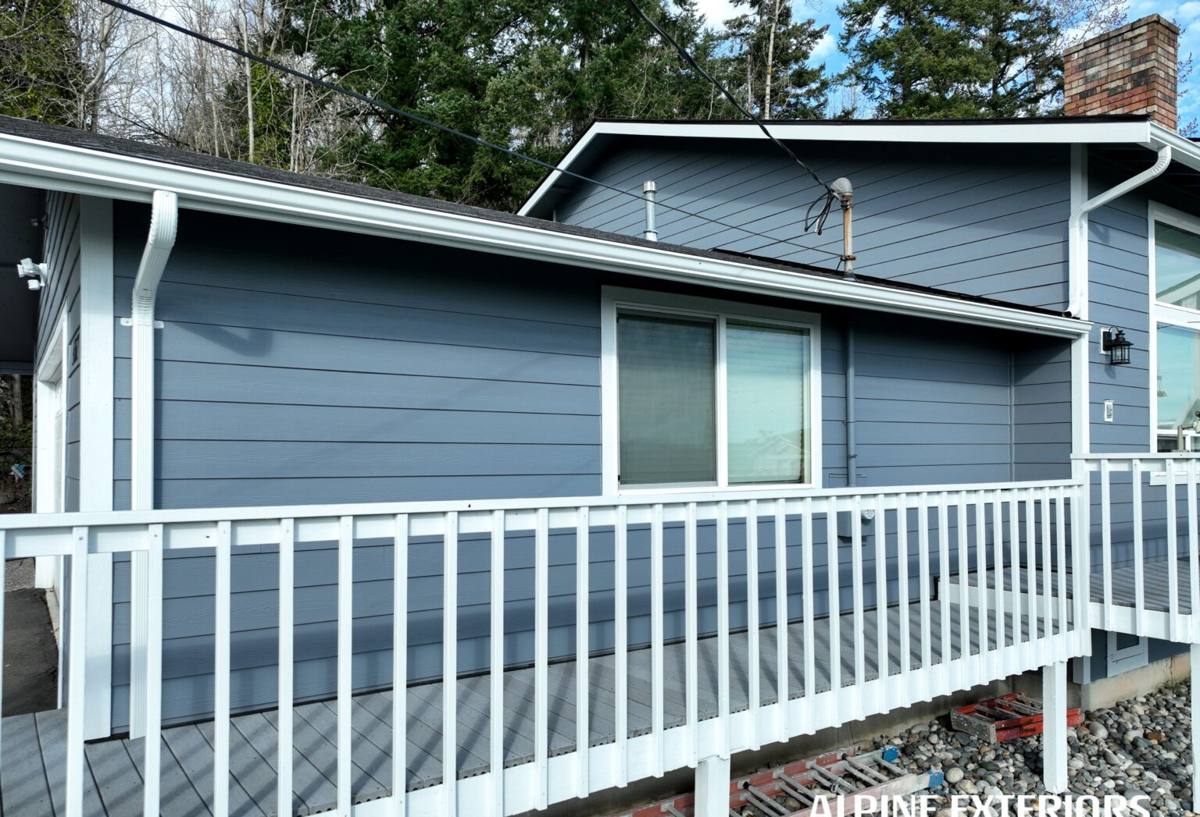
What Driving Rain, Salt-Tinged Air, and Moss Actually Do
Three things wear on roofs in this part of Washington, and Kendall gets a version of all three:
- Driving rain: Storms off the Sound push rain sideways, not straight down. That means water finds its way under shingle tabs, around chimney flashing, and into valleys that a calm-weather roof would shed just fine.
- Salt-tinged marine air: Weather systems moving inland off the coast still carry moisture-laden, salt-influenced air into Whatcom County. It accelerates corrosion on exposed metal — nail heads, flashing edges, gutter fasteners — faster than a dry inland climate would.
- A long moss season: Shade, moisture, and mild temperatures mean moss doesn't just grow in a few wet months here — it has a long runway. Moss holds water against the roof surface, lifts shingle edges, and works its way into the granule layer.
None of these are dramatic on their own. The problem is that they run for most of the year, so a roof in Kendall is rarely getting a real chance to dry out and reset.
Repair or Replace? Reading a Kendall Roof Honestly
Not every roof with moss or a stain on the ceiling needs full replacement. We'd rather tell a homeowner they've got a few good years left than sell a roof they don't need yet. That said, there are signals in this climate that reliably point toward replacement instead of another round of patching:
| Signal | Usually means |
|---|---|
| Granule loss showing bare asphalt in multiple spots | Shingles have lost their weather layer — patching won't restore protection |
| Moss regrowth within a year of cleaning | Roof surface is holding moisture; underlying shingle life is likely short |
| Soft or springy decking underfoot | Water has reached the sheathing — a repair over soft decking won't hold |
| Roof is 20+ years old with original flashing | Flashing seals are past their reliable life even if shingles look okay |
| Leaks appearing in more than one location | Points to a systemic issue (ventilation, underlayment) rather than one bad spot |
If a roof only shows one or two of these, repair is often the honest answer. If several show up together, replacement usually costs less over five years than repeated patch visits.
What a Correct Roof Replacement Actually Involves
A roof replacement done right in a wet, moss-prone area isn't just new shingles over the old layout. The parts that matter most are the ones you don't see once it's finished:
Tear-off and decking inspection
We remove the old roofing down to the deck so we can actually see the plywood or plank sheathing underneath. Any soft, delaminated, or water-stained decking gets replaced before anything new goes down — covering over compromised decking is the single most common shortcut that leads to early failure.
Underlayment built for this climate
Given how much wind-driven rain this area sees, we use synthetic underlayment with ice-and-water shield reinforcement at eaves, valleys, and around every penetration — chimneys, vents, skylights. This is the layer that protects the home if wind ever pushes water past the shingle surface, and it matters more here than in drier parts of the state.
Flashing that won't corrode out early
Flashing takes the brunt of both driving rain and that salt-influenced air. We use corrosion-resistant metal and proper step, valley, and counter-flashing techniques rather than relying on sealant or caulk to do a metal joint's job. Sealant-dependent flashing is one of the most common causes of a "new" roof leaking within a few years.
Ventilation sized for the shade and moisture load
Balanced intake and exhaust ventilation keeps the underside of the deck dry and helps the shingle surface shed moisture instead of holding it. On shaded, tree-covered Kendall lots, undersized or blocked ventilation is a major contributor to both moss growth and premature shingle aging from underneath.
Material Choices for a Wet, Shaded Property
There's no single "best" roofing material — the right call depends on the home's exposure, budget, and how much shade the roof sits under. Here's how the common options actually perform under Kendall-type conditions:
| Material | Moss resistance | Wind-driven rain performance | Considerations |
|---|---|---|---|
| Architectural asphalt shingle | Moderate — improves with algae/moss-resistant granules | Good with proper underlayment and flashing | Best value; wide color range; 25–30 year products common |
| Standing seam metal | High — sheds moisture, little surface for moss to grip | Excellent | Higher upfront cost; longest service life; performs well under trees |
| Cedar shake | Low without diligent upkeep | Good when properly installed and ventilated | Attractive but demands regular maintenance in shaded, wet settings — a maintenance burden many Kendall homeowners want to avoid |
| Synthetic/composite shingle | Moderate to high depending on product | Good | Cedar look without cedar's upkeep; product warranties vary widely |
For heavily shaded Kendall lots specifically, we lean toward steering homeowners away from cedar shake unless they're committed to regular upkeep — not because the material is bad, but because the moisture and shade load in this setting shortens its practical life faster than in a sunnier spot. Architectural asphalt with algae-resistant granules or standing seam metal both hold up with far less ongoing attention.
How the Replacement Process Works
- On-site inspection: We walk the roof, check the attic or crawlspace for ventilation and moisture signs, and assess decking condition where accessible.
- Written estimate: A clear scope covering tear-off, decking allowance, underlayment, flashing, ventilation, and material choice — no vague line items.
- Tear-off and deck repair: Old roofing comes off, decking is inspected and replaced where needed, and debris is hauled off site.
- Underlayment, flashing, and ventilation installation: The protective layers go in before a single shingle is set.
- Roofing installation: Material is installed to manufacturer spec, which matters for warranty coverage as much as it does for performance.
- Final walkthrough: We review the finished roof with the homeowner, including gutters, flashing details, and any ventilation additions.
Moss Prevention Doesn't End at Installation
A new roof in Kendall's tree cover will still see moss spores land on it — that's just the environment. What changes with a correctly installed roof is how the roof responds. Algae-resistant shingle granules, proper ventilation, and keeping overhanging branches trimmed back all slow regrowth substantially. We're happy to walk homeowners through simple upkeep — periodic soft washing, gutter clearing, and a yearly visual check — that keeps a new roof performing for its full rated life instead of fighting moss again in three years.
Why Local Experience in Kendall Matters
Kendall isn't identical to Ferndale proper or the rest of Whatcom County. Lot shading, tree density, and how storms track through the foothills all affect what a roof needs here. A crew that's replaced roofs on Kendall properties before knows to check for decking softness in the shaded north-facing sections first, to size ventilation for tree cover rather than open-sky assumptions, and to flash around the kind of chimney and dormer setups common in this area. That familiarity shows up in fewer callbacks and a roof that's actually built for the property it's on — not a generic install dropped in from a sunnier job across town.
Questions Worth Asking Before You Hire
- Will you inspect and replace soft decking, or just re-roof over what's there?
- What underlayment and ice-and-water shield do you use at valleys and eaves?
- How will you handle ventilation given the shade on this lot?
- What's your flashing approach at chimneys, skylights, and dormers?
- Is the manufacturer warranty tied to a certified installation, and does your install qualify?
- What's included in writing — decking allowance, disposal, cleanup?
A contractor who answers these clearly and specifically, without dodging into vague reassurances, is one worth trusting with a roof that has to hold up to this climate for the next few decades.
If your Kendall roof is showing moss that keeps coming back, soft spots, or a leak that's hard to pin down, we're glad to take a look. We offer free, no-pressure estimates — just fill out the form below and we'll get in touch to schedule a time to walk the roof with you.