 Ferndale
 Roofing Built for Cordata's Climate, Not a Generic Spec Sheet
Cordata sits close enough to the water and open farmland north of Bellingham that roofs here take a specific kind of beating: salt-tinged air moving in off the Strait, long stretches of driving rain through fall and winter, and a moss season that can run eight months out of twelve under the right shade and moisture conditions. A roof that would be fine in a drier inland climate can start showing granule loss, moss colonies, and soft decking within a few years out here if it wasn't installed with this environment in mind. New roof installation in this neighborhood isn't just about swapping old shingles for new ones — it's about choosing materials, underlayment, and ventilation that actually hold up to what Whatcom County throws at a roof year-round.
We install roofs across Ferndale and the surrounding communities, and Cordata's mix of established single-family homes and newer construction gives us a good cross-section of what works and what fails early. This page focuses on that one job — full new roof installation for Cordata homes — and what we've found actually matters here.
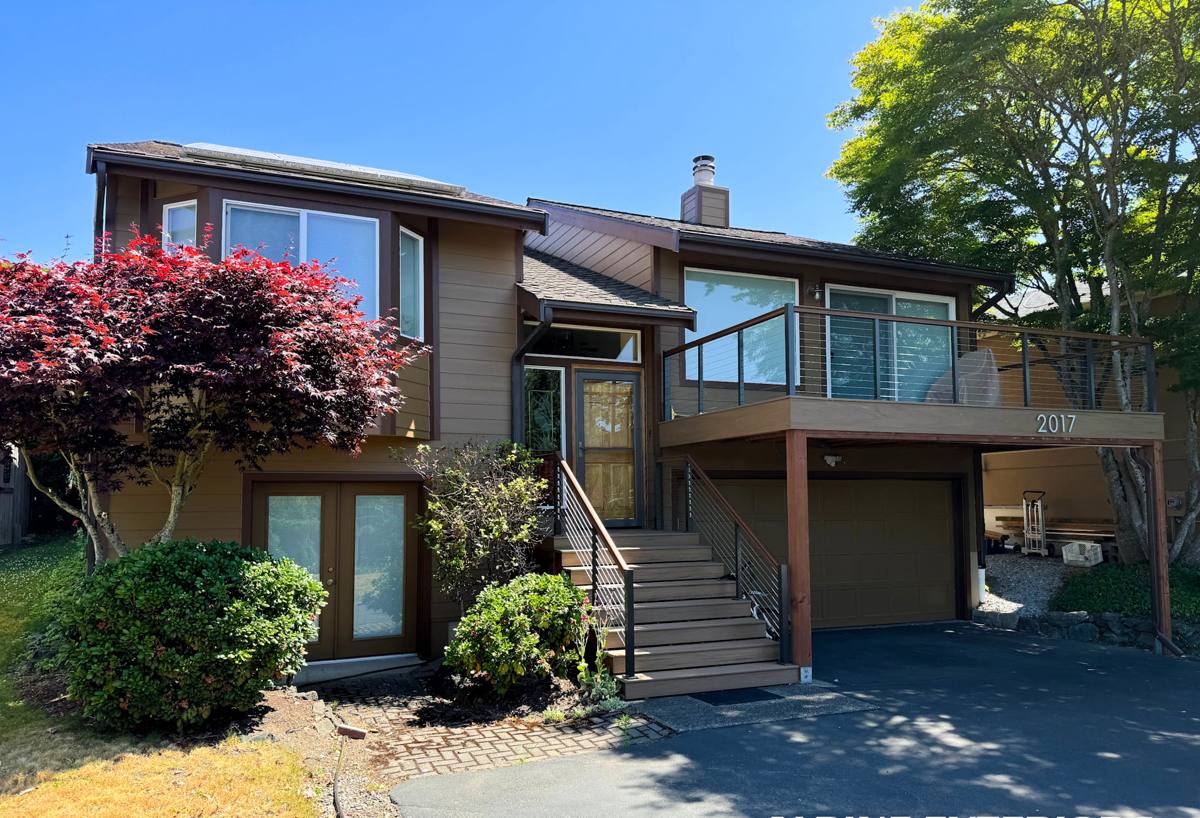
What Cordata's Weather Does to a Roof Over Time
Salt Air and Metal Fatigue
Proximity to Bellingham Bay and the Strait of Georgia means the air carries more salt than most people realize, even several miles inland. Salt accelerates corrosion on exposed fasteners, flashing, and any unprotected metal roofing components. It doesn't ruin a roof outright, but it shortens the useful life of cheap or improperly coated hardware, which is why fastener and flashing material selection matters more here than in a landlocked town.
Driving Rain and Wind-Driven Water
Whatcom County rain rarely falls straight down. Storms off the water tend to push rain sideways against roof planes, valleys, and wall-roof transitions. That means standard nailing patterns and minimal underlayment coverage that might pass in a calmer climate can let water find its way under shingles at the edges, valleys, and penetrations — the places installers are most tempted to cut corners.
Moss, Shade, and Slow-Drying Roof Decks
Cordata has enough tree cover and cloud-heavy stretches that roof surfaces often stay damp longer than they would in full sun. Moss and algae thrive in that environment, and once established, moss holds moisture against the shingle surface, lifts tabs, and accelerates granule loss. A roof installed without moss-resistant materials or without attention to airflow and shading is fighting an uphill battle from day one.
What a Correctly Installed Roof Actually Includes
"New roof" covers a lot of ground, and the difference between a roof that lasts 25-30 years and one that needs attention in year eight usually comes down to what's underneath the visible layer. A correct installation for this area includes:
- Tear-off to bare decking and inspection for rot, soft spots, or delamination — not roofing over existing layers
- Repair or replacement of any damaged sheathing before new material goes down
- Ice-and-water shield or high-quality synthetic underlayment at eaves, valleys, and around all penetrations, sized for our wind-driven rain pattern
- Proper drip edge and starter course installation at all edges
- Correctly lapped and sealed valley flashing, chimney flashing, and wall-to-roof step flashing
- Balanced intake and exhaust ventilation so the attic and roof deck can actually dry out between wet stretches
- Shingle or roofing material with algae- and moss-resistant properties suited to shaded, damp roof planes
- Fasteners and exposed metal components rated for coastal or high-moisture exposure
Skip any one of these and you're not really getting a "new roof" — you're getting new shingles on old problems.
Choosing the Right Roofing Material for a Cordata Home
There's no single "best" roofing material for every house — it depends on the roof's pitch, shading, budget, and how long the homeowner plans to stay in the home. Here's how the common options stack up specifically against Cordata's salt-air, high-rain, moss-prone conditions:
| Material | Moss/Moisture Resistance | Wind-Driven Rain Performance | Typical Lifespan Here |
|---|---|---|---|
| Standard 3-tab asphalt shingle | Fair without algae-resistant granules | Adequate with proper underlayment | 15-20 years |
| Architectural (laminate) asphalt shingle | Good, especially algae-resistant lines | Strong — thicker profile sheds water well | 25-30 years |
| Standing seam metal | Excellent — sheds moss habitat entirely | Excellent | 40-50+ years |
| Cedar shake | Poor without diligent maintenance | Fair — depends on install detail | Highly variable; high upkeep in this climate |
For most Cordata homes, we steer people toward architectural asphalt with algae-resistant granules as the value-for-money standard, and standing seam metal for homeowners who want to minimize moss and maintenance long-term and are comfortable with the higher upfront cost. We generally advise against cedar shake in this specific climate — not because it's a bad-looking product, but because the maintenance burden to keep it moss-free and weathertight under Cordata's shade and moisture pattern is significant, and the honest trade-off doesn't work for most budgets.
Our Installation Process
1. On-Site Inspection and Estimate
We walk the roof and attic, check for existing damage, evaluate ventilation, and talk through material options based on your home's specific exposure — how much shade, which direction storms typically hit, and the roof's current pitch and complexity.
2. Tear-Off and Deck Assessment
We remove existing roofing down to the deck and inspect the sheathing. Any rot or soft spots get flagged and repaired before anything new goes down — this is the step that gets skipped on cut-rate jobs and causes problems years later.
3. Underlayment and Flashing
This is where we build in the wind-driven rain protection: proper underlayment coverage, new flashing at valleys, chimneys, and wall transitions, and correct drip edge at all roof edges.
4. Roofing Material Installation
Shingles or metal panels go down per manufacturer specification, with fastener patterns and exposure suited to our wind and rain conditions — not just the manufacturer's minimum.
5. Ventilation Check
We confirm intake and exhaust venting are balanced so moisture doesn't get trapped in the attic, which matters as much for roof longevity here as the shingles themselves.
6. Final Walkthrough
We review the finished roof with you, cover warranty details, and answer questions about maintenance — including moss prevention going forward.
Why a Crew That Already Works Cordata Matters
Roofing crews that mostly work drier or more sheltered climates sometimes bring assumptions that don't hold up here — lighter underlayment coverage, standard rather than coastal-rated fasteners, or material choices that look fine on paper but struggle against sustained moss pressure. Working regularly in Ferndale and the greater Whatcom County area means we're not guessing at how a roof will perform under local conditions — we're building to what we've actually seen hold up and what's failed early. That includes knowing which roof orientations in this neighborhood tend to hold moisture longest and need extra attention to ventilation and material choice.
Signs a Cordata Home May Need a New Roof Soon
- Granules collecting in gutters or at downspout outlets
- Moss growth on north-facing or heavily shaded roof planes
- Curling, cupping, or missing shingles, especially after a windy storm season
- Soft spots or sagging when walked on (a sign to call a professional, not to walk further)
- Water stains on interior ceilings near exterior walls or chimneys
- A roof approaching or past 20 years old, particularly if the original installation quality is unknown
Catching these early usually means the difference between a planned roof replacement and an emergency repair after a leak has already caused interior damage.
What Affects the Cost of a New Roof
Every roof is different, and we won't quote a number without seeing the job, but the main factors that move the price up or down are worth understanding before you start getting estimates:
| Factor | Why It Matters |
|---|---|
| Roof size and pitch | Steeper roofs take longer and require more safety equipment and labor |
| Material choice | Asphalt, metal, and shake vary significantly in material and labor cost |
| Deck condition | Rotted or damaged sheathing found during tear-off adds repair cost |
| Roof complexity | Valleys, dormers, chimneys, and skylights all add flashing work |
| Ventilation upgrades | Adding or correcting attic ventilation adds cost but protects the investment |
| Tear-off layers | Removing multiple existing layers takes more labor than a single-layer tear-off |
Broadly speaking, a straightforward asphalt shingle re-roof on a typical Cordata home tends to run in the mid-to-upper five figures, with metal roofing costing more upfront but less over the life of the roof. The only way to get a real number is a site visit, since roof size, pitch, and condition vary so much house to house.
Get a Free, No-Pressure Estimate
If your Cordata home's roof is showing moss, granule loss, or is simply getting up in years, we're happy to take a look and give you an honest assessment — no obligation, no pressure. Use the form below to request a free estimate, and we'll walk through your options based on what your roof actually needs.