 Ferndale
 New-Construction Windows Built for Nooksack's Weather
Nooksack sits in a part of Whatcom County where the weather doesn't do anything halfway. Winters bring long stretches of driving rain, low clouds hold moisture against exterior walls for days at a time, and the combination of shade, dampness, and mild temperatures adds up to a moss season that seems to run most of the year. Add in the salt-tinged air that moves through this part of northwest Washington and you've got a climate that's genuinely tough on window openings — not because any one factor is extreme, but because the exposure is constant. A window that's installed correctly here can go decades without a problem. One that's installed carelessly, even with a great product, can start leaking behind the trim before the first winter is over.
New-construction window installation is a different job than swapping out an old window in an existing wall, and it deserves to be treated that way. This page is about what that job actually involves for homes going up in and around Nooksack, and why the installation sequence matters as much as the window brand you choose.
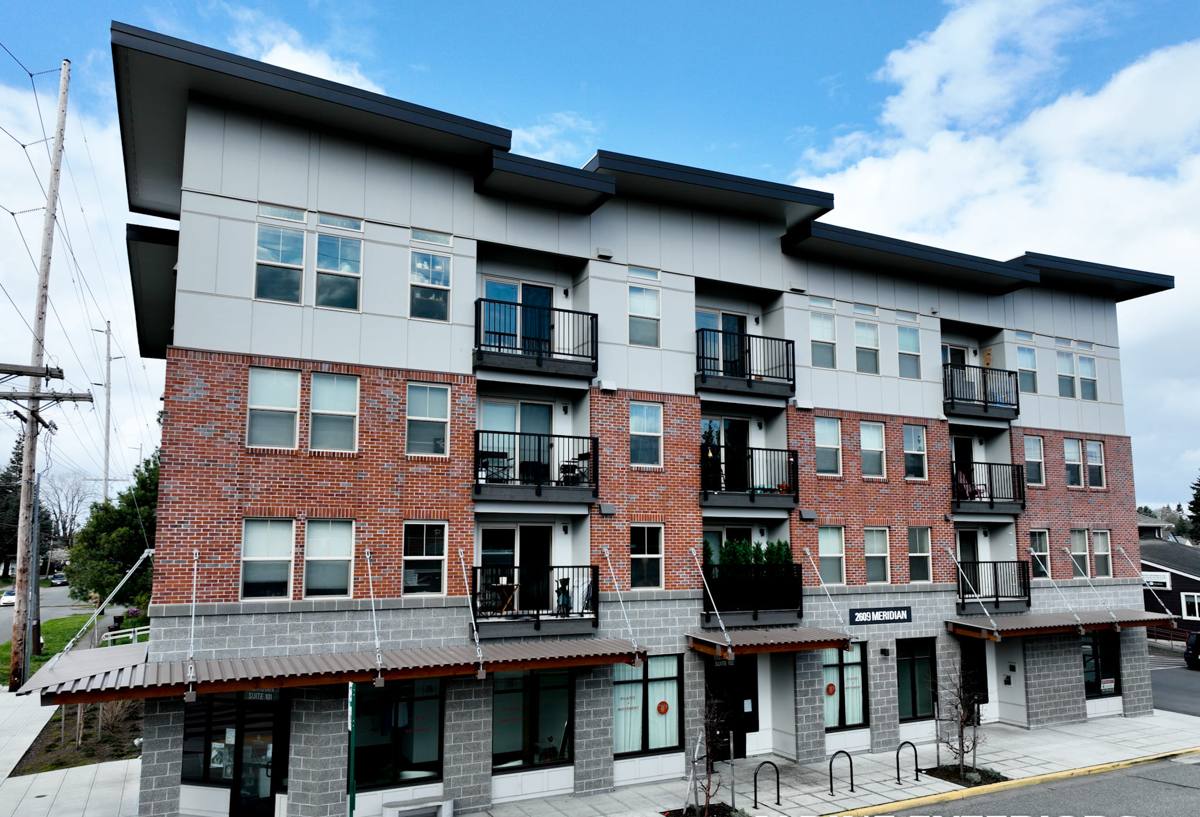
New-Construction vs. Replacement: Why It's a Different Job
"New-construction" windows come with a nailing fin (sometimes called a flange) around the perimeter of the frame. That fin gets integrated directly into the wall assembly — lapped with the weather-resistive barrier (WRB), sealed to a sill pan, and tied into the siding system — before the exterior finish ever goes on. Replacement windows, by contrast, get set into an existing opening with the old siding and trim already in place, which means a different set of flashing details and often a different frame style entirely.
On a new build, we get the advantage of working with an open wall. That's a real advantage — it means the flashing and drainage plane can be built correctly from scratch, with no guessing about what's hidden behind old trim. But it also means there's no room for shortcuts, because whatever gets sealed up behind the siding stays hidden for the life of the house.
What a Correct Installation Includes
- Rough opening checked for square, level, and correct dimensions before the window ever shows up on site
- A sloped sill pan flashing to direct any water that gets past the window back out, not into the wall
- Weather-resistive barrier lapped shingle-style over the flanges — never taped flat, which traps water instead of shedding it
- Corner flashing patches at the sill corners, where most window leaks actually originate
- Proper fastening per the manufacturer's schedule — enough fasteners, in the right locations, without over-driving them and warping the frame
- Backer rod and sealant at the interior and exterior, sized and placed so the window can still expand and contract with temperature
- Sill pan and flashing tied into the siding's own drainage plane so water has one continuous path down and out
Where Whatcom County Weather Puts the Most Stress
A few specific conditions in this region drive how we detail every window opening:
Driving Rain
Wind-driven rain doesn't just fall on a window, it pushes against it. Any gap in the flashing lap or sealant bead becomes a place water gets forced through, not just seeps through. That's why lap sequencing (WRB over the flange, never under) and a properly sloped sill pan matter more here than in drier climates.
Moss and Sustained Dampness
Whatcom County's long damp season means anything that stays wet, stays wet for a while. Moss and algae growth on the exterior isn't just cosmetic — sustained moisture against trim and siding accelerates wear on caulk joints and can hide slow leaks behind healthy-looking siding. Detailing the window-to-siding transition so water sheds cleanly, instead of pooling at the sill or head trim, cuts down on this significantly.
Salt-Influenced Air
This part of the Puget Sound region gets a mild marine influence in its air, which is harder on exposed metal fasteners and hardware than an inland dry climate. We spec corrosion-resistant fasteners and flashing tape rated for this kind of long-term exposure rather than builder-grade materials meant for drier regions.
Our Installation Process
For new-construction work we coordinate directly with the builder or GC, since window installation has to happen at a specific point in the framing and weatherproofing sequence — not before, not after.
| Step | What Happens | Why It Matters |
|---|---|---|
| 1. Rough opening check | Verify dimensions, plumb, level, and square against the window order | Catches framing errors before the window is on site, when they're cheap to fix |
| 2. Sill pan flashing | Install a sloped, sealed pan at the base of the opening | Gives any water that gets past the window a way out instead of into the wall cavity |
| 3. WRB integration | Lap the housewrap or building paper correctly around the opening | Maintains a continuous drainage plane behind the siding |
| 4. Window set and fasten | Set the window plumb and level, fasten per manufacturer spec | A window that's out of square binds, doesn't seal, and wears its hardware early |
| 5. Flange and corner flashing | Seal and tape the nailing fin, with reinforced corner patches | Corners are where the vast majority of window leaks start |
| 6. Siding tie-in | Integrate window trim and flashing with the siding install | Keeps the whole exterior envelope working as one system, not separate parts |
| 7. Final check | Water-test critical openings where practical, confirm operation and seal | Confirms the details are right before the wall is closed up for good |
Choosing Window Materials for This Climate
The frame material matters less than the installation, but it's still worth getting right for a house that will sit through decades of Whatcom County winters.
| Frame Type | Strengths Here | Trade-offs |
|---|---|---|
| Vinyl | Budget-friendly, low maintenance, good energy performance | Frame can expand/contract more with temperature swings; fewer color options |
| Fiberglass | Very stable dimensionally, holds paint well, strong in wet climates | Higher upfront cost than vinyl |
| Wood-clad | Traditional look, good insulator | Cladding protects the exterior, but any breach at the seal exposes wood to our wet climate |
| Aluminum | Slim sightlines, durable frame | Poor insulator unless thermally broken; not our first recommendation for this region |
Whatever material a homeowner or builder chooses, we install it the same careful way — flashing details don't change based on brand, and we don't cut corners on sequencing to save time regardless of the window in hand.
What This Costs to Get Right
New-construction window installation pricing depends more on the number and size of openings, wall complexity, and site access than on the windows themselves, which the builder typically supplies or specifies separately. As a rough guide, expect installation labor and flashing materials to run from a few hundred dollars per opening for straightforward standard-size windows up to noticeably more for large openings, corner windows, or units set high on multi-story walls needing additional access equipment. We'll give a firm, itemized number once we've seen the plans or the framed openings — there's no reason to guess on a job where the details matter this much.
A Checklist for Builders and Homeowners
- Confirm window sizes and rough openings match the approved plans before framing is finalized
- Ask what sill pan flashing method will be used, and confirm it's sloped to drain
- Verify WRB lap sequence — over the flange at the top, under at the sides and sill
- Check that fasteners and flashing tape are rated for long-term exterior exposure, not just interior-grade materials
- Make sure window installation is scheduled to align with the siding crew's sequence, not rushed ahead of or behind it
- Keep a record of window model numbers and installation photos for warranty purposes
Why a Crew That Already Works Nooksack Makes a Difference
New-construction window work only goes smoothly when the window installer and the siding crew are sequencing together, not working around each other. Because we do both, there's no handoff where flashing gets rushed to make room for someone else's schedule, and no finger-pointing later if something behind the siding doesn't perform the way it should. We're already familiar with how homes in this part of Whatcom County get built and what the local weather demands of them, which means fewer surprises for the builder and a tighter, better-sealed result for the homeowner who'll be living with this wall assembly for the next thirty years.
If you're planning a new build in Nooksack or anywhere nearby, we're happy to walk through the plans, talk through window and flashing details with your builder, and give you a straightforward, no-pressure estimate. Use the form below to get started.