 Ferndale
 Roof Repair for Nooksack Homes
Nooksack sits up the valley from Ferndale, in the flatter agricultural country along the Nooksack River, closer to the foothills than the water. It's a quieter setting than the coastal parts of Whatcom County, but the roof over a Nooksack home is dealing with the same underlying weather pattern that shapes exterior work across this whole region: salt-tinged marine air that still reaches this far inland on a wet system, driving rain that gets pushed sideways under shingle edges instead of falling straight down, and a moss season that runs long on shaded, north-facing slopes. This page is specifically about roof repair for homes in and around Nooksack — not a general roofing overview, and not a replacement pitch. If your roof has a leak, a soft spot, or damage from a storm, this is what that job actually looks like done right in this area.
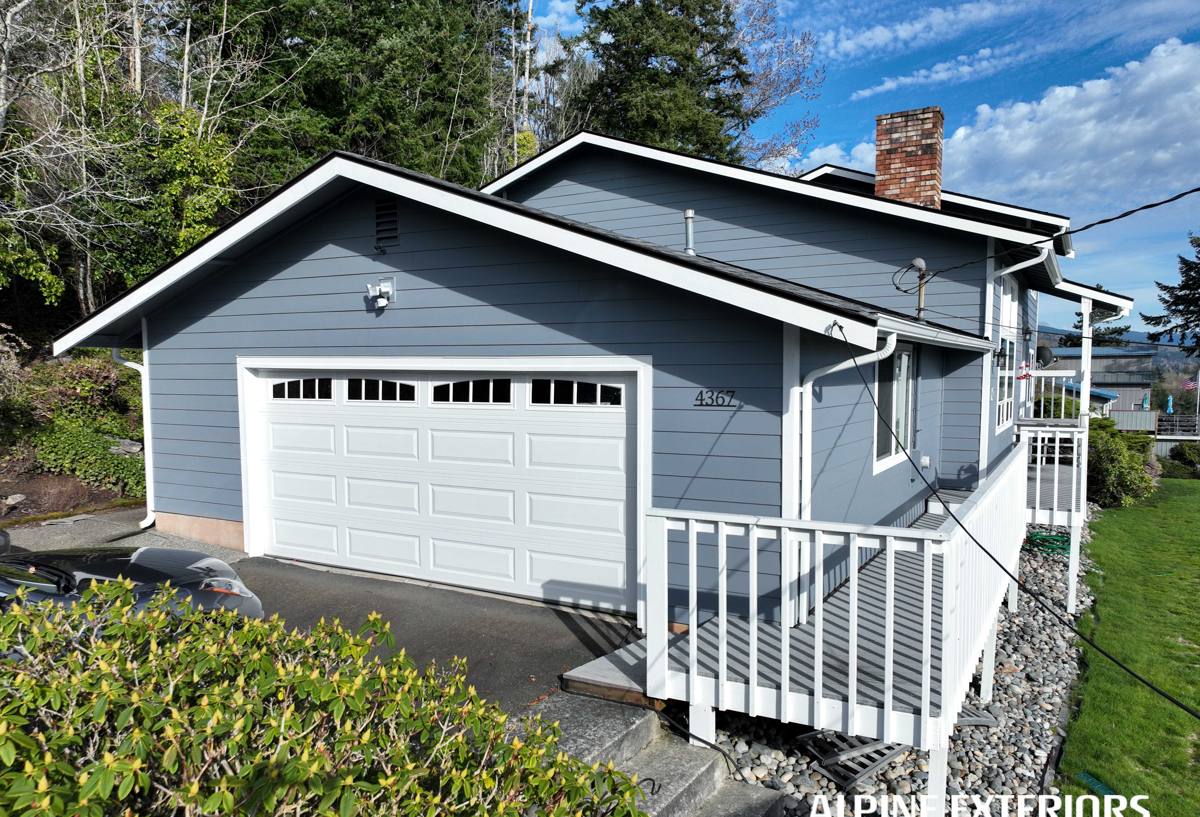
What the Nooksack Climate Does to a Roof
Driving Rain and Wind-Driven Water Intrusion
Storms moving up the valley from Bellingham Bay don't lose all their force by the time they reach Nooksack. Rain still comes in on a wind, and wind-driven rain behaves differently than a straight downpour — it gets pushed up and under shingle edges, into valleys, and around flashing that was only ever sealed for water falling straight down. That's why so many roof leaks in this area start at flashing and transitions rather than in the open field of the roof, and why a repair that only patches the visible shingle without addressing the flashing underneath often fails again within a season or two.
A Long Moss and Mildew Season
Mild temperatures, sustained regional dampness, and plenty of shaded roof area add up to a moss season that stretches across much of the year here. Moss doesn't just look bad — it lifts shingle edges as it grows, holds water directly against the roofing material, and works its way under tabs and flashing over time. A roof that looks intact from the ground can already have moss undermining shingle seals in the shaded valleys and north-facing slopes where sun never fully dries the surface.
Freeze-Thaw Cycling and Valley Dampness
Nooksack sees more frequent hard frosts than the milder coastal towns closer to the water, and that adds a freeze-thaw dimension to any moisture that's already found its way into a roof system. Water trapped under a cracked shingle or worn flashing seal expands when it freezes, which accelerates cracking and separation in a way that a purely wet-but-mild climate wouldn't produce. Combined with the valley's low-lying, slower-draining setting, roofs here get less of a chance to fully dry out between storms than roofs on higher, more exposed ground.
Signs a Nooksack Roof Needs Repair, Not Just a Look
Most roof problems don't announce themselves as a dramatic leak on day one. They show up as smaller signals first, and catching them early is usually the difference between a straightforward repair and a much bigger job once water has been getting into the structure for a while.
- Water stains on interior ceilings or upper walls, especially after a windy storm
- Shingles that are cracked, curling, or visibly missing granules
- Moss buildup concentrated on shaded or north-facing slopes
- Rusted, lifted, or separated flashing around chimneys, vents, or skylights
- Sagging or soft-feeling spots when the roof deck is walked or inspected
- Granules collecting in gutters or at the base of downspouts
- Daylight visible through the roof deck from inside an attic space
- Higher-than-usual heating bills, which can point to a compromised attic or roof seal
None of these on their own means a full replacement is coming, but any of them is worth a real inspection rather than waiting to see if it gets worse on its own.
What a Correct Roof Repair Actually Involves
Diagnosing the Real Source of a Leak
Water rarely shows up on a ceiling directly below where it entered the roof. It can travel along rafters, sheathing, or underlayment before it finds a gap in the drywall or insulation, so tracing a leak back to its actual origin point takes an eyes-on inspection of the attic and roof surface together, not just a guess based on where the stain appears inside. Repairing the wrong spot leaves the real problem in place and the homeowner thinking it's fixed until the next storm proves otherwise.
Flashing Repair Done Right
Given how much local leak activity starts at flashing, correct repair means re-bedding or replacing step flashing, valley flashing, and counter-flashing where it's cracked, rusted, or has pulled away from the surface it's sealing against — not just running a bead of roofing cement over the problem and calling it done. Cement and sealant have a place as a component of a properly detailed repair, but used alone as a patch over failed flashing, they buy a season or two at most before the same leak comes back.
Matching Shingles and Materials
A repair should blend into the existing roof, not stand out as an obvious patch. That means sourcing a shingle that matches the existing product's style, color, and wind rating as closely as possible, and installing it with the same lap and fastening pattern the rest of the roof was built with. On an older roof where the exact original product is no longer available, we'll walk you through the closest realistic match rather than promising a perfect one that doesn't exist.
Checking the Decking Underneath
Any repair that involves pulling shingles back is also a chance to check the roof deck itself for soft spots or rot from long-term moisture. Skipping this step and just re-covering damaged decking is one of the more common shortcuts that leads to a callback, because new shingles over compromised sheathing don't hold fasteners the way they should and the underlying problem keeps spreading.
Moss and Debris Removal
Where moss is part of what's driving the damage, correct repair includes removing it properly — not pressure-washing it off in a way that drives water and granules further under the shingles, but clearing it by hand or with appropriate low-pressure methods and treating the surface to slow regrowth. Gutters and valleys get cleared at the same time, since trapped debris holds water against the roof edge long after the rest of the surface has dried.
Repair vs. Replacement: How We Make the Call
Not every roof problem in Nooksack calls for a full tear-off, and we're not going to sell a replacement when a targeted repair genuinely solves the problem. The honest answer usually comes down to a few concrete factors.
| Factor | Leans Toward Repair | Leans Toward Replacement |
|---|---|---|
| Extent of damage | Isolated to one section, valley, or flashing point | Widespread across multiple slopes or the whole roof |
| Roof age | Well within expected service life for the material | At or past the material's typical lifespan |
| Decking condition | Solid, dry sheathing under the affected area | Soft, rotted, or repeatedly repaired decking |
| Leak history | First occurrence or a single known cause | Recurring leaks in different spots over time |
| Material availability | Close match to existing shingle still obtainable | Original product discontinued, leaving a visible patchwork |
We'll walk the roof, tell you honestly which column your situation falls into, and explain the reasoning rather than just handing you a number. If a repair is the right call, that's what we'll recommend.
How Our Roof Repair Process Works
- Inspection: We walk the roof and, where accessible, the attic, to find the actual source of the problem rather than just the symptom you noticed.
- Diagnosis and explanation: We show you what we found and explain in plain terms what's causing it, including whether it's a repair or a bigger conversation about replacement.
- Written estimate: A clear, itemized estimate before any work starts, with no pressure to sign on the spot.
- The repair itself: Flashing, shingles, decking, and moss or debris removal addressed as a connected system, not a single patched spot.
- Cleanup and walkthrough: Debris cleared, gutters checked, and a final look together so you know exactly what was done.
Why a Local Nooksack Crew Matters
A crew that works this part of Whatcom County regularly has a feel for how driving rain, valley dampness, and freeze-thaw cycling actually behave on real roofs here through a full year — not just how a shingle performs on a spec sheet. That shows up in practical ways: knowing which slopes and valleys hold moss longest, which flashing details tend to fail first on older Nooksack homes, and how to schedule around the weather windows this area actually gets rather than promising a timeline that ignores it. It also means being reachable afterward. A roof repair should come with a crew that's still local and answering the phone if a question comes up next winter, not a company that worked the area for one storm season and moved on.
What to Expect When You Call Us
- An honest, in-person inspection of the roof and, where relevant, the attic — not a drive-by estimate
- A clear explanation of what's actually causing the problem, in plain language
- A straight answer on repair versus replacement, based on the condition of your roof rather than what's easiest to sell
- A written estimate with no pressure to commit on the spot
If your Nooksack home has a roof leak, storm damage, or a spot that just doesn't look right, we're glad to come take a look. Reach out using the form below to schedule a free, no-pressure estimate.