 Ferndale
 Siding Repair Built for the Nooksack Area's Climate
Homes along the Nooksack corridor near Ferndale deal with a specific combination of weather stress that a lot of siding simply isn't built to handle over the long run. You've got salt-tinged air drifting in off the Salish Sea, long stretches of driving rain that push water sideways into every seam and joint, and a moss season that can run most of the year in shaded, low-lying spots along the river valley. None of those things alone is unusual for Western Washington. Together, and applied to a house year after year, they find every weak point in a siding system fast.
That's the difference between a siding repair that actually holds and one that fails again in eighteen months. A patch that looks fine on a dry August afternoon can still let water behind the wall the next time a Pacific storm rolls through in November. Repair work in this area has to account for how water moves, where moss and organic growth take hold, and how the existing material has already aged — not just fill a hole and repaint.
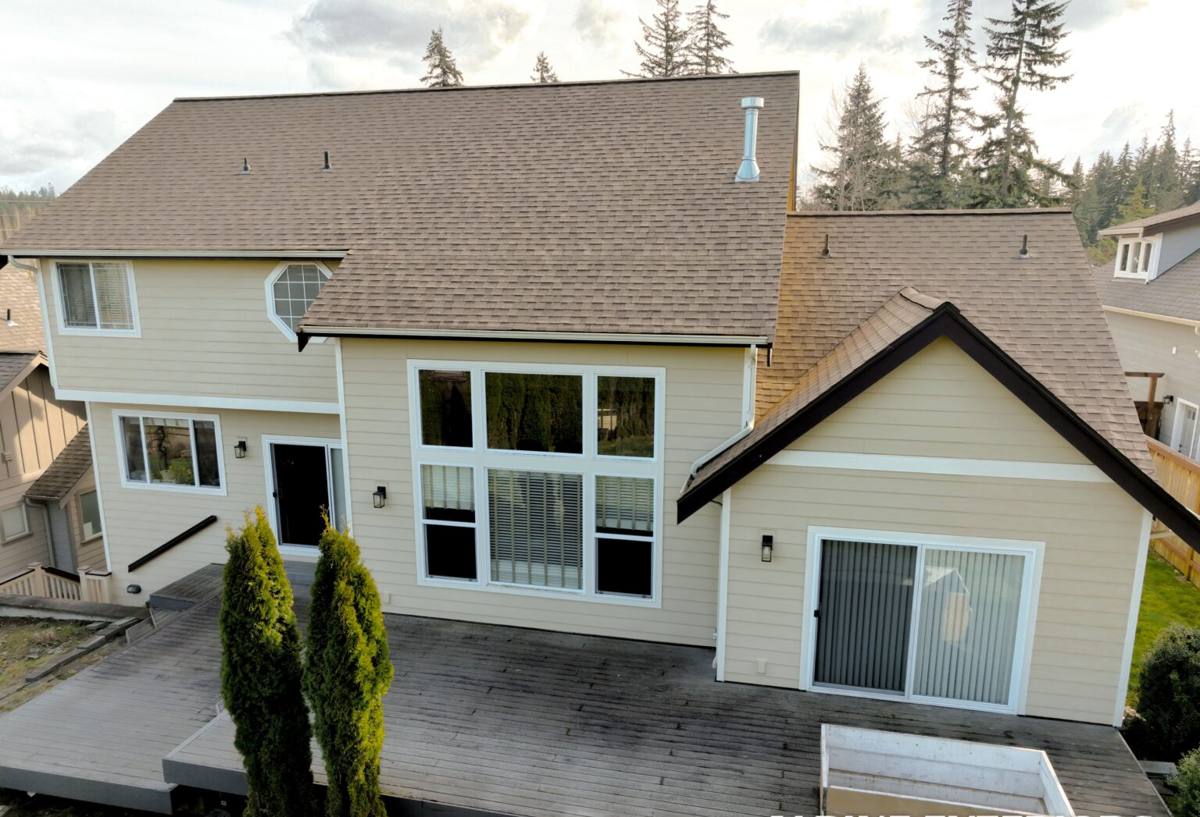
Common Siding Problems We See on Nooksack-Area Homes
Most of the repair calls we get in this part of Whatcom County fall into a handful of recurring categories. Recognizing which one you're dealing with helps set expectations for what the fix actually involves.
Moisture Intrusion and Hidden Rot
This is the most consequential issue and the easiest to miss from the ground. Water works its way in through failed caulk joints, poorly flashed windows and trim, or siding that was face-nailed too tight and can't move with seasonal humidity. By the time you see staining, soft spots, or bubbling paint on the surface, there's often sheathing or framing damage behind it that needs to be addressed before any new siding goes back on.
Buckling, Cupping, and Cracking
Older wood, engineered wood, and some fiber cement installations that weren't fastened or gapped correctly will buckle or cup as they take on and release moisture through the wet months. Cracking shows up most often at butt joints, around fasteners, and near corners where the material flexes the most.
Moss, Algae, and Organic Staining
Shaded elevations and anything close to overhanging trees hold moisture longer, which is exactly what moss and algae need to establish. This is cosmetic at first, but moss holds water against the siding surface far longer than open air would, and over time that constant dampness accelerates whatever underlying weakness already exists in the material or the caulking.
Caulk and Trim Failure
Caulk is a maintenance item, not a permanent seal, and it's usually the first thing to give out. Once it cracks or pulls away at trim boards, window casings, and butt joints, it stops doing its job and starts funneling water exactly where you don't want it — behind the siding instead of off of it.
Impact Damage
Storm debris, ladders, landscaping equipment, and general wear can crack or chip individual boards or panels. These are usually the most straightforward repairs, provided the replacement material matches what's already on the wall.
Repair or Replace? How We Make That Call
Not every siding problem calls for a full re-side, and we're not going to tell you it does. But a repair only makes sense if the underlying wall assembly is sound and the damage is truly localized. Here's roughly how we evaluate it:
| Signal | Usually a Repair | Usually Points to Replacement |
|---|---|---|
| Extent of damage | Isolated to a few boards or one wall section | Spread across multiple elevations |
| Moisture readings behind siding | Localized, sheathing still sound | Elevated readings across a broad area |
| Age and condition of remaining siding | Sound material, recent-ish install | Siding nearing end of service life overall |
| Material match availability | Matching profile/color available or blendable | Discontinued product, no reasonable match |
| Underlying sheathing/framing | Intact once opened up | Soft, delaminated, or rotted |
The only way to know for sure is to open up the affected area and, where moisture is suspected, take actual readings rather than guess from what's visible on the surface.
What a Correct Siding Repair Actually Involves
Moisture Testing First
Before we cut into anything, we check for trapped moisture with a meter, not just a visual scan. Siding that looks fine from six feet away can be sitting over sheathing that's been slowly absorbing water for a season or more. Skipping this step is how a "quick patch" turns into a callback a year later.
Removing Damage Back to Sound Material
We pull damaged boards or sections back to a point where the surrounding material, flashing, and house wrap are all in good condition. Patching directly over compromised material just hides the problem instead of solving it.
Correcting the Water Management, Not Just the Cosmetics
Most repair failures trace back to flashing and gaps, not the siding material itself. That means proper kick-out flashing at rooflines, correct clearances at grade and at trim, and butt joints that are actually weatherproofed rather than just butted and caulked.
Matching James Hardie's Factory Finish
Because we install exclusively with James Hardie fiber cement, repair sections come from the same HardiePlank and HardieShingle product lines already on the majority of the homes we service, finished with the same ColorPlus factory coating process. That matters for a repair: a factory-baked finish holds its color far more consistently than field-painted patches, which tend to weather at a different rate and become a visible mismatch within a couple of seasons.
Why We Only Repair With James Hardie Fiber Cement
We don't install or patch with vinyl, LP SmartSide, primed wood, or other fiber cement brands. That's a deliberate standard, not a lack of options. James Hardie's HZ product lines are engineered specifically for Pacific Northwest moisture exposure, the material is non-combustible, and the ColorPlus finish is backed by a real, transferable warranty. When we open up a wall to make a repair, we want the replacement material to perform at least as well as — ideally better than — what's coming out, and for homes already sided in Hardie, that means using Hardie. For homes currently sided in something else, we'll always be straight with you about whether a true repair is realistic or whether you're better served planning for a full re-side down the line.
Our Nooksack Siding Repair Process
- On-site inspection. We look at the damage, the surrounding siding condition, and take moisture readings where intrusion is suspected.
- Honest scope. We tell you plainly whether this is a repair, a section replacement, or something that's really pointing toward a full re-side — before any work starts.
- Material sourcing and color matching. We confirm the exact HardiePlank or HardieShingle profile and ColorPlus color, or plan a field-finish approach if the original run is discontinued.
- Removal and structural check. Damaged siding comes off, sheathing and framing get inspected, and anything compromised underneath gets addressed first.
- Flashing and water management correction. We fix the actual cause of the failure, not just the symptom.
- Installation to manufacturer spec. Correct fastening, gapping, and caulking at every joint and penetration.
- Final walkthrough. We show you what was found, what was fixed, and what to watch going forward.
Why Local Experience Matters for This Kind of Work
A crew that already works the Nooksack area regularly has a working knowledge of how houses in this specific stretch of Whatcom County actually fail — which elevations catch the worst of the wind-driven rain, which yards hold enough shade and river-valley humidity to grow moss year-round, and which older installations in the area were done with details that don't hold up long-term. That's not something you get from a general contractor passing through once. It shows up in faster, more accurate diagnosis and in repairs that account for the next ten years of weather, not just the visible damage today.
Maintenance Checklist to Extend the Life of a Repair
- Walk your exterior once or twice a year, especially after major fall and winter storms, and look for cracked caulk or gapped trim joints.
- Keep gutters clear so overflow isn't running down the siding face during heavy rain.
- Trim back vegetation that's shading and holding moisture against any wall section.
- Address moss or algae staining early with a gentle, non-pressure-washed cleaning approach rather than letting it establish.
- Watch for soft spots or bubbling paint near ground level and around window trim — early signs of moisture intrusion.
- Don't caulk over a problem you haven't identified; get moisture readings first if you suspect something is wrong behind the surface.
If you're seeing damage, staining, or soft spots on your siding anywhere in the Nooksack area, we're glad to come take a look. The estimate is free, there's no pressure to move forward, and you'll get a straight answer about whether it's a repair or something bigger — just fill out the form below to get started.