 Ferndale
 Energy-Efficient Windows for a Home Surrounded by Water on Three Sides
Point Roberts occupies a strange spot on the map — an American exclave hanging off the bottom of a Canadian peninsula, connected to the rest of Whatcom County only by a drive back up through British Columbia. That geography isn't just a curiosity for homeowners here; it means almost every property in Point Roberts sits close to open water, with very little land mass around it to break wind or absorb salt spray before it reaches a house. Windows take the brunt of that exposure more than almost any other part of the building envelope, since they're where the wall assembly has the most seams, the most hardware, and the most opportunity for wind-driven rain and marine air to find a way in.
We work on siding, roofing, windows, and decks throughout Ferndale and the surrounding parts of Whatcom County, and Point Roberts is one of the more demanding places we work because of how exposed most lots are to open water on multiple sides. When we talk about "energy-efficient windows" for a property out here, we mean something more specific than a glazing upgrade — we mean a window and installation package built to hold its seal, resist corrosion, and keep performing through decades of salt air, driving rain, and a moss season that runs longer than it does almost anywhere else in the county.
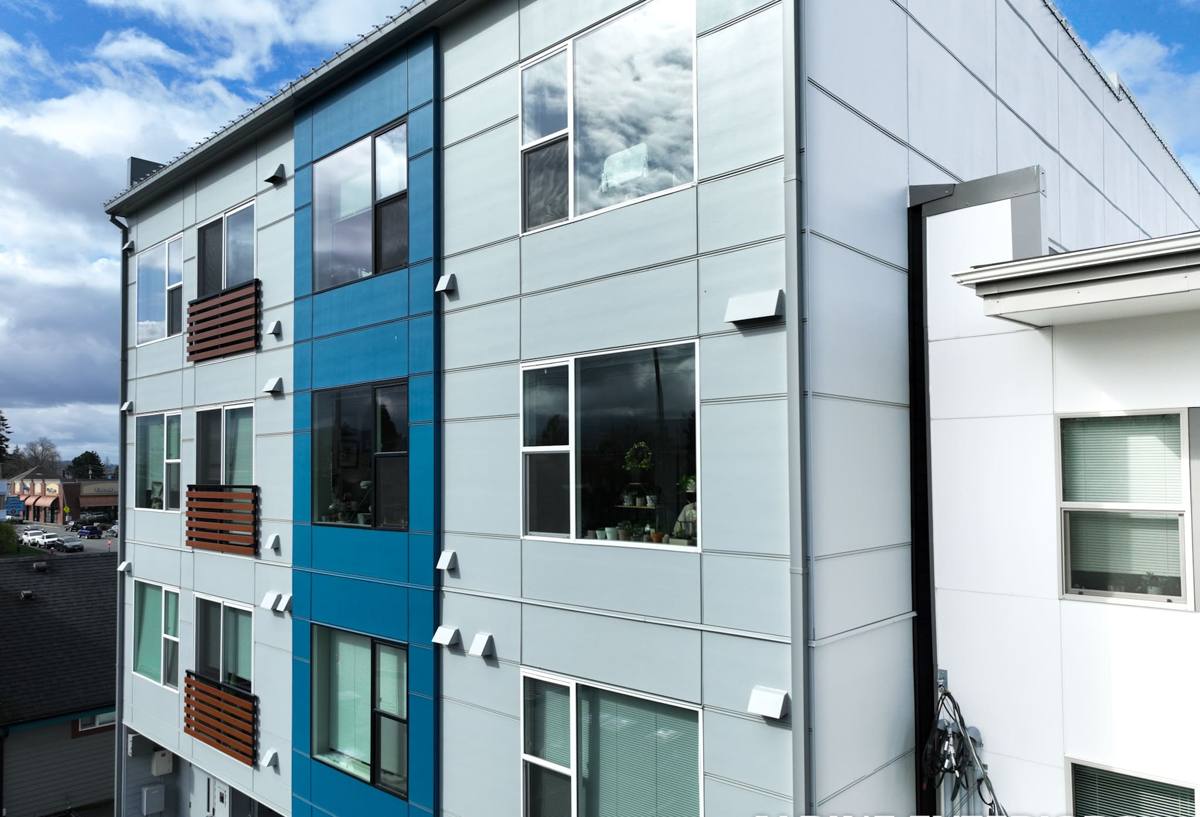
What Point Roberts' Location Does to Windows
Salt Air on Every Side
Most Whatcom County properties deal with marine air carried inland on storms. Point Roberts deals with it constantly, from more directions, because the peninsula has water on three sides and almost no inland buffer. Salt-laden air accelerates corrosion in hardware, fasteners, and lower-grade window components, and it breaks down site-applied finishes faster than a drier or more sheltered setting would. Hardware and seals chosen without that exposure in mind tend to show it early — stiff or pitted hinges, corroded locks, and weatherstripping that fails ahead of schedule.
Wind-Driven Rain
Open water on multiple sides means very little windbreak, and storms coming off the Strait of Georgia push rain sideways into window openings rather than straight down. That's a tougher test for a window installation than total rainfall alone suggests, because wind-driven rain gets pushed into flashing seams and frame joints that a calmer, more sheltered site would rarely stress. A window that performs fine somewhere inland can still leak here if the flashing and sealing detail isn't built for it.
A Long Moss and Condensation Season
Mild, damp conditions through most of the year keep moss and mildew active on shaded walls and window trim longer here than in drier parts of the county, and older wood sills and frames are a common place it takes hold. Inside the house, the gap between a heated interior and a cold, damp exterior creates real condensation pressure on glass and frames — fogged panes, moisture on interior sills, and drafts that get worse rather than better each winter are common complaints in older Point Roberts homes.
The Logistics of Working on an Exclave
Point Roberts' isolation affects more than climate exposure — it affects how a window project actually gets built and delivered. Custom-sized replacement windows already carry manufacturer lead times of several weeks in this region, and getting materials and crews to a property that's only reachable by driving back through a Canadian border crossing adds real scheduling considerations on top of that. We plan Point Roberts jobs around those logistics from the start rather than treating the exclave like any other stop on a Whatcom County route.
What "Energy-Efficient" Actually Means for a Window
Energy-efficient window ratings can be confusing when they're printed on a spec sheet, but they translate into things a homeowner actually feels: fewer drafts, less condensation, and a more even indoor temperature between rooms with a lot of glass and rooms without it.
U-Factor and Solar Heat Gain Coefficient
U-factor measures how well a window resists heat loss — lower is better for a marine climate like this one, where keeping heat inside during long damp stretches matters more than blocking summer sun. Solar heat gain coefficient (SHGC) measures how much solar heat passes through the glass; for a Point Roberts property that isn't dealing with intense summer sun the way an inland or southern climate would, U-factor typically matters more to comfort and energy bills than SHGC does, though both numbers are worth reviewing together.
Double-Pane vs. Triple-Pane Glass
Double-pane windows with a quality low-E coating and gas fill are a solid, proven standard for this climate and cover most homeowners' needs. Triple-pane adds another layer of insulation and can help further with sound and condensation resistance, at added cost and weight — worth discussing for a room with unusually large glass or persistent condensation problems, but not something every window in a house needs.
Low-E Coatings and Gas Fills
Low-emissivity (low-E) coatings are a microscopically thin layer that reflects heat back into the room during cold months, and argon or krypton gas fill between panes slows heat transfer further than plain air would. Both make a measurable difference in a climate defined by long damp winters, and both also reduce the interior condensation that shows up on cold glass — one of the more common complaints we hear from Point Roberts homeowners with older windows.
NFRC Labels and Washington's Energy Code
Every legitimate replacement window carries an NFRC (National Fenestration Rating Council) label listing its U-factor, SHGC, and other performance numbers, which lets you compare products on real data instead of marketing language. Washington's state energy code sets minimum performance requirements for replacement windows, and we make sure what we install meets or exceeds those requirements rather than treating code minimums as a ceiling.
Frame Material: Built to Handle Salt Air and Moisture
Frame material matters as much as the glass package for a property with this much sustained water exposure. We install vinyl and fiberglass systems suited to a wet, salt-exposed marine climate, and we walk homeowners through the real trade-offs rather than defaulting to whichever product has the highest margin.
| Frame Material | How It Handles This Climate | Trade-Offs |
|---|---|---|
| Vinyl | Resists rot and corrosion well; performs reliably in wet, mild climates | Limited color range; can expand and contract more than fiberglass across temperature swings |
| Fiberglass | Very dimensionally stable; holds paint and finishes well under sun and salt exposure | Higher upfront cost than vinyl |
| Aluminum (uncladded) | Strong, but conducts heat and cold readily and is prone to corrosion in salt air without special coatings | Generally a poor energy-efficiency fit for a marine exclave like this one |
| Wood (unclad) | Traditional appearance, but vulnerable to rot and moss growth without diligent maintenance | High maintenance burden given how long the moisture season runs here |
We don't install unclad wood or uncladded aluminum on Point Roberts properties as a rule — not because either product is inherently bad, but because a peninsula exposed to water on three sides puts more sustained stress on frame material than either handles well without a level of upkeep most homeowners don't want to sign up for.
What Correct Installation Looks Like on This Exposure
A quality window installed with sloppy flashing will leak on a Point Roberts property faster than almost anywhere else in the county, given how directly and consistently wind-driven rain hits most lots here. We treat flashing and sealing detail as the deciding factor in whether a window installation lasts one wet winter or several decades.
Full-Frame Replacement vs. Insert Replacement
Insert (or "pocket") replacement windows go into the existing frame and can be a reasonable option when that frame is still structurally sound and properly flashed. Full-frame replacement removes the old frame down to the rough opening, which costs more in labor but lets us correct old flashing mistakes, address any hidden rot, and start the water-management detailing over from scratch. On a property that's taken years of direct salt air and driving rain, we check the existing frame and flashing carefully before recommending one approach over the other.
Flashing and Sealing Details
Correct installation means flashing that laps properly with the surrounding weather-resistive barrier and siding, water directed out and away from the rough opening instead of trapped behind it, and every seam sealed with materials rated for sustained coastal moisture exposure. Caulk plays a supporting role in that system — it is not a substitute for flashing that's lapped correctly, and relying on caulk alone is one of the more common causes of window water damage we find on older homes here.
Signs Your Windows Are Costing You Money
- Fogging or visible moisture trapped between panes on a double-pane window
- Noticeable drafts or cold spots near the frame even when the window is fully latched
- Wood sills or trim that feel soft, look discolored, or show visible rot or moss growth
- Hardware that's stiff, corroded, or harder to operate than it used to be
- Visible gaps or daylight where the frame meets the siding
- Rising heating bills that track with a specific room or wall of the house
- Condensation pooling on interior sills during cold, wet stretches
Cost Factors for Point Roberts Window Projects
| Factor | What It Affects | Why It Matters Here |
|---|---|---|
| Frame material | Upfront cost and long-term maintenance | Salt air exposure on multiple sides makes corrosion-resistant material worth the added cost |
| Full-frame vs. insert replacement | Labor scope and ability to fix hidden flashing issues | Older Point Roberts homes often have flashing that was never properly integrated in the first place |
| Glass package (panes, coatings, gas fill) | Energy performance and condensation resistance | Long damp winters make low-E coatings and gas fill a meaningful upgrade rather than a luxury |
| Number and size of openings | Total material and labor cost | Larger or custom-sized openings extend manufacturer lead times |
| Site logistics | Scheduling and delivery timing | Materials and crews reaching Point Roberts require routing through a border crossing, which needs to be planned into the project timeline |
Exact pricing depends on the specific property, its exposure, and the condition of the existing openings, which is why we walk the home in person and give a written estimate rather than quoting off a generic price list.
Why a Local Crew Matters in Point Roberts
A crew that already works this stretch of Whatcom County understands that Point Roberts isn't just "another coastal property" — it's a small exclave with water on three sides, minimal windbreak, and logistics that don't apply anywhere else we work. That shows up in practical decisions: how much lap a flashing detail gets, which hardware grade actually holds up against near-constant salt air, and how a project gets scheduled so that a border crossing doesn't turn into a delay mid-installation. We build those considerations into every Point Roberts estimate from the start instead of treating the exclave as an afterthought on a standard Whatcom County route.
What to Expect When You Call Us
- An on-site look at your existing windows — frame condition, seal integrity, hardware function, and how current flashing ties into the surrounding siding
- A straightforward read on which windows are reasonable repair candidates and which make more sense to replace
- A clear explanation of which frame material and glass package make sense for your property's specific exposure
- A written estimate, with realistic lead times factored in, and no pressure to sign on the spot
If your Point Roberts home has drafty, foggy, or hard-to-operate windows — or you just want an honest read on whether repair or replacement is the right call — we're glad to take a look. Reach out using the form below to schedule a free, no-pressure estimate.