 Ferndale
 Siding a Home on Point Roberts Is Its Own Project
Point Roberts sits on its own peninsula, cut off from the rest of Whatcom County by an international border, surrounded on three sides by water. That geography is exactly why siding work here needs more thought than a standard install a few miles inland. The same salt-laden air and wind-driven rain that make the area beautiful are also what wear down the wrong siding material faster than homeowners expect. We install fiber cement siding on Point Roberts homes specifically because it holds up to those conditions, and we've built our process around the practical realities of working on a peninsula that most contractors treat as too much hassle to bother with.
This page focuses on one job: fiber cement siding installation for homes in Point Roberts. Not a general overview of siding options, not a company-wide sales pitch — just what your home actually needs here, what a correct installation looks like, and why the crew you hire matters more in this location than almost anywhere else in the county.
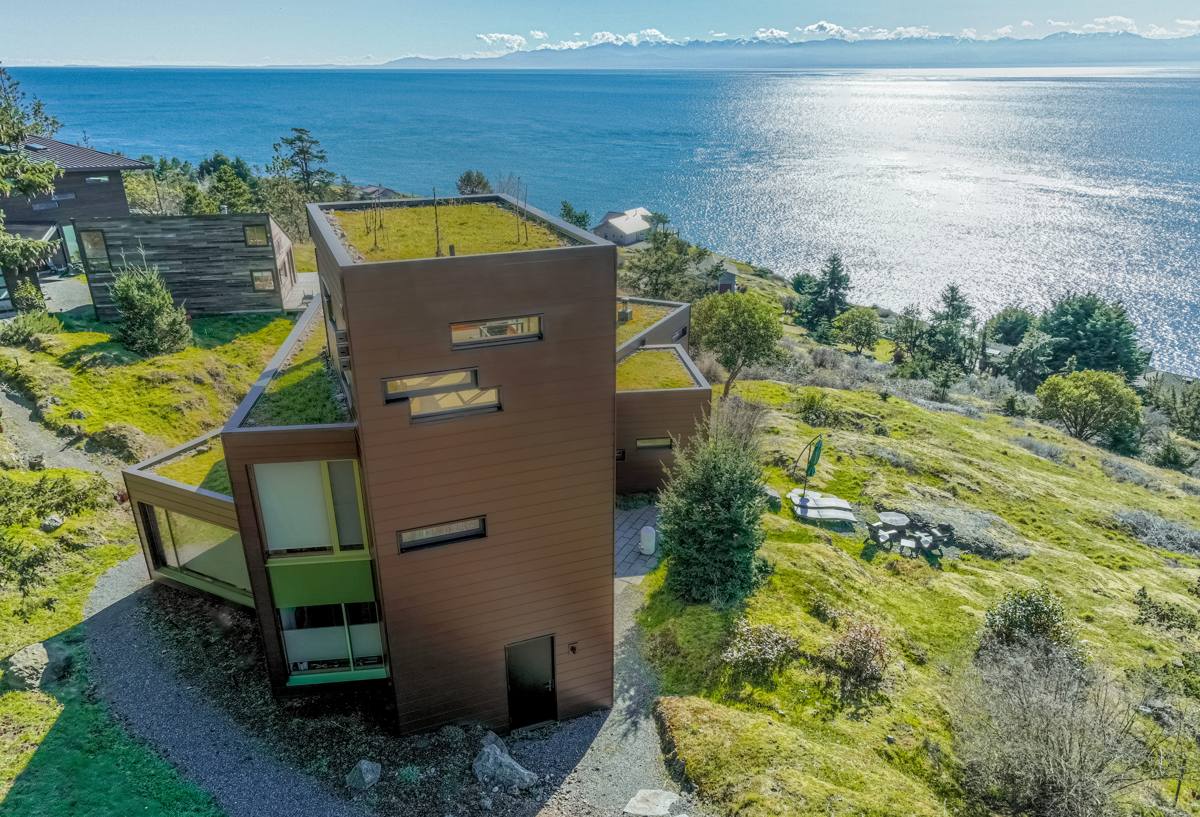
What the Point Roberts Climate Does to Siding
Three things define the climate load on a Point Roberts exterior, and all three compound each other:
Salt Air
Homes close to the water take on a steady drift of salt-laden moisture. Over years, that salt exposure accelerates corrosion on fasteners and trim, and it speeds up the breakdown of finishes that weren't engineered to resist it. Paint films that would last a decade inland often chalk, fade, or lift years earlier on a marine-exposed wall.
Driving, Wind-Driven Rain
Point Roberts gets weather straight off open water with little to break the wind. That means rain doesn't just fall on siding — it's driven sideways into laps, corners, and butt joints. Any siding system with weak seams, poor flashing details, or a finish that absorbs water is going to show it first in a location like this.
A Long Moss Season
Shaded walls, damp ground, and mild winters add up to a moss and algae season that runs much longer here than in drier parts of the state. North-facing and tree-shaded elevations are especially prone to green streaking and moss buildup where moisture lingers against the wall surface.
None of this makes Point Roberts an unusual place to live — it's a genuinely beautiful stretch of Whatcom County. But it does mean the siding material and the installation detailing matter more here than they do on a dry, inland lot.
Why We Only Install James Hardie Fiber Cement Here
We don't offer vinyl siding, LP SmartSide, cedar, primed spruce, or other fiber cement brands like Cemplank or Allura. That's a deliberate standard, not a lack of options, and it matters even more on a peninsula exposed to salt air and constant moisture:
- Non-combustible core: Hardie fiber cement won't feed a fire the way wood-based products can, which matters for insurance and peace of mind in any coastal or wooded setting.
- Moisture stability: Fiber cement doesn't swell, delaminate, or rot the way engineered wood products can when they take on repeated moisture cycling.
- Factory-applied ColorPlus finish: Baked-on color resists the fading and chalking that field-applied paint struggles with in salt air, and it holds up to the freeze-thaw and UV cycling of a marine climate far longer than site-painted finishes.
- Climate-engineered product lines: Hardie builds its HZ5 product formulation for regions with higher moisture exposure — which describes Point Roberts far better than a one-size-fits-all siding product does.
- A real, transferable warranty: Backed by the manufacturer, not just the installer, which matters when a home changes hands.
We're not going to tell you vinyl or engineered wood siding is junk — plenty of homes have them and get by fine, especially in milder, drier locations. But we've made a professional call: on a peninsula that takes this much salt, wind, and moisture, we only put our name behind a product built for it. That's why every Point Roberts installation we do is James Hardie fiber cement.
What a Correct Installation Actually Involves
Fiber cement is only as good as the installation behind it. A rushed or under-detailed job on a marine-exposed wall will trap moisture behind the siding regardless of how good the board itself is. Here's what we build into every install:
Drainage Plane and Rain Screen Gap
Water-resistive barrier goes on first, lapped correctly from the bottom up, with a drainage gap behind the siding so any moisture that does get past the surface has somewhere to go besides your wall sheathing. This detail matters far more on a wind-driven-rain site than it does on a sheltered inland lot.
Flashing at Every Penetration
Windows, doors, hose bibs, light fixtures, and roof-wall intersections all get proper flashing and integration with the water-resistive barrier — shingle-fashion, so water sheds down and out, never behind the siding. This is where most of the moisture problems on any home actually start, not with the siding material itself.
Fastening and Clearances
Hardie's published fastening schedule, corrosion-resistant fasteners appropriate for a salt-air environment, and correct clearance from grade, roofing, and decks — typically several inches minimum — so splashback and standing moisture don't sit against the bottom course.
Sealant Selection and Joint Treatment
Not every caulk is rated for the movement and UV exposure a marine climate puts on it. We use sealants matched to Hardie's specifications at butt joints and trim intersections, and we keep field-caulked joints to a minimum by favoring factory-finished trim and proper overlaps wherever possible.
Installation Checklist We Run on Every Point Roberts Job
- Water-resistive barrier installed and lapped correctly before any siding goes up
- Rain screen/drainage gap confirmed behind the siding field
- Flashing integrated at every window, door, and roof-wall intersection
- Minimum clearance maintained from grade, decks, and roofing
- Corrosion-resistant fasteners driven to Hardie's published pattern
- Butt joints and trim sealed with manufacturer-approved sealant
- Finished walls inspected for gaps that could trap moisture or invite moss growth
How Siding Materials Actually Compare in This Climate
Homeowners on Point Roberts often come to us already comparing a few options. Here's an honest look at how the common choices hold up specifically against salt air, wind-driven rain, and a long moss season:
| Material | Salt Air Resistance | Wind-Driven Rain Behavior | Moss/Algae Resistance |
|---|---|---|---|
| James Hardie Fiber Cement | Strong — non-combustible, dimensionally stable | Strong when properly flashed and gapped | Good; factory finish resists surface staining better than painted wood |
| Vinyl Siding | Moderate; can become brittle over time with UV/salt exposure | Depends heavily on underlying wrap and flashing, since panels themselves aren't sealed joints | Moderate; smooth surface but can trap moisture behind panels if not vented properly |
| LP SmartSide / Engineered Wood | Weaker; wood-strand core is more moisture-sensitive | Vulnerable at cut edges and joints if sealant fails | Weaker; organic wood content is more prone to fungal growth if moisture intrudes |
| Cedar / Primed Wood | Weaker; natural wood absorbs and releases moisture constantly | Requires diligent, ongoing maintenance to shed water properly | Weakest; untreated or lightly primed wood is the most moss-prone surface |
This isn't a knock on every homeowner's current siding — it's simply why, when a Point Roberts home needs a new exterior, fiber cement is the material we recommend and the only one we install.
Our Process — and the Logistics of Working on a Peninsula
Point Roberts is part of Whatcom County and part of the U.S., but it isn't connected to the rest of the mainland by road — getting a crew and a truckload of materials there means crossing into Canada and back out again. That's a routine part of how we plan every project here, not an afterthought:
- On-site assessment: We walk the exterior, check existing moisture and moss patterns, and note which elevations take the most weather exposure.
- Material and crew logistics planned up front: Delivery timing and border crossings are built into the schedule from day one, so a project doesn't stall waiting on a truck that got held up.
- Staging and installation: We stage materials efficiently on-site to minimize repeat crossings, then install to the details above — drainage plane, flashing, fastening, sealant.
- Final walk-through: We review the finished exterior with you before calling the job done, including a look at clearances and drainage details you can check yourself over time.
Why a Crew That Already Works Point Roberts Matters
A lot of contractors quote Point Roberts jobs reluctantly, or avoid them altogether, because the border crossing and ferry-adjacent logistics add friction that inland jobs don't have. That friction shows up as delayed start dates, surprise scheduling gaps, or crews that treat the peninsula as an inconvenience rather than a normal part of the route.
We already build our schedules around Point Roberts logistics, so a project here isn't a special case for us — it's a known routine. That translates directly into fewer surprises for the homeowner: material deliveries timed correctly, crews that show up when planned, and an installation crew that already understands how this specific stretch of coastline treats a wall.
What to Expect After Installation
Correctly installed Hardie siding with a ColorPlus finish is genuinely low-maintenance, but "low-maintenance" doesn't mean "no maintenance" on a site this exposed. A periodic rinse to clear salt residue and any moss growth from shaded elevations, a visual check of caulked joints every year or two, and keeping vegetation and sprinklers from holding moisture against the wall will go a long way toward getting the full lifespan out of the installation. None of that requires repainting on the schedule that field-painted wood or aging vinyl would demand.
If your Point Roberts home is due for new siding, or you're seeing early moss, staining, or moisture damage on what's there now, we're happy to take a look and talk through what your specific exposure calls for. The estimate is free, there's no pressure attached to it, and you can use the form below to get started.