 Ferndale
 Siding Installation for Kendall Homes
Kendall sits in the wooded foothill country of Whatcom County, east of Ferndale toward the base of the Mt. Baker range. It's a different setting than the open, wind-exposed lots closer to the water — more tree cover, more shade, more standing moisture that lingers instead of blowing through. That combination is exactly what wears siding down early: not one dramatic storm, but season after season of dampness that never fully dries between rain events.
This page is about one job, done right, in one area: new siding installation for homes in and around Kendall. We're not going to cover every siding topic under the sun — just what actually matters if you live here and you're looking at replacing or upgrading your home's exterior.
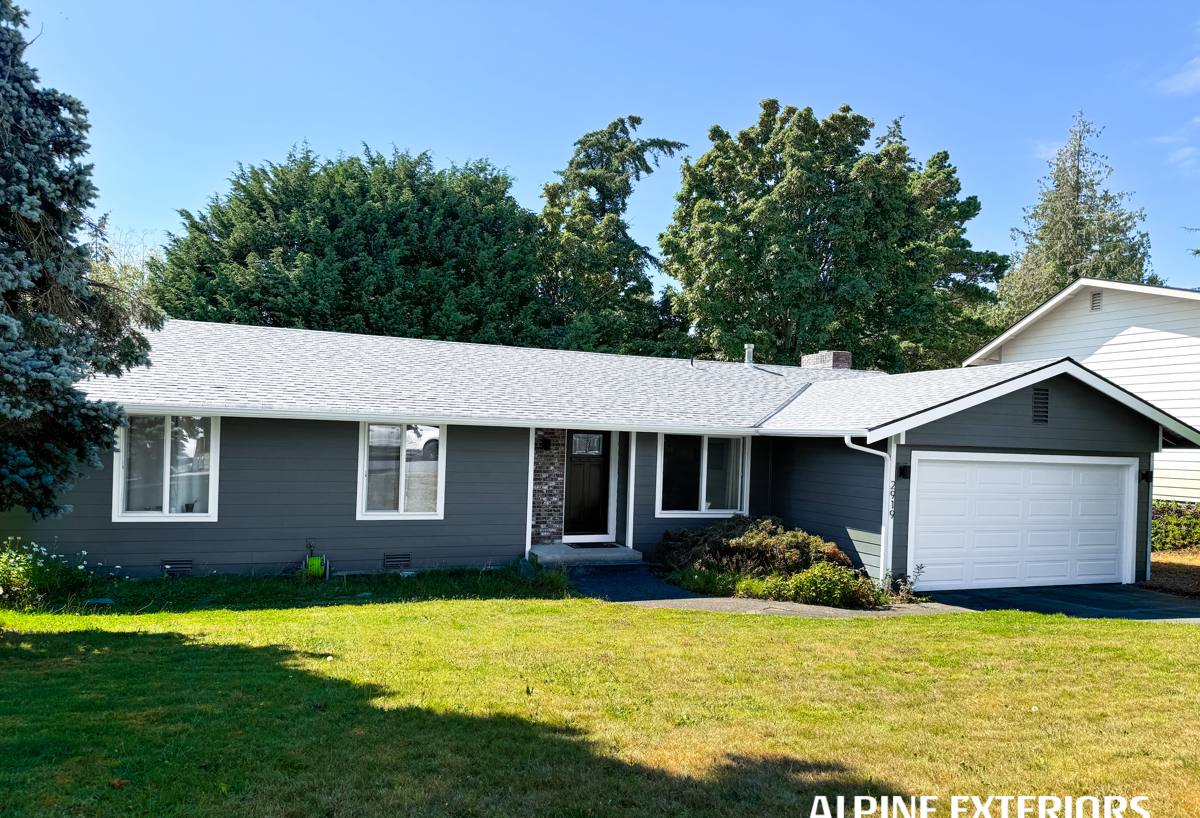
What Whatcom County's Climate Does to Siding Over Time
Whatcom County's marine-influenced climate means long, wet winters, cool damp springs, and a summer dry season that's often shorter than people expect. Homes closer to Bellingham Bay and the Ferndale lowlands get more direct exposure to salt-laden air off the Salish Sea, which accelerates corrosion on fasteners and trim. Kendall is set back from that immediate coastal exposure, but it trades salt air for something just as hard on siding: near-constant shade and humidity trapped under a forest canopy.
Moisture & Rot
Any siding material that absorbs water — untreated wood, primed spruce, engineered wood panels with exposed edges — is on borrowed time in a climate like this. Water doesn't need to pool to cause damage; it just needs repeated wetting and slow drying, which is precisely the cycle a shaded, tree-lined lot produces day after day through the wet months.
Moss & Organic Growth
Moss, algae, and lichen need shade and moisture to establish, and Kendall's tree cover provides both in abundance. Once organic growth takes hold on a siding surface, it holds moisture against the material even longer, which speeds up whatever underlying damage is already happening. It's a self-reinforcing problem, and it shows up faster on north-facing walls and anywhere gutters or downspouts aren't directing water away properly.
Temperature Swings
Whatcom County doesn't see extreme heat, but it does see repeated freeze-thaw cycling in the colder months, especially at Kendall's slightly higher elevation compared to Ferndale proper. Materials that swell and contract with moisture — again, wood-based products — take a beating from that cycling in a way that stable fiber cement does not.
Why Kendall's Setting Adds Its Own Wrinkles
Beyond the general climate, a few things about how homes sit in Kendall change how a siding job should be planned:
- Wooded lots mean more year-round shade on at least part of most homes, which slows drying time after every rain.
- Longer driveways and more distance between properties can mean more material staging and access planning than a tight in-town lot.
- Well and septic systems are common outside the Ferndale city limits, which affects where equipment, trailers, and dumpster placement can go during a project.
- Homes further from town sometimes went longer between exterior updates simply because it's less convenient to get contractors out there — which means more of what we find underneath older siding has been quietly failing for a while.
None of this is a problem — it just means the crew showing up needs to actually plan for it, not treat a Kendall property like a standard in-town job.
Why We Only Install James Hardie Fiber Cement
We install one siding system: James Hardie fiber cement. Not because it's the only decent product on the market, but because after years of doing this work in exactly this climate, it's the one we're willing to put our name behind for the long haul. Fiber cement is made from cellulose fiber, sand, and cement — it doesn't rot, it doesn't feed moss the way organic materials can, and it holds its shape through the wet-dry, warm-cold cycling that defines a Whatcom County year.
James Hardie's HZ5 product line is engineered specifically for climates like ours — freeze-thaw cycling, sustained moisture, and moderate temperature swings — and it comes with ColorPlus, a factory-baked finish that resists the fading and chalking that field-applied paint eventually shows. It also carries a strong transferable limited warranty, which matters more in a wet climate than a dry one, because that's where premature failure actually shows up.
| Factor | James Hardie Fiber Cement | Wood / Engineered Wood | Vinyl |
|---|---|---|---|
| Moisture absorption | Does not absorb or swell | Absorbs at cut edges and joints | Doesn't absorb, but seams trap moisture behind panels |
| Moss & algae resistance | Low food value for organic growth | Organic material, feeds growth readily | Resists growth but doesn't stop it on the surface |
| Finish stability | Factory-baked ColorPlus finish | Field-applied paint, needs repainting | Color molded in, can fade and become brittle |
| Fire resistance | Non-combustible | Combustible | Can warp or melt near heat sources |
| Typical lifespan when installed correctly | 30+ years | 10-20 years before major maintenance | 20-30 years, brittleness increases with age |
We don't install LP SmartSide, vinyl, Cemplank, Allura, primed spruce, or cedar. Some of those are reasonable products in the right circumstances — we're not here to run any of them down. But we made a standard, and Kendall's climate is a good example of why: moisture-sensitive materials and shaded, damp lots are a bad match, and we'd rather turn down work than install something we don't believe will hold up on your house.
What a Correct Siding Installation Actually Involves
Fiber cement is only as good as the installation behind it. Most siding failures we see aren't a product problem — they're a water management problem hiding underneath a wall that looks fine from the driveway. A correct installation gets the details right in places you'll never see once the job is finished.
- Weather-resistant barrier installed correctly over the sheathing, with proper overlap at every seam so water sheds down and out, not in.
- Flashing at every window, door, and penetration — this is where the majority of hidden leaks originate on any home, regardless of siding brand.
- Rainscreen or proper clearance behind the siding so air can circulate and moisture doesn't sit trapped against the back of the panel.
- Correct fastener pattern and type — Hardie specifies fastener spacing, embedment depth, and materials, and skipping the spec is one of the most common causes of early failure.
- Proper clearance at grade and roofline — siding installed too close to the ground or a roof deck traps moisture and invites rot in the framing behind it, not just the siding itself.
- Sealed and caulked joints using products rated for the exposure, not whatever tube happened to be on the truck.
- Factory-cut edges preserved wherever possible, since field-cut fiber cement edges need to be sealed to match the factory-primed edge protection.
Skip any one of these and the siding can look perfect for a year or two while water quietly works on the wall behind it. This is also where hiring a crew with real fiber cement experience matters — Hardie installation isn't identical to installing wood lap or vinyl, and treating it that way is how corners get cut without anyone noticing until much later.
Our Process, From Estimate to Finished Wall
We keep the process straightforward because a straightforward process is how quality actually gets protected on a job site.
- Walkthrough and assessment — we look at your current siding, the condition of the sheathing and trim underneath where accessible, drainage around the foundation, and anything specific to your lot (shade, tree cover, drainage patterns) that should shape the plan.
- Written estimate — scope, product line, color, and a clear breakdown of what's included, with no vague allowances hiding surprises for later.
- Prep and tear-off — removing existing siding, checking sheathing condition, and repairing or replacing any damaged framing before anything new goes up. This step is where a lot of hidden moisture damage from years of trapped water gets found and fixed.
- Weather barrier and flashing — the part of the job nobody sees but that determines whether the siding lasts.
- Hardie installation — installed to manufacturer spec for fastening, clearance, and joint treatment.
- Final trim, caulking, and cleanup — including a walkthrough with you before we call it finished.
Maintenance in a Shaded, Wet Microclimate
Fiber cement is low-maintenance, not no-maintenance, and Kendall's shade and moisture mean a little seasonal attention goes a long way:
- Keep gutters and downspouts clear so water is actually directed away from siding and foundation walls, especially where trees drop needles and leaves.
- Trim back vegetation and tree branches that keep a wall in permanent shade — a little more airflow and sun exposure meaningfully cuts down moss growth.
- Rinse siding periodically to remove early moss or algae growth before it establishes, rather than waiting until it's visible from the street.
- Check caulking at trim and window joints every couple of years — caulk is the first line of defense and the first thing that wears out.
None of this is heavy work, but skipping it in a climate like ours is how a 30-year product ends up needing attention at year twelve.
Why Hiring a Crew That Already Works Kendall Matters
A lot of siding problems in this area trace back to a crew that installed the product correctly for a drier climate and never adjusted for what Whatcom County actually does to a wall. Working Kendall regularly means we already know what shaded, wooded lots do to drying time, where moss shows up first, and how to plan flashing and drainage details for a property that doesn't get the same sun exposure as a home a few miles closer to open water. It also means straightforward logistics — we're not learning the roads or guessing at permit requirements for the first time on your job.
If you're weighing a siding replacement or new construction siding for a Kendall property, we're happy to walk the house with you, look at what's actually going on with your current siding, and give you a straight answer about what it needs — no pressure, no inflated scope. Fill out the form below to set up a free estimate.