 Ferndale
 When Custer's Weather Works Against Your Siding
Custer sits close enough to the water that homes here take on a mix of problems you don't see as much further inland — salt-laden air moving off the Strait, long stretches of driving rain through the fall and winter, and a moss and algae season that can run most of the year in shaded yards. Any one of those is manageable. Together, they wear on siding faster than most homeowners expect, especially on north-facing walls, under eaves that don't get much sun, and anywhere wind-driven rain hits a wall at an angle instead of straight on.
We work Custer as part of our regular Ferndale-area service territory, not as a side trip. That matters for a repair call specifically, because siding failure out here tends to follow patterns tied to this exact climate — patterns you learn by seeing them over and over on real houses in Whatcom County, not from a general repair checklist.
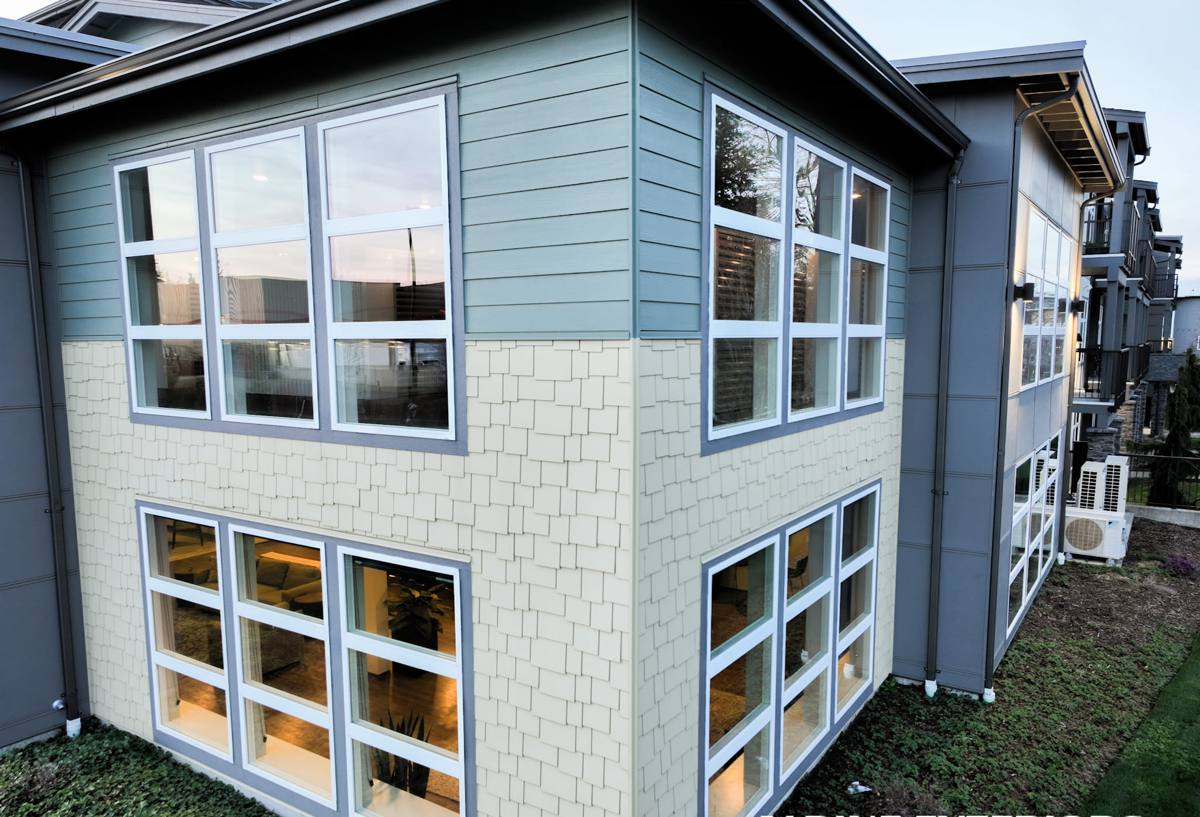
The Early Warning Signs Custer Homeowners Shouldn't Ignore
Siding damage rarely announces itself. It shows up as small, easy-to-dismiss details long before there's a visible hole or a soft spot you can push a finger through. Here's what we tell Custer homeowners to walk their exterior and check for, especially after a wet winter:
- Bubbling, peeling, or bulging paint or finish, particularly on the lower few feet of a wall or below window sills
- Soft or spongy spots when you press on the siding, which usually means moisture has already reached the substrate
- Visible gaps or separation at seams, corners, or where siding meets trim, window casings, or the foundation
- Persistent black or green streaking that keeps coming back within weeks of being cleaned
- Warping, cupping, or boards that no longer sit flat against the wall
- Musty smell or visible staining on interior walls that share an exterior wall with a problem area
- Caulk that has cracked, shrunk, or pulled away from the material on either side of a joint
Any one of these on its own might be minor. Two or three together, especially in the same area of the house, usually means water has been getting behind the siding for a while and the repair needs to address what's underneath, not just what's visible.
What a Correct Siding Repair Actually Involves
Diagnosing the Real Problem First
A repair that just replaces the damaged board and moves on is a repair that's likely to fail again in the same spot. Before we touch anything, we're trying to answer one question: why did this section fail here and not somewhere else? That usually means checking the flashing above the damaged area, looking at how water sheds off the roofline or a deck ledger nearby, and checking whether the house wrap or weather barrier behind the siding is doing its job. Skip this step and you're just buying a year or two before the same spot opens back up.
Matching Material, Not Just Color
Whatever is on the wall now — whether it's original siding or a past repair — the new section has to match its behavior, not just its appearance. Different siding materials expand, contract, and absorb moisture differently, and mixing materials in a repair without accounting for that is a common way repairs fail early. If the existing product is discontinued or hard to source in a matching profile, we'll tell you honestly rather than force a mismatch and hope it holds.
Flashing and Water Management Details
Most siding failures we open up in this area trace back to a flashing or sealant detail, not a defect in the siding itself. Correct repair work means re-flashing around windows, doors, and penetrations as needed, using appropriate sealants at the right joints (and knowing which joints should never be sealed, since some are designed to let trapped moisture drain and dry), and confirming the water barrier behind the siding is continuous and lapped correctly before anything new goes back on the wall.
Repair or Replace? How We Make That Call
Not every damaged section needs a full re-side, and not every "small" repair should be treated as small. We walk through a few honest questions with every Custer homeowner before recommending either path.
| Situation | Repair usually makes sense | Replacement usually makes more sense |
|---|---|---|
| Damage location | Isolated to one wall or a small section | Showing up on multiple walls or elevations |
| Underlying structure | Sheathing and framing are sound once opened up | Rot has reached the sheathing or framing itself |
| Age of existing siding | Siding is mid-life and otherwise performing well | Siding is near or past its expected service life |
| Material availability | Matching material is available or close enough to blend in | Product is discontinued or the profile no longer matches |
| Root cause | A specific, fixable detail (flashing, sealant, one bad panel) | A systemic issue with the original material or installation |
When the honest answer points toward replacement, we'll say so plainly instead of running repair after repair on a wall that's fighting a losing battle. That's also the point where we talk about what we install going forward, which is James Hardie fiber cement siding — not because every repair should turn into a sales pitch, but because if you're going to invest in a section of new wall, it's worth knowing what holds up best in this exact climate.
Why the Material Behind the Wall Changes the Repair
What the existing siding is made of has a direct effect on how well a repair can actually be done, and how long it lasts. This is worth understanding before you agree to any patch job.
| Existing material | Repair difficulty | Long-term outcome |
|---|---|---|
| Vinyl siding | Panels are easy to swap but color fades unevenly over time, so a new panel can stand out even when the profile matches | Fine as a stopgap; noticeable mismatch is common within a season or two |
| Primed spruce or cedar | Repairs require careful priming and painting to blend, and the wood underneath may already be compromised beyond the visible damage | Prone to repeat failure if moisture caused the original damage |
| LP SmartSide or similar engineered wood | Repairable, but edge and seam sealing has to be done exactly right or moisture gets back in quickly | Works only if the original installation detail was sound to begin with |
| Fiber cement (James Hardie) | Sections cut cleanly and factory ColorPlus finish holds its color, so a properly matched repair blends in and stays that way | Most stable long-term result of the common siding types |
We're not going to tell you your existing siding is a disaster if it isn't — plenty of repairs on vinyl, wood, or engineered wood siding hold up fine when the underlying cause is fixed correctly. But we will tell you straight if a material's own limitations (fading, moisture sensitivity, seam behavior) are working against the repair, so you can decide with real information instead of guessing.
Moss, Algae, and the Long Wet Season
Custer's tree cover and proximity to the water mean shaded and north-facing walls stay damp longer after every rain than they would somewhere drier. That's exactly the condition moss and algae need to take hold, and once they're established on a wall, they hold moisture directly against the siding surface, which accelerates whatever damage is already happening underneath.
A repair in a spot with heavy moss growth should include a look at why that section stays wet — overhanging branches, poor sun exposure, a gutter that's overflowing onto the wall below, or grading that keeps splash-back hitting the lower courses. Fixing the repair without addressing why that wall stays damp longer than the rest of the house just resets the clock on the same problem.
Our Process for a Custer Repair Call
- A walk-through of the affected area and a broader look at the rest of the exterior, since visible damage in one spot is often a signal to check nearby areas too
- An honest assessment of whether this is a contained repair or a sign of a bigger issue, explained in plain terms before any work starts
- A written scope and estimate that spells out exactly what's being repaired, what material will be used, and why
- Careful removal of the damaged section, with an inspection of the sheathing, framing, and water barrier underneath before anything new goes back on
- Correction of the actual cause — flashing, sealant, drainage, or whatever the inspection turned up — not just replacement of the visible piece
- A final walk-through with you so you know what was found, what was fixed, and what to keep an eye on going forward
We don't upsell a full re-side when a targeted repair will genuinely hold. We also don't patch over a problem we know will resurface just to keep a job small. Either way, you get a straight answer.
Why a Crew That Already Works Custer Matters
Siding repair is one of those jobs where local familiarity actually changes the outcome. A crew that already works Custer and the rest of the Ferndale area has seen how homes here handle salt exposure, how driving rain behaves against different wall orientations, and which details tend to fail first in this specific stretch of Whatcom County. That's different from general siding experience gained somewhere with a milder or drier climate.
It also means faster response when a repair is time-sensitive — a section of siding open to weather during a wet stretch isn't something that should sit on a waiting list for weeks. Being based nearby means we can usually get eyes on a problem, and a tarp or temporary protection in place, quickly if the situation calls for it.
Getting an Honest Look at Your Siding
If you're seeing any of the warning signs above, or you're just not sure whether what you're looking at is a quick fix or something bigger, it's worth getting a second set of eyes on it before it gets worse. We offer free, no-pressure estimates for siding repair in Custer and the surrounding Ferndale area — fill out the form below and we'll take a look.