 Ferndale
 Why Birch Bay's Shoreline Climate Is Hard on Siding
Birch Bay sits right on the water in Whatcom County, and that waterfront location is exactly what makes siding replacement here a different job than it is a few miles inland in Ferndale. Homes facing the bay take a steady dose of salt-laden air, and that salt settles into anything porous — caulk joints, cut edges, fastener heads, and the face of any siding material that isn't built to shrug it off. Add the region's driving rain, which blows in sideways during winter storms rather than falling straight down, and water gets pushed into laps, seams, and trim intersections that would stay dry in a calmer climate. Homes closest to the water usually show the effects first, but salt-laden air travels well beyond the immediate shoreline on windy days, so properties set back from the beach still face real exposure.
Then there's moss. Whatcom County's long, wet, mild-temperature season is close to ideal moss-growing weather, and Birch Bay's tree cover and shaded north walls make it worse. Moss holds moisture against a wall for months at a stretch, and on the wrong siding material that constant damp exposure is a slow path to rot, delamination, or paint failure. A siding replacement done for a Birch Bay home has to account for all three of these stressors at once — salt, wind-driven rain, and moss — not just look good on install day.
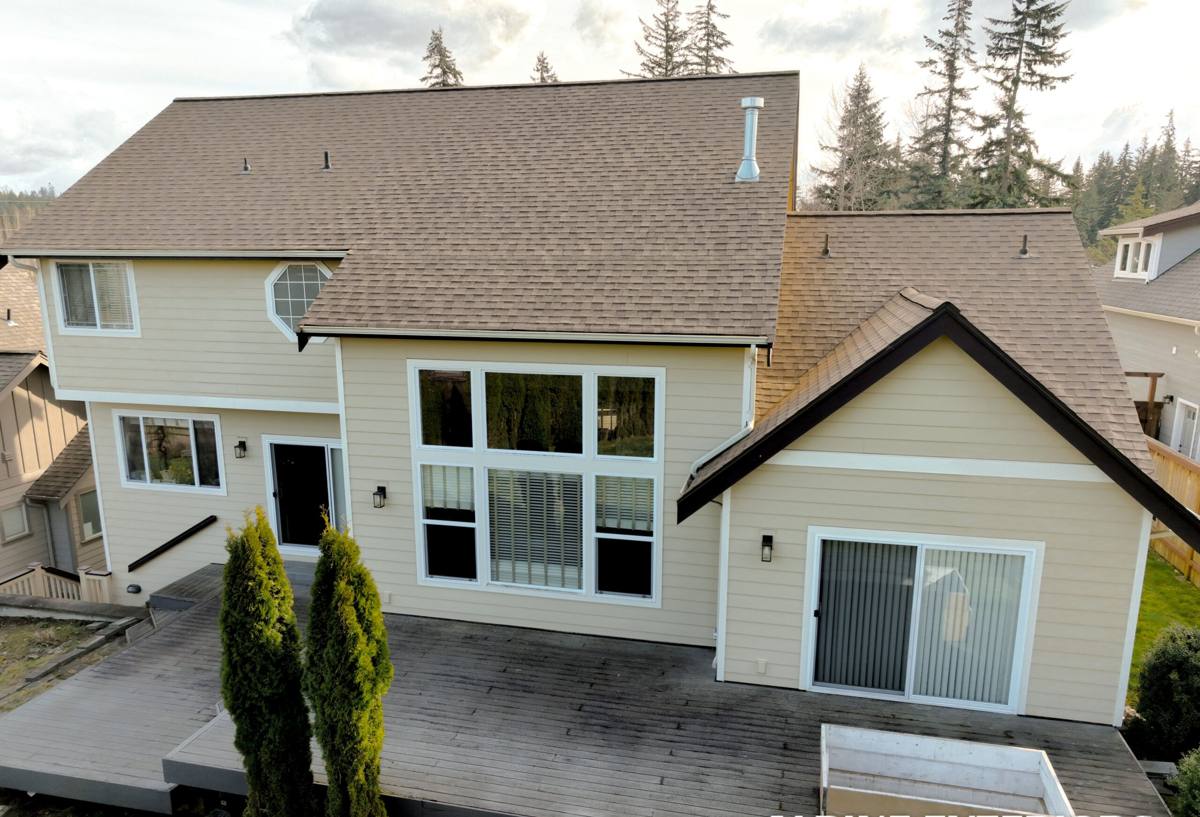
What a Correct Siding Replacement Actually Involves
Siding replacement isn't just stripping old panels and nailing up new ones. On a shoreline property, most of the value in the job is in the parts you don't see once it's finished.
Tear-off and moisture inspection
Once the old siding comes off, we inspect the sheathing, framing, and any window and door openings for water damage that may have been hidden for years. This is often the first real look anyone has had at the wall assembly since the home was built, and on older Birch Bay properties it's common to find soft sheathing or corroded fasteners near ground level or under window sills where wind-driven rain has been working its way in.
Water-resistive barrier and flashing
A new water-resistive barrier goes on before any new siding, lapped correctly from the bottom up so water sheds down and out rather than behind the wall. Flashing at windows, doors, and every horizontal trim transition gets rebuilt to current best practice, not just patched around. On a bay-facing wall, this layer matters more than the siding itself — it's the actual line of defense if wind-driven rain gets past the exterior surface.
Fastening, clearances, and joints
Fastener choice and placement affect how well siding holds up to salt exposure over time, and we follow the manufacturer's fastening schedule rather than cutting corners on nail spacing. We also keep proper clearance between the bottom of the siding and grade, decks, or roof lines — a detail that's easy to skip and one of the most common causes of early rot on homes near the water.
Why We Install Only James Hardie Fiber Cement in Birch Bay
We made a company-wide decision to install James Hardie fiber cement siding exclusively, and nowhere does that decision matter more than on a salt-air, high-moisture property like the ones along Birch Bay. Vinyl siding can warp and fade under UV and temperature swings, and its seams give wind-driven rain more opportunities to find a way behind the panel. Wood-based products — cedar, primed spruce, and engineered wood siding like LP SmartSide — depend on an intact factory coating and diligent long-term maintenance to keep moisture out; once that coating is compromised by salt exposure or constant moss dampness, the wood substrate underneath is vulnerable to rot in a way fiber cement simply isn't.
James Hardie fiber cement is non-combustible, doesn't support rot, and holds its factory-applied ColorPlus finish far longer than field-applied paint on wood siding. That finish is baked on and warranted against fading and peeling, which matters on a coastal-facing home where sun, salt, and moisture all work against paint at once. That protection is backed by a warranty structure meant to transfer to a future owner if you sell, which matters in a desirable waterfront community like Birch Bay where the exterior's condition affects resale. We're not saying every other product is unusable everywhere — we're saying that for the specific conditions Birch Bay homes face, fiber cement is the material we're willing to warranty our workmanship against.
Choosing the Right Hardie Product Line for a Waterfront Property
James Hardie makes climate-engineered product lines, and for a Birch Bay home we typically look at their HZ5 formulation, engineered for wetter, harsher climates like the Pacific Northwest coast, rather than a formulation built for drier inland regions. The right choice depends on your home's exposure, existing trim, and the look you're after.
| Consideration | What It Means for Birch Bay |
|---|---|
| HZ5 climate engineering | Formulated for high-moisture, freeze-thaw-prone regions like the Pacific Northwest coast |
| Lap siding vs. panel siding | Lap siding suits most traditional homes; panel siding pairs well with more modern designs and heavier trim |
| ColorPlus factory finish | Reduces repainting cycles and holds color better against salt air and UV than field-applied paint |
| Trim and fascia matching | Coordinated Hardie trim keeps butt joints and corners performing as a system, not mismatched parts |
We'll walk you through actual product samples and color options during the estimate rather than asking you to decide from a brochure — seeing the ColorPlus finish in person, in Birch Bay's actual light, makes the decision a lot easier.
Our Process, From Estimate to Finished Job
- On-site walkthrough: We look at your current siding, trim, and any problem areas — especially bay-facing and shaded walls where moisture damage tends to concentrate.
- Written estimate: A clear scope and price, with product line and color options explained, not a vague allowance.
- Tear-off and inspection: Old siding comes off, and we document any sheathing or framing repairs needed before moving forward.
- Weather barrier and flashing: Rebuilt to current standards at every window, door, and trim transition.
- Hardie installation: Installed to manufacturer fastening and clearance specifications, not shortcuts.
- Final walkthrough: We go over the finished work with you before calling the job complete.
Cost Factors for a Birch Bay Siding Replacement
Every home is different, but a handful of recurring factors drive most of the cost variation we see on siding replacement jobs along this stretch of Whatcom County.
| Factor | Why It Affects Cost |
|---|---|
| Extent of hidden moisture damage | Sheathing or framing repairs found during tear-off add labor and material beyond the base siding job |
| Home size and wall complexity | More corners, dormers, and trim transitions mean more cutting, flashing, and labor time |
| Siding profile and accessories | Lap width, trim style, and accent details affect both material cost and install time |
| Access and site conditions | Waterfront lots with limited access, slopes, or landscaping can add setup and staging time |
| Existing exterior condition | Removal of multiple old layers or extensive prep work adds time compared to a single clean tear-off |
We don't quote a job until we've actually looked at your walls — a phone estimate on siding replacement almost always misses something that changes the price once tear-off begins.
Signs Your Birch Bay Home Needs Siding Replacement Now
Some warning signs are obvious; others hide behind moss or under eaves where they're easy to miss during a quick look from the driveway.
- Soft or spongy spots when you press on the siding, especially near the bottom courses
- Persistent moss or algae growth that comes back within weeks of cleaning
- Paint that's peeling, bubbling, or chalking faster than a normal repaint cycle
- Visible gaps, warping, or buckling in panels, especially on bay-facing or shaded walls
- A musty smell or visible staining on interior walls that back up to exterior siding
- Fastener heads rusting through or popping out of the siding face
- Cracked or crumbling caulk at trim joints and window edges
If you're seeing two or more of these, it's worth having someone look at the wall assembly itself, not just the surface — by the time siding shows visible damage, the water-resistive barrier behind it has often been compromised for a while.
Why Local Experience in Birch Bay Matters
A crew that already works in Birch Bay knows what a bay-facing wall looks like after a decade of wind-driven rain, and what a shaded, moss-prone north wall looks like after the same amount of time. That's not something you can fully account for from a general siding pricebook — it comes from having actually torn siding off homes in this specific stretch of Whatcom County and seen what the salt air and moss season do over time. It also means fewer surprises on schedule and access, since waterfront lots and seasonal properties often come with their own quirks that a crew unfamiliar with the area wouldn't anticipate.
If your Birch Bay home's siding is showing its age — or you just want an honest assessment of what shape it's really in — we're happy to take a look. Reach out for a free, no-pressure estimate using the form below.