 Ferndale
 Storm Damage in Fairhaven Is Its Own Kind of Problem
Fairhaven sits close enough to the water that storms off the Strait and Bellingham Bay hit different than they do further inland. Wind-driven rain, salt-laden air, and long stretches of grey, damp weather all work on a roof at the same time, and after a hard blow it's not always obvious how much damage actually happened. A shingle can look fine from the ground and still have lost its seal. A little bit of lifted flashing can leak for weeks before it shows up as a stain on a ceiling. We repair storm-damaged roofs for homes in this part of Whatcom County regularly, and the pattern is consistent: the damage that matters most is usually the damage you can't see from the driveway.
This page is about one thing — storm damage roof repair for Fairhaven homes — and what it actually takes to do that job right in a climate that doesn't give a roof much of a break between one storm and the next.
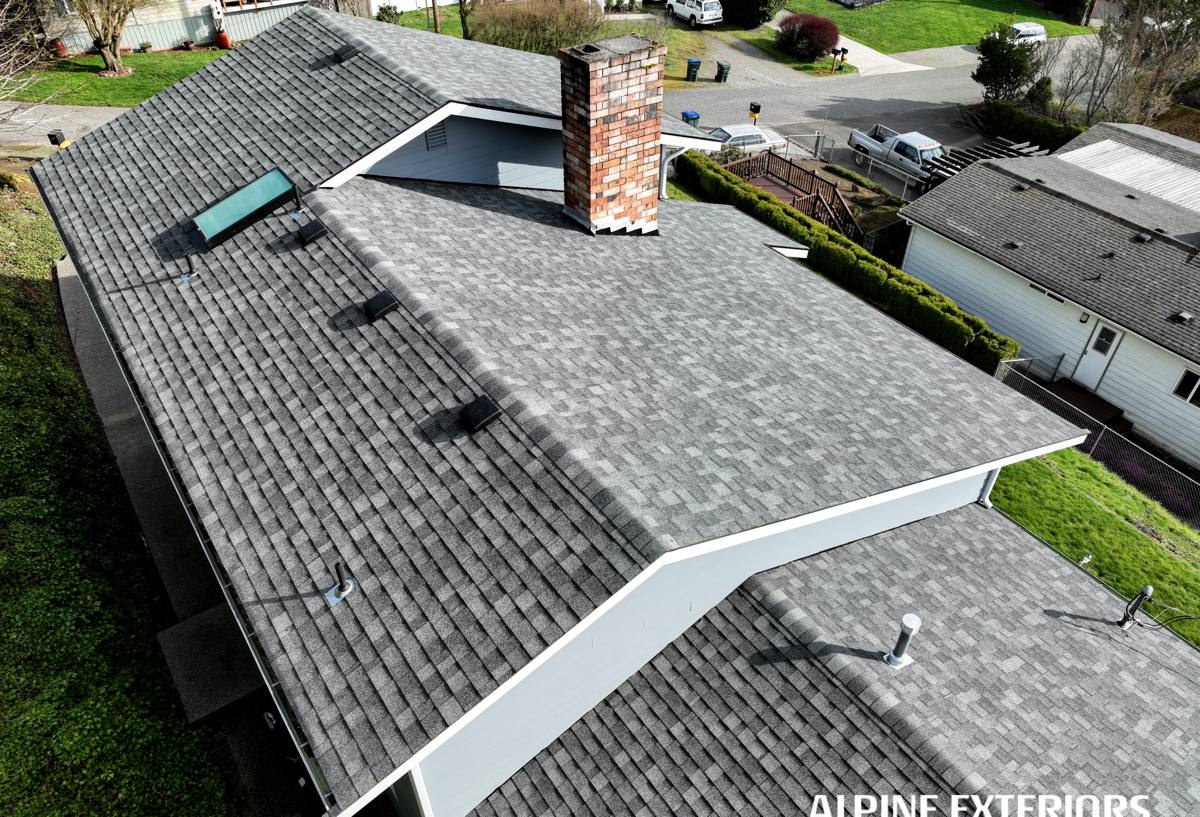
What Storm Damage Actually Looks Like Here
Not every storm leaves the same fingerprints. Depending on wind direction, rainfall totals, and how exposed a particular roof slope is, the damage tends to fall into a few categories:
Wind Damage
Gusts off the water can lift shingle tabs, crease them, or tear them loose entirely. Sometimes a shingle blows off completely and it's obvious. More often, a shingle gets partially unsealed and lies back down looking normal — until the next rain finds the gap.
Wind-Driven Rain Intrusion
Rain that's moving sideways doesn't behave like rain falling straight down. It can work its way under flashing, around vent boots, and into any spot where the roofing material has even a small gap, well before the shingles themselves fail.
Debris Impact
Branches and wind-thrown debris can bruise or puncture shingles, crack ridge caps, or knock loose a section of flashing around a chimney or skylight.
Moss-Weakened Areas Giving Way First
A roof that's been carrying a moss load through a wet season is already compromised before the storm even arrives. Moss holds moisture against the roofing material and lifts shingle edges, so those areas are usually the first to fail when wind and rain hit hard.
Why Salt Air and a Long Moss Season Change the Job
Ferndale and the surrounding Whatcom County coastline deal with two conditions that a lot of inland repair crews don't think about day to day: salt-tinged air off the water and a moss season that can run most of the year in shaded, north-facing areas. Neither one causes storm damage by itself, but both make storm damage worse and harder to repair correctly.
Salt air accelerates corrosion on exposed metal — flashing, fasteners, vent caps, and gutter hardware — so a repair that ignores the condition of the metal underneath a damaged shingle is only solving half the problem. And a roof that already has moss growth is a roof where the underlayment and decking may be holding moisture that isn't visible from the surface. A proper storm repair in this area has to account for both, not just replace what's obviously broken and move on.
What a Correct Storm Repair Involves
A storm repair that's done right is more than swapping out a few shingles. Here's what we actually check and do on a Fairhaven storm call:
- Full-slope inspection, not just the damaged spot. Wind damage rarely stays confined to one area — we check the whole roof plane, not just where the homeowner spotted a problem.
- Decking check underneath removed materials. If shingles or flashing are being pulled up anyway, that's the moment to confirm the decking underneath is dry and sound before anything new goes back down.
- Flashing and fastener condition. Given the salt air, we look closely at metal components near the repair, not just the shingles.
- Underlayment integrity. If wind-driven rain got past the shingle layer, the underlayment is the last line of defense — it needs to be intact or replaced in the affected section.
- Material matching. We match shingle type, weight, and as close to color as the existing roof allows, so a repair doesn't stand out as a patch and doesn't create a mismatched wear pattern down the road.
- Proper resealing and fastening. Storm-loosened shingles that are simply pressed back down without new fasteners or sealant tend to lift again in the next wind event.
Repair Versus Replacement: How to Think About It
Not every storm-damaged roof needs full replacement, and not every roof can be fixed with a patch. The right call depends on the extent of the damage, the age and condition of the rest of the roof, and how much of the underlying structure was affected.
| Situation | Typical Approach | Rough Cost Factor |
|---|---|---|
| A handful of lifted or missing shingles, decking dry underneath | Targeted shingle and flashing repair | Lower — localized labor and materials |
| Damaged flashing around a chimney, vent, or skylight | Flashing repair or replacement in that section | Moderate — depends on access and metal condition |
| Water intrusion that reached the decking | Decking repair plus roofing repair over it | Higher — added carpentry and drying time |
| Widespread damage on a roof already near the end of its service life | Full or partial re-roof | Highest — but often more cost-effective than repeated repairs |
We'll always tell you honestly which category your roof falls into and why, including when a repair is the right call and a replacement isn't necessary yet.
Insurance and Documentation
Most storm damage claims move faster and get resolved more fairly when the damage is documented clearly and promptly, before further weather makes it harder to tell what happened and when. If a repair may be tied to an insurance claim, we document the damage as we find it — condition, location, and likely cause — so that record exists independent of the adjuster's own inspection. We're not a public adjuster and won't speak for your policy, but a clear, honest record of what we found on your roof only helps your case.
Our Process for a Fairhaven Storm Call
We keep the process straightforward because storm repair is stressful enough without an unclear timeline:
- We schedule the inspection promptly, especially if there's active leaking or exposed decking.
- We walk the full roof, not just the reported damage area, and check flashing, vents, and moss-prone spots while we're up there.
- We give you a plain-language explanation of what we found, what needs to happen, and why — including the repair-versus-replace question if it applies.
- We provide a written estimate before any work starts, with no pressure to decide on the spot.
- We complete the repair using matched materials and proper fastening and flashing technique, then confirm the area is sealed and sound before we consider the job done.
What to Do Right After a Storm
If you suspect storm damage on your Fairhaven roof, a few simple steps in the first day or two can prevent a small problem from becoming an expensive one:
- Check the attic or top-floor ceilings for new water stains, damp spots, or a musty smell.
- Look at the ground and gutters for granules, shingle fragments, or pieces of flashing — that's often the first visible clue.
- Avoid getting on the roof yourself, especially on a wet or moss-covered surface — that's how a storm problem turns into a fall injury.
- Photograph any visible damage from the ground if it's safe to do so, before cleanup or weather changes the scene.
- Get a temporary tarp over any exposed or actively leaking section if you can safely arrange it, to limit further water intrusion until repairs happen.
- Call for an inspection sooner rather than later — a small gap left open through another rain event tends to grow into a bigger repair.
Why It Matters That We Already Work in Fairhaven
A crew that already works this part of Ferndale knows what a Fairhaven roof is up against year-round — the salt exposure off the water, the moss buildup in shaded areas, and the specific way wind tends to hit roofs in this pocket of Whatcom County. That familiarity shows up in small but real ways: knowing which roof orientations take the worst of a given storm, recognizing moss damage patterns before they turn into leaks, and not having to relearn the local climate on your dime.
It also means a faster, more realistic response after a storm. When a whole area gets hit at once, a contractor who already has a route and a presence nearby can get to your roof without the delays that come from crews traveling in from farther away and juggling an unfamiliar service area on top of storm-season demand.
If your Fairhaven home took storm damage, or you're just not sure whether what you're seeing on the roof is cause for concern, we're glad to take a look. The estimate is free, there's no pressure to commit to anything on the spot, and you'll get a straight answer about what we find and what it would take to fix it. Fill out the form below to get started.