 Ferndale
 Building a Deck That Actually Holds Up in Sumas
Sumas sits at the base of the foothills along the Canadian border, and it gets its own version of Whatcom County weather: long stretches of driving rain in the fall and winter, damp ground that doesn't dry out for months, and a moss season that seems to start earlier every year. A deck out here isn't just an outdoor living space — it's a structure that has to shed water, resist rot, and stay safe to walk on when the boards are wet and shaded half the day. We've built and repaired decks all over this area long enough to know which details matter and which ones are just marketing.
A lot of deck problems we get called out to fix didn't start as big mistakes. They started as small shortcuts — a ledger board that wasn't flashed right, joists that were never protected from standing water, fasteners that looked fine going in but weren't rated for the wood they were driven into. None of that shows up on day one. It shows up two or three wet seasons later, usually as soft spots, staining, or a railing that's gone spongy at the post base.
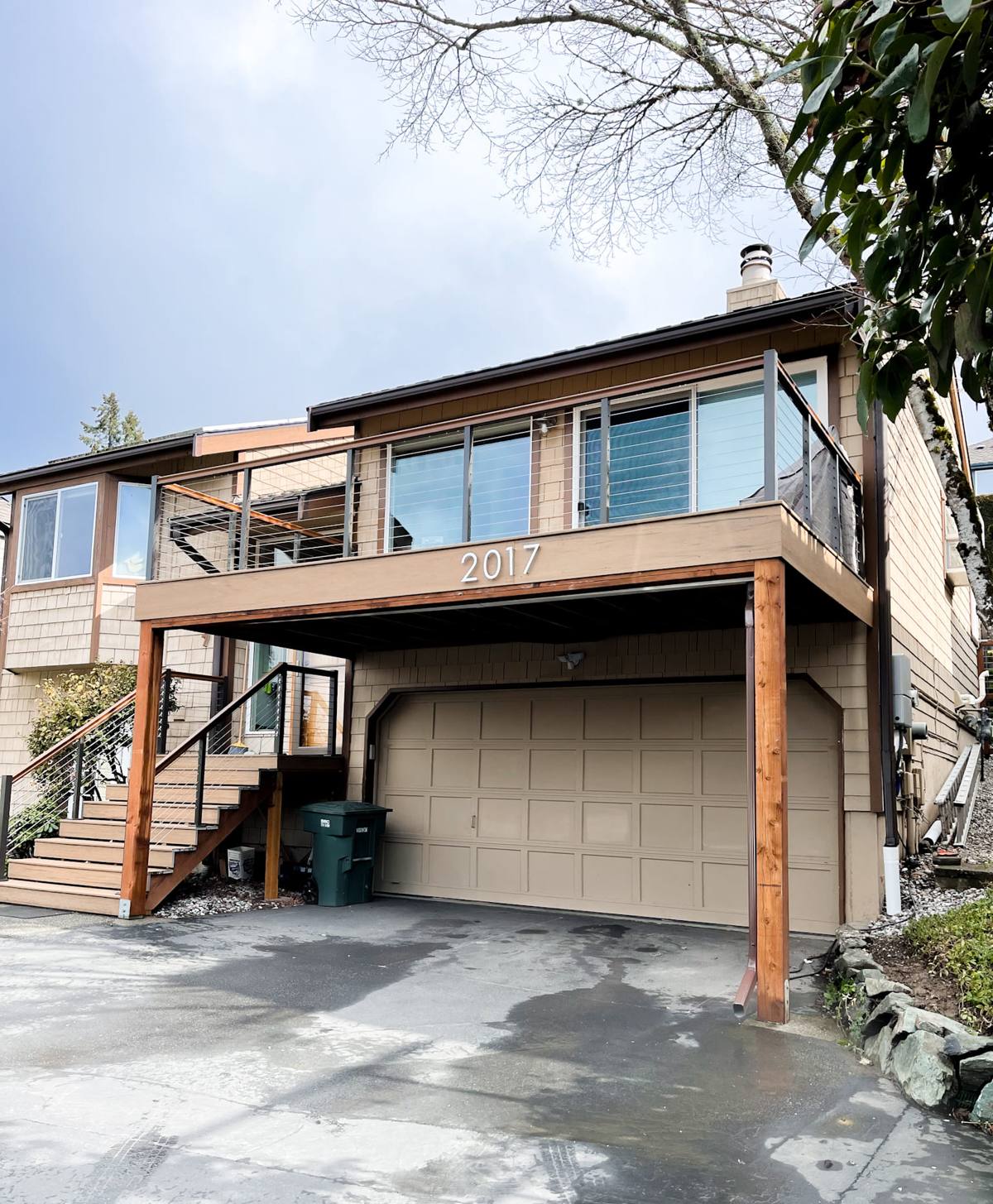
What This Climate Actually Does to a Deck
Whatcom County's marine-influenced weather brings moisture into wood assemblies from more directions than people expect — not just rain falling on the surface, but ground moisture wicking up through posts and footings, and condensation trapped under boards that never get direct sun. Add in the salt-tinged air that moves through this part of Western Washington, and you've got conditions that are hard on fasteners and hardware even when the wood itself is holding up fine.
The Three Things We Watch For
- Trapped moisture: anywhere water can sit against wood without draining or drying — ledger connections, post bases, under deck boards with no airflow.
- Corrosion-prone hardware: standard fasteners and connectors that weren't rated for treated lumber or coastal-influenced air.
- Moss and algae buildup: shaded, north-facing, or tree-covered decks that stay damp long after the rain stops, creating a slick surface and slowly feeding rot into the board fibers.
None of these are exotic problems. They're the predictable result of building a deck the same way you'd build one in a dry climate, then handing it a Whatcom County winter.
Choosing the Right Decking Material
There isn't a single "best" decking material for Sumas — there's a best material for your budget, your maintenance appetite, and how much shade and moss exposure your yard actually gets. We walk every homeowner through the honest trade-offs before they pick.
| Material | How It Handles This Climate | Maintenance | Typical Lifespan Here |
|---|---|---|---|
| Pressure-treated fir/hem-fir | Good rot resistance if sealed and detailed correctly; needs a real drainage plan underneath | Re-stain/seal every 2-3 years | 15-20 years with upkeep |
| Cedar | Naturally rot- and insect-resistant, but greys and can grow moss fast in shaded spots without regular cleaning | Clean and treat annually in shaded areas | 20-25 years with upkeep |
| Composite/PVC boards | Doesn't rot or absorb water; still needs periodic cleaning to keep moss and algae film from building up on the surface | Occasional wash, no staining/sealing | 25-30+ years |
We're honest about composite decking's own trade-offs too — it costs more up front, some boards can still show mildew film in deep shade if they're never cleaned, and color/texture varies by manufacturer. It's not maintenance-free, just lower-maintenance. For a shaded, tree-covered lot common around Sumas, that lower maintenance burden is often worth the extra upfront cost. For a sunnier, more open lot, a well-sealed wood deck can perform just as well for a lot less money.
Railings and Fascia Boards
Railings and fascia take more direct weather exposure than the decking surface itself, since they don't dry as quickly and often catch runoff from the roofline above. We generally recommend matching or upgrading the railing material's moisture resistance relative to the deck boards — putting an untreated wood rail on a composite deck just moves the maintenance problem to the one part of the deck people actually touch every day.
The Structural Details That Actually Matter
The decking surface is the part everyone sees. The framing underneath is the part that determines whether the deck is still safe in ten years. This is where we spend the most time, and where corners get cut most often on lower-bid jobs.
Ledger Board Flashing
The ledger board — where the deck attaches to the house — is the single most common failure point on decks in wet climates. If it isn't flashed correctly to shed water away from the house band joist, water works its way behind the ledger and rots the framing from the inside, often invisibly until the deck starts to sag or pull away. We flash every ledger connection as if the deck's structural life depends on it, because it does.
Joist Protection
Untreated cut ends and the tops of joists are where rot typically starts, even on treated lumber, because treatment doesn't always penetrate a fresh cut or a fastener hole. We use joist tape and cap flashing on top of the framing members so standing water can't sit directly on exposed wood fibers.
Footings and Post Bases
Whatcom County's frost depth and drainage conditions mean footings need to be set deep enough and properly compacted to avoid frost heave and settling. Post bases should hold the post above the deck surface and off the concrete, so water doesn't wick up into the end grain — a detail that's easy to skip and expensive to fix later.
Fasteners and Hardware
We use fasteners and structural connectors rated for treated lumber and coastal-influenced air, not standard hardware that looks the same on the shelf but corrodes faster in this environment. Corroded fasteners are one of the more common things we find when repairing decks other crews built.
Railings, Stairs, and Code Requirements
Deck railings and stairs aren't optional design choices past a certain height — they're governed by building code, and inspectors in Whatcom County check them. Guard height, baluster spacing, stair rise-and-run consistency, and graspable handrail profiles all have specific requirements, and getting them wrong means a failed inspection or a rebuild.
- Guards required on any walking surface more than 30 inches above grade
- Baluster spacing sized so a sphere of a specific diameter can't pass through
- Consistent stair rise and run — inspectors and homeowners alike will notice an uneven step
- Handrails required on stairs with a minimum number of risers, sized to be graspable
We build to code as a baseline, not a ceiling — a deck that barely passes inspection today is often the one that needs rework in five years.
Our Process, Start to Finish
- On-site walkthrough: we look at grade, drainage, sun/shade exposure, and how the deck ties into the house before we talk materials.
- Honest material conversation: we lay out the real trade-offs between wood and composite for your specific lot, not a one-size pitch.
- Permit and design: we handle the permitting details required for the jurisdiction your property falls under, and design footings and framing to match your soil and frost conditions.
- Framing and flashing: ledger flashing, joist protection, and footing depth are done to spec, not shortcuts, since this is the part nobody sees once the boards go down.
- Decking, railing, and finish work: boards, railings, stairs, and fascia installed with attention to fastener spacing and drainage gaps between boards.
- Final walkthrough: we go over maintenance expectations for your specific material choice before we consider the job done.
Moss, Algae, and Long-Term Maintenance
Almost every deck in this part of Whatcom County will see some moss or algae growth eventually, especially under trees or on the shaded side of a house. The goal isn't to eliminate it entirely — it's to build the deck so moisture doesn't get trapped long enough for growth to take hold in the wood fibers, and to give homeowners a maintenance routine that keeps it under control.
A Simple Seasonal Checklist
- Sweep debris off the deck surface regularly, especially in fall when leaves and needles accumulate and trap moisture
- Clean gaps between boards where organic debris collects and holds water against the wood
- Wash the surface at least once a year with a deck-safe cleaner to remove early moss and algae film before it embeds
- Check railing post bases and stair stringers annually for soft spots or discoloration
- Reseal or re-stain wood decking on the schedule appropriate to the product — don't wait until it looks bad
- Keep gutters and downspouts near the deck clear so runoff isn't dumping directly onto the structure
Permitting and Working in Sumas
Deck projects typically require a building permit, and requirements can vary depending on whether a property falls under city or county jurisdiction in this part of Whatcom County. We handle that process as part of the job rather than leaving homeowners to sort out paperwork on their own, and we build to pass inspection the first time, not after a list of corrections.
Cost Factors to Expect
Every deck is priced around a handful of variables, and we'd rather explain them up front than hand over a number with no context behind it.
| Factor | Why It Moves the Price |
|---|---|
| Decking material | Composite and PVC boards cost more upfront than treated wood or cedar |
| Deck height and footings | Taller decks need deeper footings, more bracing, and often stairs and additional railing |
| Ground conditions | Sloped or poorly draining lots need more site prep and sometimes engineered footings |
| Railing style | Cable, glass, or composite railing systems cost more than standard wood balusters |
| Attached vs. freestanding | Ledger-attached decks require more careful flashing work; freestanding decks avoid that connection entirely |
We give a firm, itemized estimate before any work starts, so there are no surprises once framing is underway.
What to Ask Any Deck Contractor
- How will you flash the ledger board where it meets the house?
- What fastener and hardware grade are you using, and is it rated for treated lumber?
- Are you using joist tape or cap flashing over the framing?
- How deep are the footings going, and how is that determined for this lot?
- What's the realistic maintenance schedule for the decking material we're choosing?
- Is the permit and inspection process included, or is that on me?
If a contractor can't answer those clearly, that's worth noticing before signing anything.
Let's Talk About Your Deck
Whether you're planning a new deck from scratch or replacing one that's showing its age, we're happy to walk your property, talk through material options honestly, and give you a straightforward estimate — no pressure, no upsell script. Fill out the form below and we'll get in touch to schedule a time that works.