 Ferndale
 Deck Building for Sumas Homes
Sumas sits out at the eastern edge of Whatcom County, in the flat farmland of the Sumas Prairie near the Canadian border. It's a different setting than the coastal parts of our service area, but the same regional weather systems that carry salt-tinged marine air and driving rain across the county still reach out here, and a deck built for this spot needs to handle that combination along with a valley climate that holds moisture close to the ground for long stretches of the year. We build and repair decks in Sumas regularly, and the decisions we make on a project here — footing depth, ledger flashing, fastener choice, decking material — are shaped by what actually happens to a deck through a full Whatcom County wet season, not by a generic build sheet.
A deck is one of the more exposed structures on a property. It takes sun, standing water, foot traffic, and direct ground contact at the posts, and unlike a wall that's protected by siding and house wrap, a deck's structure is often sitting right in the weather with very little between it and the elements. Getting it right the first time matters more here than in a drier climate, because problems caused by trapped moisture or a poorly flashed ledger don't announce themselves quickly — they show up as soft boards, rust streaks, or a wobbly rail a few years down the road.
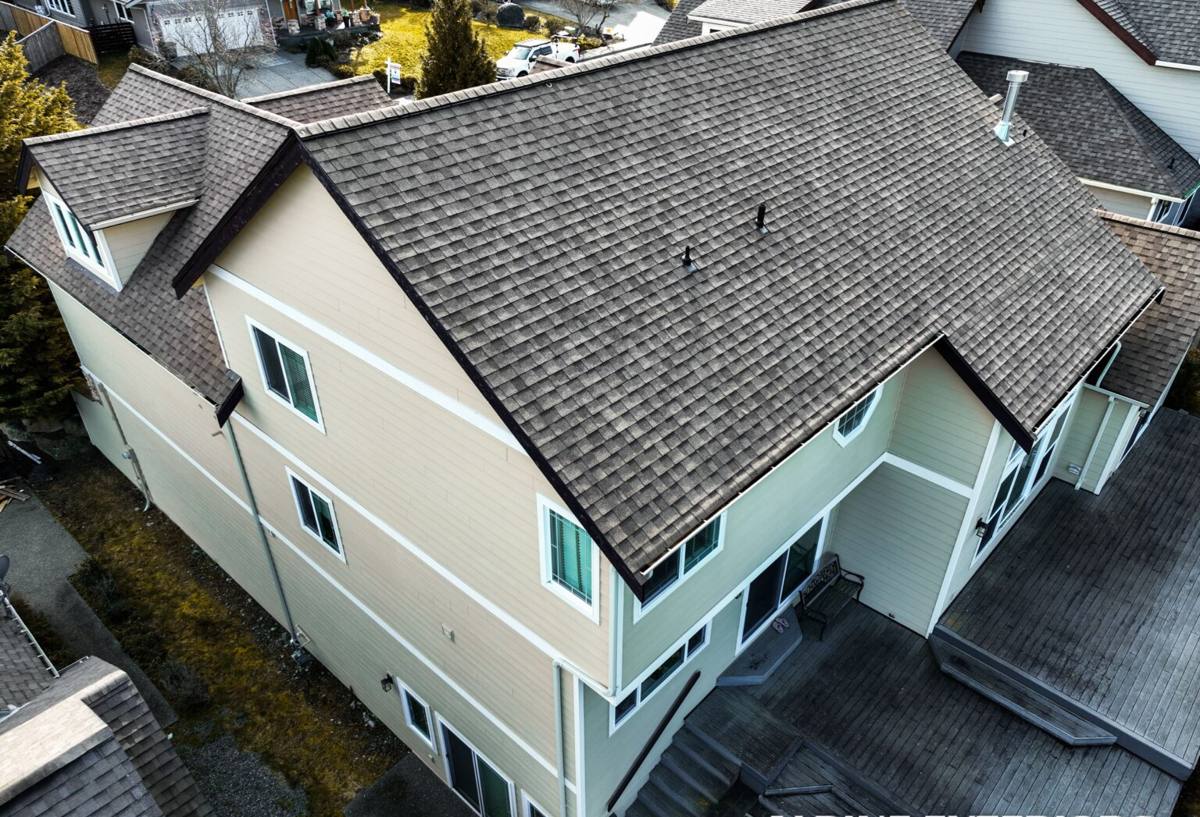
What the Sumas Climate Does to a Deck
Driving Rain and Ledger Board Vulnerability
The ledger board — the framing member that bolts the deck to the house — is the single most common failure point on decks across our service area, and it's worth taking seriously anywhere Whatcom County storms push rain sideways instead of straight down. Where the deck meets the wall, water has a direct path to work its way behind the siding if the ledger isn't flashed correctly. We treat this connection as part of the home's exterior water-management system, not just a structural attachment, because that's exactly what it is.
A Long Moss and Algae Season
Persistent regional dampness and mild temperatures add up to a moss and algae season on horizontal deck surfaces that runs longer here than in drier climates. Deck boards, especially in shaded corners or under overhangs, stay damp for extended stretches, and that moisture supports growth that makes surfaces slick and, over time, holds water against the wood or composite cap longer than it should. It's a maintenance issue as much as a safety one — a mossy deck board is a slip hazard before it's ever a structural concern.
Freeze-Thaw Cycling on Fasteners and Footings
Sumas sees more frequent hard frosts than the milder coastal towns closer to Bellingham Bay, and that freeze-thaw cycling matters for a deck in two specific places: footings set in soil that can experience frost movement, and any fastener or connector where trapped water has a chance to freeze and expand. Footings poured to the correct frost depth and connectors rated for exterior, moisture-exposed use aren't optional extras on a build out here — they're the difference between a deck that stays solid for decades and one that starts working loose within a handful of winters.
Low, Damp Ground on the Sumas Prairie
Much of the land around Sumas is flat agricultural ground that doesn't drain as quickly as a hillside lot. That affects how we set posts and grade around them, since a post base sitting in standing water or saturated soil for weeks at a time is going to deteriorate faster than one on ground that sheds water properly.
What a Correctly Built Deck Involves
Footings Set to Proper Depth
Footing depth and sizing need to account for both the load the deck will carry and how the local soil behaves through freeze-thaw cycles. We don't shortcut footing depth to save a day of digging — an undersized or shallow footing is one of the hardest things to fix once decking and railing are installed on top of it.
Ledger Flashing Done Right
A correctly flashed ledger uses proper step flashing integrated with the house's water-resistive barrier, not just caulk smeared along the top edge. Caulk is a maintenance item that eventually fails; flashing that's properly lapped and integrated with the wall assembly is a permanent water-management detail. Because we also do siding work, we look at the ledger connection as part of the whole wall system rather than treating it as an isolated deck detail — which matters, because a poorly flashed ledger is one of the more common hidden causes of rot we find when we open up a wall for siding replacement.
Joist and Beam Protection
Framing lumber that's going to sit outside, exposed to Whatcom County rain for its entire service life, needs real moisture protection: joist tape over the tops of joists and beams, hardware rated for ground contact and treated lumber, and fasteners that won't corrode and streak the decking above them. These are small material costs relative to the whole project, and they're exactly the kind of detail that separates a deck built to last from one that needs structural repair inside ten years.
Proper Drainage Beneath the Deck
On a low or flat lot like much of what surrounds Sumas, grading beneath the deck so water moves away from posts and footings is worth doing right at the start, since a deck built over standing or slow-draining water is going to age its substructure faster regardless of what decking material sits on top.
Choosing the Right Decking Material for This Climate
| Material | How It Handles This Climate | Trade-Offs |
|---|---|---|
| Composite decking | Resists moisture absorption, rot, and moss staining better than any wood option; holds color without repeated finishing | Higher upfront material cost; some boards can get slick with algae film without periodic cleaning |
| Cedar | Naturally rot-resistant and a strong regional look, but still an organic material that absorbs moisture | Needs regular sealing or staining to keep performing; more prone to graying, cupping, and moss growth if maintenance lapses |
| Pressure-treated lumber | Treated to resist rot and insect damage; the most common and affordable framing and decking choice | Requires periodic sealing; can check and warp as it dries, and moss takes hold readily on unsealed surfaces |
| Tropical hardwoods (e.g. ipe) | Extremely dense and naturally moisture-resistant | High material cost, heavy, and requires specialized fasteners and installation experience |
There's no single right answer for every homeowner — it comes down to budget, maintenance appetite, and how the deck will be used. We'll walk through the honest trade-offs of each option for your specific property rather than pushing whatever's easiest for us to install.
Railings, Stairs, and Code Considerations
Railings and stair details aren't just aesthetic choices — they're governed by Washington building code requirements around height, baluster spacing, and load, and getting them wrong is one of the more common issues we find on decks built without a permit or without someone paying close attention to code minimums. Whatcom County permitting applies to most new deck construction and many substantial repairs, and we handle that process as part of the build rather than leaving it to the homeowner to sort out.
Stair and Landing Detail
Stairs see concentrated foot traffic and, in a moss-prone climate, tend to accumulate slippery growth faster than the main deck surface because they're often shaded and get less sun exposure. Stringers set on solid footings, consistent rise and run, and a landing that drains properly all matter more here than on a drier, sunnier site where surfaces dry out between rain events.
Our Deck Building Process
- An on-site walk-through to assess the site, existing structure (if any), drainage, and how the deck will connect to the house
- A design conversation covering size, material, railing style, and how the space will actually be used
- Permit handling with Whatcom County where required
- Footing and framing work built to the depth and hardware standards this climate calls for
- Ledger flashing integrated properly with the home's existing wall assembly
- Decking, railing, and stair installation with attention to drainage and fastener choice
- A final walk-through so you understand how to maintain the deck going forward
Repair vs. Full Rebuild
Not every aging deck in Sumas needs to be torn out and replaced. A deck with a solid, correctly built substructure but worn or moss-stained decking boards can often have its surface replaced without touching the framing underneath, especially if the ledger flashing and footings check out on inspection. But if the ledger was never properly flashed, if footings are undersized or frost-heaved, or if joists show soft spots from years of trapped moisture, patching the surface just delays a bigger problem while the structure underneath keeps deteriorating. We'll tell you honestly which situation you're looking at before recommending either path.
Cost Factors for Deck Projects in Sumas
| Factor | What It Affects | Why It Matters Here |
|---|---|---|
| Decking material | Material cost and long-term maintenance | Composite costs more upfront but resists this climate's moss and moisture better than wood over the deck's lifetime |
| Footing depth and count | Excavation and concrete cost | Frost movement and flat, slow-draining ground call for footings that aren't shortcut on depth |
| Deck height and stairs | Structural complexity and railing requirements | Taller decks and multi-flight stairs add code requirements and structural load considerations |
| Ledger and house condition | Whether siding or wall repair is needed alongside the deck | Older homes may have wall assemblies needing attention before a new ledger connection goes in |
| Site access and grading | Labor time and drainage work required | Flat Sumas Prairie lots sometimes need extra grading work to keep water moving away from the structure |
Exact pricing depends on the specific property, so we walk the site in person and give you a real number rather than a rough estimate over the phone.
Deck Maintenance Checklist for This Climate
- Clear leaves and debris from between boards regularly, especially in shaded corners where moisture lingers
- Check the ledger flashing annually for any signs of separation, cracking, or water staining on the siding above it
- Look for moss or algae buildup on stairs and shaded sections before it becomes a slip hazard
- Inspect fasteners and connectors for rust streaking or corrosion
- Confirm footings and posts haven't shifted or heaved after a hard winter
- Reseal wood decking on the manufacturer's recommended schedule if you didn't choose composite
Why a Local Crew Matters in Sumas
A crew that regularly works this end of Whatcom County understands how valley damp, driving rain, and freeze-thaw cycling behave on a real structure here through an entire year, not just how a material performs on a spec sheet. That experience shows up in practical decisions on build day: where extra flashing attention pays off, which fastener grade is worth the added cost, and how deep a footing really needs to go on flat, slow-draining Sumas Prairie ground. Because we also handle siding, roofing, and windows, we look at a deck as part of the whole exterior system connected to your home, not an isolated carpentry project — which matters most right where the ledger meets the wall.
Get a Free Estimate
If you're planning a new deck, replacing an aging one, or just want an honest opinion on whether your current deck's ledger and footings are sound, we're glad to take a look. Reach out using the form below to schedule a free, no-pressure estimate for your Sumas property.