 Ferndale
 Everson's Climate Puts Real Demands on a Shingle Roof
Everson sits inland from the Salish Sea but still gets the full package of Whatcom County weather: long stretches of driving rain from fall through spring, salt-tinged air that drifts in off the water, and a moss season that can run eight months or longer in shaded yards. None of that is unusual for this part of Washington, but it does mean a roof built for a drier climate, or installed by a crew that doesn't work this area regularly, tends to show problems early — granule loss, algae streaking, soft spots at the eaves, and moss working its way under shingle tabs.
Asphalt shingles are still one of the most practical roofing choices for this climate when they're specified and installed correctly. They're not the problem. The problem is usually a roof that was installed to a national average spec instead of a Whatcom County one — thinner underlayment, no cold-weather sealant strategy, or ventilation that was never checked against how wet this air actually stays.
What Moss and Moisture Actually Do to a Roof
Moss doesn't just look bad. Once it establishes on a shingle surface, it holds water against the granules far longer than open air would, which accelerates granule loss and shortens the shingle's effective life. In shaded sections of a roof — under overhanging trees, on north-facing slopes, or wherever airflow is blocked — moss can also lift shingle edges slightly as it grows, giving wind-driven rain a path underneath. Left unaddressed for a few seasons, that's how a roof that should have another decade in it starts leaking at the deck.
What a Correctly Installed Shingle Roof Needs Here
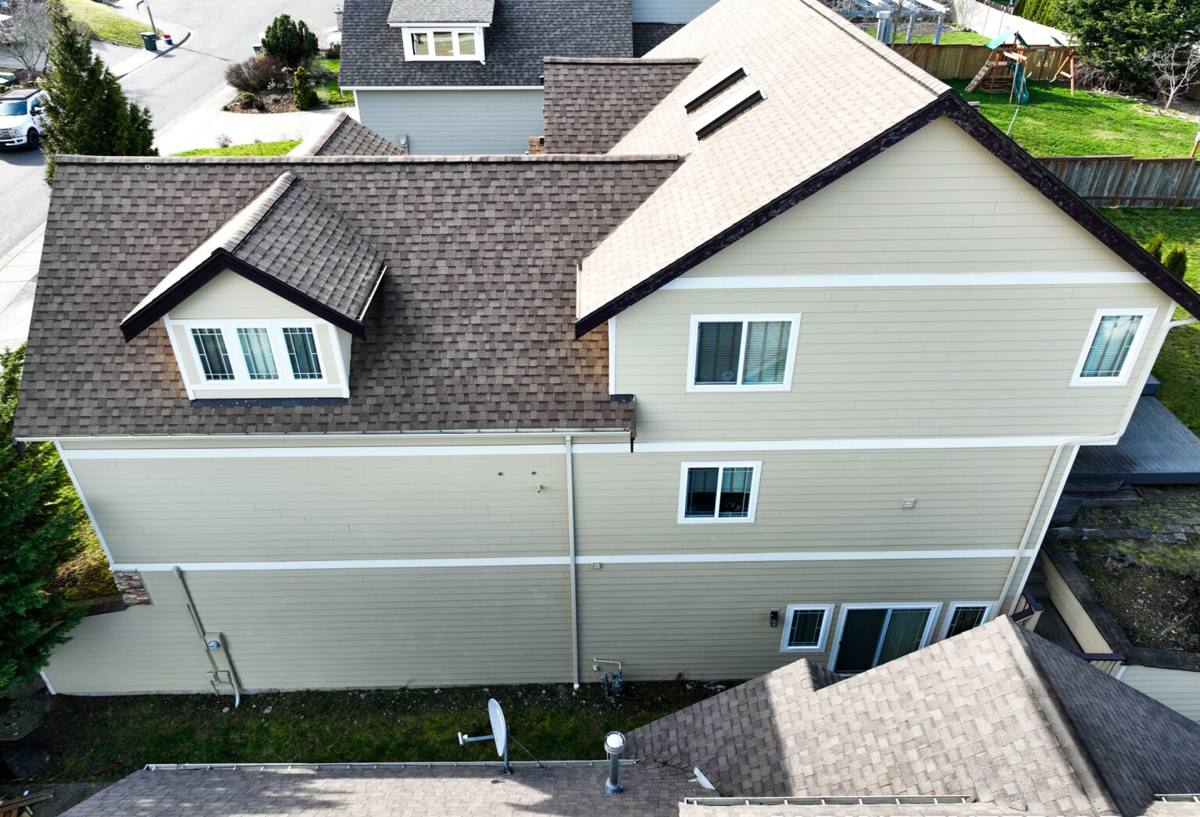
A roofing job that's built for Everson's conditions looks a little different from a generic install, even though the shingles on top might look identical. The differences are mostly in what's underneath and how the details are handled.
- Full synthetic or ice-and-water underlayment at eaves, valleys, and penetrations — not just felt paper, given how much sustained moisture this roof will see over a Whatcom County winter
- Balanced intake and exhaust ventilation so moisture from inside the attic doesn't condense against the roof deck from below, which is just as damaging as rain from above
- Properly lapped and sealed valleys, since valleys carry the heaviest concentrated water flow during a hard rain event
- Corrosion-resistant fasteners and flashing to hold up against the salt air common to this stretch of the county
- Starter strips and drip edge sized correctly at the eaves, where ice-cold runoff and standing moisture do the most long-term damage
Skip any one of these and the shingles themselves become almost irrelevant — water will find the weak point regardless of the product warranty printed on the wrapper.
Our Asphalt Shingle Roofing Process
1. On-Site Assessment
We start by walking the roof, not just eyeballing it from the ground. We check deck condition, existing ventilation, moss and algae growth patterns, flashing condition around chimneys and vents, and how the roof has aged relative to its age and orientation. Shaded, north-facing sections of Everson homes often need attention years before south-facing slopes do.
2. Tear-Off and Deck Inspection
Full tear-off lets us see the deck itself, which a re-roof over old shingles never does. Soft, delaminated, or water-stained decking gets replaced before anything new goes down — installing new shingles over a compromised deck just buries the problem.
3. Underlayment and Flashing
This is where most of the roof's actual weather resistance comes from. We install underlayment rated for sustained wet exposure, with extra protection at valleys, eaves, and any roof-to-wall transitions, and replace flashing rather than reusing what's there whenever there's any doubt about its condition.
4. Shingle Installation
Shingles go down to manufacturer spec for nail placement and exposure, with attention to proper sealing in cooler installation temperatures — a detail that matters more here than in warmer climates, since shingle sealant strips need adequate warmth to bond.
5. Ventilation Check and Final Walkthrough
We confirm intake and exhaust venting are balanced before calling the job done, then walk the finished roof with the homeowner to review what was done and what maintenance to expect going forward.
Choosing the Right Shingle for This Climate
Not every asphalt shingle product handles sustained Pacific Northwest moisture the same way. The table below covers the general tiers homeowners in this area typically choose between.
| Shingle Type | Typical Lifespan Here | Best For | Trade-Offs |
|---|---|---|---|
| 3-Tab Standard | 15–20 years | Budget-conscious re-roofs, rental or secondary structures | Less algae resistance, shorter wind rating, thinner profile |
| Architectural / Dimensional | 25–30 years | Most Everson homes — good balance of cost, durability, and appearance | Higher upfront cost than 3-tab |
| Algae-Resistant (AR) Architectural | 25–30 years | Shaded lots, north-facing slopes, tree-heavy properties | Slight cost premium; still needs periodic moss cleaning |
| Premium / Designer | 30+ years | Homeowners prioritizing appearance and longest-term durability | Highest material cost |
For most Everson homes, we recommend an algae-resistant architectural shingle. The copper- or zinc-infused granules in AR shingles slow algae and moss growth meaningfully over the life of the roof, which matters in a climate where moss isn't a cosmetic issue — it's a maintenance and longevity issue.
Ventilation and Moss Prevention Matter as Much as the Shingles
We bring this up on nearly every job in this area because it's the piece homeowners are least likely to have thought about. A roof can have excellent shingles and still fail early if the attic below it is poorly ventilated. Trapped moisture condenses on the underside of the deck, which rots sheathing from below while the homeowner is only watching the surface for leaks.
Good ventilation also helps manage moss. Airflow keeps the roof surface drying out between rain events instead of staying damp, which is the single biggest factor in how fast moss establishes. We check ridge vents, soffit vents, and any gable vents as part of every roofing job — not as an upsell, but because it directly affects how long the new roof will last.
What Affects the Cost of a Shingle Roof in Everson
Every roof is different, and we don't quote sight-unseen, but these are the factors that typically move the price up or down on a project in this area.
| Factor | Effect on Cost |
|---|---|
| Roof size and number of facets | More area and more valleys/hips increase material and labor time |
| Existing deck condition | Rotted or soft sheathing found during tear-off adds replacement cost |
| Roof pitch and access | Steep or hard-to-access roofs require more safety setup and time |
| Shingle tier chosen | 3-tab, architectural, and premium products carry different material costs |
| Layers to remove | Roofs with multiple existing layers cost more to tear off |
| Ventilation upgrades needed | Adding or correcting intake/exhaust venting adds modest cost but pays off in roof life |
We'll always walk the roof and give you an itemized number before any work starts — no surprise line items added mid-project.
Signs Your Roof Needs Attention
Most roofing problems in this climate show themselves gradually. Here's what we tell Everson homeowners to watch for between inspections.
- Granules collecting in gutters or at downspout outlets
- Moss visible on shingle surfaces, especially on shaded or north-facing slopes
- Curling, cupping, or cracked shingle tabs
- Dark streaking that doesn't wash off with light rain (algae staining)
- Soft spots underfoot if you're on the roof for gutter cleaning
- Daylight visible through the attic roof deck
- Water stains on ceilings or in the attic after a heavy rain
- Shingles missing entirely after a windstorm
Catching these early is usually the difference between a repair and a full replacement. If you're seeing more than one or two of these, it's worth having someone take a look before the next wet season.
Why Hire a Crew That Already Works This Area
Roofing crews who work Whatcom County regularly make different decisions than crews unfamiliar with it — not because the shingles are different, but because the conditions demand it. We know which slopes on a typical Everson lot hold moss longest, how much underlayment coverage actually makes sense given the rain pattern here, and what ventilation setups tend to be under-built on older area homes. That local pattern recognition shows up in fewer callbacks and a roof that performs the way it's supposed to for its full expected life, not just for the first dry summer.
We're based in Ferndale and work throughout Whatcom County, including Everson, so when we say we account for salt air, driving rain, and moss season, that's based on roofs we've actually worked on in these conditions — not a general climate assumption pulled from a manufacturer spec sheet.
After Installation: Keeping the Roof Performing
A correctly installed shingle roof still benefits from basic upkeep in this climate. We recommend:
- Gutter cleaning at least twice a year, more often near trees
- A visual roof check each fall before the heavy rain season starts
- Prompt moss removal using proper methods — never pressure washing, which strips granules and shortens shingle life
- Trimming back overhanging branches to reduce shade and debris buildup
- Addressing any flashing issues or small leaks immediately rather than waiting for the next dry season
None of this requires a service contract or repeat visits from us — it's just what keeps a well-installed roof performing for its full expected lifespan in a climate that doesn't give a roof much of a break.
If your Everson home is due for a roof inspection, repair, or full replacement, we're happy to take a look and give you an honest, no-pressure estimate — just fill out the form below.