 Ferndale
 Roofing on Lummi Island Is Its Own Challenge
Lummi Island sits out in the salt water off Whatcom County, and that location shapes everything about how a roof performs there. Homes here take on a steady mix of salt-laden air, wind-driven rain coming off the water, and long stretches of damp, shaded weather that keep moss and algae active for most of the year. A shingle roof that would hold up fine twenty miles inland can wear out faster on the island if it wasn't built and maintained with those conditions in mind.
We work throughout Ferndale and greater Whatcom County, and Lummi Island roofs get a different level of attention from us than a typical mainland job. The materials, the flashing details, and the maintenance plan all need to account for salt exposure and moisture in a way that a generic installation doesn't.
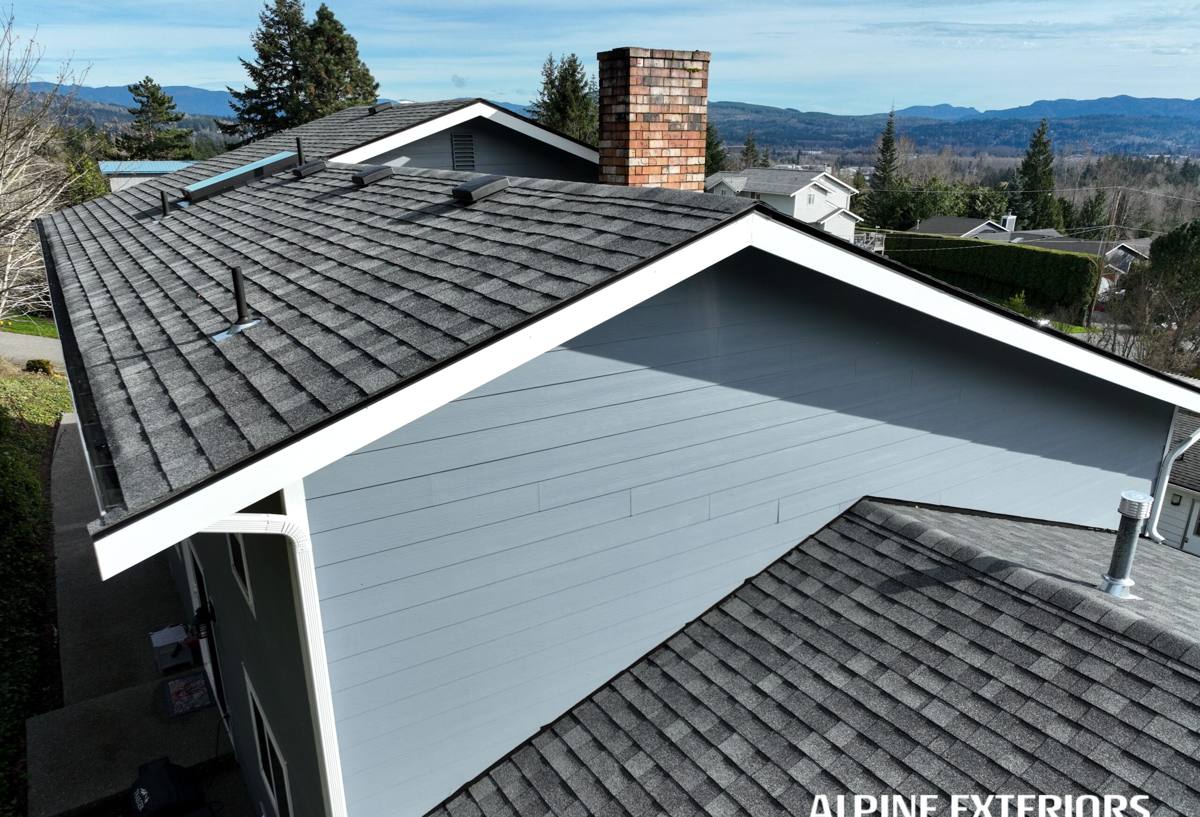
What Lummi Island's Climate Does to a Shingle Roof
Three things drive most of the roofing problems we see on the island:
Salt Air
Airborne salt doesn't just affect metal — it accelerates the breakdown of granules on asphalt shingles and speeds up corrosion on exposed fasteners, flashing, and roof vents. Over years, that shows up as granule loss, thinning shingles, and rusted metal components long before a comparable inland roof would show the same wear.
Driving Rain
Storms coming off open water tend to push rain sideways instead of straight down. That matters because a shingle roof is designed to shed water moving downhill, not water being forced sideways and upward under the shingle edges. Roofs here need tighter flashing, properly lapped underlayment, and attention to every edge and penetration where wind-driven water can find a gap.
A Long Moss Season
Shaded roof sections, north-facing slopes, and the general dampness of a marine climate give moss and algae a long growing window. Moss holds moisture against the shingle surface, works its way under shingle tabs, and lifts them over time — which is one of the more common ways a roof starts leaking well before it's actually "old."
What a Correctly Built Roof Needs Here
A roof that's going to hold up on Lummi Island needs more than good shingles nailed down correctly. The system underneath and around the shingles matters just as much.
Ventilation and Moisture Control
Balanced intake and exhaust ventilation keeps the attic space dry and close to outdoor temperature. Without it, moisture gets trapped under the roof deck, which shortens the life of the shingles from underneath and can lead to rot in the sheathing — a problem you won't see until it's already serious.
Flashing and Water-Shedding Details
Every place a roof plane meets a wall, chimney, skylight, or vent pipe is a potential entry point for water. On a roof exposed to driving rain, we pay close attention to step flashing, counter-flashing, and valley construction, because these details fail long before the shingle field does. We also run high-quality underlayment as a second line of defense, since no shingle installation is completely immune to wind-driven water.
Fasteners and Metal Components
In a salt-air environment, the grade of nails, vent flashing, and drip edge matters more than it would inland. We use corrosion-resistant fasteners and metal components sized for coastal exposure rather than standard-grade parts that are fine elsewhere but corrode faster here.
Choosing the Right Shingle for This Location
Not every asphalt shingle product is a good fit for a salt-air, high-moss environment. We generally steer homeowners toward heavier architectural (dimensional) shingles with algae-resistant granules over basic 3-tab shingles for island homes, for reasons of durability and moss resistance rather than looks alone.
| Shingle Type | Typical Lifespan | Moss/Algae Resistance | Best Fit |
|---|---|---|---|
| 3-Tab Shingles | 15-20 years | Lower unless treated | Budget projects, low-exposure roofs |
| Architectural (Dimensional) Shingles | 25-30+ years | Better mass and profile sheds debris more easily | Most Lummi Island homes |
| Algae-Resistant (AR) Shingles | Same as base product | Copper- or zinc-infused granules resist streaking and growth | Shaded roofs, north-facing slopes, heavy tree cover |
| Impact-Rated Shingles | 25-30+ years | Comparable to standard architectural | Homes wanting added durability against debris and hail |
Algae-resistant granules are worth the modest upcharge on most island roofs, particularly on shaded sections. They don't stop moss outright, but they slow the streaking and biological growth that leads to premature granule loss.
Our Asphalt Shingle Roofing Process
Every roof is different, but our process follows the same core steps on every job, adjusted for the specific house and roof plan.
1. Inspection and Estimate
We start by getting on the roof (or reviewing close-up photos and measurements when access requires it) to check the deck condition, flashing, ventilation, and current shingle wear. This tells us whether we're looking at a repair, a full tear-off and replacement, or something in between, and it's how we put together an honest, itemized estimate.
2. Tear-Off and Deck Inspection
For a full replacement, we remove the old roofing down to the deck. This is the point where hidden problems — soft sheathing, old leaks, inadequate ventilation — actually become visible. We address deck issues before anything new goes down, since covering a compromised deck just hides the problem.
3. Underlayment and Flashing
We install underlayment rated for the exposure level of the roof, with extra protection at eaves, valleys, and other vulnerable areas prone to wind-driven water. New flashing goes in at every wall, chimney, skylight, and vent penetration rather than reusing old, potentially corroded pieces.
4. Shingle Installation
Shingles are installed to manufacturer specifications for nailing pattern, exposure, and sealing, which matters more in high-wind, coastal-exposure locations than it does in sheltered inland settings. Proper nailing and sealant activation are what keep shingles locked down through winter storms.
5. Ventilation Check and Final Walkthrough
Before we call a job finished, we confirm intake and exhaust ventilation are balanced, clean up the site thoroughly, and walk the roof with the homeowner (or review it together) so there are no surprises.
What Drives the Cost of a Lummi Island Roofing Project
Every roof is priced individually after inspection, but a few factors consistently move the price up or down on island jobs specifically.
| Factor | Why It Matters |
|---|---|
| Roof size and pitch | More surface area and steeper slopes mean more material and labor time |
| Deck condition | Rotted or soft sheathing found during tear-off adds repair work before shingles go on |
| Shingle grade selected | 3-tab, standard architectural, and algae-resistant/impact-rated products carry different material costs |
| Flashing and penetration count | Chimneys, skylights, and multiple vent pipes each add flashing work |
| Access and logistics | Ferry scheduling and material staging on the island can affect project timeline more than mainland jobs |
| Existing ventilation | Adding or upgrading intake/exhaust vents where none exist is additional scope |
We give straightforward, itemized estimates rather than vague ballpark numbers, so homeowners know exactly what they're paying for and why.
Keeping Moss and Algae Under Control Between Roof Jobs
A new roof buys time, but moss and algae don't stop trying to move in just because the shingles are new. A little regular attention goes a long way toward protecting that investment.
- Keep overhanging branches trimmed back so roof sections get more sun and airflow, especially over shaded or north-facing slopes
- Clear gutters and valleys of needles and debris, which hold moisture against the roof edge and feed moss growth
- Have moss physically removed rather than scraped aggressively, since scraping can lift or damage granules and shorten shingle life
- Avoid pressure washing shingles directly — it can strip granules and force water under the shingle edges
- Schedule a roof check after major storms to catch lifted shingles or flashing issues before they turn into leaks
- Ask about zinc or copper control strips during installation, which release trace metals that discourage moss regrowth on the roof plane below them
Signs Your Roof Needs a Closer Look
Because moss and salt-air wear can advance quietly, it helps to know what to watch for between inspections.
- Granules collecting in gutters or at the base of downspouts
- Dark streaking or green/black patches spreading across shingle surfaces
- Shingle tabs that look lifted, curled, or cupped, especially on shaded slopes
- Rust staining around vent pipes, flashing, or metal roof components
- Daylight visible through the attic roof deck, or damp insulation after storms
- Water stains on interior ceilings, particularly near chimneys, skylights, or exterior walls
Catching these early usually means a repair. Waiting on them usually means a much larger project once water has reached the deck or the framing underneath.
Why Local Experience on Lummi Island Matters
Working on the island isn't the same as working a job a few miles outside Ferndale. Ferry schedules affect when crews and materials can arrive, staging space on many island properties is tighter than on the mainland, and the exposure conditions vary noticeably from one side of the island to the other depending on how a home sits relative to the water and prevailing wind. A crew that has already planned around those logistics builds that into the schedule and estimate up front, instead of running into it mid-project.
Familiarity with how salt air and moss behave on this specific stretch of coastline also shapes real decisions — which shingle grade actually earns its cost here, where extra flashing attention pays off, and which roof sections need a closer eye during maintenance. That's the kind of judgment that comes from doing this work in this location repeatedly, not from a one-size-fits-all approach applied to every roof regardless of where it sits.
If you're dealing with an aging roof, active leaks, or you're just planning ahead for a Lummi Island home, we're happy to take a look and put together a straightforward, no-pressure estimate. Use the form below to get started.