 Ferndale
 Why Decks Near Bellingham Wear Out Faster Than the Manual Says
Most decking products are rated and warrantied based on generic weather assumptions that don't hold up well here. Bellingham and the surrounding Whatcom County shoreline sit close enough to saltwater that airborne salt reaches fasteners, flashing, and metal hardware on homes several blocks inland, not just on waterfront lots. Add driving rain that comes in sideways off the Strait during fall and winter storms, and you get moisture forced into joints and seams that a deck built for a drier climate was never detailed to handle.
Then there's moss. This area's moss season isn't a few weeks — it's realistically half the year, from the first heavy fall rains through the last damp weeks of spring. Any deck surface that stays shaded, doesn't drain fast, or traps standing water becomes a moss farm, and moss holds moisture against wood and composite alike far longer than open sun and open air would. Over several seasons that combination — salt-laden air, wind-driven rain, and prolonged damp shade — is what actually ages a deck, more than sun exposure or foot traffic ever does.
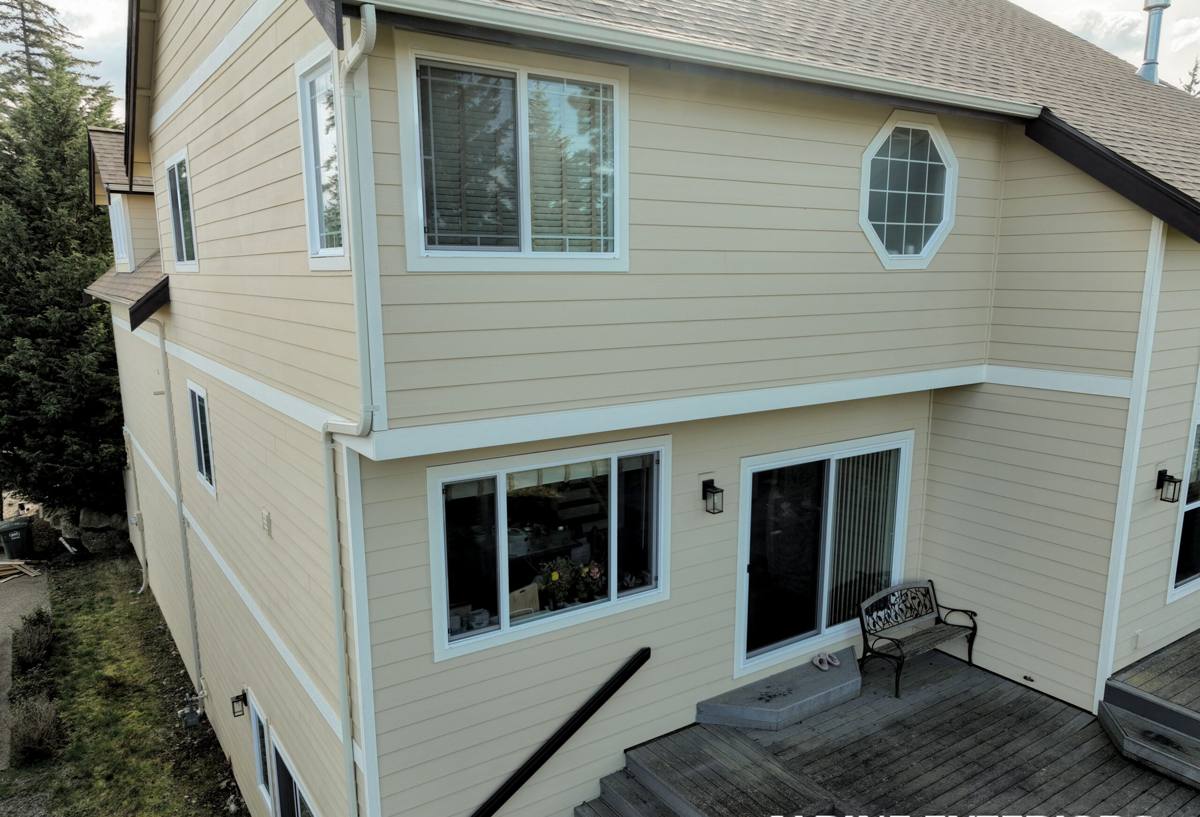
Repair or Replace? Signs It's Time
Not every tired-looking deck needs a full replacement. But there's a point where patching individual boards or re-tightening hardware stops being cost-effective and starts becoming a cycle of chasing the same problems every year. A few signs that point toward replacement rather than repair:
- Boards that feel spongy, springy, or soft underfoot — especially near the house or in shaded corners
- Rust streaks bleeding from screws, nail heads, or joist hangers
- Visible gaps or separation where the ledger board meets the house
- Posts that are soft, cracked, or rotted at or just below grade level
- A railing that flexes or moves when you lean on it
- Persistent moss or dark staining that comes back within weeks of cleaning
- A deck more than 20–25 years old that has never had the substructure inspected
If you're only seeing one or two of these on an otherwise sound structure, a repair might genuinely be the smarter move — we'll tell you that during a site visit rather than pushing a full rebuild you don't need.
What a Correct Deck Replacement Actually Includes
What's Underneath the Boards
The part of a deck that fails first is almost never the decking surface — it's what's under it. Footings need to bear on solid ground below the frost line for this area, posts need to be set to stay dry at the base rather than sitting in standing water, and the beam and joist layout needs to be sized for the actual span and load, not just whatever was there before. A replacement is the one point where all of that can be inspected, corrected, and brought up to current standards, instead of building a new deck surface on top of a compromised frame.
The Ledger Board and House Connection
This is the single most important — and most commonly rushed — part of any deck attached to a house in a wet climate. The ledger board has to be properly flashed and sealed where it meets the siding or sheathing, with the flashing detailed to shed water away from the house rather than trapping it behind the deck. A poorly flashed ledger is one of the most common causes of hidden rot damage to the house itself, not just the deck, and it's very difficult to catch from the outside once it's covered.
Decking Material and Fastening
Board spacing, fastener type, and orientation all affect how fast water drains off the surface and how long moss takes to establish. Hidden fastener systems look cleaner but can trap moisture differently than traditional face-screwed boards, so the right choice depends on the material and how much airflow the site gets.
Choosing a Decking Material for This Climate
There's no single "best" decking material — each option trades off cost, maintenance, and how it behaves in salt air and prolonged dampness. Here's how the common choices compare for a Bellingham-area deck:
| Material | Moisture Behavior | Maintenance | Typical Lifespan |
|---|---|---|---|
| Pressure-treated wood | Absorbs and releases moisture; prone to moss and graying without upkeep | Annual cleaning and periodic sealing/staining | 15–20 years with upkeep |
| Cedar | Naturally moisture- and insect-resistant, but still needs sealing to hold color and shed water well | Regular sealing; more attentive care in shaded, damp areas | 20–25 years with upkeep |
| Composite decking | Doesn't rot, but can hold surface moisture and grow moss/algae in shaded spots if not cleaned | Periodic washing; no staining or sealing required | 25–30+ years, manufacturer-dependent |
| PVC / capstock boards | Fully sheds moisture, most resistant to staining and moss buildup | Occasional washing only | 25–30+ years, manufacturer-dependent |
We're upfront about the trade-offs on each: wood costs less upfront but asks for real yearly maintenance to look and perform well here; composite and PVC cost more initially but ask for almost none. Given how long this area's damp season runs, we'll walk you through which option actually fits your budget and your appetite for maintenance — not just push whatever has the best margin.
Our Deck Replacement Process
- Site visit and assessment — we look at the existing structure, ledger connection, drainage, and sun/shade exposure before recommending anything
- Written scope and material selection — you know exactly what's being replaced, what materials are being used, and what it costs before work starts
- Permitting — we handle the permit application where one is required for your project and jurisdiction
- Demolition and disposal — old decking, framing, and hardware removed and hauled off
- Structural rebuild — footings, posts, beams, and joists installed or corrected to current standards
- Ledger flashing and waterproofing — done before a single deck board goes down
- Decking, railing, and stairs installed — per the material and layout you chose
- Final walkthrough — we go over the finished deck with you and flag any maintenance items specific to your site
Permits, Code, and Safety in This Area
Most deck replacements in and around Bellingham require a building permit, particularly when the deck is attached to the house, elevated above grade, or involves structural work rather than a like-for-like resurfacing. Requirements can differ depending on whether the property falls under City of Bellingham or Whatcom County jurisdiction, and on the specific size and height of the deck. Guardrails are required above a certain deck height, and footings need to be set below the local frost depth — both are things an inspector will check, and both are things we build to from the start rather than treating as an afterthought.
We pull the permit and coordinate inspections as part of the job, so you're not left figuring out which jurisdiction's rules apply or tracking down inspection scheduling yourself.
Maintenance After Your New Deck Is In
A correctly built deck still needs some seasonal attention in this climate — the goal of a good replacement is to make that upkeep minimal, not eliminate it entirely.
- Sweep leaves and debris off the surface regularly through fall to prevent damp buildup in corners
- Rinse or wash the surface a couple times a year to knock back early moss and algae growth before it sets in
- Check that gutters and downspouts near the deck are draining away from it, not onto it
- For wood decking, plan on re-sealing or re-staining on the schedule the product calls for — skipping a cycle is when moss and graying get ahead of you
- For composite or PVC, an occasional wash is typically all that's needed
Why a Ferndale-Based Crew Working in Bellingham Matters
A deck built by a crew that only occasionally works this area is guessing at how much salt exposure, rain direction, and moss really affect a build here. A crew based in Ferndale and working Bellingham regularly has already seen how decks in this specific stretch of Whatcom County age — which orientations hold moisture longest, which hardware actually resists corrosion here versus what a spec sheet claims, and which detailing choices save a homeowner from redoing work in eight years instead of twenty-five.
Being local also means faster response if something needs a look after the job is done, and accountability that doesn't disappear once the invoice is paid — we're still in the area, still reachable, and still standing behind the work.
If your deck is showing its age or you're just not sure whether it needs repair or full replacement, we're happy to take a look and give you a straightforward, no-pressure estimate — fill out the form below to get started.