 Ferndale
 New Construction Is Your One Shot to Get Windows Right
When a home is being built from the ground up, window installation only happens once with full access to bare framing. There's no siding to work around, no old flashing to guess at, no interior trim to protect. That access is an advantage — but only if the crew doing the work treats it that way. A window set into an open rough opening with careless flashing will cause the same leaks and rot as a bad replacement job; it just takes longer to show up, usually after the siding, trim, and paint have already gone on top of it.
Bellingham has seen steady new-home and infill construction in recent years, and we work alongside builders and homeowners in the area regularly. The window package on a new build is one of the few details that's cheap to do correctly during framing and expensive to fix later, so it's worth understanding what "correct" actually looks like before your windows go in.
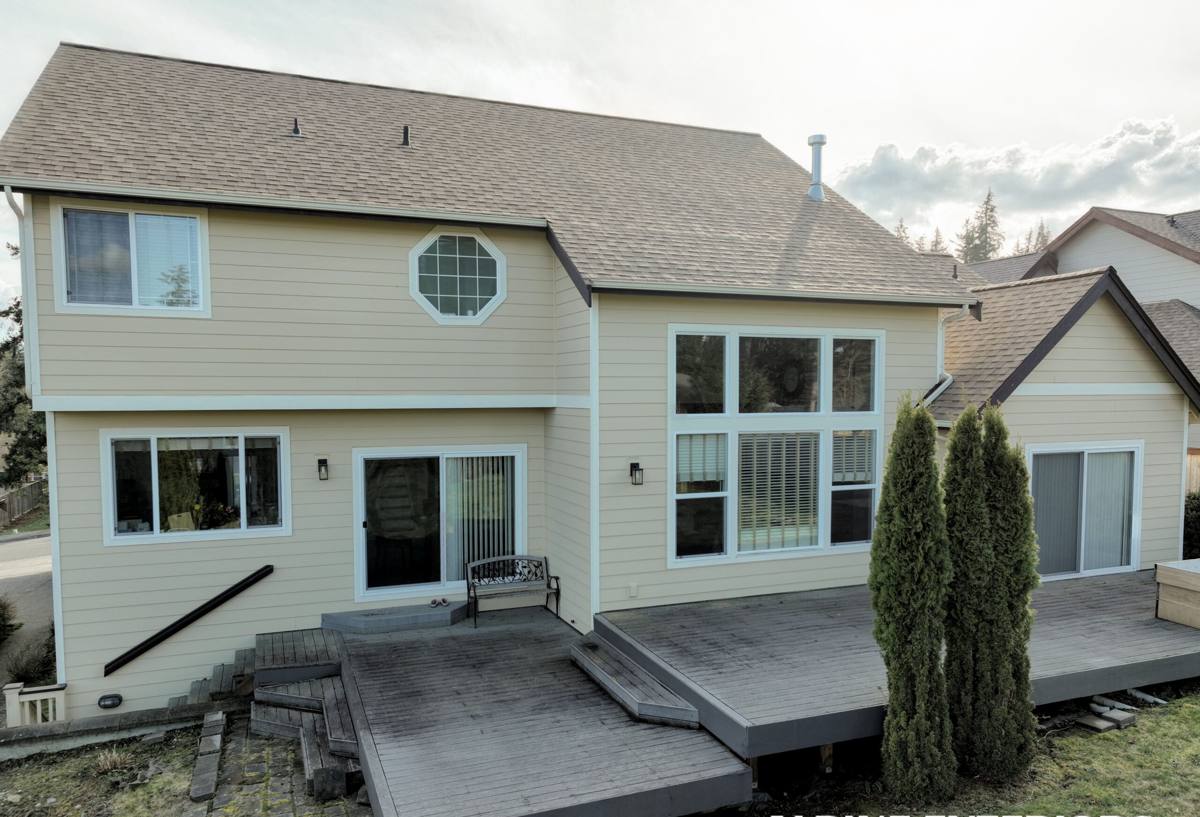
What Bellingham's Weather Asks of a Window System
Whatcom County's marine climate isn't extreme, but it is relentless. Windows here don't face 100-degree heat or hard freezes very often — they face months of moisture, one way or another, and that changes what matters most in both the product and the installation.
Salt Air and Coastal Exposure
Bellingham's proximity to the Bay and Puget Sound means airborne salt is a real factor for anything metal on the exterior of a home. Hardware, fasteners, and hinges that aren't rated for coastal exposure will corrode faster here than they would inland, which is why fastener choice and hardware finish matter more on Bellingham homes than the spec sheet might suggest.
Driving Rain and Water Management
Wind-driven rain is common through fall and winter, and it doesn't behave like a gentle vertical rainfall — it gets pushed sideways and upward into gaps that a fair-weather installation would never be tested against. A window opening needs redundant water management: a sloped sill pan, properly lapped flashing, and clear weep paths so that any water that does get past the glass and frame has somewhere to go besides your wall cavity.
Moss Season and Sustained Dampness
The long stretch of damp, low-light months that keeps moss thriving on roofs and siding does the same thing to any trapped moisture around a window opening. Wood framing that stays wet doesn't need a flood to rot — it just needs weeks of dampness with nowhere to dry out. Good installation is as much about ventilation and drainage as it is about sealing things up tight.
New-Construction vs. Replacement Windows: Why the Distinction Matters
These two jobs look similar from the outside but are handled very differently, and mixing up the approach is a common source of problems on new builds.
| Factor | New-Construction Window | Replacement Window |
|---|---|---|
| Frame type | Nail-fin, set into open framing | Block frame or insert, fit into existing opening |
| Flashing access | Full access to sheathing and WRB | Limited — works around existing siding |
| Sequencing | Installed before siding and trim | Installed with siding already in place |
| Typical use | New homes, additions, full remodels to the studs | Existing homes keeping current siding |
Because a new-construction window is installed before the weather barrier and siding go on, the flashing has to be built into the wall assembly correctly the first time — there's no siding to pull back and fix later without real cost.
Choosing a Frame Material for This Climate
There's no single "best" frame material — it depends on budget, the home's design, and how much maintenance the owner wants to take on. In a coastal, wet climate like Bellingham's, here's how the common options generally compare:
| Material | Moisture & Salt Tolerance | Maintenance | Notes |
|---|---|---|---|
| Vinyl | Good — won't corrode or rot | Low | Cost-effective, wide color/style range, quality varies a lot by manufacturer |
| Fiberglass | Very good — dimensionally stable in temperature and moisture swings | Low | Higher upfront cost, holds paint well if a custom color is wanted |
| Wood-clad | Good on the exterior cladding, but exposed wood interior needs care | Moderate to high | Classic look; the clad exterior protects the wood from weather |
| Aluminum | Prone to condensation and corrosion issues near salt air without thermal breaks | Low | Best reserved for specific architectural or commercial applications |
For most Bellingham-area homes, vinyl and fiberglass are the practical middle ground — good performance against sustained moisture without the upkeep that wood or bare aluminum can demand in this environment. That's a call every homeowner should make based on their own priorities, not a one-size answer.
Glass and Performance Packages That Make Sense Here
Whatcom County's building code requires a minimum energy performance for new windows, and any reputable installer should be able to show you how a given window meets it. Beyond code minimums, a few choices are worth thinking through:
- Double-pane with Low-E coating and argon fill — the standard for most Bellingham new construction; solid performance for our mild-but-damp climate.
- Triple-pane — better insulating value and quieter, but heavier and pricier; worth it for north-facing rooms, homes near busy roads, or owners prioritizing comfort over cost.
- Low-E coating selection — the Pacific Northwest doesn't need the same solar-heat-blocking coatings as a hot climate; a coating tuned for heat retention rather than heat rejection generally makes more sense here.
Condensation resistance is worth asking about specifically. In a climate with as much sustained humidity as ours, a window that fogs or sweats on the interior in winter is more than a nuisance — it's a sign the glass package or the room's ventilation isn't matched to conditions.
Correct Installation Starts Before the Window Ever Arrives
Most window failures we're called to diagnose trace back to the opening, not the window itself. Before a window ever gets set, the rough opening needs to be checked for square and correct size, the sill needs a sloped pan flashing so any water drains outward instead of pooling, and the weather-resistive barrier around the opening needs to be sequenced correctly — meaning each layer laps over the one below it, shingle-style, so water always sheds downward and outward.
This is also where timing with the framing and siding crews matters. A window installed out of sequence with the WRB and flashing tape can look fine on install day and still leak the first hard rain of the season.
Our New-Construction Window Process
- Review the plans, window schedule, and rough opening dimensions before the windows are ordered.
- Verify each rough opening on site is square, plumb, and correctly sized before installation day.
- Install sloped sill pan flashing at every opening.
- Set the window, shim it for level and square, and fasten per the manufacturer's specification — this is what keeps the warranty valid.
- Integrate flashing tape around the nail fin with the weather-resistive barrier in the correct shingle-lap order.
- Fill the perimeter gap with a low-expansion sealant or backer rod and sealant rather than packing it solid, so the frame isn't put under pressure.
- Coordinate hand-off with the siding and trim crews so nothing gets covered before it's checked.
- Walk every opening for level operation, smooth locking, and a clean seal before calling the job done.
What a Correct New-Construction Installation Includes
If you're a homeowner keeping an eye on your builder's window package, or a builder wanting a clear standard to hold subcontractors to, this is the short version:
- Sloped sill pan flashing at every opening, not just a bead of caulk
- Flashing tape lapped in the correct shingle order with the weather-resistive barrier
- Corrosion-resistant fasteners and hardware, appropriate for coastal exposure
- Shims placed correctly so the frame isn't twisted or bowed
- Perimeter gaps sealed with backer rod and sealant or low-expansion foam — never packed solid
- Weep paths left clear so water has somewhere to exit
- Interior air seal completed separately from the exterior water seal
- Installation done to the manufacturer's written instructions so the warranty stays intact
Why Hiring a Crew That Already Works Bellingham Matters
Window installation isn't the same job in every climate. A crew that mostly works drier inland markets can do everything "by the book" and still miss the redundancy that Whatcom County's driving rain and prolonged damp seasons actually require. Working in and around Bellingham regularly means we've seen how local conditions play out on real homes over real winters — not just on a spec sheet.
We're based in Ferndale, a short drive from Bellingham, which means we're familiar with local builders, know what inspectors are looking for on new construction, and can get back out to a job site quickly if something needs a second look. For new construction specifically, that local accountability matters — you want the same crew reachable years later, not a name that only shows up for one job and moves on.
If you're planning new-construction windows for a home in Bellingham or elsewhere in Whatcom County, we're happy to walk the plans with you and put together a free, no-pressure estimate — just fill out the form below.