 Ferndale
 Birch Bay's Waterfront Climate Is Hard on Decks
Birch Bay sits right on the water in Whatcom County, and that location is exactly what makes decking here a different job than decking twenty miles inland. Salt-laden air moves off the bay and settles on everything, driving rain comes in sideways off the water for months at a time, and the shoulder seasons bring a moss and algae bloom that coats any surface that stays damp and shaded. A deck built to a generic spec sheet, with no thought given to salt exposure or drainage, tends to show its age fast here — fading unevenly, growing slick with moss, and loosening hardware years before it should.
None of that means a deck in Birch Bay has to be high-maintenance or short-lived. It means the material choice, the substructure, the fasteners, and the way the boards are installed all need to account for what this specific stretch of coastline throws at a structure year-round. That's the difference between a deck that needs real attention every spring and one that just gets used.
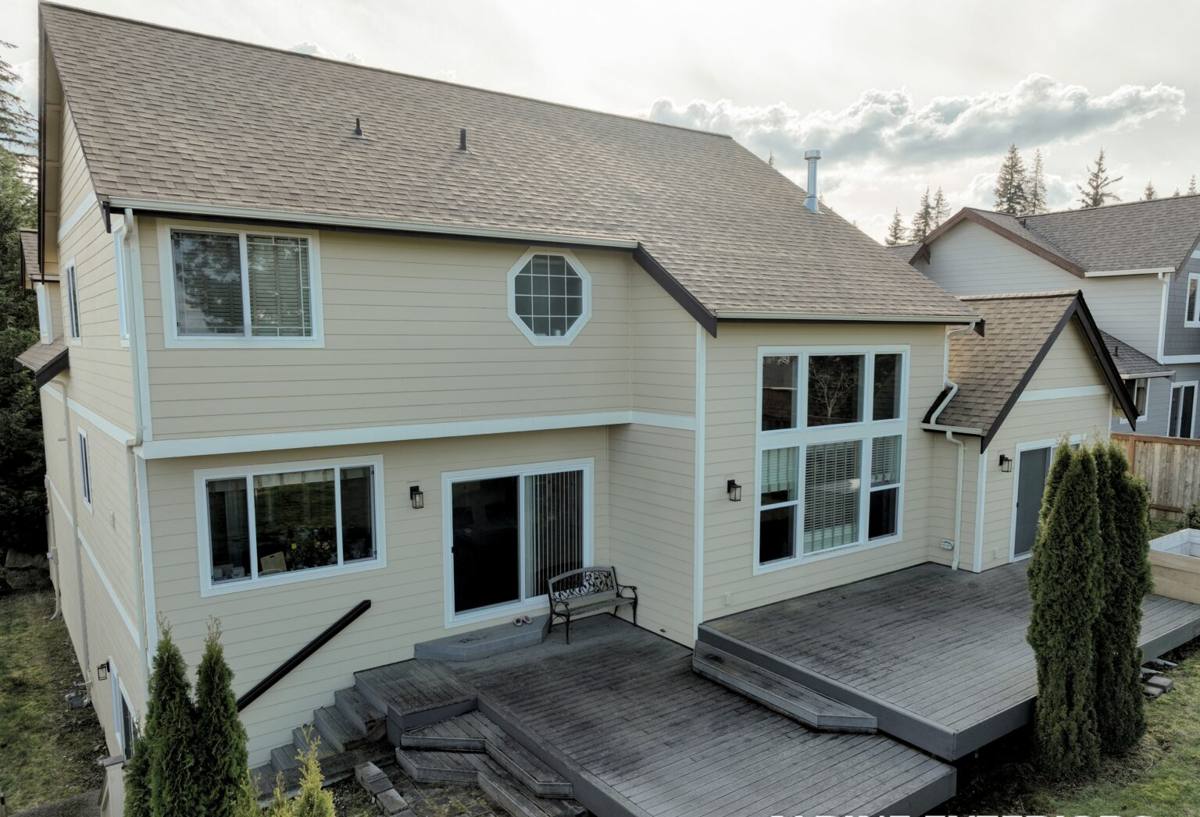
Why Composite Decking Fits Birch Bay Better Than Wood
Wood decking isn't a bad product, but in a salt-air, high-moisture environment it asks a lot of the homeowner. Untreated or even pressure-treated lumber absorbs moisture, swells, and dries out repeatedly through the wet season, which is exactly the cycle that causes splitting, cupping, and fastener pop. Add in the moss and algae that thrive in Birch Bay's damp, often shaded waterfront lots, and a wood deck needs annual cleaning, sealing, and occasional board replacement just to stay safe underfoot.
Composite decking was built to break that cycle. The wood-fiber-and-polymer core doesn't absorb water the way solid lumber does, so it doesn't swell, crack, or rot from repeated wetting. That matters more here than in a drier inland yard, simply because Birch Bay decks spend more days of the year genuinely wet. Composite also resists the salt film that settles on waterfront surfaces — it wipes off rather than working its way into open wood grain.
Where Composite Still Requires Judgment
Composite isn't maintenance-free, and we won't tell a homeowner otherwise. It still needs periodic cleaning to keep moss and green algae from taking hold, especially on boards that sit in shade or under overhanging trees near the water. The difference is that cleaning a composite board is a matter of washing the surface — there's no sanding, no re-sealing, no exposed grain for spores to root into.
Choosing the Right Composite Board for Salt Air Exposure
Not all composite decking is built the same, and the gap matters more in a salt-air location than it does further inland. The biggest variable is whether the board is fully capped on all four sides, capped on three sides, or uncapped.
| Board Type | How It Handles Salt Air & Moisture | Maintenance | Typical Warranty Range |
|---|---|---|---|
| Fully capped composite | Polymer shell on all sides resists salt film, moisture wicking, and staining | Occasional wash | 25–50 years |
| Three-side capped composite | Cut ends and underside exposed; more prone to moisture uptake at end cuts near water | End caps or sealant recommended at cut edges | 10–25 years |
| Uncapped composite | Absorbs moisture and salt spray directly into the fiber core | Regular cleaning, more visible fading over time | 10–20 years |
| PVC (cellular) decking | No wood fiber at all; handles constant moisture and salt exposure very well | Occasional wash | 25+ years |
| Pressure-treated wood | Absorbs moisture readily; salt spray accelerates fastener corrosion and surface checking | Annual cleaning and sealing | Not typically warrantied for finish |
For a lot with direct water exposure or prevailing wind off the bay, we generally steer homeowners toward a fully capped composite or PVC board. It costs more up front than an uncapped board, but the end-cut exposure that trips up cheaper composite is exactly where salt air and standing moisture do the most damage.
What a Correct Substructure Looks Like Here
The boards get the attention in most decking conversations, but the framing underneath is where a lot of coastal decks actually fail first. Standard dimensional lumber joists, even pressure-treated ones, are vulnerable to the same wet-dry cycling and salt exposure as the visible boards, and a joist failure is a structural problem, not a cosmetic one.
- Joist tape or a moisture barrier on top of every joist to keep fastener penetrations from becoming water entry points
- Proper spacing and blocking sized for composite board span ratings, which differ from lumber decking
- Ledger board flashing that actually sheds water away from the house band joist, not just a bead of sealant
- Adequate air gap and slope under the deck so standing water and trapped humidity don't sit against the framing
- Corrosion-resistant structural hardware rated for treated lumber and coastal exposure, not standard interior-grade fasteners
Skipping any of this doesn't show up on day one. It shows up in three or four years as soft spots, movement underfoot, or rust streaks bleeding through the deck boards — problems that are expensive to fix after the fact and cheap to prevent during the build.
Our Installation Process
The steps themselves aren't exotic, but doing each one with Birch Bay's conditions in mind is what separates a deck that holds up from one that doesn't.
- On-site assessment of sun, wind, and water exposure for that specific lot, since a bluff-facing deck and a more sheltered one call for different board and hardware choices
- Removal of the old deck and inspection of the ledger connection and existing framing for hidden moisture damage
- Framing built or reinforced to current span and hardware standards, with moisture barrier applied over every joist
- Ledger flashing installed and integrated with the house's existing water management, not just caulked over
- Composite board installation using hidden fastener systems where the product allows, reducing surface penetrations that can trap moisture
- Railings, stairs, and any structural posts set with corrosion-resistant hardware appropriate to salt-air exposure
- Final walk-through covering how the specific board we installed handles cleaning, what to expect from moss growth, and warranty paperwork
Fasteners, Railings, and Hardware That Won't Fail Near Salt Water
Hardware is the most common shortcut we see on decks that fail early near the water. Standard zinc-coated screws and brackets corrode faster in salt air than they do inland, and once a fastener starts rusting, it can stain the surrounding decking and lose holding strength well before the boards themselves show any wear. We use stainless steel or coated fasteners rated for coastal and treated-lumber exposure, and we apply the same standard to railing brackets, post bases, and any structural connectors — not just the visible screws.
Railings deserve the same scrutiny. Aluminum and composite railing systems generally hold up better than raw wood railing in this environment, since they don't need refinishing and don't develop the same surface checking that lets moisture in.
Keeping a Birch Bay Deck Looking Good Through Moss Season
Even a well-built composite deck benefits from a short seasonal routine, especially on shaded or water-facing sections where moss and green algae get a head start.
- Sweep debris and organic buildup off the deck regularly through fall, before it has a chance to hold moisture against the boards
- Wash the deck surface once or twice a year with a composite-safe cleaner to lift salt film and early moss growth before it takes hold
- Check railing and stair hardware annually for early corrosion, especially on posts closest to open water exposure
- Keep gutters and downspouts near the deck clear so runoff isn't dumping extra water onto the structure
- Trim back overhanging vegetation where practical to cut down on shade and moisture retention over the deck surface
None of this is heavy maintenance — it's closer to the seasonal upkeep most Birch Bay homeowners already do for siding and gutters. The point is timing it before moss season sets in, not after the deck is already slick.
Permits and Code Basics in Whatcom County
Most deck rebuilds and many new deck installations in unincorporated Whatcom County, including Birch Bay, require a building permit, particularly when the deck is attached to the house or exceeds a certain height or footprint. Requirements can also touch on setback distances from property lines and, depending on the lot, shoreline-related review given the proximity to the water. We handle the permit process as part of the job rather than leaving a homeowner to sort it out, and we build to the structural and guardrail requirements the permit requires — not just what looks finished.
Why Local Experience in Birch Bay Matters
A contractor who mostly works inland can still build a technically sound deck, but they may not default to capped composite over uncapped, or think to spec coastal-rated hardware, simply because those choices don't come up as often on their typical jobs. Working Birch Bay regularly means those decisions are standard practice, not an afterthought after a callback. It also means we've seen how different boards, fasteners, and railing systems actually hold up a few years in on lots with direct water exposure versus more sheltered ones nearby — not just how they're rated on paper.
If you're weighing options for a deck in Birch Bay, we're happy to walk your specific lot, talk through what its sun and water exposure calls for, and give you a straight, no-pressure estimate. There's a request form below whenever you're ready.