 Ferndale
 Why Birch Bay Is Tougher on Windows Than Most of Whatcom County
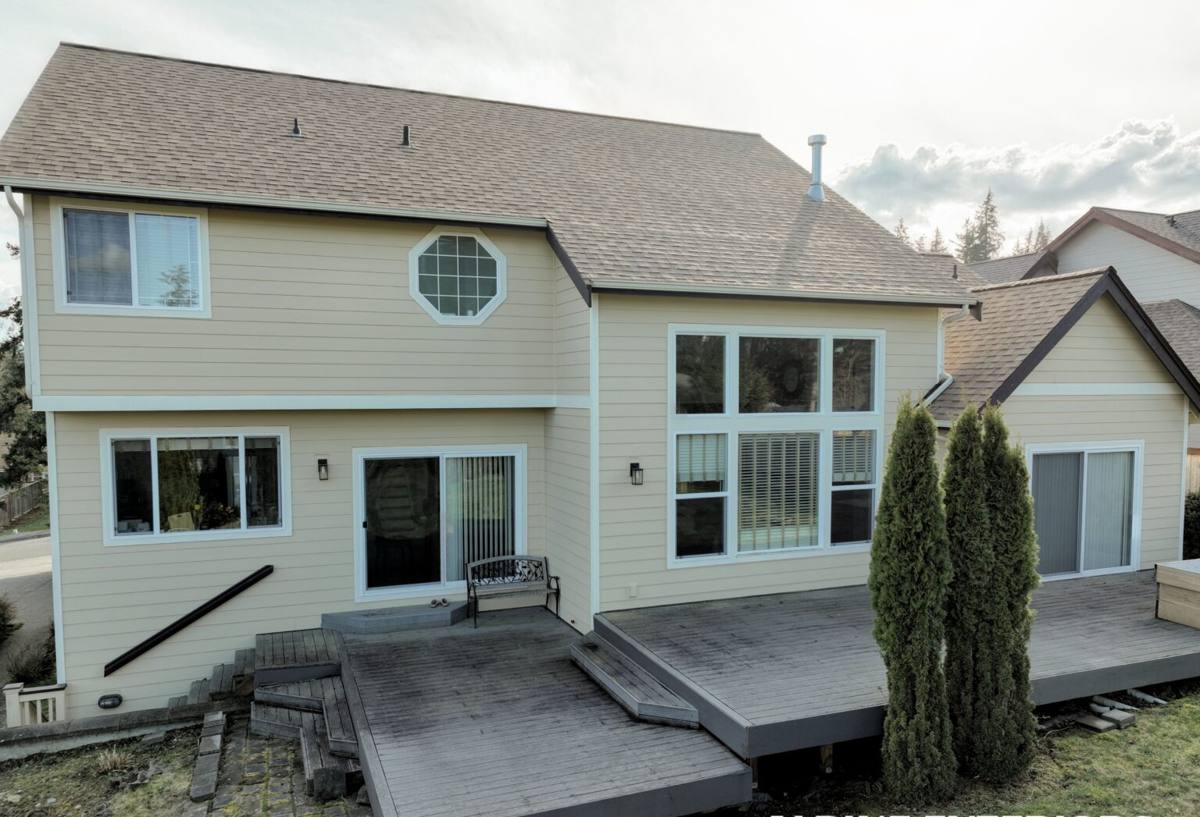
Birch Bay sits right on the water, and that changes what a window has to survive year after year. Homes a few miles inland in Ferndale deal with plenty of rain, but Birch Bay adds salt-laden marine air, wind-driven rain that hits window walls at an angle instead of falling straight down, and a moss season that stretches from fall through spring. All three work on a window at once: salt air corrodes metal hardware and fasteners faster than it would elsewhere, driving rain finds any gap in flashing or sealant and pushes water where it doesn't belong, and constant shade and dampness on north- and west-facing walls keep moss and algae established on sills and frames for months at a time.
None of this means Birch Bay homes need exotic products. It means the glazing package, frame material, and installation details all have to be chosen with that exposure in mind, and the install itself has to tie correctly into the wall and siding around it. That's the part that gets skipped when a crew is used to installing in a drier, more sheltered part of the county.
What "Energy-Efficient" Actually Means for a Home Like Yours
Energy-efficient window is a broad label, and manufacturers use it loosely. What actually matters is a short list of measurable properties, and how they line up with your home's orientation and exposure.
U-Factor: How Much Heat Escapes
U-factor measures how well a window resists heat loss — lower is better. In our climate, with mild but long heating seasons and relatively few extreme temperature swings, U-factor is usually the number that affects your heating bill the most, more than solar heat gain coefficient does. A well-chosen U-factor keeps interior glass surfaces warmer, which also cuts down on the condensation that shows up on cold, damp mornings.
Low-E Coatings and Gas Fills
Low-emissivity coatings reflect heat back into the room in winter without meaningfully darkening the glass. Paired with an argon or krypton gas fill between panes, they're what actually separates a modern efficient window from an older double-pane unit. The gas fill only does its job if the seal around it holds — which is why seal failure (that permanent fog you sometimes see between panes) is the single most common reason older Birch Bay windows lose their efficiency long before the glass itself fails.
Condensation Resistance
This one gets overlooked. A window with poor condensation resistance will sweat on the interior during our wet, cool months, and that moisture works its way into sills and trim over time. In a marine climate, we weigh this almost as heavily as U-factor when recommending a glazing package.
Frame Materials: What Actually Holds Up Near the Water
Frame choice matters more in Birch Bay than in drier parts of the county, because salt air and constant moisture exposure accelerate wear on hardware, finishes, and seams. Here's how the common options compare for this specific setting.
| Frame Material | Salt Air / Moisture Behavior | Maintenance | Typical Trade-Off |
|---|---|---|---|
| Vinyl | Won't corrode or rust; performs well against salt air | Low — occasional cleaning | Limited color/finish options; can't be repainted easily |
| Fiberglass | Very stable in moisture and temperature swings; holds up well long-term | Low | Higher upfront cost than vinyl |
| Wood (interior) with clad exterior | Clad exterior protects the wood if the cladding and seals stay intact | Higher — any breach in cladding exposes wood to rot | We're cautious recommending this in direct salt exposure unless the homeowner understands the maintenance commitment |
| Bare aluminum | Prone to corrosion and pitting in salt air over time | Moderate to high | We generally steer Birch Bay homeowners away from uncoated aluminum for this reason |
Our default recommendation for most Birch Bay homes is vinyl or fiberglass, chosen for the specific wall it's going in — not because one product is "bad," but because those two materials give up the least when exposed to salt air and constant moisture, with the lowest long-term maintenance burden.
Signs Your Current Windows Are Working Against You
Before assuming a window needs full replacement, it's worth checking for these signs. Some point to a window that's genuinely failed; others point to an installation or sealant problem that can sometimes be addressed without replacing the unit.
- Fog or moisture trapped permanently between panes (seal failure — this one always means replacement)
- Cold drafts you can feel with your hand near the frame edge, even with the window latched
- Visible moss, algae, or dark streaking building up on the sill or lower frame within weeks of cleaning it off
- Paint or finish bubbling or peeling on wood trim immediately around the window
- Difficulty latching or locking — often a sign hardware has corroded or the frame has shifted
- Soft or discolored drywall/trim on the interior below a window after heavy wind-driven rain
- A noticeable difference in room temperature near the window compared to the rest of the room
- Rattling or whistling during storms coming off the water
What a Correct Installation Involves
The window unit itself is only part of the job. In a wind-driven-rain climate like Birch Bay's, how the window is integrated into the wall determines whether it actually stays dry for the next twenty years.
Flashing and the Water-Resistive Barrier
Every opening needs to be flashed so that any water that gets past the window sheds down and out over the weather-resistive barrier behind the siding, never behind it. This is where a crew that also does siding work has a real advantage — we're thinking about how the window opening ties into the wall assembly as a whole, not just how the window looks once it's set.
Sealant and Drainage
Sealant is a backup, not the primary defense — a window that relies entirely on a bead of caulk to stay dry will eventually leak, because caulk is the first thing salt air and sun degrade. Correct sill pans and weep paths matter more over the long run than the sealant does.
Fit and Shimming
A window that's out of square or under- or over-shimmed will bind, won't seal evenly against its own weatherstripping, and will develop drafts within a year or two even if the product itself is high quality. This is an installation issue, not a product issue, and it's the most common reason a homeowner replaces "bad windows" that were actually just installed poorly the first time.
Our Process
- On-site assessment — we look at each opening individually, including the wall assembly and any existing moisture or moss issues, not just the window itself.
- Product recommendation — frame material and glazing package matched to that specific wall's sun and rain exposure, not a one-size answer for the whole house.
- Written estimate — clear on what's included: removal, disposal, flashing and integration work, and the window units themselves.
- Removal and inspection — once old windows come out, we check the framing underneath for hidden rot or moisture damage before anything new goes in.
- Installation — proper flashing, shimming, and sealing, integrated with the surrounding siding and trim.
- Walkthrough — we go over operation and basic care with you before we consider the job done.
Cost Factors
Every project is different, but these are the variables that move the price up or down on most Birch Bay window jobs.
| Factor | Why It Matters |
|---|---|
| Frame material | Vinyl is typically the lowest upfront cost; fiberglass and clad-wood cost more but bring different maintenance and longevity trade-offs |
| Glazing package | Upgraded Low-E coatings and gas fills add cost but usually pay back through comfort and lower heating bills |
| Number and size of openings | Larger or custom-sized units cost more per window than standard sizes |
| Condition of the existing opening | Hidden rot or moisture damage found during removal adds repair work before the new window can go in |
| Access and wall complexity | Second-story, tight-clearance, or heavily trimmed openings take more labor to flash and finish correctly |
| Disposal | Removal and hauling of old units and materials is part of most quotes |
We'd rather walk a homeowner through these trade-offs honestly than quote a number that doesn't hold up once we're inside the wall.
Why Local Experience in Birch Bay Matters
A crew that mostly installs windows on sheltered, inland lots in Ferndale or further into Whatcom County will size up a Birch Bay opening differently than one that works this shoreline regularly. We know which walls take the worst of the wind-driven rain, which corners collect moss and stay damp long after a storm passes, and where salt air does the most damage to hardware and finishes over time. That shapes which flashing details we insist on and which frame materials we steer homeowners toward, before a single window is ordered.
It also means we're not learning on your house. Working this area consistently is what lets us catch a marginal detail — a flashing lap that's an inch short, a sill pan that won't drain — before it becomes the leak that shows up two winters later.
Caring for Your New Windows
Energy-efficient windows still need basic upkeep in this environment, especially near the water:
- Rinse salt residue and grime off frames and glass a few times a year, more often on water-facing walls
- Keep sills clear of moss and organic debris rather than letting it sit against the frame
- Check and re-lubricate hardware periodically so locks and hinges don't seize or corrode unnoticed
- Inspect exterior sealant annually and have any cracked or missing sealant addressed promptly
- Watch for early condensation or fogging between panes and have it checked before it spreads to other units
If your windows are drafty, fogged, or just past their working life, we're happy to come take a look and give you a straightforward, no-pressure estimate — no obligation, just an honest read on what your home actually needs. Use the form below to get started.