 Ferndale
 Storm Damage Roof Repair Built for Birch Bay's Waterfront Exposure
Birch Bay sits right where Whatcom County's weather gets personal. Homes along the water and back through the neighborhoods behind Birch Bay Drive take a different kind of beating than a roof ten miles inland in Ferndale proper. You've got wind coming straight off the water with nothing to slow it down, salt-laden air that works on metal and fasteners year-round, and a wet season that stretches long enough for moss to get a real foothold before anyone notices. When a windstorm or a heavy winter blow does damage, it's rarely a single dramatic event you can point to — it's more often the storm that finally exposes weakness that's been building for a while.
We work Birch Bay regularly, which matters more than it might sound like. A roof repair here needs to account for wind-driven rain finding its way under lifted shingles, salt air accelerating corrosion on exposed metal, and moss holding moisture against the roof deck for months at a stretch. A crew that mostly works drier, inland roofs can still do competent work, but they're guessing at conditions we see on every job out here.
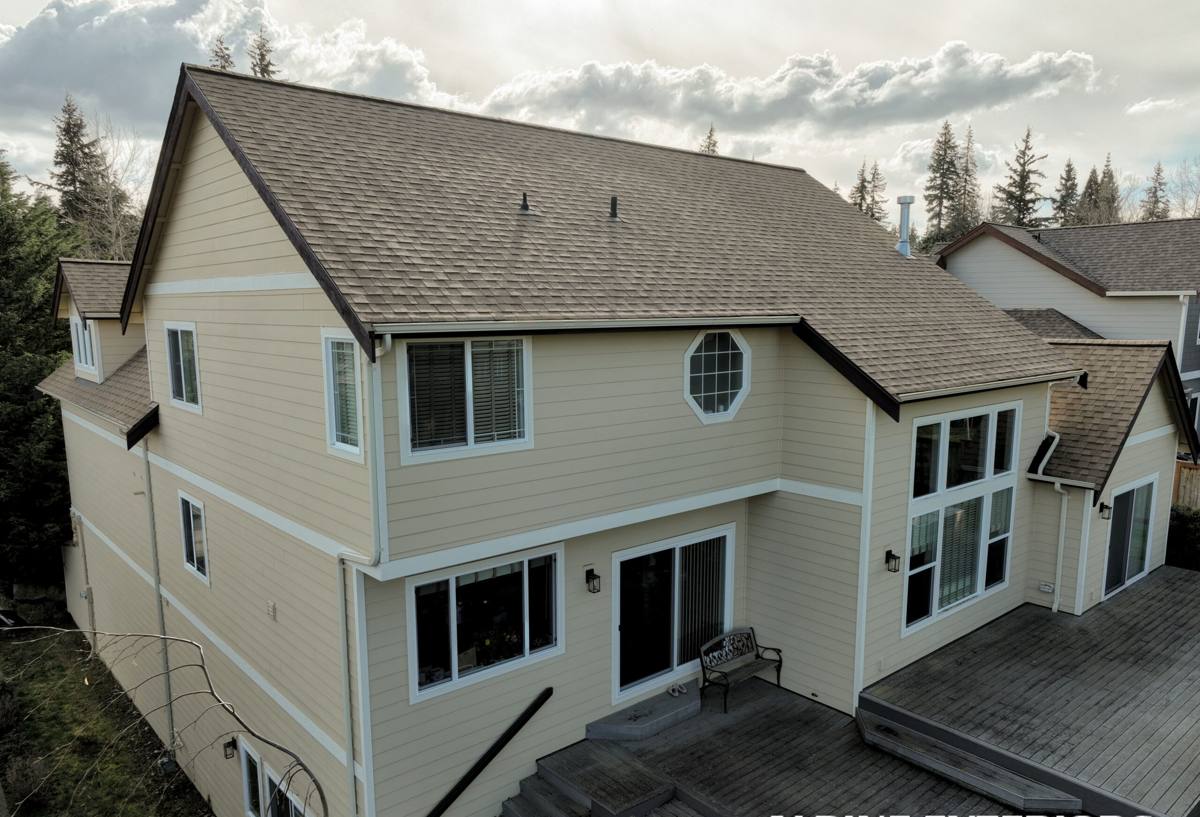
What Storm Damage Actually Looks Like on a Birch Bay Roof
Storm damage isn't always the obvious kind. Homeowners often expect a tarp-and-missing-shingles scenario, but a lot of what we find after a windstorm is quieter and more likely to cause trouble down the road if it's ignored.
Wind Damage
Sustained wind off Georgia Strait and Birch Bay itself can lift shingle tabs, break the adhesive seal strips, and loosen or crack ridge cap shingles without tearing anything off completely. That's actually the tricky part — a shingle that's been lifted and re-seated by the wind can look fine from the ground but no longer has a working seal, which means the next rain gets underneath it.
Wind-Driven Rain Intrusion
Because storms here usually come with rain, not just wind, we're checking for water intrusion at every penetration point: flashing around chimneys and vents, valleys, and the transitions where roof meets wall. Wind-driven rain can push water uphill under shingles in ways that gravity-only rain never would, so damage sometimes shows up in the attic or on an interior ceiling before it's visible on the roof surface.
Salt Air and Corrosion
Proximity to the bay means exposed metal — flashing, fasteners, gutter hardware — ages faster here than it does further inland. After a storm, we specifically look for fasteners that have backed out or corroded to the point of losing their grip, and flashing edges where salt exposure has started to compromise the seal.
Moss and Trapped Moisture
Whatcom County's long wet season gives moss plenty of time to establish itself on north-facing slopes and shaded sections of roof. Moss holds moisture against shingles and roof decking well after the rest of the roof has dried out, which softens shingles over time and can contribute to rot at the deck level. Storm damage and moss damage often overlap — a storm can loosen shingles in an area that was already softened by months of moss growth underneath.
Our Storm Damage Repair Process
We keep the process straightforward because homeowners dealing with storm damage usually want clarity, not a sales pitch.
1. Inspection
We walk the roof and check the attic when accessible, looking at shingles, flashing, ridge caps, valleys, and any areas with moss or standing debris. We're not just looking for what's obviously broken — we're checking seal integrity on shingles near the damage, since a lifted shingle that reseals crooked is a future leak even if it looks intact today.
2. Honest Documentation
We document what we find with photos and plain-language notes, which is useful whether you're paying out of pocket or filing an insurance claim. We tell you what's storm-related, what's pre-existing wear (like moss damage that's been building for a couple seasons), and what's cosmetic versus structural.
3. Repair Plan and Options
For most storm damage, a targeted repair — replacing the affected shingles, resealing or replacing flashing, addressing any deck-level moisture — is the right call. We'll tell you plainly if the damage is limited enough that spot repair makes sense, or if the extent of it (or the roof's overall age and condition) means repair is just delaying a fuller replacement conversation. We're not going to recommend a full re-roof for a repair-scale problem.
4. The Repair Itself
We match shingles as closely as possible, properly seal and fasten replaced sections so they perform in wind the same way the surrounding roof does, and pay particular attention to flashing and fastener condition given the salt air exposure. Any moss or debris found during the repair gets cleared from the work area so it's not just repaired and re-covered.
What a Correct Repair Requires in This Environment
A repair that holds up in Birch Bay's conditions isn't just about matching shingles. A few things matter more here than they would on a more sheltered roof:
- Fastener choice and placement — corrosion-resistant fasteners set correctly matter more with salt air in the mix.
- Flashing integrity — flashing that's just "close enough" tends to fail faster here than in drier, inland conditions.
- Full seal restoration — any shingle that's been lifted needs a proper reseal, not just a visual fix, or it becomes the next leak point.
- Moss clearing before closing up the repair — sealing a repair over existing moss just traps the moisture problem underneath.
- Ventilation check — a roof that's had wind-driven rain intrusion is worth checking for adequate attic ventilation, since trapped moisture compounds shingle and deck problems over time.
Repair vs. Replacement: How We Help You Decide
| Factor | Leans Toward Repair | Leans Toward Replacement |
|---|---|---|
| Extent of storm damage | Isolated section or slope | Widespread across multiple slopes |
| Roof age | Under 12–15 years, otherwise sound | Nearing or past expected lifespan |
| Moss/moisture history | Minimal, surface-level | Long-term moss with deck softening |
| Underlying shingle condition | Granule loss minimal, seals intact elsewhere | Widespread granule loss or brittle shingles |
| Flashing/metal condition | Sound apart from storm-affected area | Corrosion or failure in multiple areas |
Most storm calls we get in Birch Bay fall on the repair side of this table. Replacement conversations usually come up when storm damage lands on a roof that was already near the end of its service life from years of moss and salt exposure.
Insurance and Storm Damage Claims
If you're planning to file a claim, timing and documentation matter. We recommend having the roof assessed as soon as it's safe to do so after a storm, before rain has a chance to compound the damage. Our inspection notes and photos are written to be useful for a claims adjuster, and we're glad to walk the roof with your adjuster if that's helpful to your process. We don't handle the claim itself, but we'll give you a straightforward, accurate account of what's storm damage and what isn't — that distinction matters for how a claim gets evaluated.
What to Check After a Storm, Before You Call Anyone
A quick, safe check from the ground can help you know how urgent the situation is:
- Shingles or granules visible in gutters or on the ground around the house
- Visible gaps, lifted tabs, or missing shingle sections from the ground or a neighbor's-eye view
- Water stains, drips, or damp spots on ceilings, especially near chimneys, vents, or where an interior wall meets the roofline
- Sagging or uneven rooflines, which can indicate deck-level problems and should be treated as more urgent
- Debris — branches or heavier material — that landed on the roof during the storm
- Gutters pulled loose or overflowing, which can point to blockage or storm-related fastener failure
Don't get on the roof yourself after a storm — wet, wind-damaged roofing is not a safe place to be doing your own inspection. If you see interior water intrusion, that's worth a call sooner rather than later, since standing water and wet insulation cause their own separate problems the longer they sit.
Why a Local Birch Bay Crew Makes a Real Difference
Storm damage repair isn't just a checklist — it's judgment calls about what's actually storm-related versus long-term wear, and what materials and methods will actually hold up in this specific spot on the map. Working Birch Bay regularly means we already know how salt exposure ages metal out here, how moss behaves on shaded slopes near the water, and what wind-driven rain does to flashing and seals in this exact microclimate. That's not something you can fully substitute with a general inspection checklist. It also means we can typically respond faster after a widespread storm event, since we're not driving in from across the county for every call.
Get a Straightforward Assessment
If a recent storm has you wondering whether your roof needs attention, we're happy to take a look and give you a plain-language read on what we find — no pressure, no upsell to a bigger job than you actually need. Fill out the form below for a free estimate, and we'll get back to you to schedule a time to assess the damage.