 Ferndale
 Board & Batten in a Salt-Air, High-Moisture Climate
Fairhaven sits close enough to the water that homes here deal with a different set of stresses than siding a few miles inland. Salt-laden air accelerates corrosion on fasteners and trim hardware, driving rain off Bellingham Bay drives water sideways into wall assemblies that aren't detailed for it, and a long, damp moss season keeps north- and shade-facing walls wet for weeks at a stretch. Board and batten siding is a strong look for the craftsman, farmhouse, and coastal-modern homes common in this part of Whatcom County — but it's also a style that punishes shortcuts. The vertical boards and battens create dozens of extra seams and fastener lines compared to lap siding, and every one of those seams is a potential path for water if it isn't installed correctly.
We install board and batten as a James Hardie system exclusively. That's not a marketing line — it's a decision about what actually holds up in this climate over the long haul, and it shapes every part of how we approach a Fairhaven project.
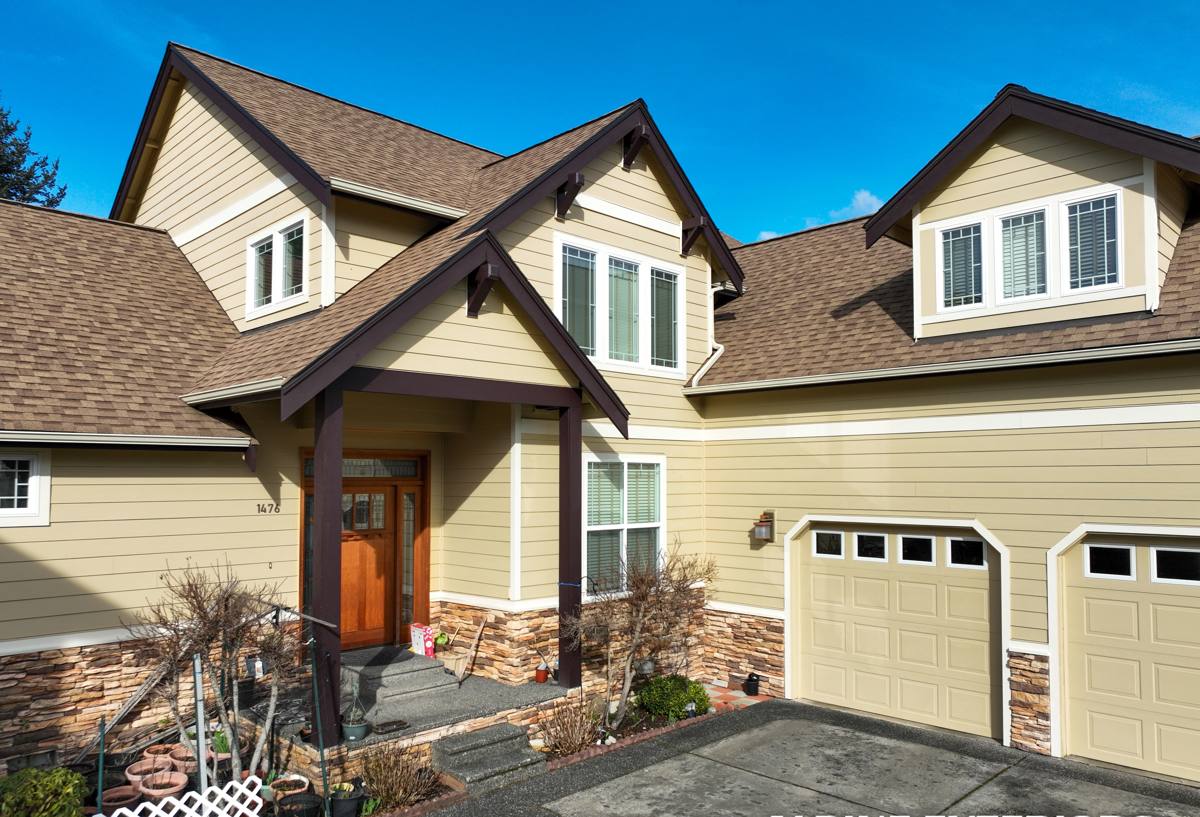
Why Board & Batten Specifically Struggles Here Without the Right Product and Install
Board and batten relies on more vertical wood-grain-style boards, more butt joints, and more fastener penetrations than a standard horizontal lap job. In a dry climate that's a minor detail. In Whatcom County, where wind-driven rain is common through fall and winter and morning fog keeps siding damp well into the day, those extra seams matter a lot. Three things tend to go wrong when board and batten isn't handled correctly:
- Moisture wicking at butt joints — boards that aren't properly flashed or gapped at horizontal seams pull moisture in by capillary action, which shows up later as staining, swelling, or paint failure.
- Batten fastening into thin air — battens need to land on solid backing or be fastened per manufacturer spec, not just nailed wherever looks even; missed studs or over-driven nails create loose battens and open gaps within a few seasons.
- Moss and algae holding moisture against the wall — shaded, north-facing walls near mature trees (common throughout this part of the county) stay damp longer, and a siding material that absorbs moisture will feed that cycle instead of shedding it.
This is exactly why the material choice matters as much as the installer. Wood-based and engineered-wood board and batten products are more vulnerable to swelling, delamination, and rot at cut edges when they take on repeated moisture. Vinyl board and batten sheds water fine but expands and contracts significantly with our temperature swings, which telegraphs through as waviness and gaps at the battens over time. Fiber cement, done right, resists all three of the failure points above — it doesn't wick moisture the way wood does, it holds paint and factory finish far longer, and it doesn't move with temperature the way vinyl does.
Why We Only Install James Hardie for This Application
James Hardie's board and batten profiles are engineered fiber cement, not wood or wood composite, which removes the swelling and rot risk that a lot of homeowners don't find out about until years two or three. The ColorPlus factory finish is baked on under controlled conditions rather than field-painted, which matters enormously on a style with this many exposed edges and seams — factory finish holds color and resists chipping at cut lines far better than site-applied paint, and Hardie backs it with a real finish warranty. Hardie also engineers its siding by climate zone (HZ5 for our Pacific Northwest region), which means the product is formulated for the moisture exposure we actually get here, not a generic national spec.
We don't install LP SmartSide, vinyl, Cemplank, Allura, primed spruce, or cedar board and batten. Some of those are genuinely decent products for the right application — cedar has real appeal, and engineered wood products have improved — but none of them match fiber cement's combination of moisture resistance, non-combustibility, and factory finish durability for a vertical-seam siding style in a wet coastal climate. We'd rather install one system well than offer five and let homeowners guess which one will hold up.
What a Correct Board & Batten Job Involves
Wall Prep and Water Management
Before any board goes up, the wall needs a continuous weather-resistive barrier, correctly lapped and taped at every seam, with flashing integrated at windows, doors, and any horizontal transitions. On board and batten specifically, we pay close attention to the housewrap behind vertical seams and to kickout flashing where roof lines meet siding walls — a detail that gets missed more often on vertical-profile jobs than on standard lap siding.
Fastening and Board Layout
Boards and battens are fastened per James Hardie's published specifications for our climate zone — correct fastener type (to resist the corrosion salt air accelerates), correct spacing, and fasteners driven into solid framing rather than sheathing alone. We lay out board spacing before cutting the first piece so battens land evenly across a wall face and around openings, rather than adjusting as we go and ending up with an odd width at a corner.
Joints, Gaps, and Caulking
Every butt joint gets the manufacturer-specified gap and is backed appropriately — not just butted tight and caulked over, which traps moisture instead of letting it drain. Field-cut edges are sealed per spec, since a cut edge is the one place factory finish doesn't already protect the substrate.
Finish Work
Trim, corners, and transitions are finished to shed water outward and downward at every level — not just sealed with caulk as a catch-all. Caulk is a maintenance item, not a substitute for correct flashing and lap sequencing.
Our Process for a Fairhaven Board & Batten Project
- On-site walkthrough — we look at wall orientation, tree cover, roof-to-wall transitions, and existing moisture damage before quoting anything.
- Written scope and product spec — you get the exact Hardie board and batten profile, color, and fastening plan in writing, not a verbal estimate.
- Tear-off and wall inspection — we don't side over rot or hidden water damage; sheathing issues get flagged and addressed before new siding goes on.
- Weather barrier and flashing install — this is the step that determines whether the siding lasts 10 years or 40, and it happens before a single board is visible.
- Board and batten installation to spec — layout, fastening, joint gapping, and trim finished per James Hardie's requirements for our climate zone.
- Final walkthrough — we go over the finished job with you, including basic care so the finish holds up.
Cost Factors for Board & Batten in This Area
Board and batten typically costs somewhat more than standard lap siding per square foot, mainly due to the added board and batten material and the extra labor of double-layer fastening. Exact pricing depends on the specifics of your home, but the factors below are the ones that actually move the number:
| Factor | Why It Affects Cost |
|---|---|
| Wall condition underneath | Rot, water damage, or inadequate sheathing found during tear-off adds repair scope before new siding goes on |
| Home height and access | Multi-story walls and tight side yards near neighboring lots add scaffolding and labor time |
| Amount of trim and transitions | Board and batten around dormers, bump-outs, and mixed rooflines takes more layout and cutting than a simple flat wall |
| Existing siding removal | Full tear-off versus siding over an already-sound assembly changes labor and disposal costs |
| Color and finish selection | Standard ColorPlus colors versus premium or custom options carry different material costs |
Signs Your Current Siding Isn't Holding Up
If you're not sure whether it's time to look at replacement, a few signs are worth taking seriously before they become bigger repairs:
- Soft or spongy spots when you press on siding boards, especially near the bottom courses or window sills
- Paint that's peeling, bubbling, or chalking well before its expected repaint interval
- Persistent moss or algae growth that comes back within weeks of cleaning
- Visible gaps opening up between battens or at butt joints
- Staining or dark streaks below joints or fastener heads, which usually means water is tracking through rather than shedding off
Why a Crew That Already Works This Area Matters
Whatcom County's coastal microclimates aren't uniform — wind exposure, tree cover, and how close a lot sits to the bay all change how a wall behaves over time, and that affects real installation decisions like flashing detail and fastener choice. A crew that's already worked homes in and around Fairhaven has seen how local wall assemblies typically hold up, what conditions tend to show up during tear-off in this area, and how to sequence a job around the wetter stretches of the year rather than fighting them. That local pattern recognition is worth more than a generic install checklist, especially on a siding style like board and batten where the details are what separate a job that lasts decades from one that needs attention in five years.
Maintaining Board & Batten Once It's Installed
James Hardie board and batten is low-maintenance, not no-maintenance. A rinse-down once or twice a year removes the moss and algae buildup that our climate encourages, especially on shaded walls. Keep an eye on caulked joints at trim and openings — caulk is a wear item and should be checked periodically, not assumed to last the life of the siding. Trim back vegetation that's holding moisture against the wall, and address any gutter or downspout issues promptly, since misdirected roof water is one of the most common causes of premature siding wear we see on service calls.
If you're weighing board and batten for a home in the Fairhaven area, we're glad to walk the property with you, look at what your walls are dealing with, and put together a straightforward, no-pressure estimate — just fill out the form below.