 Ferndale
 Board & Batten Siding on the Lummi Peninsula
Board and batten has picked up a lot of interest from homeowners out on the Lummi Peninsula over the past several years, and it's easy to see why — the vertical lines look sharp on a newer build and settle in naturally on an older farmhouse-style home, and it reads as a step up from standard lap siding without looking out of place next to the water. What doesn't get talked about enough is that board and batten is fundamentally a different joint system than lap siding, with roughly twice the seams and fasteners per square foot. On a peninsula lot that already takes a heavier version of Whatcom County's salt air, driving rain, and moss season than homes further inland, that extra seam count is exactly where a mediocre install starts to fail first.
We install James Hardie fiber cement board and batten exclusively, and every seam, fastening pattern, and flashing detail we build is sized to what this specific stretch of coastline does to a wall over ten, twenty, and thirty years — not to what looks fine on the day the crew packs up.
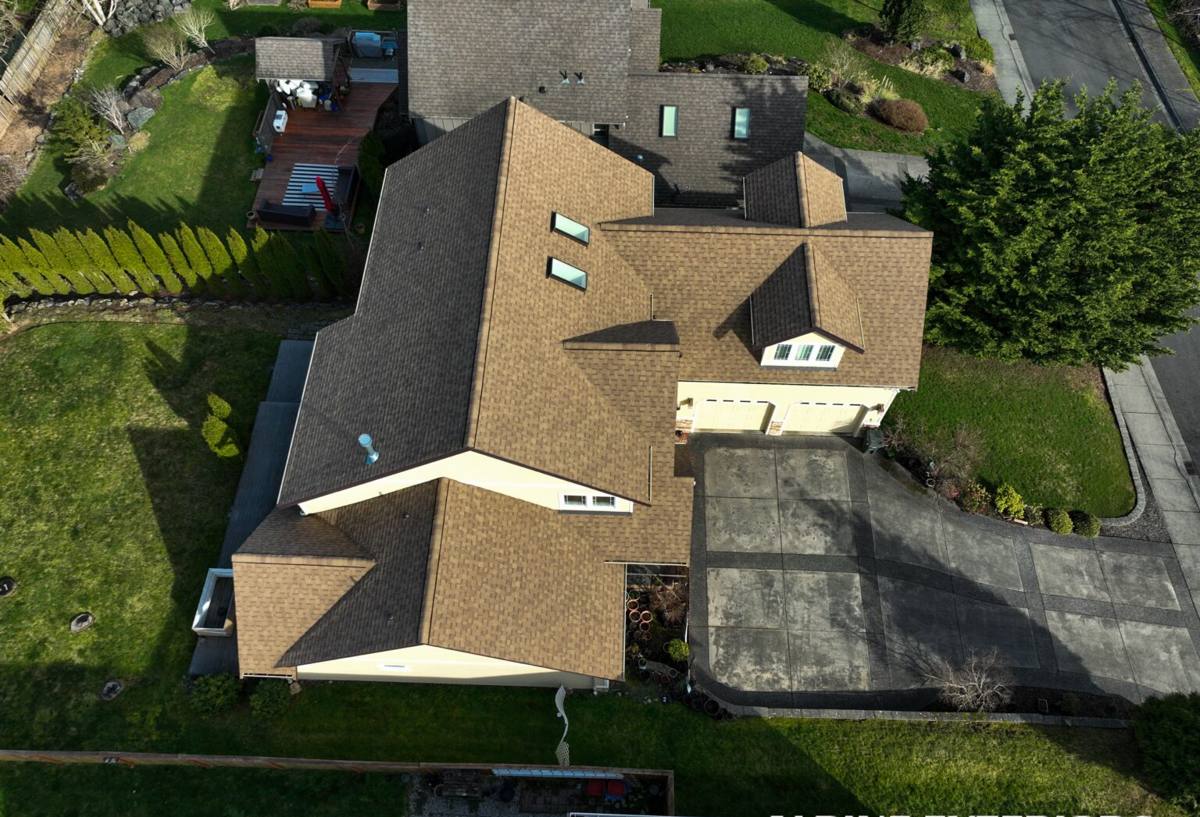
What Lummi Nation's Exposure Does to a Board & Batten Wall
Salt Air and a Higher Fastener Count
Homes out on the peninsula sit closer to open water than most of Ferndale proper, which means a steadier, heavier dose of salt-laden air moving off Bellingham Bay and the Strait. That salt is corrosive to any exposed metal, and board and batten simply has more metal exposed to it — every board and every batten strip needs its own fastening line. Get the fastener spec wrong here, even slightly, and rust streaks and loosening battens show up years earlier than they would on a sheltered inland wall.
Wind-Driven Rain Straight Into Vertical Seams
Open water means less windbreak, and less windbreak means rain arrives sideways more often than it falls straight down. A vertical batten seam running the full height of a wall gives that wind-driven rain a long, continuous joint to test. A batten that's caulked tight instead of properly lapped, back-primed, and left room to breathe becomes a wick that pulls water in toward the fastener line instead of shedding it back off the wall.
A Moss Season That Runs Most of the Year
Shade, tree cover, and near-constant dampness on peninsula lots keep moss and mildew active for a long stretch of the calendar, and shaded or north-facing walls hold that moisture longest. A batten seated tight against a board with no gap to ventilate traps exactly the dampness moss needs, which over a few seasons shows up as staining, softened substrate under the joint, and paint failure that starts at the seam and spreads outward.
Storm Wind Loading
Winter storm systems moving off open water hit peninsula properties with more direct, sustained wind than a home tucked further into town. Board and batten's higher fastener count is an advantage here if the fastening pattern is actually correct — more attachment points can mean a more secure wall — but only if every one of those fasteners is placed, sized, and spaced to spec. A shortcut on fastening that would go unnoticed on a sheltered inland wall tends to announce itself here during the first hard blow.
Why the Material Underneath Matters More on This Profile
Board and batten doesn't create new weaknesses in a siding material so much as it exposes whatever weaknesses already exist, because there's more joint length and more edge surface for water to work against. That's a bigger deal on a peninsula lot than almost anywhere else in our service area, and it's part of why we don't offer LP SmartSide, vinyl, Cemplank, Allura, primed spruce, or cedar board and batten. Those are legitimate products, and other contractors install them competently. On a profile with this many seams, in a location that takes this much sustained salt and wind, we settled on one system we trust completely rather than a lineup of options with different maintenance trade-offs.
| Material | Behavior at Batten Seams | Fit for Peninsula Exposure | Realistic Lifespan Here |
|---|---|---|---|
| James Hardie fiber cement | Dimensionally stable; doesn't swell or cup at the joint | HZ5 formulation built for heavy, sustained moisture | 30+ years with correct install |
| LP SmartSide (engineered wood) | Cut edges and fastener holes more sensitive to moisture intrusion | Needs consistent edge sealing to hold up this close to water | 15-25 years, exposure-dependent |
| Vinyl | Can warp or gap at battens under sun, cold, and salt spray | Rigid seams stress more in wind-driven conditions | 20-30 years, variable |
| Cedar | Absorbs moisture readily at every unsealed seam | Salt and constant dampness shorten the recoat cycle | 15-25 years with regular upkeep |
Hardie's fiber cement core doesn't expand and contract with moisture the way wood-based sidings do, which matters most on a profile made up almost entirely of vertical seams. The factory-applied ColorPlus finish means the only field-painted surfaces on the wall are cut edges we prime ourselves — not the whole board face, the way a site-finished material depends on.
What a Correct Install Looks Like on a Peninsula Lot
Board and batten's finished look is straightforward, but a correct install has more steps behind it than most siding profiles, and a location this exposed leaves less room to skip any of them:
- Weather-resistive barrier installed and lapped correctly, sized for a wall that will see more wind-driven moisture than a sheltered inland home
- A drainage gap or rainscreen behind the siding so moisture that gets past the surface can dry out instead of sitting against the sheathing
- Corrosion-resistant fasteners at Hardie's specified spacing on both boards and battens — not a reduced count to save labor time
- Battens set with the clearance the install spec calls for, never caulked tight, so the wall can shed water rather than trap it
- Flashing and laps detailed at every window, door, corner, and base transition, where a vertical profile meets a horizontal surface
- Factory-cured ColorPlus finish preserved by cutting boards face-down and priming field-cut edges before they go up
A wall missing any one of these can still look fine for a season or two. What shows up later — staining at the seams, a soft spot at the base, paint failure tracking down a batten — takes a few wet winters to surface, which is exactly long enough for a rushed install to be someone else's problem by the time it does.
Our Process for a Lummi Nation Board & Batten Project
Walkthrough Before Anything Is Planned
We start by looking at the actual walls in question — which face open water directly, which sit shaded and slow to dry, and whether the existing wall assembly already has moisture damage that needs addressing before new siding goes up. New board and batten over a wall with hidden rot just buries the same problem under better-looking material.
Working Out the Details on Paper First
Batten spacing, corner treatment, and how the siding meets windows, trim, and rooflines get planned before crews start cutting boards. On a profile this seam-heavy, in a location this exposed, working through the details ahead of time avoids the kind of field improvisation that tends to be where corners quietly get cut.
Installing to Manufacturer Spec, Not a Generic Standard
Every fastener, gap, and flashing lap follows James Hardie's published requirements for this climate zone specifically. That's what keeps the manufacturer's warranty intact, and it's what actually determines whether the wall performs for decades or starts showing problems within a handful of wet seasons.
A Final Walkthrough You Can Follow
We walk the finished wall with you, explain what little maintenance board and batten actually needs, and make sure you know what a healthy seam looks like if you ever want to check it yourself down the road.
Repairing Damaged Sections Versus a Full Re-Side
Not every board and batten problem on a peninsula home calls for tearing the whole wall off. A storm-damaged section, an isolated batten that's come loose, or impact damage near grade can often be repaired and matched into existing Hardie siding without redoing the whole elevation. But if water has been tracking behind battens for a while, or the home still has an older, non-Hardie board and batten system nearing the end of its service life, a patch job usually just delays a bigger project while the hidden damage keeps spreading underneath. We'll tell you honestly which situation you're in rather than defaulting to whichever answer is easier to sell.
Why Hire a Crew That Already Works Lummi Nation
Board and batten rewards familiarity with this specific stretch of coastline in a way a lot of siding work doesn't, because the failure points here are subtle and slow to surface. A crew that's installed this profile on peninsula homes through multiple wet seasons already knows which wall orientations need extra flashing attention because of shade and water exposure, how much batten clearance actually holds up against Lummi Nation's version of wind-driven rain versus what a generic install guide assumes, and where a rainscreen gap is worth the added labor versus where it's optional. That judgment doesn't show up on a spec sheet, and it's the difference between a wall that still looks and performs the same in fifteen years and one with seam staining by year five.
Cost Factors for Board & Batten Near Lummi Nation
Board and batten generally costs more per square foot than standard lap siding because of the added batten material and the extra labor of fastening and detailing two layers instead of one. A few things move the price further on a specific peninsula home:
| Factor | Why It Matters Here |
|---|---|
| Distance from open water | Closer lots see faster fastener and finish wear, which can call for tighter fastening specs |
| Existing wall condition | Tear-off often reveals moisture or rot damage that's common under aging siding on exposed lots |
| Batten spacing and reveal | Tighter spacing means more material and more fastening labor |
| Wind exposure and fastening spec | More open, exposed elevations may need a tighter fastener pattern than sheltered walls |
| Site access | Peninsula lots can have limited access, tree cover, or longer staging distances |
We'll walk your specific property and give you real numbers instead of a rough square-footage estimate — two homes with identical square footage can land very differently on cost depending on how many of these factors actually apply.
Getting It Right the First Time
Board and batten isn't forgiving to fix after the fact. Because the battens cover the seams between boards, correcting a bad install usually means pulling battens, boards, or both, rather than a simple patch — and on a peninsula lot, water that's found its way behind a poorly detailed seam has had a heavier exposure to work with the whole time it went unnoticed. That's why we treat the planning and detailing phase of a Lummi Nation board and batten project as seriously as the install itself. Getting it right once costs a lot less than tearing out a wall that was built wrong.
If you're weighing board and batten for a home in or around Lummi Nation, we're glad to walk the property, talk through what your specific walls need given their exposure and orientation, and give you a straightforward, no-pressure estimate. There's a form below — reach out and we'll set up a time to take a look.