 Ferndale
 Composite Decking Built for Kendall's Weather, Not Just Its Looks
Kendall sits in a part of Whatcom County where the weather doesn't do decks any favors. Between the long stretches of driving rain, the marine-influenced humidity that never fully lets up, and the shade cover that keeps moss and algae thriving most of the year, a deck out here works harder than the same deck would in a drier climate. Composite decking is popular in this area for good reason — it doesn't rot, splinter, or need yearly staining — but "composite" isn't a single product, and installing it wrong will get you the same moisture problems you were trying to avoid with wood in the first place.
This page is about doing composite decking right for a Kendall property specifically: what the local conditions demand from the material and the build, what a correct installation actually involves, and why the details matter more here than they would somewhere with a drier, sunnier climate.
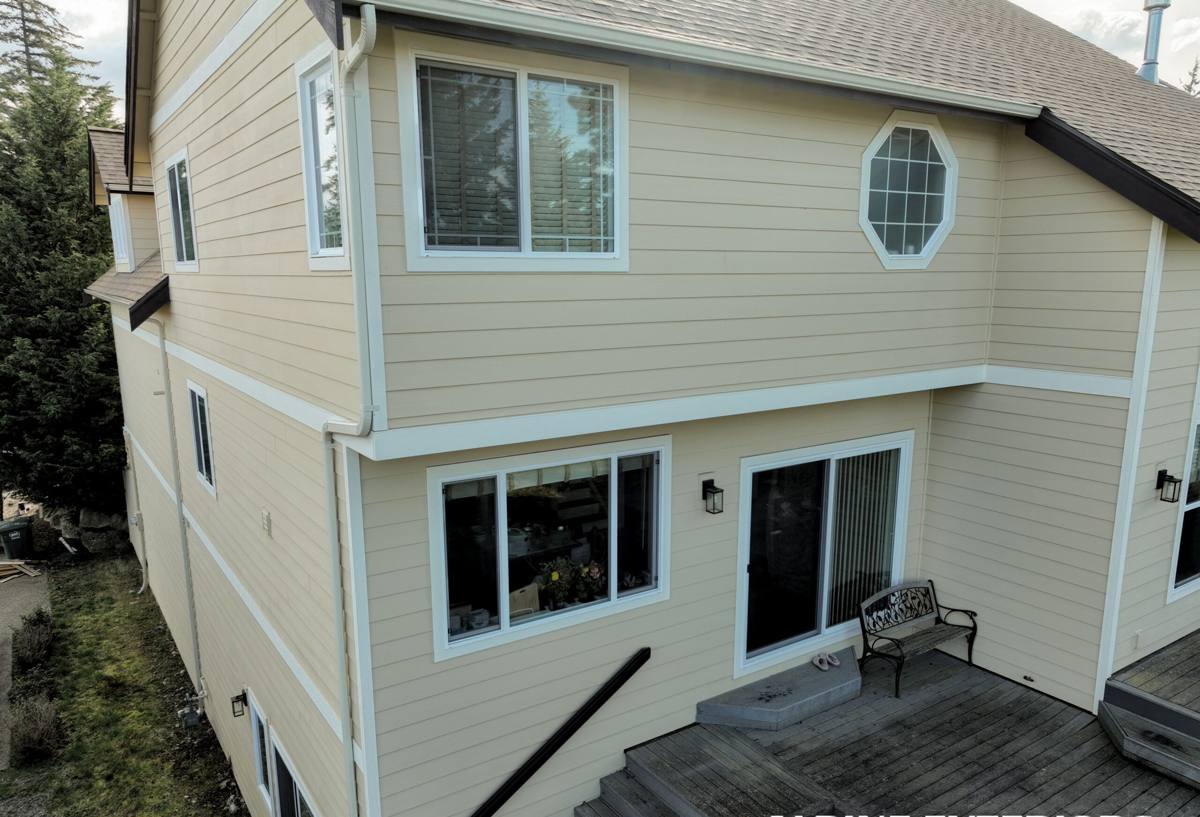
What Whatcom County Conditions Do to a Deck Over Time
Composite boards themselves resist rot, but the structure underneath a deck is still mostly wood, and moisture management is still the whole game. In and around Kendall, three conditions show up again and again:
- Persistent moisture: Long rainy stretches keep everything under and around the deck damp for extended periods, which is exactly the environment mold, mildew, and wood rot need to take hold in framing, ledger boards, and fasteners.
- Moss and algae growth: Shaded yards and tree cover common to this area keep deck surfaces and substructures damp longer after a rain, which accelerates moss and algae growth on boards that don't drain and dry properly.
- Salt-influenced air: The marine climate across Whatcom County carries salt-laden moisture that accelerates corrosion on fasteners, brackets, and hardware that aren't rated for it — even at properties well away from open water.
None of these conditions are unique to Kendall, but together they mean a deck built here needs better drainage, better-rated hardware, and more attention to airflow underneath than the same project would need in a drier region.
What a Correct Composite Deck Installation Involves
Composite boards are only as good as what's underneath them. Most composite deck failures we see aren't the boards failing — they're the substructure or the details around it failing, which then shows up as staining, sagging, or fastener problems on the surface. A build done right for this climate includes:
Ledger Board Flashing
Where the deck attaches to the house, the ledger board and flashing need to shed water away from the structure completely. This is the single most common point of hidden rot on older decks in wet climates, because a poorly flashed ledger lets water track behind the siding and into the wall framing where nobody sees it until there's a real problem.
Joist Protection
Joists and beams should be wrapped or taped at the top edge to keep standing water from soaking into end grain and fastener holes — the two spots where wood framing rots first, even under composite decking that never absorbs water itself.
Proper Ventilation and Ground Clearance
The space under the deck needs enough clearance and airflow to actually dry out between rain events. Decks built too low to the ground, or boxed in without any ventilation, stay damp for days after a storm — which is exactly the condition that feeds moss and mildew on the underside of boards and on the framing itself.
Corrosion-Resistant Hardware
Every fastener, joist hanger, and bracket should be rated for treated lumber and coastal/marine exposure. Standard hardware corrodes faster in this climate and can fail well before the decking above it shows any wear.
Board Spacing and Drainage
Composite boards need consistent gapping to let water drain through rather than pool on the surface. Too tight, and water sits on the boards and feeds algae growth; too loose, and the deck feels unfinished and debris collects in the gaps.
Choosing the Right Composite Board for This Climate
Not all composite decking is built the same way, and the differences matter more in a wet, shaded climate than they do in a dry one. The main distinction is whether the board is capped — meaning it has a protective polymer shell around the wood-plastic core — or uncapped, where the core is exposed to the weather.
| Board Type | Moisture Behavior | Moss/Algae Resistance | Maintenance |
|---|---|---|---|
| Uncapped composite (older-generation) | Core can absorb some moisture over time | More prone to surface staining and growth in shaded, damp areas | Periodic cleaning required to prevent buildup |
| Capped composite | Polymer shell sheds water; core stays protected | Better resistance, but growth can still occur on the surface film without cleaning | Occasional washing to remove organic buildup |
| Capped PVC (no wood content) | Fully synthetic; no organic material to absorb moisture | Best resistance since there's no wood fiber for organics to cling to | Lowest maintenance of the three |
We work with capped composite and PVC decking from established manufacturers such as Trex, TimberTech, and Fiberon, and we'll walk through the tradeoffs in cost, warranty, and appearance for each based on how the deck will actually be used and how much shade the site gets. In a climate like this, we generally steer homeowners away from uncapped, older-style composite for anything in a shaded or low-airflow spot, simply because it asks for more upkeep than a capped product to look the same five years down the road.
How We Approach a Composite Deck Project in Kendall
- On-site assessment: We look at drainage, sun/shade exposure, existing structure (if replacing a deck), and how the deck ties into the house before recommending anything.
- Honest product recommendation: Based on the site conditions, we'll recommend a board tier that fits the budget and the amount of shade and moisture the deck will actually see — not just the most expensive option.
- Substructure first: Framing, flashing, joist protection, and hardware get addressed before a single composite board goes down. This is the part that determines how the deck holds up in ten years, not just how it looks on day one.
- Proper installation: Hidden fastener systems, correct board spacing, and manufacturer-specified expansion gaps are followed to the letter — composite boards expand and contract with temperature more than people expect, and skipping this step leads to buckling.
- Final walkthrough: We go over basic care with the homeowner before we leave — what to expect in year one and what routine cleaning looks like in a climate that grows moss on almost everything.
Composite vs. Wood: What Changes in This Climate
Homeowners weighing composite against traditional wood decking in this part of Whatcom County are really weighing ongoing labor against upfront cost. Wood decking can look great and costs less to install, but in a climate with this much sustained moisture, it needs annual attention to stay ahead of graying, splintering, and moss growth. Composite shifts that burden from yearly maintenance to a higher upfront material cost.
- Wood decking: Lower material cost, natural look, but requires yearly cleaning/sealing and is more susceptible to moss, splintering, and rot in shaded, damp spots.
- Composite decking: Higher upfront cost, no staining or sealing required, better long-term resistance to moisture and moss when installed with proper drainage and airflow.
Neither is objectively "better" — it depends on how much yearly maintenance a homeowner wants to take on. What we won't do is install either product on a substructure that ignores this area's rain and moss patterns, because that's what leads to problems regardless of which decking material sits on top.
Maintaining a Composite Deck in a Moss-Prone Climate
Composite decking is genuinely lower-maintenance than wood, but "low-maintenance" doesn't mean "no maintenance," especially with the tree cover and shade common around Kendall properties. A simple seasonal routine keeps a deck looking right and prevents organic buildup from becoming a slip hazard:
- Sweep debris (leaves, needles, seed pods) off the deck regularly, especially in fall — trapped organic matter is what feeds moss and algae growth.
- Rinse the deck surface periodically with a garden hose to keep pollen and grime from building up in board grooves.
- Use a soft-bristle brush and a mild soap-and-water solution (or a composite-safe deck cleaner) for visible moss or algae spots — avoid pressure washers on composite unless used on a low setting from a distance, since high pressure can damage the surface texture.
- Keep gutters and downspouts near the deck clear so runoff isn't dumping extra water onto or under the deck surface.
- Check underneath the deck once or twice a year for standing water, debris blocking airflow, or any signs of moisture at the ledger board connection.
Why Hiring a Crew That Already Works in Kendall Matters
A lot of deck problems in this climate don't come from bad materials — they come from a build that was designed for a drier place and installed here anyway. A crew that regularly works Whatcom County properties already knows to over-flash the ledger board, already specs corrosion-resistant hardware as standard rather than an upgrade, and already understands how much ventilation a deck needs to actually dry out between rain events in a shaded yard. That local pattern recognition is the difference between a deck that needs attention in year three and one that still looks right after a decade of Pacific Northwest winters.
We also know this area well enough to give straight answers about tradeoffs — when a lower-tier composite board is genuinely fine for a sunny, open deck, and when it's worth spending more on a fully capped or PVC product because the site stays shaded and damp most of the year. That's a conversation, not a sales pitch, and it starts with actually looking at the property.
Get a Free, No-Pressure Estimate
If you're planning a new composite deck or replacing an aging one in Kendall, we're happy to take a look at the site, talk through board options that make sense for the amount of shade and moisture your yard gets, and give you a straightforward estimate — no pressure, no upsell. Use the form below to get started.