 Ferndale
 James Hardie Siding Built for Cordata's Climate
Cordata sits in the Ferndale–Bellingham corridor of Whatcom County, close enough to Bellingham Bay and the broader Salish Sea shoreline that salt-laden air is a regular part of what a home's exterior deals with, even without being directly on the water. Add in the wind-driven rain that blows through this part of the Pacific Northwest most winters and a shaded, damp season that keeps moss active for much of the year, and you have a climate that is genuinely harder on siding than most homeowners realize until something starts to fail. We install James Hardie fiber cement siding exclusively, and Cordata is a good example of exactly the kind of property that material was engineered for.
This page is specifically about James Hardie siding for homes in and around Cordata — what the local climate actually does to an exterior wall assembly here, what a correct installation involves, and why hiring a crew with real, repeated experience in this part of Whatcom County matters more than it might seem.
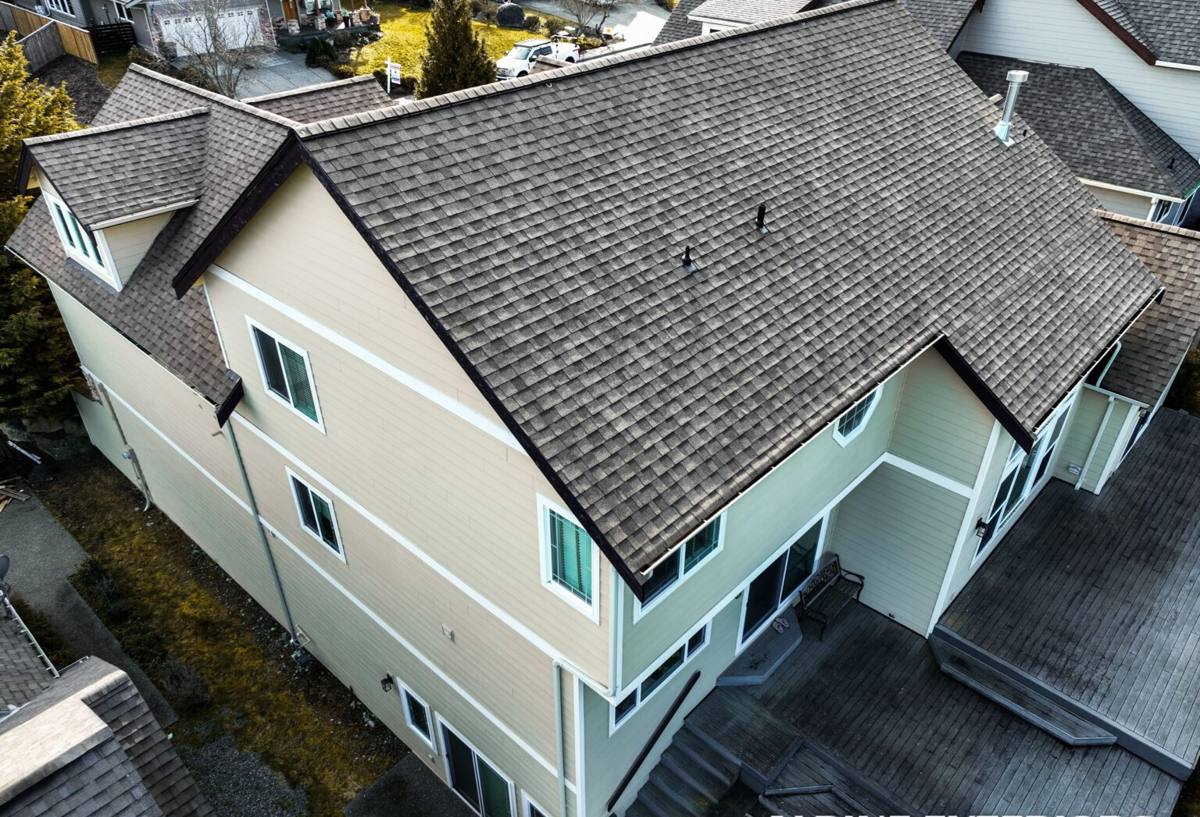
What Cordata's Climate Actually Does to Siding
Salt Air Off the Bay
Cordata isn't waterfront, but it's close enough to Bellingham Bay that salt-bearing moisture in the air still reaches homes here, especially during onshore wind events. Over years, that salt content accelerates corrosion in fasteners and flashing and breaks down lower-grade paints and coatings faster than a purely inland climate would. It's a slow process, which is exactly why it catches homeowners off guard — the damage is cumulative, not sudden.
Driving Rain, Not Just Rainfall
Whatcom County gets a lot of rain, but the number that matters more for siding is how often that rain arrives sideways rather than straight down. Wind-driven rain pushes water into lap joints, trim seams, and any spot where flashing or caulking isn't doing its job — conditions that a simple "inches of annual rainfall" figure doesn't capture. Siding systems that hold up fine in a calmer climate can still fail here because the water is attacking from an angle they weren't detailed for.
A Long Moss and Mildew Season
Tree cover, shaded elevations, and near-constant dampness through fall, winter, and spring add up to a moss and mildew season that runs longer here than in drier regions. It shows up first on north-facing walls and anywhere direct sun doesn't reach. Left alone, moss and mildew hold moisture against the wall assembly, and sustained moisture contact is one of the more common paths to rot developing behind siding that looks fine from the street.
Temperature Swings and Freeze-Thaw
Cordata doesn't see extreme cold, but it does see enough freeze-thaw cycling in a typical winter to matter. Water that's worked its way into a crack, seam, or absorbed material expands when it freezes, and repeated cycles widen existing damage. Materials that absorb moisture into their core are more vulnerable to this than materials that don't.
Why We Only Install James Hardie
We used to work with a broader range of siding products. Over time, watching how different materials actually performed on real Whatcom County homes through repeated wet seasons, we narrowed to one system we trust completely. For a climate like Cordata's, the case for fiber cement is straightforward:
- Non-combustible core: Fiber cement doesn't feed a fire the way wood-based or wood-derived siding can, which matters for both household safety and insurance underwriting.
- Factory-applied ColorPlus finish: The color is baked on in a controlled factory process instead of brushed on in the field, so it resists fading, chalking, and salt exposure far longer than site-applied paint.
- Climate-engineered HZ5 formulation: Hardie's HZ5 product line is built specifically for regions with heavy, sustained moisture exposure and freeze-thaw cycling — a solid match for Whatcom County generally and Cordata specifically.
- Dimensional stability: Fiber cement doesn't swell, cup, or warp after repeated wet-season moisture cycles the way engineered wood products can.
- Strong transferable warranty: Hardie backs correctly installed siding with a real warranty structure, not just marketing language.
We don't install LP SmartSide, vinyl siding, Cemplank, Allura, primed spruce, or cedar. Every one of those products has a place in the broader market and homeowners who are satisfied with them elsewhere. But for a climate that combines salt air, driving rain, and a long moss season the way Cordata's does, we made a professional call that standardizing on one system we trust fully serves homeowners better than offering a cheaper option that quietly shifts maintenance risk onto them a few years down the road.
Choosing the Right Hardie Product for a Cordata Home
James Hardie makes several siding profiles and at least two climate-zone formulations, and picking the right combination for a specific home matters more than most homeowners expect going in.
| Product Option | Best Fit For | Why It Matters in Cordata |
|---|---|---|
| HardiePlank lap siding | Most single-family homes, traditional or modern styles | The most common profile locally, with proven long-term performance in wet marine climates |
| HardieShingle | Accent gables, dormers, or a full shingle-style exterior | Gives a cedar-shake look without the moisture absorption and upkeep of real cedar shingles |
| HardiePanel | Modern builds, board-and-batten looks, garage or accent walls | Clean vertical lines that hold their shape in wind-driven rain conditions |
| HZ5 formulation | Homes in higher-moisture, freeze-thaw-prone zones | Engineered specifically for climates like this one rather than a warmer, drier region |
We walk each Cordata property individually before recommending a specific profile and finish — a shaded, north-facing lot with heavy tree cover calls for different attention than a more open, sun-exposed one, even a few streets apart.
ColorPlus Colors and Finish
Beyond the profile, the ColorPlus finish itself is part of what makes Hardie perform well here. Because the color and protective topcoat are cured onto the fiber cement at the factory under controlled conditions, the finish resists the fading and chalking that salt air and UV exposure cause in field-applied paint over time. That matters on a home that's going to sit through years of Whatcom County winters without a repaint.
What Correct Installation Looks Like Here
Material choice is only half the equation. The other half is installation detail, and it's where a lot of siding problems on Cordata homes actually originate — not from the material itself, but from shortcuts taken putting it on.
- Proper clearance between siding and grade, decks, and roof lines so water has somewhere to go instead of wicking upward
- House wrap and flashing systems that actually integrate with the siding, rather than relying on caulk to bridge gaps
- Correctly lapped and sealed joints, not simply butted panels painted over to look finished
- Fastening patterns that match the exposure level of that specific wall or elevation
- Careful flashing and sealing around every window, door, and penetration, since these are the most common entry points for wind-driven rain
On a home in Cordata's climate, a shortcut on any one of these steps tends to show up faster than it would somewhere drier — sometimes within a single wet season instead of several years out.
Repair, Partial Replacement, or Full Re-Side?
Not every Cordata home with a siding issue needs a complete tear-off. A damaged section from a storm, a failed piece of trim around one window, or an isolated impact spot can often be repaired and matched into existing Hardie siding without touching the rest of the house. But if water has been tracking behind the wall for a while, or the home still has an older, non-Hardie product reaching the end of its service life, patching usually just delays a larger job while hidden rot keeps spreading underneath. Part of an honest estimate is telling a homeowner which situation they're actually in, rather than defaulting to whichever answer generates more work.
Cost Factors for Cordata Siding Projects
| Factor | What It Affects | Why It Matters Here |
|---|---|---|
| Tear-off vs. overlay | Labor scope and access to sheathing | Tear-off is the only way to catch hidden moisture damage under older siding |
| Substrate condition | Repair work needed before new siding goes on | Long-term trapped moisture in a shaded, damp climate can rot sheathing and framing |
| Siding profile and finish selection | Material cost and labor complexity | Lap, shingle, and panel profiles each involve different cutting, fastening, and trim work |
| Trim and flashing scope | Detail work around windows, corners, and rooflines | These details do the most work keeping wind-driven rain out of the wall assembly |
| Home size and elevation complexity | Overall labor time | Multiple gables, dormers, and wall angles add cutting and fitting time |
Exact numbers depend on the specific home and what we find once the old siding comes off, which is why we give real estimates after walking the property rather than quoting from a generic price sheet.
Signs a Cordata Home's Siding Needs Attention
- Moss or dark staining that returns quickly after cleaning, particularly on shaded or north-facing walls
- Soft or spongy siding low on the wall or around window and door trim
- Rusting fasteners, corroding flashing, or chalky, faded paint
- Visible gaps at seams, corners, trim joints, or window flashing
- Warping, cupping, or bubbling siding panels, especially on wood-based or engineered wood products
- Rising heating bills that may point to a wall assembly no longer sealing properly
Any one of these on its own isn't necessarily an emergency, but they're worth having a professional look at before the next wet season, since damage behind siding tends to accelerate once moisture has a consistent path in.
Why a Crew That Works Cordata Regularly Matters
A contractor who works this part of Whatcom County on a regular basis knows how salt air, driving rain, and a long moss season actually behave on real homes across a full year — not just how a product performs on a spec sheet. That experience shows up in small, practical decisions on install day: which elevations stay damp longest, where extra flashing attention genuinely pays off, and which fastening details are worth the added time so a homeowner isn't dealing with a callback after the first hard winter storm. Cordata's mix of exposure and shade means no two properties behave exactly alike, and a crew with hands-on local experience treats that seriously instead of applying a generic approach built for a different climate.
What to Expect When You Call Us
- A walk-through of the home to assess current siding condition, trim, and any signs of moisture intrusion
- An honest read on whether the situation calls for a repair, a partial re-side, or a full replacement
- A clear explanation of which Hardie profile and finish makes sense for that specific property
- A written estimate with no pressure to sign on the spot
If your Cordata home needs new siding, a repair, or just an honest second opinion on what's actually happening behind an aging wall, we're glad to take a look. Reach out using the form below to schedule a free, no-pressure estimate.