 Ferndale
 Why Metal Roofing Makes Sense for Cordata
Cordata sits in the stretch of neighborhoods and commercial corridors between Ferndale and Bellingham that our crew works in regularly. It's close enough to Bellingham Bay and the Salish Sea to catch the same salt-tinged air, wind-driven storms, and shade-heavy moss growth that shapes roofing decisions all over Whatcom County. A roof here isn't fighting one problem, it's fighting three at once — corrosion, water intrusion, and biological growth — for most of the year. Metal roofing, installed correctly, is one of the few systems that holds up against all three without constant upkeep.
That last part matters: metal roofing done wrong doesn't perform much better than a mediocre shingle job, and in a salt-air environment it can actually fail faster if the wrong fasteners or panel system get used. This page walks through what a Cordata home actually needs from a metal roof, what a correct installation looks like, and why local experience isn't just a sales line — it changes the decisions a crew makes on your roof.
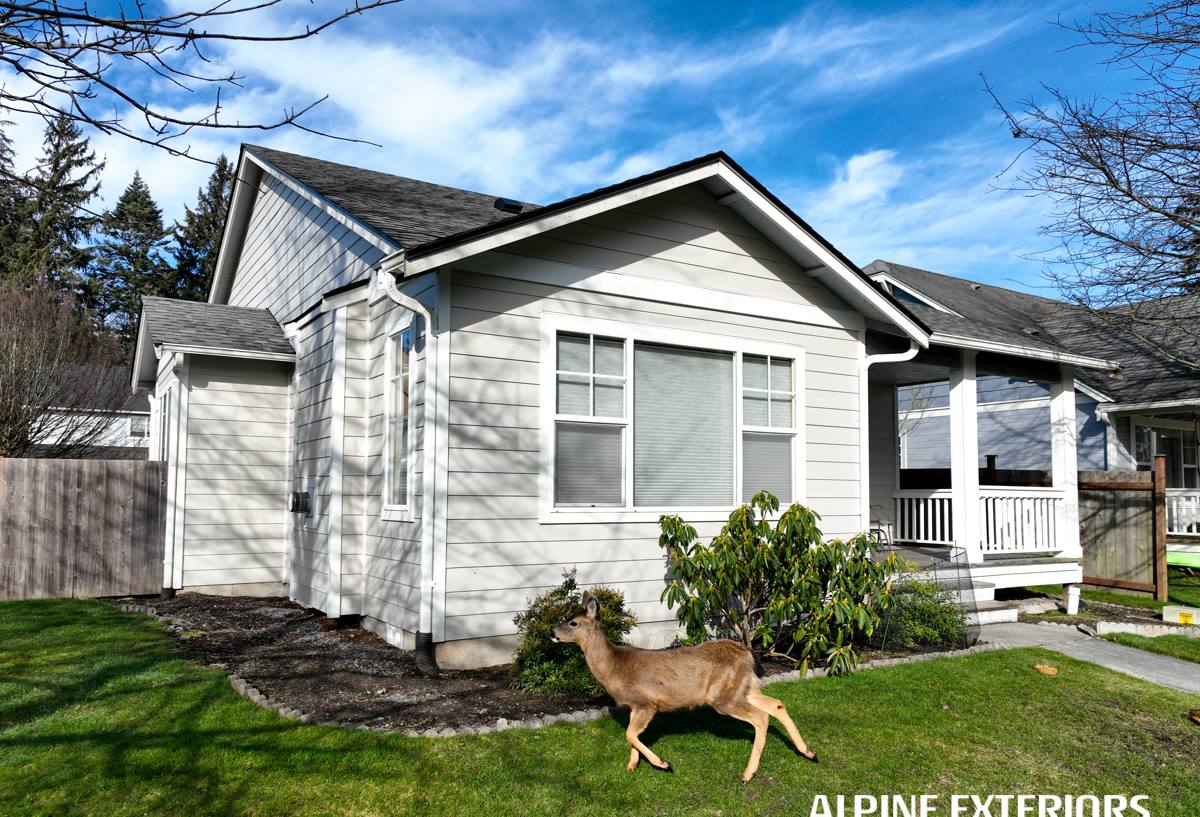
What Whatcom County Weather Does to a Roof Over Time
Salt Air and Corrosion
Homes closer to the water deal with airborne salt that settles on every exterior surface, including the roof. On metal roofing, this shows up as accelerated corrosion at cut edges, fastener heads, and anywhere the protective coating has been scratched or worn thin during installation. It's a slow process, but it's steady, and it's the main reason material choice and fastener selection matter more here than in a landlocked town.
Driving Rain and Wind-Driven Water
Storms off the Salish Sea don't just drop rain straight down — wind pushes it sideways and up under laps, flashing, and fasteners that would stay dry in a calmer climate. A roof detail that's "good enough" in a low-wind region can leak here within a few seasons if it wasn't built to handle water moving in more than one direction.
Moss Season
Whatcom County's moss season runs long — mild temperatures, high humidity, and shaded lots (common in and around Cordata) keep conditions favorable for moss and algae for much of the year. Metal sheds moss more easily than shingles because there's no granulated surface for spores to grip, but valleys, low-slope sections, and areas that stay shaded still need attention. Moss holding moisture against any roofing material, metal included, is what eventually causes trouble.
Standing Seam vs. Exposed-Fastener Panels
Most residential metal roofing in this area comes down to two systems, and the right one depends on budget, roof pitch, and how much long-term maintenance you want to take on.
| Factor | Standing Seam | Exposed-Fastener |
|---|---|---|
| Fasteners | Hidden under the seam, no roof-face penetrations | Visible screws with rubber washers through the panel face |
| Typical lifespan | Longer, since there's nothing on the surface to fail | Shorter, limited by washer and fastener wear |
| Upfront cost | Higher material and labor cost | Lower upfront cost |
| Maintenance | Minimal once installed correctly | Fasteners may need checking and occasional replacement over time |
| Best fit | Primary roofs, coastal-influenced exposure, long-term ownership | Outbuildings, shops, secondary structures, tighter budgets |
We'll walk you through both honestly. Exposed-fastener panels aren't a bad product — they're a legitimate, lower-cost option — but we're upfront that they come with a maintenance schedule that standing seam avoids, and that trade-off matters more in a climate that's hard on exposed metal-to-metal connections.
What a Correct Metal Roof Installation Involves
Underlayment
A self-adhering, high-temperature underlayment at eaves, valleys, and around penetrations is non-negotiable here. Given how much wind-driven rain Whatcom County sees, we don't treat this as an upgrade — it's the baseline for a roof that's supposed to last decades.
Flashing and Valleys
Valleys and any place two roof planes meet are where most metal roof leaks actually start, not the flat panel runs. Correct flashing means properly lapped, sealed transitions sized for real water volume, not just a bent piece of trim that looks right from the ground.
Fasteners and Metal Compatibility
Mixing incompatible metals — for example, the wrong fastener alloy against a panel it will corrode against over time — creates a slow galvanic reaction that eats away at the connection point. In a salt-air environment, this happens faster than most homeowners expect. We match fasteners and flashing metal to the panel system specifically because of the coastal exposure, not as an optional detail.
Ventilation
Metal roofs perform best over a properly ventilated attic or roof deck. Without adequate airflow, condensation can form on the underside of the panels, which undermines the whole point of installing a moisture-resistant roof in the first place.
How We Handle Corrosion and Moss Prevention
None of this is exotic — it's a matter of picking materials suited to the exposure and installing them the way the manufacturer actually specifies, not the fastest way to close out the job.
- Panel and fastener materials selected with salt-air exposure in mind, not just cost
- Cut edges treated or coated rather than left bare, since raw cut edges are where corrosion starts first
- Valleys and low-slope transitions detailed for full water shedding, not just adequate in dry weather
- Attention to shaded, moss-prone sections during layout, so water and debris have a clear path off the roof
- Flashing and trim matched to panel metal to avoid galvanic corrosion between dissimilar metals
Our Process, Start to Finish
- On-site inspection of the existing roof, deck condition, and any problem areas specific to your property
- Honest recommendation on panel system and materials based on your roof's exposure, pitch, and budget
- Written estimate with a clear scope — no vague line items
- Deck inspection and repair as panels come off the old roof, since hidden rot or damage is common under aging roofing
- Underlayment, flashing, and panel installation following manufacturer specifications
- Final walkthrough so you know exactly what was done and what maintenance, if any, to expect
Cost Factors for a Metal Roof in Cordata
Every roof is different, so we won't quote a number here that doesn't apply to your house. What actually moves the price:
| Factor | How It Affects Cost |
|---|---|
| Panel system | Standing seam costs more upfront than exposed-fastener panels |
| Roof complexity | More valleys, dormers, and penetrations mean more labor and flashing work |
| Deck condition | Rot or damage found under the old roofing adds repair cost before new panels go on |
| Roof pitch and access | Steep or hard-to-reach roofs take longer and require more safety setup |
| Tear-off vs. overlay | Removing old roofing adds labor but lets us properly inspect and treat the deck |
We give a broad range during the initial conversation once we've seen the roof, and a firm number in the written estimate — not a low "starting at" figure that grows once the crew shows up.
Maintenance Checklist for Metal Roofs in This Climate
A correctly installed metal roof doesn't need much, but a little attention goes a long way in this climate:
- Clear debris and moss from valleys and low-slope sections once or twice a year, especially after fall leaf-drop
- Keep gutters and downspouts clear so water isn't backing up against roof edges
- Check exposed-fastener panels periodically for loose or worn screws, especially after severe storms
- Trim back overhanging branches to reduce shade and debris buildup that feeds moss growth
- After major windstorms, do a visual check for lifted flashing or panel edges
Why a Ferndale Crew That Already Works Cordata Matters
A metal roof is only as good as the details a crew gets right the first time, and those details change based on what a roof is actually exposed to. A crew that works Cordata and the surrounding Whatcom County area regularly already knows which fastener and flashing choices hold up against salt air, how local wind patterns push rain into valleys, and how long moss season really runs here — because they've seen it play out on roofs like yours, not just read a manufacturer spec sheet. That local pattern recognition is what keeps a roof performing fifteen years in, not just on install day.
Being based in Ferndale also means we're not driving in from out of the area for a warranty call or a storm-damage check. If something needs a look after a bad windstorm, we're close enough to get there without it becoming a scheduling ordeal.
If you're weighing a metal roof for a home in or around Cordata, we're happy to take a look and walk you through what your specific roof needs — no pressure, no hard sell. Fill out the form below and we'll set up a free estimate.