 Ferndale
 Decks Built for Custer's Coastal Conditions
Custer sits close enough to the water that salt air is part of daily life, and that changes what a deck has to survive. Between the salt-laden wind off the Strait, driving rain that comes in sideways during winter storms, and a moss season that can stretch from October well into spring, a deck here works harder than one built a hundred miles inland. A deck that looks right on install day but wasn't detailed for this climate will show problems within a year or two — soft spots, black streaking, loose fasteners, slick boards. We build decks in Custer with those specific conditions in mind, not a generic template pulled from a warmer, drier region.
This page covers what a custom deck project in Custer actually involves: the material trade-offs, the structural details that matter most in wet coastal ground, how we manage moisture and moss, and what our process looks like from first visit to final walkthrough.
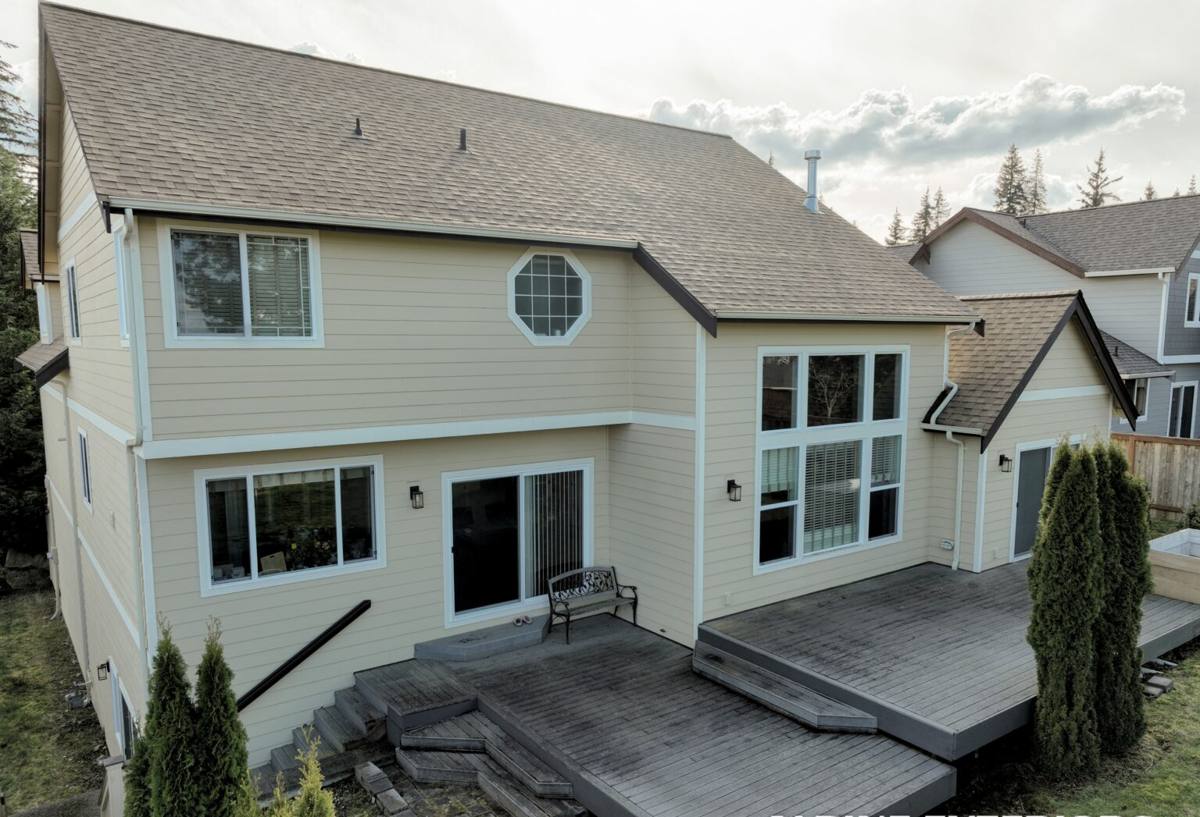
What Salt Air, Rain, and Moss Actually Do to a Deck
It helps to understand the specific ways this climate attacks a deck, because it explains every decision that follows.
Salt Air
Airborne salt accelerates corrosion on any exposed metal — nails, screws, joist hangers, bolts. A fastener rated for general outdoor use can start rusting within a couple of seasons this close to the water. Once a fastener corrodes, it loses holding strength long before it looks obviously bad, which is why fastener choice matters more here than most homeowners expect.
Driving Rain
Rain that comes in at an angle gets pushed into places a straight-down rain never reaches — under rail caps, behind ledger boards, into end grain at board edges. Wind-driven rain is what actually causes most rot damage in this region, not standing water on the surface.
The Long Moss Season
Whatcom County's moss season runs long because the deck surface rarely gets a full dry-out period. Shaded decks, north-facing decks, and decks with tight board spacing hold moisture the longest, and that moisture plus organic debris is exactly what moss and algae need to take hold. Once established, moss holds even more water against the board surface, which speeds up decay underneath it.
Choosing the Right Decking Material for a Custer Property
There's no single "best" decking material — the right choice depends on how much maintenance you want to do, your budget, and how exposed the deck site is. Here's how the common options actually compare in this specific climate.
| Material | Moisture & Moss Behavior | Maintenance | Typical Lifespan Here |
|---|---|---|---|
| Cedar | Naturally rot-resistant, but surface greys and can hold moss if not cleaned/sealed regularly | Annual cleaning, re-sealing every 2-3 years | 15-20 years with upkeep |
| Pressure-treated fir/pine | Good rot resistance from treatment, but cut ends and fastener holes need field treatment or they become weak points | Sealing every 1-2 years, more frequent inspection | 15-25 years |
| Composite/PVC boards | Won't rot, but surface texture and gaps between boards can still trap moss and algae film if not rinsed | Occasional rinse or wash, no sealing | 25-30+ years, manufacturer-dependent |
| Ipe/tropical hardwood | Extremely dense, naturally resists rot and moss better than most woods | Oiling to maintain color, otherwise low | 25+ years |
We'll walk through this trade-off with you honestly. Composite costs more up front but is the lowest-maintenance option for a property that gets a lot of shade or salt exposure. Cedar and treated wood cost less initially but need someone willing to keep up with cleaning and sealing on schedule — skip that maintenance in this climate and you lose years off the deck's life.
Why We're Careful About Certain Wood Species
Some lower-grade treated lumber sold as a budget option doesn't hold up well once it's exposed to repeated wetting and drying cycles — it can cup, check, or lose its treatment penetration at cut ends faster than it should. That's not a claim against any specific brand; it's why we spec lumber grade and treatment level up front rather than leaving it to whatever's cheapest at the yard that week, and why we field-treat every cut end and drilled hole before it goes into the structure.
Structural Details That Matter More in Custer
The framing underneath a deck is where most long-term failures actually start, and it's the part homeowners can't see once the deck is finished. A correct build here means:
- Footings sized for local soil and frost conditions — set below frost depth and bearing on undisturbed or properly compacted soil, not just poured on grade.
- Stainless or hot-dip galvanized fasteners and hardware rated for the corrosion exposure of coastal air, not standard exterior-grade fasteners that will rust prematurely.
- Proper ledger flashing where the deck attaches to the house — this is the single most common source of hidden rot on attached decks, because wind-driven rain gets pushed behind an unflashed or poorly flashed ledger board.
- Joist tape or capping on top of the framing to keep water from sitting in fastener holes and wicking into the joist over time.
- Adequate slope away from the house — a deck surface should shed water outward, not pool against the siding.
- Ventilation underneath the deck so air can move and dry out the framing between rain events instead of staying damp for weeks.
None of this is visible once the decking boards go down, which is exactly why it matters. A deck can look identical on the surface with correct flashing and fasteners underneath, or with shortcuts that won't show a problem for two or three years.
Managing Moisture and Moss From the Start
You can't eliminate moss risk on a shaded, coastal deck, but you can design the deck so moss doesn't get a foothold as fast.
Board Spacing and Airflow
Correct gapping between boards lets water drain through instead of sitting on the surface. Too tight, and the deck holds water and debris; too wide, and you get a different set of problems. We set spacing based on the specific material and expected seasonal wood movement.
Surface Texture
Smooth-faced boards shed moss and algae film more easily than heavily grooved or wire-brushed textures, which can trap grit and organic matter. If moss and slickness are a top concern for your household — especially with stairs or a frequently used walking surface — we'll factor that into the board profile we recommend.
Sun and Shade Reality
If your deck site sits under tree cover or on the north side of the house, we'll talk through that honestly rather than promising a low-maintenance result a shaded deck in this climate can't deliver. Some sites genuinely need more frequent cleaning regardless of material, and it's better to know that going in.
Our Process for a Custer Deck Project
- On-site visit — we look at your specific lot: sun exposure, drainage, existing structure if you're replacing a deck, and how the space will actually be used.
- Design and material walkthrough — we go over layout, decking material trade-offs, railing options, and a realistic cost range before anything is finalized.
- Permitting — deck projects in Whatcom County typically require a permit depending on size and height; we handle that process as part of the job.
- Build — footings and framing first, with inspection points built into the schedule, then decking, railing, and finish work.
- Final walkthrough — we go over the finished deck with you, including what maintenance schedule makes sense for the material you chose and your site's exposure.
Keeping a Deck Ahead of a Long Moss Season
Whatever material you choose, a little seasonal attention keeps a deck performing the way it should for its full lifespan. A practical maintenance checklist for this area:
- Sweep leaves, needles, and debris off the deck surface regularly through fall, since trapped organic matter is what feeds moss growth.
- Rinse or lightly scrub the surface at the start and end of the wet season, especially in shaded areas.
- Check fastener heads and hardware annually for early rust or looseness, particularly near the ledger board and stairs.
- Re-seal wood decking on the schedule appropriate to the product — don't wait until it visibly grays and cracks.
- Keep gutters and downspouts near the deck clear so roof runoff isn't dumping extra water onto or near the structure.
- Trim back overhanging branches where practical to improve sun exposure and airflow.
What a Custom Deck in Custer Typically Involves, Cost-Wise
Every project is different, but these are the main factors that move the price up or down:
| Factor | Impact on Cost |
|---|---|
| Decking material (treated wood vs. cedar vs. composite) | Largest single line item; composite and hardwood cost more upfront but less over the deck's life |
| Deck height and footing depth | Taller decks and deeper footings mean more structural work and material |
| Railing style | Basic wood rail costs less than cable, glass, or composite rail systems |
| Site access and existing structure removal | Tear-off of an old deck, difficult site access, or slope adds labor |
| Permit and engineering requirements | Larger or taller decks may need stamped engineering, adding to cost and timeline |
We give straight numbers based on your actual site and material choice rather than a rough guess — the site visit is where that gets nailed down.
Why Local Experience Matters for This Job
A deck built by a crew that already works in Custer and across Whatcom County isn't guessing at frost depth, soil conditions, or how much rain exposure a given orientation will really get — we've built and repaired decks in these exact conditions and know which shortcuts show up as callbacks two winters later. We also know the local permitting process, which keeps the project moving instead of stalling on paperwork. That local knowledge is part of what you're paying for as much as the lumber and labor.
If you're planning a new deck or replacing one that's showing its age, we're happy to come take a look and give you a straightforward, no-pressure estimate — just fill out the form below.