 Ferndale
 Deck Building in Custer, Washington
Custer sits in the farmland north of Ferndale, close enough to Birch Bay and the Salish Sea that homes here catch the same salt-laden air, driving rain, and long moss season that punishes exterior wood all along this stretch of Whatcom County. A deck built to a generic spec sheet from a warmer, drier climate will show problems here fast — soft spots at the ledger, green film on the boards by spring, rust bleeding from fasteners, railings that wobble after a couple of wet winters. A deck built for this climate, with the right materials and the right details at every connection, holds up for decades instead of years.
This page covers what we actually do differently when we build or replace a deck for a property in and around Custer, and why the details matter more here than they would somewhere drier.
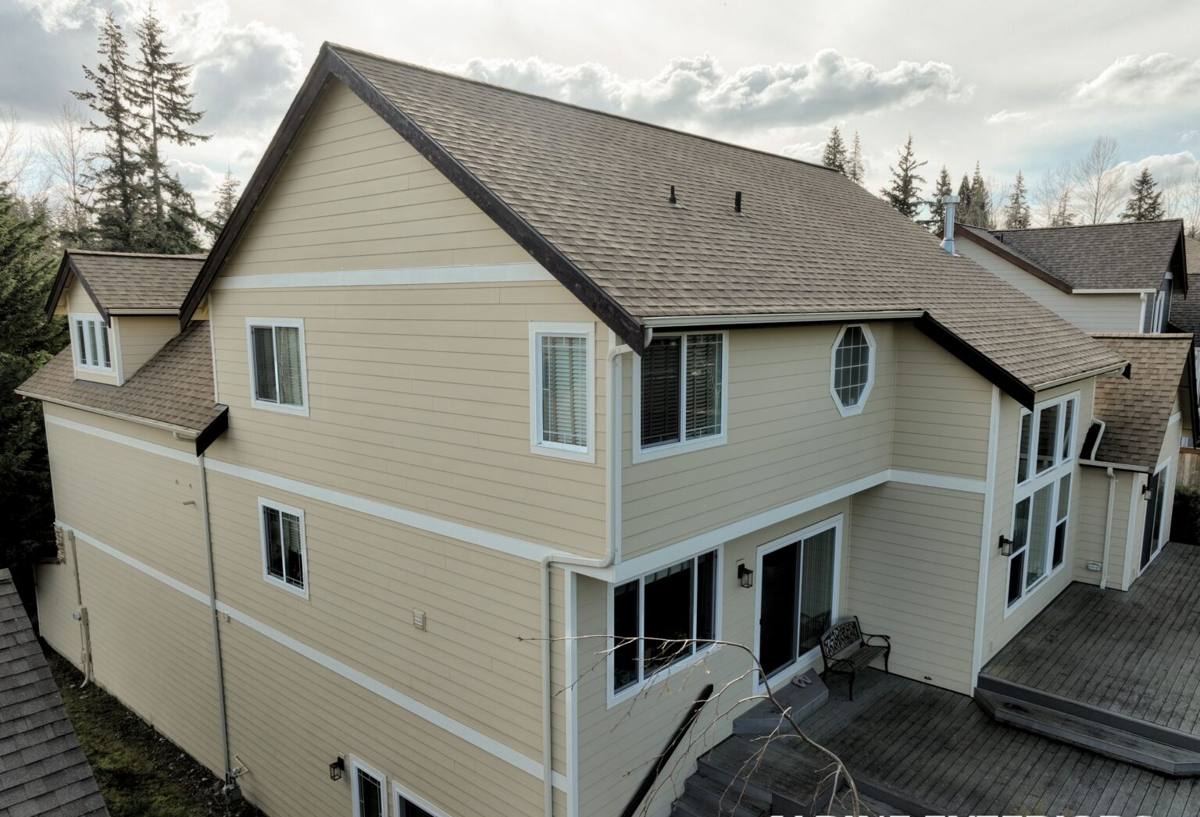
What Custer's Climate Does to a Deck
Three things drive most of the deck problems we see out this way:
Driving Rain
Whatcom County doesn't just get rain — it gets sustained, wind-driven rain that finds its way into any gap, seam, or fastener hole that isn't properly sealed. On a deck, that means water working into the ledger board connection, down through screw holes in the decking, and into end grain that isn't protected. Once moisture gets trapped against wood, rot follows.
Salt Air
Being a few miles inland from Birch Bay and the water doesn't fully spare Custer from salt exposure. Airborne salt accelerates corrosion on anything metal — fasteners, joist hangers, railing hardware — and standard zinc-coated hardware can start showing rust streaks within a season or two if it wasn't rated for a coastal-influenced environment.
The Long Moss Season
Shade, moisture, and mild temperatures mean moss and algae get a long runway here — often eight or nine months of the year where conditions favor growth. On a deck, moss doesn't just look bad; it holds moisture against the wood surface and turns boards slick and dangerous underfoot, especially on north-facing or tree-shaded decks that don't get much direct sun.
What a Correctly Built Deck Involves
A deck that's going to last in this climate isn't about upgrading one flashy material — it's about getting a series of unglamorous details right, in order.
Ledger Board Attachment
The connection where the deck attaches to the house is the single most common failure point we see on older decks. It needs proper flashing that directs water away from the house sheathing, correct lag or through-bolt fasteners (never just nailed), and a gap or flashing detail that keeps water from wicking between the ledger and the siding. Get this wrong and you're not just risking the deck — you're risking rot getting into the house structure behind it.
Footings Below Frost and Grade
Footings need to be sized and set to local frost depth and soil conditions, with post bases that hold the post off the concrete so water doesn't wick up into the end grain. Whatcom County has a mix of clay-heavy and well-drained soils depending on the property, and we adjust footing approach to what's actually under the site rather than using one default everywhere.
Joist Protection
Every joist top should be protected — either with a self-adhering flashing tape or an equivalent moisture barrier — before decking goes down. This is a step that's easy to skip and impossible to see once the deck is finished, but it's one of the biggest factors in how long the frame lasts under years of standing water and drip-through from the boards above.
Drainage and Airflow Underneath
Decks built low to the ground or over patios need real thought given to drainage and ventilation underneath, or the joist bays become a permanently damp environment that never gets a chance to dry between storms. That's exactly the kind of spot where rot and moss both take hold fastest.
Choosing Decking Material for This Climate
There's no single right answer for every homeowner — budget, maintenance tolerance, and how the deck will be used all factor in. Here's how the common options actually perform in a Whatcom County climate:
| Material | Moisture Behavior | Maintenance | Typical Lifespan Here |
|---|---|---|---|
| Pressure-treated wood | Resists rot when properly maintained; end grain and cut edges need re-sealing | Annual cleaning, periodic staining/sealing | 15-20 years with upkeep |
| Cedar | Naturally rot- and insect-resistant, but surface greys and needs sealing to hold color | Cleaning plus sealing every 1-2 years | 15-25 years with upkeep |
| Composite decking | Doesn't rot, but can retain surface moisture and grow moss/algae if not cleaned | Periodic washing; no staining or sealing | 25-30+ years |
| PVC decking | Fully moisture-resistant, sheds water at the surface | Occasional washing | 25-30+ years |
In a moss-prone climate, the maintenance conversation matters as much as the material itself. Composite and PVC boards don't rot, but they still need periodic cleaning to keep moss and algae from taking hold on shaded sections — they're low-maintenance, not no-maintenance. Wood costs less up front but only performs as advertised if someone actually keeps up with cleaning and sealing on schedule.
Railings, Fasteners, and Hardware
Hardware is where a lot of decks quietly fail early, because it's the least visible part of the job. For Custer properties we spec corrosion-resistant fasteners and structural hardware — stainless steel or hot-dip galvanized rated for the exposure the deck will actually see, not the cheapest zinc-coated option off the shelf. Hidden deck clips, joist hangers, and structural screws all get the same treatment. A deck can have beautiful decking on top and still be structurally compromised within a few years if the hardware underneath was undersized for the climate.
Railings need the same attention to connection points, since they're a code-required safety feature, not just a design element. Loose or corroding railing posts are one of the more common issues we find on older decks we're asked to inspect or repair.
Our Process for a Custer Deck Project
- Site evaluation: We look at grade, drainage, sun exposure, soil, and how the deck ties into the existing structure before recommending anything.
- Design and material selection: We walk through material options honestly, including trade-offs on cost and maintenance, so the choice fits your budget and how much upkeep you actually want to do.
- Permitting: Most decks above a certain height off grade require a permit through Whatcom County, and railing height and spacing are governed by code. We handle that process rather than leaving it to the homeowner.
- Framing: Footings, ledger attachment, joist layout, and joist protection go in first — this is the stage that determines how the deck holds up over time.
- Decking and railings: Boards, fasteners, and railing systems are installed to spec, with attention to fastener spacing and gapping for proper drainage between boards.
- Final walkthrough: We go over the finished deck with you, including what maintenance it needs and on what schedule, before we consider the job done.
Keeping a Deck Ahead of Moss and Moisture
Even a well-built deck needs some seasonal attention in this climate. A simple maintenance routine goes a long way toward getting the full lifespan out of the materials:
- Sweep debris and standing leaves off the deck surface regularly, especially in fall
- Rinse or wash the deck surface at least once or twice a year to knock back moss and algae before it establishes
- Check railing posts and stair connections annually for movement or corrosion at the hardware
- Keep gutters and downspouts near the deck clear so runoff isn't dumping directly onto or under it
- Reseal or restain wood decking on the schedule the product calls for — don't wait until it's already showing grey or soft spots
- Trim back vegetation that's keeping sections of the deck shaded and damp longer than necessary
Why Hire a Crew That Already Works in Custer
A lot of deck problems we get called out to repair started with a design or material choice that made sense somewhere else but wasn't suited to this climate. Crews unfamiliar with Whatcom County conditions sometimes skip joist protection tape, use standard hardware instead of corrosion-resistant fasteners, or don't detail the ledger flashing correctly — none of which shows up as a problem until a few winters in.
Working regularly in Custer and the surrounding Ferndale area means we already know how the local soil drains, how much rain a deck's frame needs to shed, and which details actually matter for this specific climate versus which ones are just upsells. We also know the Whatcom County permitting process for decks and residential structures, which keeps the project moving instead of stalling on paperwork.
Deck Building Cost Factors
Every deck is priced around size, framing complexity, material choice, and site conditions, so we don't quote a flat number without seeing the property. Broadly, a straightforward pressure-treated deck costs less up front than composite or PVC, but composite and PVC typically cost less over the deck's lifetime once you factor in staining and sealing labor for wood. Site factors that move the price include how far the deck sits above grade, whether the ground needs extra prep for footings, stair and railing complexity, and whether old decking needs to be removed and hauled away first.
If you're planning a new deck or need an old one evaluated for repair or replacement, we're happy to come take a look and give you a straightforward, no-pressure estimate — just fill out the form below.