 Ferndale
 Deck Repair Built for Custer's Weather, Not a Generic Checklist
Custer sits close enough to the water and open farmland that decks here take a specific kind of beating. It's not just rain volume — Whatcom County gets plenty of that everywhere — it's the combination of salt-tinged air moving in off the Strait, wind-driven rain that gets up under railings and ledger boards, and a moss season that can run eight months or more if a deck sits shaded or under trees. A deck repair that works fine in a drier inland town can fail early out here if it doesn't account for those three things together.
We're a Ferndale-based crew, and Custer is part of our regular service area, not a stretch job we drive an hour for once a year. That matters for deck work specifically, because the failure patterns repeat house to house, and knowing them ahead of time changes how we diagnose and price a repair.
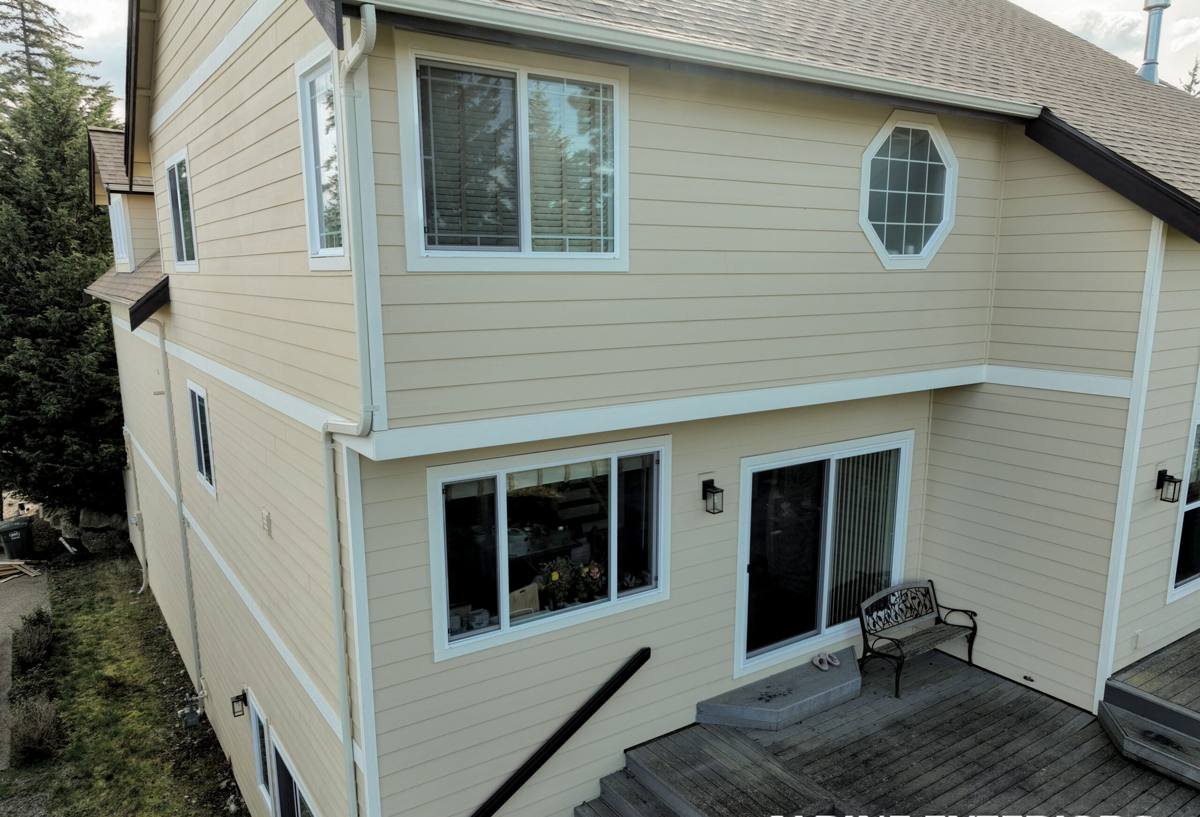
What Actually Fails on Custer Decks
Ledger Board and Rim Joist Rot
The ledger board — where the deck attaches to the house — is the single most common failure point we find. Flashing that was installed thin, missing, or improperly lapped lets water track behind the siding and into the rim joist. In a salt-air, high-rain area like this, that hidden rot can be well advanced before anything shows on the surface. By the time a homeowner notices the deck feels slightly spongy near the house, the ledger connection may already be compromised structurally.
Moss and Algae on Decking and Framing
Custer's tree cover and marine humidity keep wood surfaces damp longer than a drier climate would. Moss doesn't just look bad — it holds moisture against the wood surface, which accelerates rot in cedar and pressure-treated lumber alike, and it makes composite decking dangerously slick underfoot. Decks with north-facing exposure or heavy shade from mature trees are the ones we see moss damage on first and worst.
Fastener and Hardware Corrosion
Salt air corrodes exposed fasteners, joist hangers, and structural screws faster than most homeowners expect, even a few miles inland from the water. Once a fastener starts rusting, it loses holding strength well before it visibly fails, and a deck that "looks fine" can have weakened connections at stair stringers, railing posts, or joist hangers.
Railing and Post Movement
Wind-driven rain finds its way into post bases and railing connections that weren't properly flashed or sealed at install. Over a few wet seasons, that moisture rots the post base from the inside, and a railing that feels solid when pushed lightly can still fail under real load — this is one of the more serious safety issues we check for on every repair call.
What a Correct Repair Actually Involves
A proper deck repair isn't just replacing the boards that look bad. It starts with figuring out why they failed, because if the underlying moisture path isn't fixed, the same problem returns in a few years.
- Probe the ledger board, rim joist, and any post bases for soft wood, not just visual inspection
- Check flashing at the house connection and correct or replace it if it's missing, thin, or improperly lapped
- Inspect joist hangers, structural screws, and other hardware for corrosion, not just the decking surface
- Identify moss and algae growth patterns to understand which areas hold moisture longest
- Test railing posts and stair stringers for movement or soft spots at the base
- Match repair materials to the existing deck structure and confirm they're rated for exterior/ground contact where relevant
- Address drainage — standing water under or near the deck accelerates every problem above
Repair vs. Replacement: How We Make That Call
Not every deck with problems needs a full rebuild, and not every deck with a few bad boards is actually a simple repair. We look at the structural framing first, separate from the decking surface, because that's where the real cost decision lives.
| Condition Found | Typical Approach | Why |
|---|---|---|
| Surface boards worn, framing sound | Board replacement/resurfacing | Structure is fine; only the wear layer needs attention |
| Isolated ledger or joist rot | Targeted structural repair | Fix the moisture source, replace only affected framing |
| Widespread frame rot or corroded hardware throughout | Full or partial rebuild | Patching individual spots won't restore overall structural reliability |
| Railing/post failure only | Railing system repair | Deck surface and frame may be unaffected; isolate the fix |
| Chronic moss/algae, no rot yet | Cleaning, drainage fix, preventive sealing | Cheaper to intervene now than after rot sets in |
We'll always tell you honestly which category your deck falls into, including when a repair is a reasonable short-term fix but not a permanent one — that's information you should have before deciding how much to spend.
Why Materials Matter More Here Than in Drier Climates
Whatcom County's combination of moisture and salt exposure means material choice for a repair isn't just about matching the existing look. Fasteners should be corrosion-resistant hardware rated for exterior or coastal-adjacent use — standard interior-grade screws or hangers corrode faster here and undermine the repair from the inside. Replacement lumber needs to be genuinely rated for ground contact or exterior exposure where the original decking was, not just "treated" in a generic sense. And any flashing work has to account for wind-driven rain direction, not just gravity drainage, since horizontal rain is a normal weather pattern this close to the water.
We don't push a specific composite or engineered decking brand as the automatic answer to every repair. Composite has real advantages in low maintenance and moss resistance, but it also has trade-offs — higher upfront cost, and it can be less forgiving if the underlying frame issue isn't fully corrected first, since the surface won't show early warning signs the way wood sometimes does. We'll walk through the honest maintenance and cost trade-offs for your specific deck rather than defaulting to one product.
Our Process for a Custer Deck Repair Call
1. On-Site Assessment
We inspect the full deck system — ledger, framing, hardware, railings, and surface — not just the area you called about. Problems in this climate rarely stay isolated.
2. Plain-Language Findings and Options
You get a clear explanation of what's actually wrong, what's causing it, and realistic options ranging from targeted repair to fuller replacement, with honest pros and cons for each.
3. Scoped, Written Estimate
No vague allowances. You know what's being replaced, what materials are going in, and why.
4. Repair Work
We fix the moisture source first, then the structural damage, then the surface — in that order — so the repair actually holds instead of just covering up the symptom.
5. Follow-Up Guidance
We'll tell you what maintenance actually matters going forward — things like keeping moss from re-establishing and checking flashing after major storms — rather than a generic maintenance flyer.
Why a Local Crew Matters for This Specific Job
Deck repair diagnosis is largely pattern recognition, and those patterns are regional. A crew that works Ferndale and Custer regularly has already seen how ledger flashing fails in this specific rain-and-wind combination, which hardware corrodes fastest in this air, and which orientations collect the worst moss. That's not something you can fully substitute with general carpentry experience from a different climate. It also means we're not guessing at seasonal timing — we know which months give a repair the best chance to dry and cure properly before the next heavy rain stretch arrives, and we can plan the work around that instead of around a generic calendar.
Being local also means if something about the repair needs a second look after a hard winter, we're a short drive away, not a company that did one job in the area and moved on.
Signs You Shouldn't Wait On
- Any springiness or give underfoot, especially near the house connection
- Railings or posts that move when pushed firmly
- Visible gaps, cracking, or dark staining where the deck meets the siding
- Persistent moss or slick green film that returns quickly after cleaning
- Rust staining around fasteners or hardware
- Stair stringers that feel different underfoot from step to step
None of these mean the whole deck is doomed, but all of them are worth a real inspection rather than a wait-and-see approach — the underlying moisture damage in this climate tends to progress quietly.
Get an Honest Look at Your Deck
If you're in Custer or elsewhere around Ferndale and your deck has some combination of soft spots, moss buildup, or hardware that's seen better days, we're glad to come take a real look. The estimate is free, there's no pressure to act on it immediately, and you'll get a straight answer about whether you're looking at a repair or something bigger. Fill out the form below and we'll get in touch.