 Ferndale
 Windows Built for Custer's Weather, Not Just Any Weather
Custer sits close enough to the water that salt-laden air reaches homes even several miles inland, and it takes that toll year-round, not just during storms. Add in the driving rain that comes off the Strait and the long, damp stretch of the year when moss and algae get a foothold on anything that stays wet, and you've got a climate that's genuinely harder on windows than what you'd find in most of the country. Standard windows sold at big-box stores are engineered to a national average. They're not wrong, exactly — they're just not built with this specific combination of salt exposure, wind-driven moisture, and near-constant humidity in mind.
When we talk about "energy-efficient windows" for a Custer home, we're not just talking about a sticker on the glass. We're talking about a window and an installation that can shed wind-driven rain without letting it find a way behind the frame, resist the slow corrosion that salt air causes to hardware and seals, and still do its actual job — keeping conditioned air in and outside air out — for the next twenty-plus years.
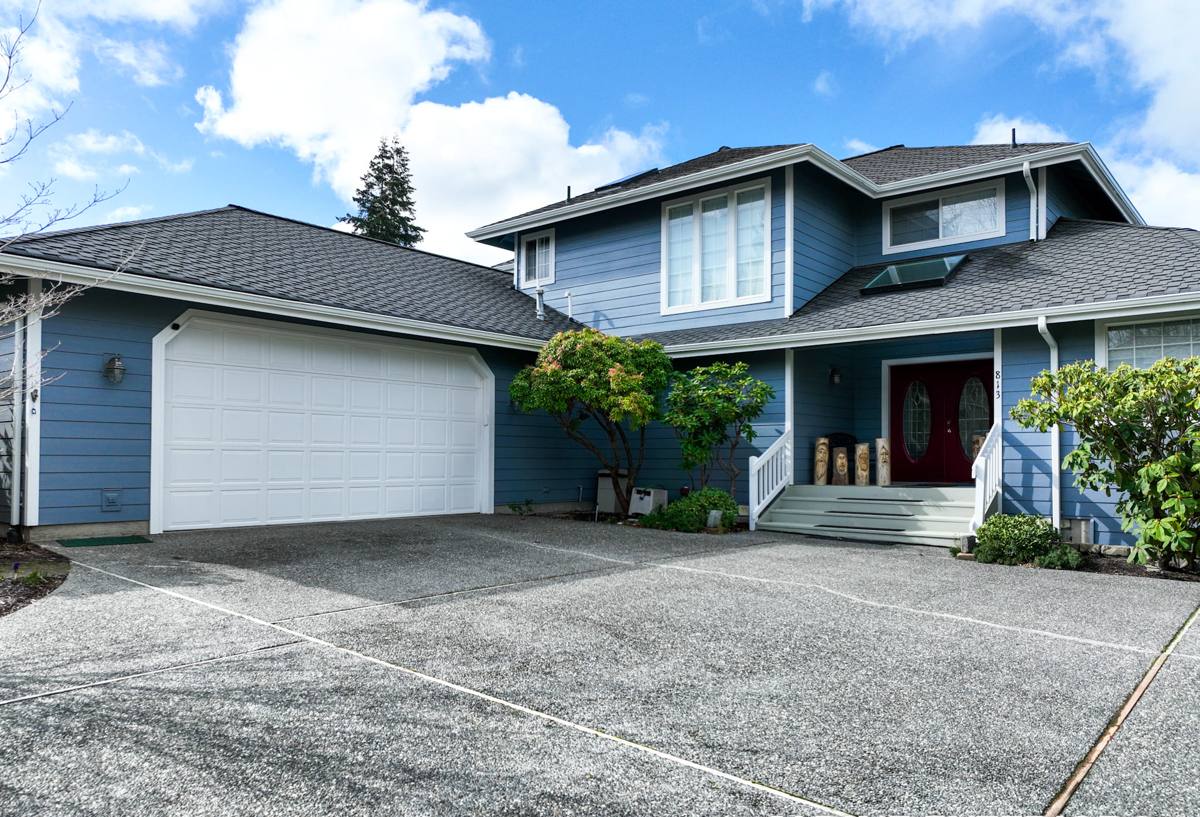
What "Energy-Efficient" Actually Means Here
Energy performance on a window comes down to a handful of measurable numbers, and in a marine climate like Whatcom County's, some matter more than others.
The Numbers Worth Paying Attention To
U-factor measures how well the window resists heat loss — lower is better, and it's the number that matters most in our climate, where the goal is keeping heat inside more than blocking it out. Solar Heat Gain Coefficient (SHGC) matters less here than it would in a sunnier climate, but it's still worth getting right on south- and west-facing walls. Just as important, though less talked about, is condensation resistance — how well a window handles the temperature and humidity swings that come with our damp winters. A window with a great U-factor but poor condensation resistance will still fog up, sweat, and eventually feed mold growth on the interior sill.
Glass Packages That Make Sense in a Marine Climate
Double-pane windows with a low-E coating and an argon gas fill are the practical baseline for most Custer homes — they balance cost against real-world performance well. Triple-pane glass adds meaningful insulation value and sound dampening, which some homeowners want given how often weather moves through here, but it adds cost and weight, and on a smaller or older home the return doesn't always justify it. We'll walk through that trade-off honestly rather than upselling the most expensive option by default.
Signs Your Current Windows Are Costing You Money
Most homeowners don't replace windows because of one dramatic failure — it's usually a slow accumulation of small problems. Here's what we look for, and what you can check yourself:
- Visible condensation or fogging between the panes of double-pane glass (a sign the seal has failed and the gas fill is gone)
- Drafts you can feel near the frame on a windy day, especially on walls that face the water or prevailing weather
- Wood sills that feel soft, discolored, or stay damp longer than the surrounding trim
- Hardware — locks, cranks, hinges — that's stiff, corroded, or doesn't latch tight anymore
- Visible moss, algae, or black staining building up in the corners of the frame or on the exterior trim
- A noticeable jump in heating costs compared to similarly sized homes nearby
- Paint or finish on wood-framed windows that's peeling or bubbling, often a sign moisture is getting in behind it
What a Correct Installation Actually Involves
A window is only as good as the opening it's installed into. This is the part that separates a job that performs for decades from one that starts leaking within a few years, and it's where a lot of corners get cut — not always out of carelessness, but because it's the part homeowners can't see once the trim goes back on.
Flashing and Moisture Management
Every window opening needs to be flashed so that any water that gets past the exterior siding or trim is directed back out, not down into the wall cavity. In a climate with as much driving rain as ours, this isn't optional detailing — it's the difference between a window that stays dry inside the wall and one that quietly rots the framing around it. We integrate window flashing with the home's existing weather-resistive barrier so water sheds in the correct order, top layer over bottom, the same way shingles do.
Sealing and Insulation Around the Rough Opening
The gap between the window frame and the rough opening needs to be insulated and air-sealed correctly — not stuffed tight with fiberglass, which can actually reduce performance, and not left with gaps that let air and moisture through. We use appropriate low-expansion foam or backer rod and sealant depending on the gap size, then finish with correctly bedded exterior caulking sized for the movement and weather this area sees.
Setting the Window Level, Plumb, and Square
A window that's out of square will bind, won't lock tight, and will develop gaps that let in both drafts and water over time. This is basic craftsmanship, but it's worth stating plainly because it's the step that gets rushed on lower-quality jobs.
Comparing Window Frame Materials for Coastal Whatcom County Homes
Frame material has a real effect on how a window holds up to salt air and constant moisture. There's no single right answer for every home — it depends on your budget, your home's style, and how much maintenance you want to take on.
| Frame Material | Performance in Salt Air & Moisture | Maintenance | General Cost Position |
|---|---|---|---|
| Vinyl | Won't corrode or rot; performs well in coastal conditions | Low — occasional cleaning | Most affordable |
| Fiberglass | Very stable, resists expansion/contraction and moisture damage well | Low | Mid to upper range |
| Wood or wood-clad | Attractive but vulnerable where the wood is exposed to salt-laden moisture; needs a well-maintained exterior clad or finish | Higher — finish upkeep required | Upper range |
| Aluminum | Prone to corrosion and condensation in marine climates unless thermally broken | Moderate | Varies |
For most Custer homes, vinyl or fiberglass ends up being the practical choice — both stand up to salt air without the ongoing finish maintenance that wood-clad windows require. If you want the look of wood, a wood-interior/clad-exterior window can still work, but we'll be upfront if your home's exposure makes that a higher-maintenance choice.
Our Process for a Custer Window Project
- On-site assessment. We look at your current windows, check for water damage or rot around openings, and talk through what's actually not working — draftiness, condensation, appearance, or all three.
- Honest product recommendations. Based on your home's exposure, orientation, and budget, we'll recommend frame material and glass package options with the real trade-offs explained, not just the priciest option.
- Written estimate. Clear scope, clear pricing, no surprise add-ons once work starts.
- Removal and inspection. When we pull the old windows, we check the framing underneath for any hidden moisture damage before anything new goes in.
- Correct installation. Proper flashing, air-sealing, and squaring — the steps described above, done in the right order.
- Final walkthrough. We test operation, check seals, and make sure everything is finished and cleaned up before we consider the job done.
Why a Crew That Already Works in Custer Matters
Window installation done wrong doesn't usually show up as a problem on day one — it shows up two or three winters later as a soft spot in the wall, a persistent draft, or moss creeping into a gap that should've been sealed. A crew that's worked on homes throughout Ferndale and Custer already knows how the local weather behaves against different exposures — which walls take the worst of the driving rain, how fast moss and algae establish themselves here, and what kind of flashing detail actually holds up through a Whatcom County winter. That's knowledge you don't get from a general contractor rotating through a dozen different climates.
It also means we're a known, local presence if a warranty question or a follow-up adjustment ever comes up — not a crew that installed your windows and then moved on to the next county.
Protecting Your Investment After Installation
New windows are close to maintenance-free compared to what you're likely replacing, but a little upkeep goes a long way in this climate:
- Rinse salt residue and grime off exterior frames and glass a couple of times a year, especially after winter storms
- Check exterior caulking annually for cracking or gaps and have it touched up before it fails
- Keep weep holes (the small drainage openings along the bottom of the frame) clear of debris and moss so water can drain out as designed
- Operate locks and cranks periodically through the year so hardware doesn't seize up from disuse
If your windows in Custer are drafty, fogged, or just past their prime, we're happy to take a look and give you a straightforward, no-pressure estimate — use the form below to get started.