 Ferndale
 Building Decks That Hold Up in Bellingham's Climate
Bellingham sits close enough to the water and low enough under our Pacific storm track that a deck here works harder than a deck almost anywhere inland. Salt-laden air off Bellingham Bay accelerates corrosion on fasteners and hardware. Driving rain off the Strait pushes moisture sideways under railings and into end grain. And our long, gray moss season — often six or seven months of the year when surfaces stay damp and shaded — turns any deck with poor drainage or airflow into a slip hazard and a slow-motion rot problem. A deck built to a generic spec sheet from a warmer, drier region simply doesn't last here. One built for this specific climate, on the other hand, can go decades before it needs more than routine care.
We build decks for homeowners throughout Ferndale, Bellingham, and the rest of Whatcom County, and the difference between a deck that ages well and one that doesn't almost always comes down to decisions made before a single board goes down: footing depth, framing material, drainage slope, and how the structure handles water that's going to find its way in no matter what.
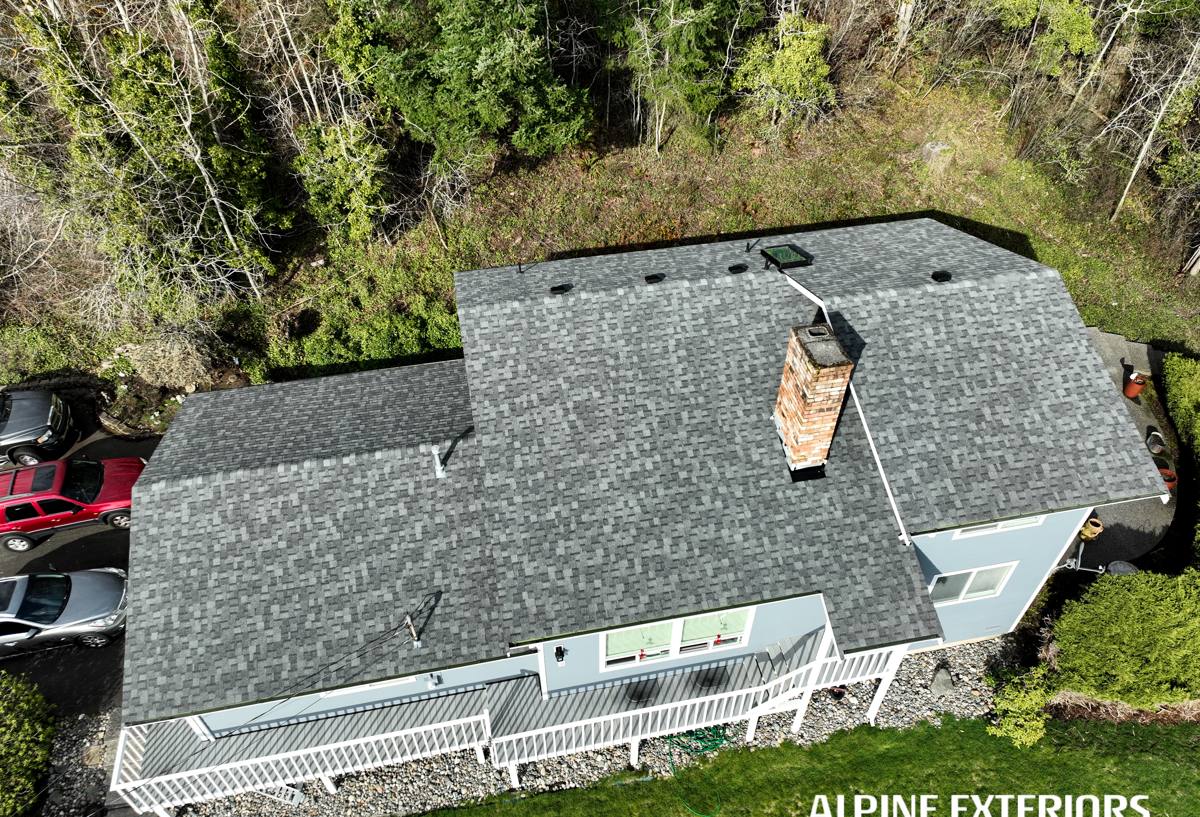
What a Correctly Built Deck Actually Requires Here
Footings and Foundation
Whatcom County soil varies a lot by lot — some areas sit on well-drained glacial till, others on heavier clay that holds water. Footings need to go below frost depth and bear on undisturbed, stable soil, not fill dirt or topsoil. On a wet lot, that sometimes means digging deeper or adding drainage gravel around the footing than the minimum code number, because a footing that heaves or settles even slightly will eventually show up as a bouncy joist, a gap at the ledger, or a railing post that leans.
Ledger Attachment
The ledger board — where the deck attaches to the house — is the single most common failure point on older decks in this region, and it's almost always a moisture problem, not a structural one. Water gets behind the ledger, the house's sheathing or rim joist starts to rot, and nobody notices until the deck feels soft or starts pulling away. A correct ledger installation uses proper flashing that directs water out and away from the house, not a bead of caulk and hope. This is also where we catch existing rot on remodels or rebuilds — worth knowing if you're replacing an older deck rather than building new.
Framing Material
Pressure-treated lumber rated for ground contact is standard for framing in our climate, and it matters more here than in drier regions because the wood stays damp longer between rain events. We also pay attention to joist spacing and blocking — tighter spacing than the bare code minimum reduces bounce and extends the life of whatever decking sits on top, especially with composite boards, which need firmer support than wood.
Choosing Decking Material for Salt Air and Moss Season
There's no single "best" decking material — there's a best material for your budget, your sun exposure, and how much upkeep you want to do. Here's how the common options actually perform in a Whatcom County climate:
| Material | How It Handles Our Climate | Maintenance | Typical Lifespan |
|---|---|---|---|
| Pressure-treated wood | Affordable, but needs regular sealing to resist moisture and moss growth in shaded areas | Annual cleaning, re-sealing every 1-2 years | 15-20 years with upkeep |
| Cedar | Naturally rot- and insect-resistant, ages to a silver-gray if left unfinished; still needs cleaning in moss season | Periodic cleaning, optional staining | 20-25 years |
| Composite decking | Doesn't absorb water like wood, resists moss staining better, holds up well to salt air | Occasional washing, no sealing or staining | 25-30+ years (manufacturer-dependent) |
| PVC decking | Fully synthetic, best moisture resistance of the group, good choice for low, shaded, or waterfront-adjacent decks | Occasional washing | 25-30+ years |
For decks in shaded, low-airflow spots — which describes a lot of Bellingham backyards under mature trees — composite or PVC decking earns its higher upfront cost by resisting the moss and algae staining that wood picks up in our wet months. For sunnier, more open decks, a well-maintained wood deck can perform just fine and costs less to start.
Railings, Fasteners, and Hardware: Where Salt Air Does the Most Damage
Homes closer to Bellingham Bay and the Strait see accelerated corrosion on any hardware that isn't rated for it. Standard galvanized fasteners can start showing rust streaks within a few years in a salt-air environment; we use stainless steel or heavy-duty coated fasteners rated for coastal exposure on connections that matter structurally — ledger bolts, joist hangers, post bases. It costs more than using whatever's on the shelf, but a rusted-out joist hanger is a structural problem, not a cosmetic one, and it's far cheaper to spec the right hardware once than to open up a deck later to replace it.
Railing systems deserve the same attention. Metal cable or rod railing systems look great but need corrosion-resistant hardware in this climate, or they'll show rust at every connection point within a few seasons. Wood and composite railing systems have fewer exposed metal points and are often a lower-maintenance choice for homes closer to the water.
Drainage and Airflow: The Two Things That Actually Prevent Rot
Moss and rot both need the same thing to take hold: standing moisture that doesn't dry out. Two design choices do more to prevent that than any sealant or coating:
- Slope: Decking should have a slight slope away from the house so water sheds instead of pooling.
- Gapping: Proper spacing between boards lets water drain through instead of sitting on the surface.
- Under-deck airflow: Low decks built tight to the ground with no ventilation underneath trap moisture against the framing — a foot or more of clearance, where the site allows it, makes a real difference.
- Shade management: We can't move the sun, but board orientation and gaps can be planned around known shaded areas to reduce moss buildup where it's worst.
- Post base drainage: Post bases should sit above grade on a standoff, not buried in soil or mulch where they stay wet.
A deck that drains and breathes correctly will outlast a more expensive one that doesn't, every time.
Permits and Whatcom County / Ferndale Code Requirements
Most new decks and significant deck rebuilds require a building permit, with specifics depending on height, size, and attachment to the house. Requirements can differ between City of Ferndale, City of Bellingham, and unincorporated Whatcom County, so the process depends on exactly where the property sits. Guardrail height, baluster spacing, and stair requirements are all governed by code and inspected — this isn't a place to guess or skip. We handle permitting and inspection scheduling as part of the build so you're not tracking down requirements yourself.
Our Process, Start to Finish
- On-site assessment: We look at your existing deck (if replacing one), the slope and drainage of the site, sun and shade exposure, and how the deck ties into the house.
- Design and material discussion: We walk through decking and railing options based on your budget, how much maintenance you want to do, and the specific exposure of your yard.
- Written estimate: Clear scope, materials, and cost — no vague allowances that turn into surprises later.
- Permitting: We handle the permit application and coordinate inspections with the appropriate jurisdiction.
- Build: Footings, framing, ledger flashing, decking, and railings, built to hold up to Whatcom County weather, not just pass a one-time inspection.
- Final walkthrough: We go over the finished deck with you, including basic care guidance specific to the material you chose.
Seasonal Maintenance That Actually Matters Here
Every deck needs some upkeep, and what matters most shifts with the season in our climate:
- Fall: Clear leaves and debris before the wet season sets in — trapped organic matter is what feeds moss and algae growth over winter.
- Winter/moss season: Periodic sweeping and, on wood decks, occasional cleaning of shaded areas prone to moss keeps surfaces safer and slows staining.
- Spring: A thorough wash after moss season removes buildup before it sets in for good; wood decks may need re-sealing on a multi-year cycle.
- Summer: The dry season is the right window for any staining, sealing, or hardware inspection — check fastener heads and railing connections for early rust.
Why Hire a Crew That Already Works in Bellingham
Deck-building fundamentals don't change from region to region, but the details that make a deck last do — soil conditions on a given lot, how close a property sits to salt air, how shaded a yard stays through moss season, and which local jurisdiction's permit process applies. A crew that already works in and around Bellingham has run into these specifics repeatedly and builds for them by default, rather than treating them as surprises. That familiarity shows up in the footing depth we choose, the hardware we spec, and how we grade drainage under the decking — not in anything flashy, just in a deck that's still solid a decade or two from now.
If you're planning a new deck or replacing one that's showing its age, we're happy to come take a look and put together a straightforward, no-pressure estimate. Use the form below to get started.