 Ferndale
 Why Bellingham Decks Wear Out Faster Than the Brochure Says
A deck built in Bellingham lives a harder life than the same deck built somewhere dry and inland. You're close enough to the Salish Sea that salt-laden air reaches most yards in town, driving rain comes in sideways off Bellingham Bay for months at a stretch, and the shoulder seasons bring long stretches of shade, damp, and low sun angle that keep every horizontal surface wet far longer than it looks. Add in the moss season that runs from fall through spring across Whatcom County, and you've got a structure that's fighting moisture, corrosion, and organic growth nearly year-round instead of just during a rainy month or two.
None of that means a deck is doomed — it means the maintenance and repair schedule has to match the actual climate the deck sits in, not a generic national average. We work on decks throughout Bellingham and the surrounding Ferndale area, and the failure patterns we see are consistent enough that we can tell you what to expect before we even climb underneath.
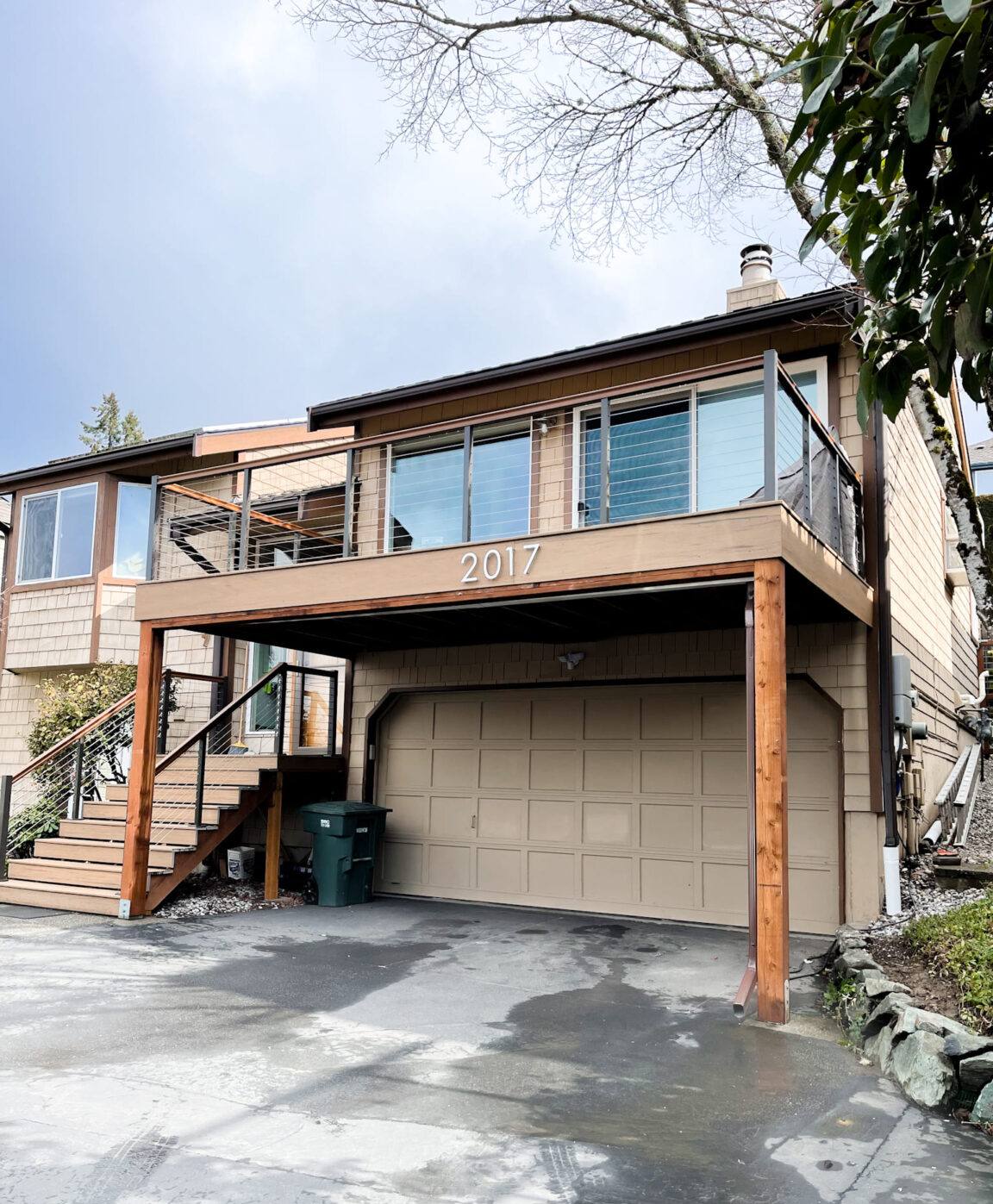
What Actually Fails First on a Whatcom County Deck
Ledger Board and Flashing
The ledger board — where the deck bolts to the house — is the single most common point of hidden rot we find. If the flashing above it was skipped, undersized, or installed before the decking (so water runs behind it instead of over it), moisture gets trapped against the house rim joist and sits there. In a climate with as much sustained rain as this one, that's often the difference between a ledger that's solid at year 15 and one that's spongy at year 8.
Fasteners and Hardware
Salt air accelerates corrosion on anything that isn't rated for it. We regularly find older decks fastened with standard galvanized hardware that's rusting from the inside of the joist hangers out, or nails that have lost most of their holding strength. Mixing metals — say, a stainless screw against a galvanized hanger — can also set up galvanic corrosion that eats hardware faster than either metal would corrode on its own.
Decking Boards
Wood decking that sits under trees or in shade for a good part of the day stays damp longer, which is exactly what moss and algae need to take hold. Beyond looking bad, a mossy deck surface is a real slip hazard on wet mornings, and moss root structures hold moisture against the board, accelerating rot and graying/cupping.
Support Structure
Posts set in or near grade, beams without proper flashing tape, and joists that were never properly protected on the cut ends are where we find structural softening. This is the repair category that matters most for safety, because it affects the deck's actual load-carrying capacity, not just its appearance.
Cosmetic Wear vs. Structural Damage
Homeowners often call about something that looks minor — a gray board, a squeak, a little moss — and it's worth understanding the difference between what's cosmetic and what needs attention now.
| Symptom | Usually Means | Urgency |
|---|---|---|
| Gray, weathered wood surface | UV and moisture exposure, normal aging | Low — cosmetic, can be scheduled |
| Moss or algae film on boards | Prolonged dampness, shade, or poor drainage | Medium — slip hazard, treat before it spreads to structure |
| Soft or spongy spots underfoot | Rot has reached the board core | High — board replacement needed |
| Rust streaks at fastener heads | Corroding hardware, common near salt air | Medium to High — depends on how far it's progressed |
| Deck feels bouncy or moves at the ledger | Possible ledger, joist, or post failure | Urgent — structural safety issue |
| Gaps opening between boards | Normal shrink/swell cycling, usually not urgent | Low — monitor |
What a Correct Deck Repair Actually Involves
A lot of "deck repair" in this region is really just swapping the boards people can see and calling it done. That fixes the symptom but leaves the cause in place, which usually means the same failure reappears in a few years — sometimes worse, because it's now hidden under new decking.
Our repair process starts underneath, not on top
- Full inspection from below, including moisture readings on the ledger, rim joist, beams, and any post bases that are accessible
- Check flashing at the ledger and any spots where the deck meets the house or a roofline
- Test fastener and hardware condition — not just visual rust, but actual holding strength where we can check it
- Identify drainage problems: standing water, blocked gaps, grading that pushes water back toward the house
- Only after the structure is confirmed sound (or repaired) do we address decking surface, railings, and stairs
This order matters because replacing decking on top of an unaddressed moisture or corrosion problem is the single most common reason a "repaired" deck fails again within a few years in this climate.
Repair Options by Situation
Localized Board Replacement
If rot or damage is limited to a handful of boards and the framing underneath is sound, replacing just those boards is the honest, cost-effective call. We match the fastening pattern and, where possible, the board profile so the repair doesn't stand out or create a new water trap at the seams.
Ledger and Flashing Correction
When the ledger is compromised, the repair usually means removing decking near the house, correcting or adding proper flashing, and confirming the ledger bolts into solid framing — not just fastened to siding or trim. This is more invasive than a board swap, but skipping it means the new decking is still sitting on a moisture problem.
Structural Reinforcement
Sistering a weakened joist, replacing a post base that's been sitting in wet soil, or upgrading undersized hardware to something rated for the exposure falls in this category. It's less visible than new decking, but it's what actually restores the deck's carrying capacity.
Full Resurfacing
If the framing is solid but the decking itself is widely worn, cupped, or inconsistent in condition, resurfacing the whole deck — sometimes moving from wood to a composite decking product — can make more sense than patching board by board. We'll walk through the real maintenance and moisture trade-offs of each material rather than pushing one option; wood costs less up front but needs regular sealing in this climate, while composite costs more initially but handles the wet/shade cycle with less upkeep.
Cost Factors for Bellingham Deck Repair
Every deck repair quote depends on a handful of real variables, not a flat per-square-foot number:
| Factor | Why It Matters |
|---|---|
| Extent of structural vs. cosmetic damage | Ledger and framing repairs take more labor and access than surface board swaps |
| Accessibility underneath the deck | Low clearance or enclosed skirting adds time to inspect and repair framing |
| Board material and matching | Matching an older wood species or a discontinued composite profile can add cost or push toward a wider resurface |
| Hardware condition | Full hardware replacement costs more than spot repair but avoids repeat failures near salt air |
| Drainage or grading corrections | Fixing the root moisture source adds a step but protects the rest of the repair |
| Railing and stair condition | These carry code requirements around height and spacing that affect scope |
A Homeowner Checklist Before You Call Anyone
- Walk the deck and note any spot that feels soft, bouncy, or different underfoot
- Look at fastener heads and hardware for rust streaks or staining
- Check the area where the deck meets the house for gaps, dark staining, or peeling paint — signs of trapped moisture
- Note any areas with persistent moss, algae, or standing water after rain
- Give railings and stair stringers a firm push to check for looseness
- Take a rough measurement of the deck's total square footage so estimates can be compared accurately
Why It Matters to Hire a Crew That Already Works Bellingham
Deck repair advice that comes from a dry climate doesn't transfer cleanly here. A crew that doesn't regularly work in Whatcom County might not flag the flashing detail that matters most against driving rain off the bay, or might spec hardware that looks fine on paper but corrodes faster than expected in salt air. We're based in Ferndale and work decks across Bellingham and the surrounding area regularly enough to know which failure patterns show up house to house — not as a sales pitch, but because it changes what we check first and what we recommend for fasteners, flashing, and material choice.
We also won't recommend a full deck replacement when a targeted structural repair will genuinely hold up. If the framing is sound, we say so. If it isn't, we'll show you what we found underneath before we talk about scope, so the decision is based on the actual condition of your deck, not a guess from the surface.
Get a Straight Answer About Your Deck
If your deck has soft spots, rust stains, persistent moss, or just feels different than it used to, it's worth having someone look underneath before deciding what it needs. We offer free, no-pressure estimates for deck repair in Bellingham and the surrounding Ferndale area — use the form below to get a time on the calendar.